



カスタムプラスチック射出成形: 工具, 材料, および制作ガイド
Custom plastic injection molding works best for products that need repeatable quality, scalable production, and tight dimensional control. Success depends on choosing the right tooling, resin, and validation process before mass production begins. Buyers should evaluate mold type, sampling procedures, production lead times, and supplier experience early to reduce revision costs, 遅延, and long-term quality issues.
Custom molded parts can fail long before production starts if tooling, 材料, or DFM decisions are rushed. A strong injection molding project is built around planning, not just machine capacity. Buyers need clear answers about tooling cost, resin selection, production timing, and validation steps before approving steel cutting or mass production.
What is custom plastic injection molding and when does it make sense?
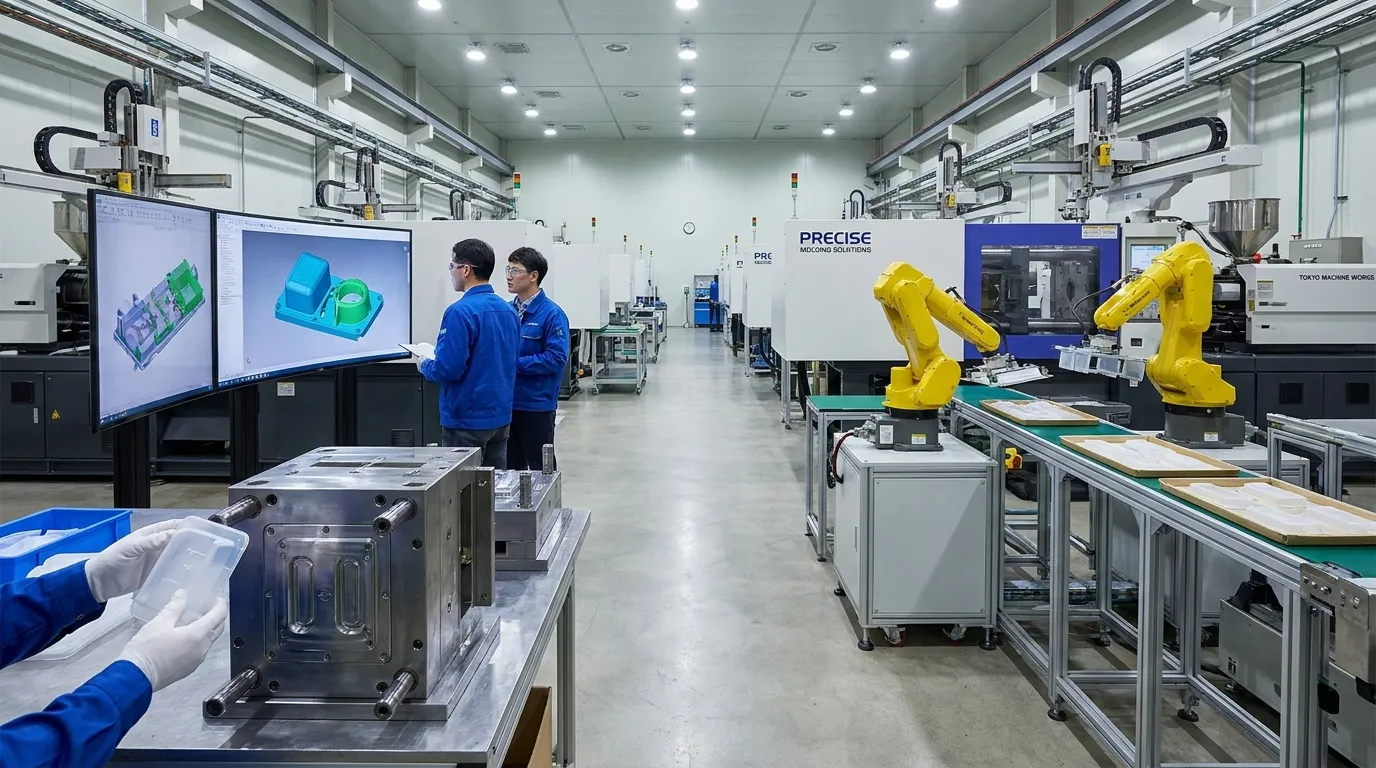
Custom plastic injection molding works best when a product needs repeatable quality, tight tolerances, and medium-to-high production volume. The process requires upfront tooling investment, but lowers per-part cost once production scales.
Injection molding creates plastic parts by injecting molten resin into a mold cavity under pressure. The same mold can produce thousands or millions of identical parts with consistent dimensions and surface finish.
The process makes sense when a product requires stable repeatability, cosmetic consistency, or complex geometry. 家電用ハウジング, automotive clips, 家電コンポーネント, and medical enclosures are common examples. 次の通りです IQSディレクトリ, injection molding remains one of the most widely used methods for large-scale plastic part production.
| 製造ニーズ | 射出成形フィット |
|---|---|
| 大量生産量 | Excellent |
| 厳密な公差 | ストロング |
| 迅速な試作機の変更 | 金型加工後の制限 |
| 初期投資が少ない | かわいそうに |
| 外観仕上げ | ストロング |
| 再現出力 | Excellent |
Low-volume projects sometimes benefit from bridge tooling or aluminum molds. A startup producing 5,000 consumer electronics housings may use aluminum tooling first to reduce launch risk before moving to hardened steel tooling later.
For a broader overview of mold structures and tooling systems, 参照 射出成形ガイド.
How does the custom injection molding process work from design to production?
Most custom injection molding projects follow a predictable sequence: DFMレビュー, tooling fabrication, T1サンプリング, 改訂, 検証, and mass production. Problems become far more expensive once steel cutting begins.
A typical project starts with a DFM review, short for Design for Manufacturability. Engineers evaluate wall thickness, ドラフト角, gating positions, material flow, and part geometry before tooling begins. Early DFM approval prevents expensive mold revisions later.
設計が承認されたら, the manufacturer creates the mold tool. This stage includes CNC machining, EDM work, 研磨, フィッティング, and cooling channel preparation. The full 型製造ワークフロー usually takes several weeks depending on mold complexity.
DFMレビュー
DFM is where many projects either stay on track or begin slipping. A buyer changing wall thickness after steel cutting may trigger additional machining, delayed sampling, and new validation rounds.
One common example is an automotive supplier switching from ABS to PC/ABS after tooling starts because the original resin failed heat testing. That single material change can affect shrinkage rates, gating, and cooling behavior.
T1と検証
金型が完成した後, the manufacturer runs the first trial shot, often called T1 sampling. 技術者が寸法を検査します, cosmetic finish, gate marks, フラッシュ, and cycle consistency.
Mass production should not begin immediately after T1 approval. Stable production requires process tuning, repeatability checks, and validated inspection procedures before the production ramp starts.
How do you choose the right plastic material?
Material selection affects strength, 耐熱性, tooling wear, サイクルタイム, and final part cost. Choosing resin based only on price often creates long-term production problems.
The right resin depends on the product’s environment, load requirements, appearance goals, and production conditions. Polypropylene works well for flexible consumer parts, while polycarbonate provides stronger heat resistance and impact performance.
A resin also affects tooling life and production efficiency. Glass-filled materials can increase mold wear. High-temperature resins often require slower cycle times and more advanced tooling design. グッドフィッシュ・グループ explains how resin behavior directly impacts manufacturability and long-term part performance.
| 素材 | 最適な利用法 | 主な利点 | 制限 |
|---|---|---|---|
| PP | 消費財 | 低コスト, flexible | 耐熱性の低下 |
| ABS | 住宅 | 良い外観 | 中程度の耐久性 |
| PC | 電子機器 | 高い衝撃強度 | コストの高さ |
| ナイロン | 機械部品 | 耐摩耗性 | 水分吸収 |
The cheapest resin is not always the lowest total cost. A lower-grade material may increase defect rates, cosmetic rejection, or part failure during production.
A medical device project may require multiple resin evaluations before approval. If sterilization temperatures exceed the material’s limit, the part can warp or crack after shipment. そういう場合, engineering-grade resin becomes necessary even if tooling and cycle costs increase.
For broader mold and resin production context, 参照 プラスチック型ソリューション.
Should you use aluminum or steel tooling?
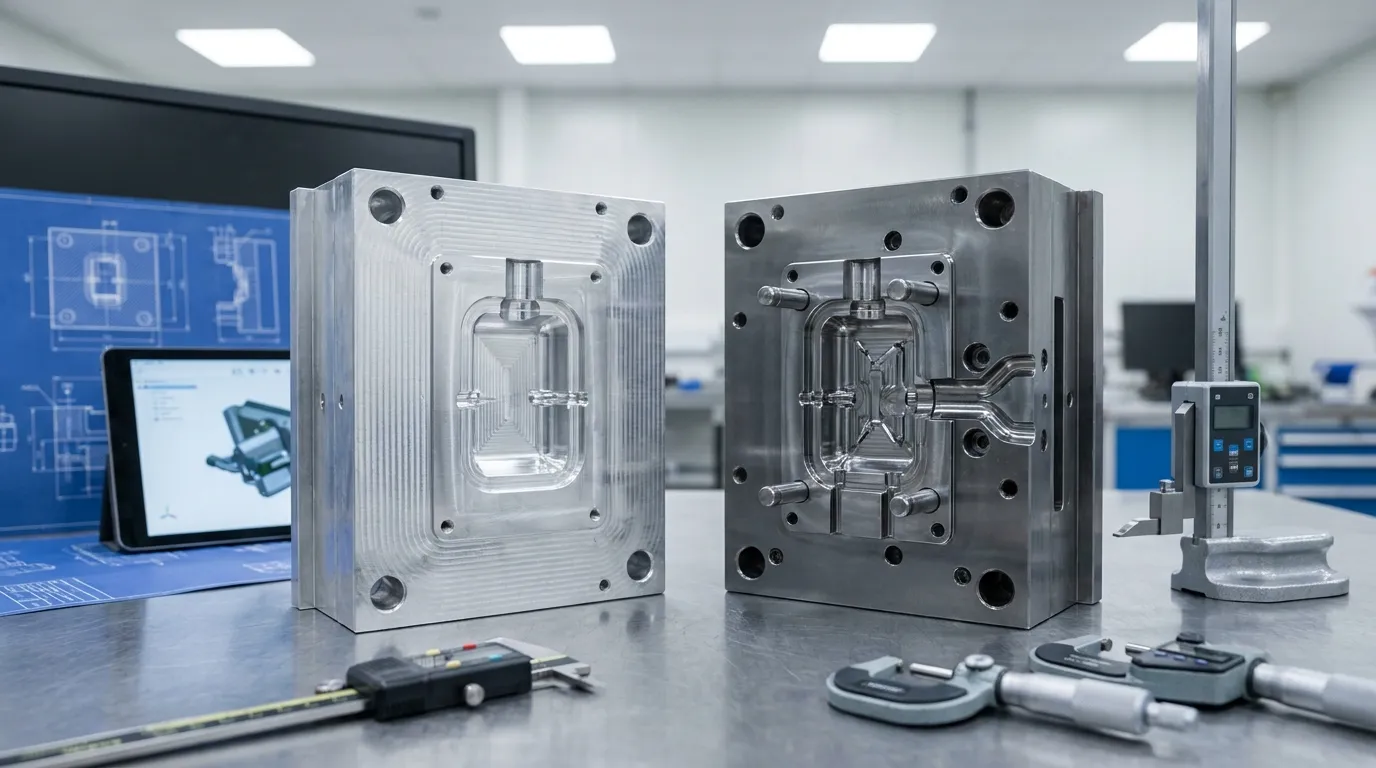
Aluminum molds reduce lead times and tooling cost for lower-volume projects, while hardened steel tooling is safer for long production runs and tighter tolerances.
Tooling material changes both project economics and production stability. Aluminum molds machine faster and cost less upfront, making them useful for prototyping, bridge production, or market testing.
Steel molds require more time and investment, but they handle higher production volumes and abrasive materials more reliably. 偉林プラスチック notes that aluminum tooling is often preferred for low-volume manufacturing because of faster turnaround times.
工具決定表
| 要因 | アルミニウム金型 | スチール金型 |
|---|---|---|
| Lead time | もっと速く | もっと長く |
| Upfront cost | 下 | 高く |
| 生産期間 | 下 | もっと高い |
| 改訂の柔軟性 | 楽だ | もっと強く |
| ベスト | Prototypes, bridge runs | 長期生産 |
Aluminum tooling is not always the cheapest long-term option. It works well for startup launches and pilot production, but hardened steel tooling is safer when repeatability and large production runs matter.
A startup launching a smart home device may choose aluminum tooling for the first 8,000 部隊. Once demand stabilizes, the company can transition to steel tooling for larger production volumes and improved durability.
If you're comparing tooling suppliers, レビュー 射出成形金型の工具 before committing to a production plan.
What affects tooling cost and production pricing?
Tooling cost depends on part geometry, キャビティカウント, resin behavior, 許容差要件, 生産量. Small design changes after tooling starts can increase both lead time and total project cost.
Most injection molding costs fall into two categories: tooling cost and per-part production cost. Tooling includes machining, 型の設計, steel selection, cooling systems, and finishing work. Per-part cost depends on resin usage, サイクルタイム, labor, and output volume.
Complex geometry increases tooling cost quickly. アンダーカット, threaded sections, side actions, and polished cosmetic surfaces all require additional machining and engineering time.
| コストドライバー | 価格への影響 |
|---|---|
| マルチキャビティ型 | 高い工具コスト, lower part cost |
| 厳密な公差 | さらなる加工と検証 |
| エンジニアリンググレードの樹脂 | 材料費の上昇 |
| 外観仕上げ | 追加の研磨 |
| 設計改訂 | 遅延と再作業 |
The lowest mold quote is rarely the lowest total project cost. Weak DFM review and poor validation often create expensive corrections later.
例えば, a buyer approving tooling before finalizing snap-fit geometry may face steel modifications after T1 sampling. Even small tooling revisions can delay production schedules and increase engineering costs.
When evaluating suppliers, a qualified カスタムモールディングサプライヤー should explain cost drivers clearly instead of quoting only a single mold price.
How long does a custom injection molding project take?
Most custom plastic injection molding projects take several weeks to months depending on tooling complexity, 改訂, sampling cycles, and production validation requirements.
Simple tooling projects may move from DFM approval to production in a few weeks. Complex hardened steel molds with multiple cavities and cosmetic requirements often take much longer. 次の通りです アプリオス, production mold lead times can extend from several weeks to multiple months depending on complexity.
| プロジェクトステージ | 典型的なタイミング |
|---|---|
| DFMレビュー | 2〜7日間 |
| 金型設計 | 1〜2週間 |
| 工具製造 | 数週間 |
| T1サンプリング | 数日間 |
| 改訂と検証 | 可変 |
| 生産段階 | 承認次第です |
遅延の一般的な原因
Most delays come from project changes, not machine downtime. 後期の設計改訂, incomplete specifications, resin changes, and failed validation rounds create the largest schedule disruptions.
A medical device project may require multiple T1 sampling rounds before dimensional stability meets approval standards. That extra validation time is normal in regulated production environments.
エヴォクポリ also highlights how tooling complexity and engineering changes affect overall lead time.
What should happen during sampling and production validation?
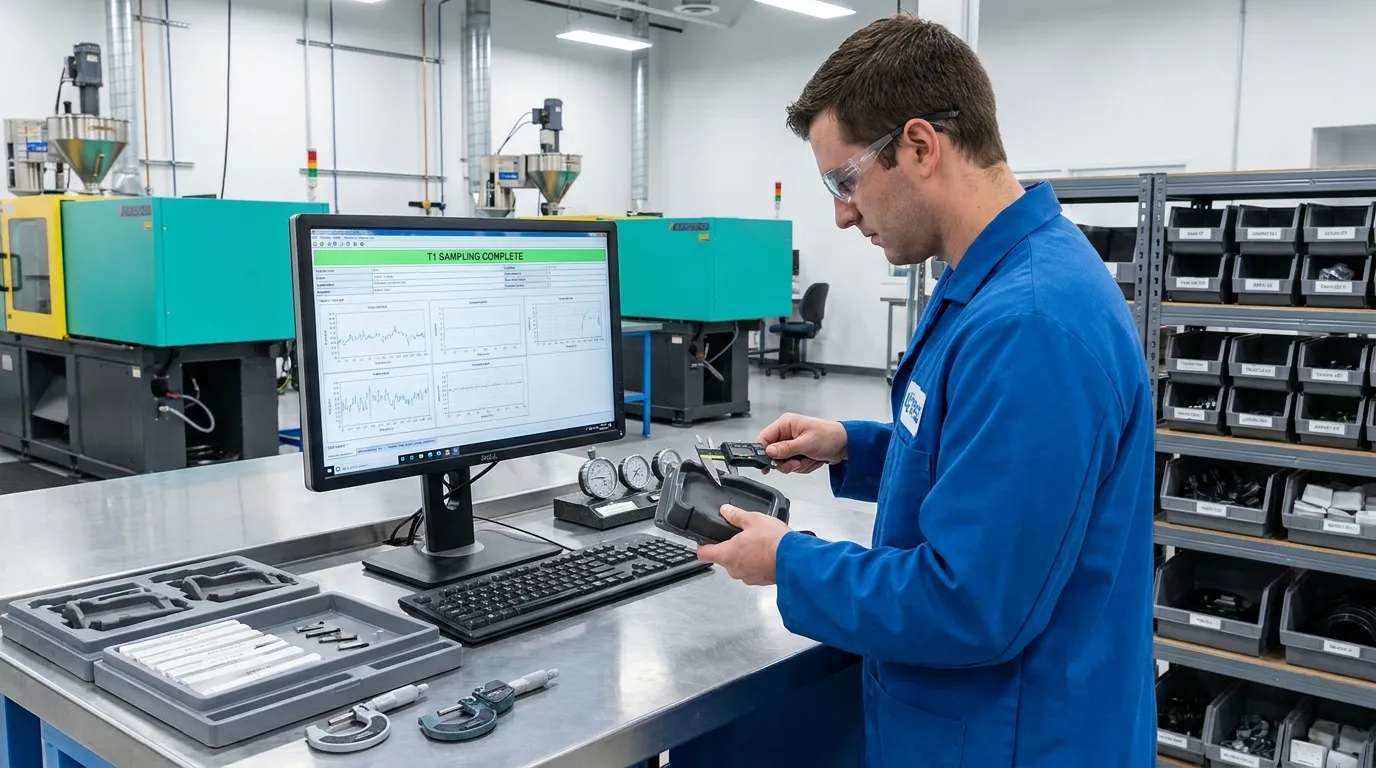
T1 sampling is where manufacturers validate dimensions, 物質的挙動, and molding stability before full production begins. Skipping structured validation increases the risk of downstream defects and delays.
Sampling is the transition point between tooling completion and production readiness. The goal is not just to create acceptable parts. The goal is to prove the process can repeat stable results consistently.
Manufacturers usually inspect dimensions, 外観の品質, gate performance, 冷却挙動, and material consistency during T1 and follow-up validation rounds.
生産準備チェックリスト
- T1サンプル承認
- 寸法検査報告書
- 樹脂検証
- 表面仕上げ検査
- プロセスパラメータレビュー
- 包装承認
- 物流計画の見直し
- 改訂追跡確認
A rushed production launch often creates avoidable quality problems. Faster production timing only helps if validation procedures are complete.
Before export shipment, some manufacturers also perform mold function testing and trial verification. アルパインカビ recommends reviewing trial reports, functionality, and dimensional checks before shipment approval.
For additional production-stage planning, レビュー 型検証プロセス used during mold qualification and production release.
How can buyers reduce production delays and supply chain risk?
Most production delays come from design revisions, incomplete specifications, 工具の変更, and poor production planning rather than machine downtime alone.
The best way to reduce delays is to lock specifications before tooling begins. Changing geometry, resin type, or surface finish after steel cutting usually affects tooling, 検証, and scheduling.
International projects also require planning for customs paperwork, shipping schedules, and packaging requirements. Both Trade.gov および アメリカ合衆国. 税関・国境警備 provide guidance related to import procedures and shipment documentation.
| もしこれが起きたら | リスクの増加 |
|---|---|
| 金型加工後の材料変更 | サンプリング遅延 |
| 公差仕様不明 | 検査失敗 |
| パッケージレビューはありません | 船舶被害 |
| 弱いコミュニケーションのリズム | 生産の混乱 |
A buyer delaying steel cutting until DFM approval often saves far more money than a buyer rushing into production. Early discipline reduces revision cycles and keeps production schedules predictable.
生産拡大に備える企業は、また見直すべきです 生産計画支援 before approving long-term manufacturing agreements.
How do you choose the right injection molding manufacturer?
Choosing the right supplier depends on engineering support, quality systems, tooling capability, and communication quality. A manufacturer should help reduce production risk, not simply quote a mold price.
Buyers should evaluate whether the supplier handles DFM reviews, sampling reports, validation support, and export coordination internally. Clear engineering communication matters just as much as machine capacity.
サプライヤー評価チェックリスト
- DFMエンジニアリングサポート
- 工具の運用経験
- 生産能力
- 品質検査手順
- 輸出および物流の経験
- 素材調達の管理
- 通信応答時間
- リビジョン管理プロセス
An experienced supplier should also explain where risk exists. 例えば, a supplier producing automotive parts may recommend hardened steel tooling immediately if annual production targets exceed projected aluminum mold lifespan.
If you're comparing long-term manufacturing partners, an 経験豊富な金型製造者 should be able to explain tooling decisions, validation methods, and production scalability clearly.
次のステップを正しく進める
A successful custom plastic injection molding project depends on early planning, realistic timelines, and disciplined validation. Buyers who focus only on mold price often face higher costs later through revisions, 遅延, または不安定な生産.
Start by reviewing your production volume, 材料要件, tolerance expectations, and launch timeline. Then evaluate whether aluminum or steel tooling fits the project long term. A supplier that supports DFM review, structured sampling, and production validation will usually reduce risk far more effectively than a low-cost quote alone.
よくある質問
How much does custom plastic injection molding cost?
Costs depend on tooling complexity, resin selection, キャビティカウント, 外観の要件, 生産量. The mold is usually the largest upfront expense, while per-part pricing becomes lower as production volume increases.
射出成形にどれくらい時間がかかりますか?
Simple molds may be completed within a few weeks, while complex hardened steel tooling can take several months. サンプリングラウンド, 改訂, and validation requirements also affect the final production timeline.
工具はアルミニウム製か鋼製か?
Aluminum tooling works well for prototypes and lower-volume production because it reduces cost and lead time. Steel tooling is better for large production runs, より厳密な公差, and longer mold lifespan.
Which plastic material should I use for my application?
Material selection depends on heat resistance, 耐久性, 柔軟性, chemical exposure, and cosmetic requirements. Resin choice also affects tooling wear, サイクルタイム, および長期的な生産の安定性.
What certifications should I look for in an injection molding supplier?
Most buyers evaluate ISO compliance, quality management procedures, traceability systems, and industry-specific certifications. Medical and automotive programs often require stricter validation and inspection standards.
What causes delays in injection molding projects?
金型開始後の設計改訂, incomplete specifications, material changes, and failed validation rounds are common delay sources. Early DFM review helps reduce many of these production risks.
共有:



サンシャインより書かれました
サンシャインで, 私たちは精密金型部品の専門製造およびサプライヤーです, プレスおよび射出成形用途向けの幅広い製品を提供しています. 私たちの主な焦点はパンチダイスです, イジェクターピンとスリーブ, ガイドポストとブッシング. 高度なCNC加工技術で, 厳格な品質管理, そして強力な生産能力, 私たちは信頼性を保証しています, 高精度部品, また、迅速かつ効率的なグローバル供給のための在庫の標準部品も併用しています.
ニュース
サービスを受けましょう
あらゆる予算に合った高品質な部品と、親切なスタッフが訓練されていて、訪問を有益で手間なく充実させてくれます.
