



エジェクタースリーブ: 排莢ピンの代わりに使うべきタイミング
Ejector sleeves are used in injection molds when parts eject around a core pin, deep boss, or cylindrical feature where standard ejector pins cannot distribute force evenly. They improve concentric ejection, reduce cosmetic defects, and protect hollow or thin-wall features. Correct sleeve fit, クリアランス, and concentricity are critical because poor alignment increases wear, くっつく, and part damage during ejection.
Parts with deep bosses or tall cylindrical cores often fail when standard ejector pins apply uneven force during ejection. That problem gets worse in cosmetic molds where stress marks or cracking can ruin the finished part. Ejector sleeves solve this by distributing force around the feature instead of pushing from one small point. The challenge is knowing when sleeves are necessary, how tight the fit should be, and what specifications matter before production starts.
What does an ejector sleeve do in injection molding?
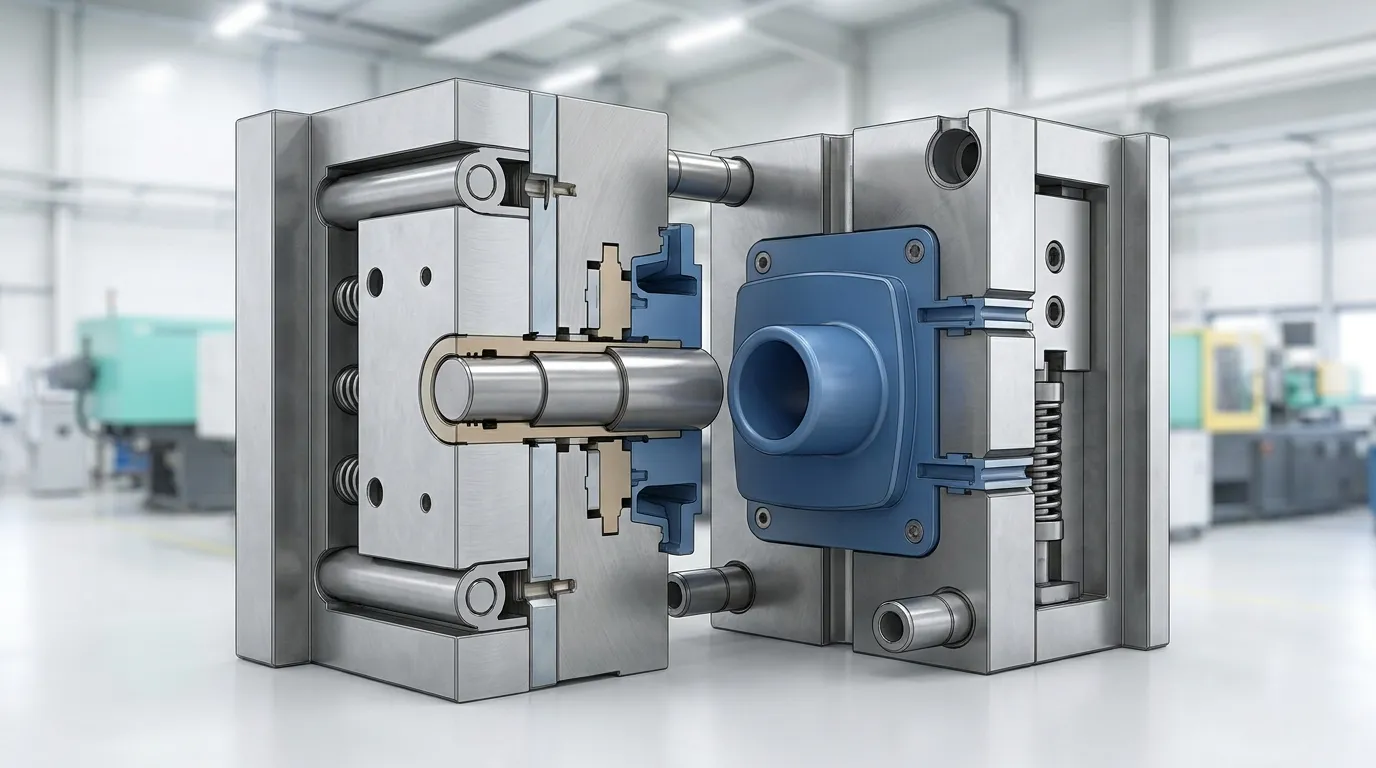
Ejector sleeves are tubular ejectors designed to push molded parts off core pins or cylindrical features evenly. They reduce stress concentration compared to standard ejector pins and help prevent deformation around bosses or hollow sections.
An ejector sleeve works like a hollow ejector pin. Instead of pushing from a single contact point, the sleeve surrounds the core pin and applies force evenly around the molded feature. This helps the part release without tilting, ひび割れ, or sticking during ejection.
Sleeves are commonly used for cylindrical geometries such as bosses, hubs, および中空断面. These shapes often trap tightly around the core pin after cooling. A standard pin can create localized stress in one area, especially on thin-wall plastic parts.
それによると US5730812A製造特許, ejector sleeves are produced with strict concentricity control so the sleeve moves smoothly around the core pin during repeated molding cycles.
For readers who want a broader overview of mold components, サンシャイン・プロの 完全な金型部品ガイド explains how ejector systems fit into the full mold assembly.
これらも確認できます イジェクターピンの基本 to compare solid pins with sleeve-style ejectors.
When should you use an ejector sleeve instead of an ejector pin?
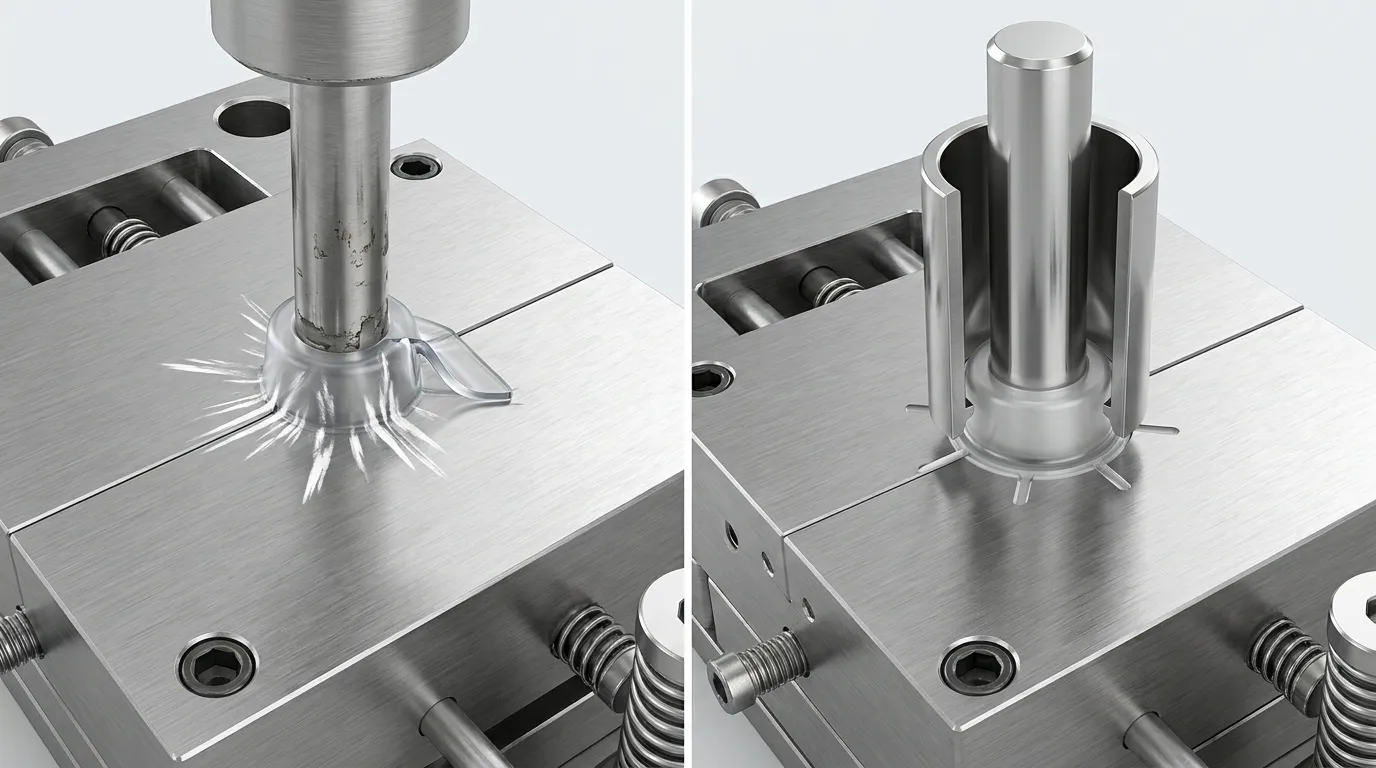
Use ejector sleeves when parts eject around a core pin, deep boss, or cylindrical feature where a standard ejector pin would create uneven force or visible stress marks. Sleeves distribute pressure more evenly and improve concentric ejection.
Ejector sleeves are usually the safer choice when the molded feature surrounds a core pin. The sleeve keeps the ejection force centered, which reduces side loading and lowers the risk of deformation. This matters most in cosmetic parts, thin-wall parts, and deep cylindrical geometries.
Standard ejector pins are not automatically the simpler or safer option. Around deep bosses or cylindrical cores, they often create uneven force that increases cosmetic defects and sticking risk. A sleeve may cost more upfront, but it can prevent expensive mold adjustments later.
スリーブとピンの決定表
| 部品幾何学 | 推奨オプション | 誤った選択が使われた場合のリスク | 美容感受性 |
|---|---|---|---|
| ディープボス | エジェクタースリーブ | ボスクラッキング | ハイ |
| 中空円筒 | エジェクタースリーブ | 不均一なリリース | ハイ |
| 平坦な構造面積 | Ejector pin | リスクは最小限です | 低め |
| Tall コア対応機能 | エジェクタースリーブ | サイドローディング | メディア |
| 厚い非美用壁 | Ejector pin | 軽微な証人痕跡 | 低め |
A cosmetic electronics housing is a common example. Deep screw bosses inside the housing often show stress whitening when standard pins eject too aggressively from one side. A sleeve spreads the force around the boss and reduces visible defects.
For a broader look at mold ejection layouts, Sunshine Pro’s guide to 排出システム設計 explains how different ejector components work together inside the mold.
Which molded part geometries typically require ejector sleeves?
Ejector sleeves are commonly used for deep bosses, cylindrical hubs, and hollow molded sections where centered ejection is critical. These geometries often fail with standard pins because force concentrates on a small contact area.
Most sleeve applications involve parts that wrap tightly around a cylindrical core. During cooling, the plastic shrinks around the core pin, which increases friction during ejection. A centered sleeve helps release the part evenly instead of pushing from one edge.
Common examples include bottle caps, medical housings, electronic screw bosses, and precision cylindrical parts. High-cycle cap molds often rely on sleeves because the parts are thin, 柔軟性があります, and sensitive to deformation during release.
一般的な幾何学的応用
| 幾何学タイプ | なぜスリーブが役立つのか |
|---|---|
| ディープボス | ボスの壁周りのひび割れを防ぐ |
| 薄壁キャップ | リリース時の変形を抑える |
| 円筒形ハブ | 同心円排出を維持する |
| 化粧品ハウジング | 目に見える応力痕を減らす |
| 高いコアサポート部品 | サイドローディングを防ぐ |
なぜスリーブがコアピンの周りに一般的に使われるのか
Core pins support internal molded features such as holes, ボス, and tubes. When the plastic cools, those features grip the core tightly. An ejector sleeve moves around the core pin and applies balanced pressure to the entire feature.
次の通りです ZJモールドテック, sleeve ejectors are widely used for cylindrical molding applications because they improve ejection stability around core-supported geometries.
これらも確認できます 金型排出部品 to understand where sleeves fit inside larger ejection assemblies.
Why do fit and concentricity matter for ejector sleeves?
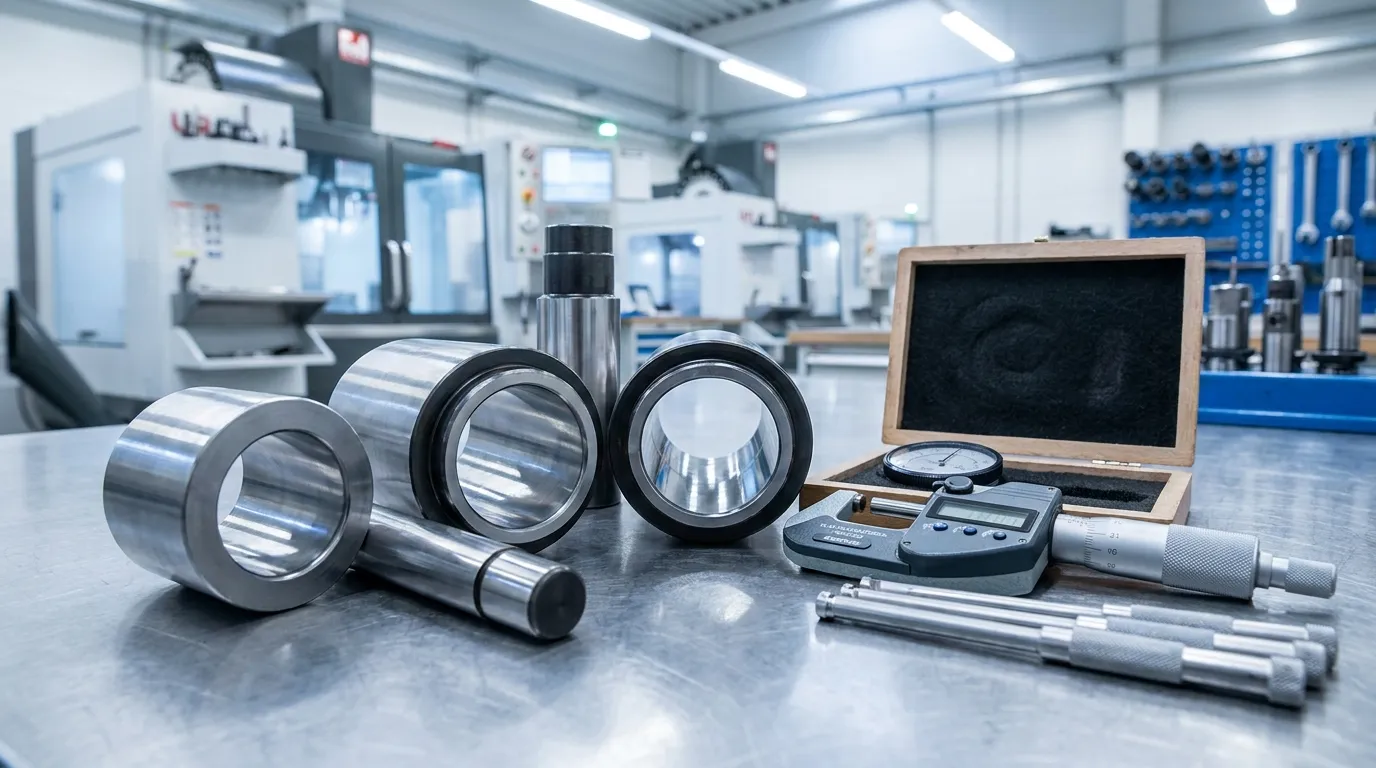
Ejector sleeves require tight concentricity and controlled clearance because misalignment increases friction, 使用期間, and sticking during ejection. Poor fit can damage both the molded part and the mold core.
Unlike standard ejector pins, sleeves move around another component. That means both the inside diameter and outside diameter must stay aligned during repeated molding cycles. Even small concentricity errors can create uneven contact and friction.
その チョイスモールドイジェクタースリーブ仕様 reference tight TIR values and nitrided surfaces to improve alignment stability and wear resistance. Those tolerances become more important in high-cycle molds.
Overly tight sleeve clearance is not always better. Tight fits improve stability, but aggressive clearance reduction can increase galling and friction if lubrication or alignment is poor. In many production molds, controlled movement is safer than forcing near-zero clearance.
同心率の低下による一般的な問題
| 問題 | 原因としては |
|---|---|
| スリーブバインディング | コアピンのずれ |
| 苛立たしい | 過度な摩擦 |
| 不均一な摩耗 | 同心率の低さ |
| 部品の貼り付け | 厳密なクリアランス |
| コア損傷 | 射出時の側面荷重 |
A medical molding application is a good example. Medical molds often run high volumes with strict dimensional requirements. Many manufacturers use nitrided sleeves because the harder surface helps reduce wear while maintaining stable movement around the core pin.
What materials and surface treatments are commonly used for ejector sleeves?
Most ejector sleeves use H13 or SKD61 hot-work tool steel because these materials resist wear, thermal fatigue, and repeated ejection stress. Nitrided surfaces further improve hardness and reduce galling.
Injection molds run through repeated heating and cooling cycles, so sleeve materials must resist thermal fatigue and surface wear. H13 and SKD61 are common choices because they hold hardness well under high-temperature production conditions.
次の通りです ZGCGMJの資料概要, SKD61 provides strong wear resistance and thermal stability for repeated molding cycles. Many suppliers also add nitriding treatments to increase surface hardness without making the sleeve brittle.
一般的なエジェクタースリーブ材料
| 素材 | 主な利点 | Typical Use |
|---|---|---|
| H13鋼 | 耐熱性 | ハイサイクル型 |
| SKD61 | 耐摩耗性 | 精密金型 |
| 窒化鋼 | 表面硬度 | 外観パーツ |
| Hardened tool steel | Durability | General production |
A thin-wall cap mold running continuously at high speed puts heavy wear on sleeve surfaces. その状況では, nitrided sleeves often last longer because the hardened surface reduces friction during repeated ejection cycles.
What failures happen when the wrong ejector method is used?
Using ejector pins where sleeves are required can create uneven ejection force, leading to boss cracking, ストレスマーク, くっつく, または変形. Incorrect sleeve fit can also accelerate mold wear and cause galling.
Most ejection failures start with uneven force distribution. When a pin pushes against one side of a deep boss, the plastic can flex or crack during release. Cosmetic surfaces are especially vulnerable because stress whitening often appears before the part fully ejects.
A mold with poor sleeve concentricity can create another problem. Repeated friction between the sleeve and core pin causes galling, which is surface damage created by metal-to-metal contact. Once galling starts, the sleeve movement becomes rough and sticking gets worse.
一般的な排莢失敗
| 失敗 | 典型的な原因 | より良い解決策 |
|---|---|---|
| ストレスホワイトニング | ピンの力の不均一さ | スリーブ排出を使う |
| ボスクラッキング | サイドローディング | センタースリーブ力 |
| 苛立たしい | クリアランスが悪い | 正しいフィットと潤滑 |
| 部品の貼り付け | ミスアライメント | 同心率を改善する |
| 不均一な摩耗 | 緩い公差制御 | 精密スリーブのサイズ設定 |
その MoldMakingTechnology 分析 highlights how wear conditions and improper operating alignment contribute to ejector sleeve failure over time.
これらも確認できます 一般的なイジェクターピンの問題 to understand how poor ejection choices affect overall mold performance.
How do you specify ejector sleeves correctly for a mold build?
Correct ejector sleeve specification depends on core-pin diameter, required clearance, ストローク長, 硬度, and concentricity tolerance. Inaccurate sizing increases wear risk and can create unstable ejection.
The first step is matching the sleeve ID to the core pin diameter with the correct running clearance. The sleeve must move freely without excessive looseness. Stroke length also matters because the sleeve needs enough travel to release the molded feature completely.
Standard catalog sleeves work for many molds, but complex cosmetic parts often require custom dimensions or tighter concentricity controls than off-the-shelf components provide. Buyers sometimes underestimate how much part geometry affects sleeve specification.
イジェクタースリーブ仕様チェックリスト
| 仕様項目 | なぜ重要なのか |
|---|---|
| コアピン直径 | スリーブIDの決定 |
| スリーブの外向き | エジェクタープレートのレイアウトに合致します |
| クリアランスフィット | 動きの安定性を制御する |
| ストローク長 | 完全な射出を保証します |
| 材料等級 | 影響による着る寿命 |
| 硬度 | 耐久性の向上 |
| 表面処理 | むき虫歯を減らす |
| 同心公差 | 結合を防ぐ |
カスタムエジェクタースリーブが必要な場合
Custom sleeves are often required for unusual boss geometries, cosmetic molds, or precision medical parts. A standard sleeve may fit dimensionally but still fail if the tolerance stack creates unstable movement around the core.
A procurement comparison shows this clearly. A standard MISUMI sleeve may work for a common bottle-cap mold, but a custom-machined sleeve is often safer for a nonstandard electronics housing with tight cosmetic requirements.
For more detail on precision component sizing, Sunshine Pro’s guide to 精密工具の公差 explains how tolerance control affects tooling performance.
Are standard ejector sleeves enough for most molds?
Standard ejector sleeves handle many production molds successfully, especially for common cylindrical geometries with moderate cosmetic requirements. They are easier to source, less expensive, and available in common dimensions from major suppliers.
Custom sleeves become more important when molds require unusual diameters, tighter concentricity, or higher cosmetic standards. Medical molds, thin-wall packaging, and precision electronics often need tighter control than standard catalog parts provide.
標準スリーブとカスタムスリーブ
| 要因 | スタンダードスリーブ | カスタムスリーブ |
|---|---|---|
| Lead time | ショート | もっと長く |
| 費用 | 下 | 高く |
| 利用可能なサイズ | 限定 | フレキシブル |
| 同心率制御 | 標準グレード | アプリケーション固有 |
| 外観性能 | 中程度 | 高精度 |
If the mold uses basic cylindrical features and standard production speeds, catalog sleeves are usually enough. For high-cycle or cosmetic molds, tighter engineering control often pays for itself through lower defect rates and reduced maintenance.
適切な選択肢の選び方
Choosing between ejector sleeves and standard pins comes down to geometry, force distribution, and tolerance control. ディープボス, cylindrical cores, and cosmetic surfaces usually benefit from sleeve ejection because the force stays centered during release.
Before finalizing a mold design, review the core-pin diameter, clearance fit, 予想生産量, そして見た目の要件. Those details affect wear life more than the component price alone. When ejector sleeves are specified correctly, they reduce sticking, 部品品質の向上, and help stabilize long production runs.
よくある質問
What is the primary function of an ejector sleeve?
An ejector sleeve pushes molded parts evenly around a core pin or cylindrical feature during mold ejection. It spreads force over a larger contact area than a standard ejector pin, which helps reduce stress marks and deformation.
When should ejector sleeves be used instead of ejector pins?
Ejector sleeves should be used for deep bosses, hollow cylinders, and core-pin-supported features that require centered ejection. Standard ejector pins can apply uneven pressure and increase the risk of cracking or visible stress marks.
Why are ejector sleeves used around core pins?
Ejector sleeves surround the core pin so the ejection force stays balanced around the molded feature. This reduces side loading, improves release stability, and helps prevent sticking during production.
What materials are commonly used for ejector sleeves?
H13 and SKD61 hot-work tool steels are common ejector sleeve materials because they resist wear and thermal fatigue. Many manufacturers also use nitrided surfaces to improve hardness and reduce galling.
What causes ejector sleeve failure?
同心率の低さ, 不正なクリアランス, 潤滑不足, and side loading are common causes of ejector sleeve failure. These conditions increase friction and wear, which can lead to binding and unstable ejection.
Do ejector sleeves require tight tolerances?
はい, ejector sleeves require controlled clearance and tight concentricity so they move smoothly around the core pin. Loose or misaligned sleeves increase wear and can damage both the mold and molded part.



サンシャインより書かれました
サンシャインで, 私たちは精密金型部品の専門製造およびサプライヤーです, プレスおよび射出成形用途向けの幅広い製品を提供しています. 私たちの主な焦点はパンチダイスです, イジェクターピンとスリーブ, ガイドポストとブッシング. 高度なCNC加工技術で, 厳格な品質管理, そして強力な生産能力, 私たちは信頼性を保証しています, 高精度部品, また、迅速かつ効率的なグローバル供給のための在庫の標準部品も併用しています.
ニュース
サービスを受けましょう
あらゆる予算に合った高品質な部品と、親切なスタッフが訓練されていて、訪問を有益で手間なく充実させてくれます.
