



カスタムプラスチック部品のためのプラスチック射出成形サービス: バイヤーガイド
Plastic injection molding service is a manufacturing process used to produce custom plastic parts from prototype to mass production using reusable molds. It works by creating a precision mold, injecting molten plastic, cooling it, and ejecting finished parts in repeatable cycles. It’s widely used because it delivers consistent quality, scalable output, and lower per-part cost at higher volumes.
If you’re trying to turn a product idea into real plastic parts, this process is usually one of the first serious manufacturing options you’ll come across. But choosing the right service is not just about “can they make it,” it’s about cost, volume, tooling risk, and how ready your design actually is for production.
What is plastic injection molding service used for in custom parts?
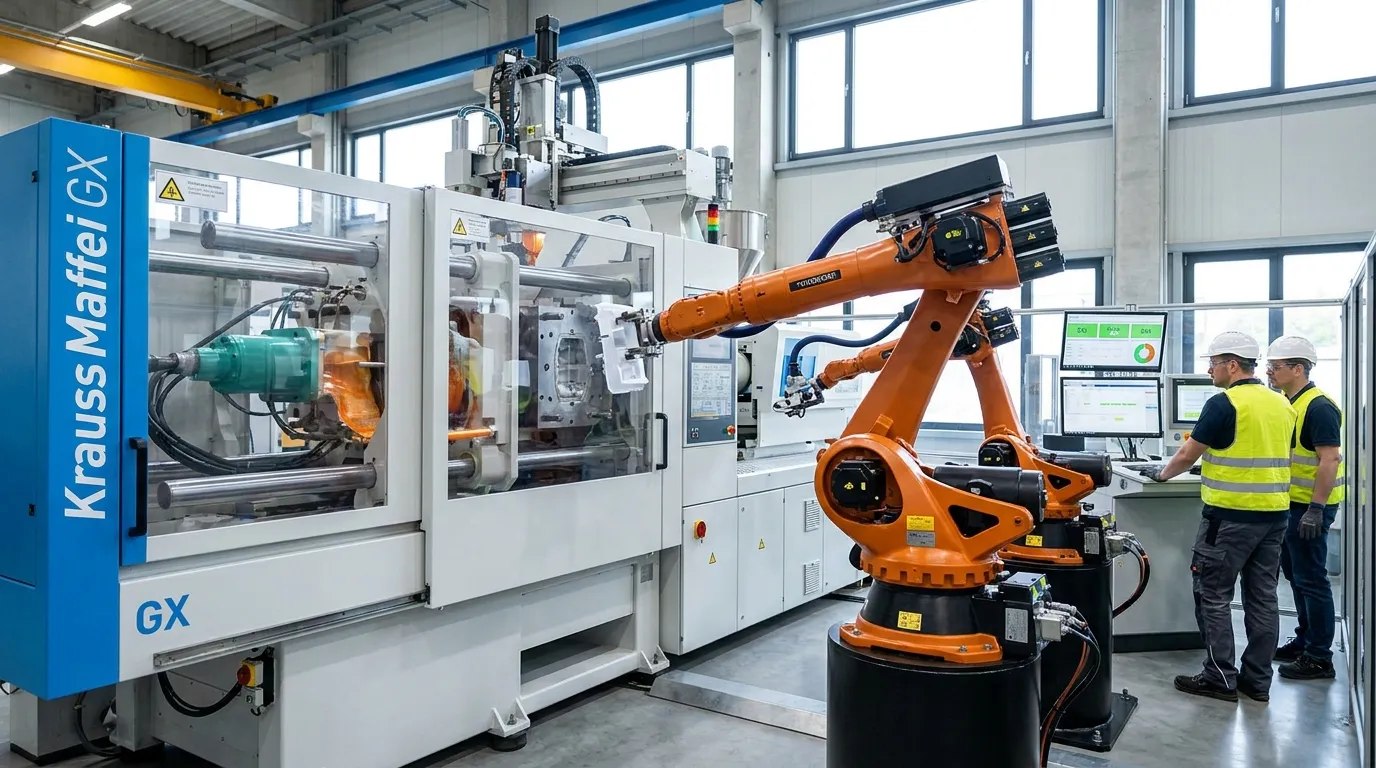
Plastic injection molding service is used to manufacture custom plastic parts from early prototypes to full-scale production. It turns a designed part into a physical product using a reusable mold, allowing consistent mass production once the tool is created.
This service is mainly used when a product needs repeatable accuracy and scalable manufacturing. It is common in consumer products, 自動車部品, 電子機器ハウジング, and medical devices where identical parts must be produced in large quantities.
実際の運用, it sits between product design and mass production. You provide a CAD design, and the provider builds a mold that can produce thousands or even millions of identical parts. Many providers also support early-stage prototypes or small batches using simplified tooling options.
How does the plastic injection molding process work from design to production?
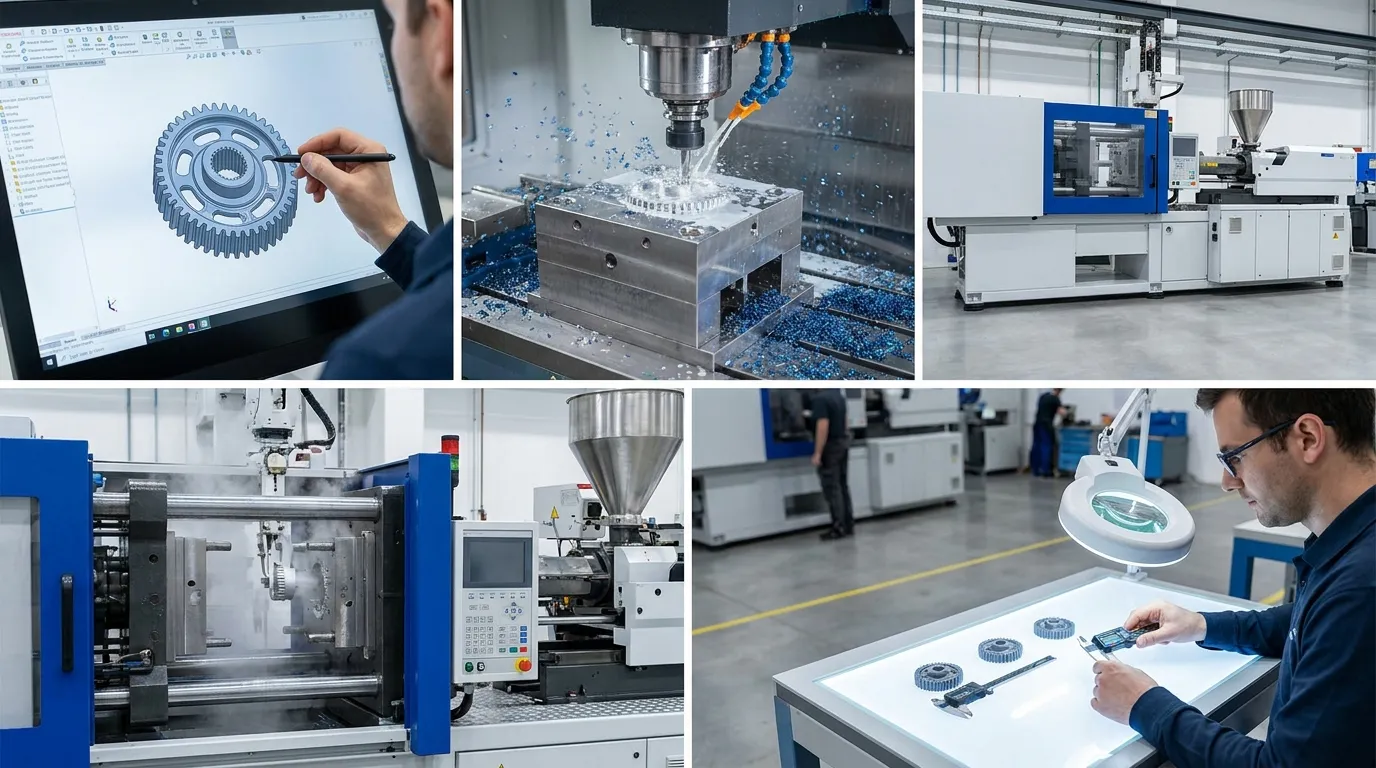
The plastic injection molding process converts a digital design into a physical mold, then repeatedly produces identical parts by injecting molten plastic into it. The cycle includes tooling, injection, 冷却, および射出, repeated for mass production.
Answer capsule: The process starts with mold design and tooling, followed by melting plastic resin and injecting it into the mold cavity. After cooling and solidification, the part is ejected and finished. This cycle repeats for mass production with high repeatability.
基本的なプロセスステップ
- 金型設計: CADファイルと製品要件に基づいています
- Tooling manufacturing: 鋼またはアルミニウムの金型製作
- 注入相: 加熱されたプラスチックが型に注入されます
- Cooling phase: 材料は最終的な形に固まる
- Ejection and finishing: 部品を取り外して検査します
Once the mold is completed, production becomes fast and highly repeatable. Each cycle can take seconds or minutes depending on part complexity and size. The upfront tooling time is longer, but unit production becomes efficient once the system is running.
In advanced cases, controlling material behavior under pressure and heat is important for precision parts and stable output quality.
What types of plastic injection molding services can you choose from?
You can choose from prototype molding, ブリッジ金型, and full production molding depending on your product stage. Each option balances cost, 速度, and volume differently.
Answer capsule: Plastic injection molding services are usually divided into three types: prototype, ブリッジ金型, and production molding. Prototype is for testing, bridge tooling supports early small batches, and production molding is used for large-scale manufacturing where cost per part becomes lowest.
| サービスの種類 | ベスト | 工具コスト | 速度 | 音量 |
|---|---|---|---|---|
| 試作成形 | 初期設計試験 | 低〜中 | ほとんど | 低め |
| ブリッジ金型 | 市場試験 | メディア | メディア | メディア |
| 生産成形 | 大量生産 | 前払いは高い | Slower start, fast output | ハイ |
Prototype molding is useful when your design is still evolving. Bridge tooling is often used when you are preparing for market launch but not ready for full investment. Production molding is the final stage when demand is stable and scaling is required.
How much does injection molding cost and what affects pricing?
Injection molding cost is mainly driven by tooling complexity, 素材の選択, 生産量. The mold is the biggest upfront expense, while per-part cost drops significantly at higher volumes.
Answer capsule: Injection molding cost is dominated by tooling design and complexity. After the mold is built, unit costs become low at scale. Simple parts with common materials are cheaper, while tight tolerances or complex geometry significantly increase tooling and production cost.
主なコスト要因
- 工具コスト: 型作りのための一度きりの投資
- Material type: エンジニアリングプラスチックは標準樹脂よりもコストがかかります
- Design complexity: 機能が増えるほど加工作業が増加します
- 許容差要件: 厳密な精度はコストを増加させます
- 生産台数: 大量生産量が増えるほど、単位あたりのコストが下がります
Tooling is often underestimated because buyers focus only on unit pricing. In reality, tooling determines whether the project is economically viable over time. If production volume is uncertain, bridge tooling can reduce early financial risk.
How to choose the right plastic injection molding service provider?
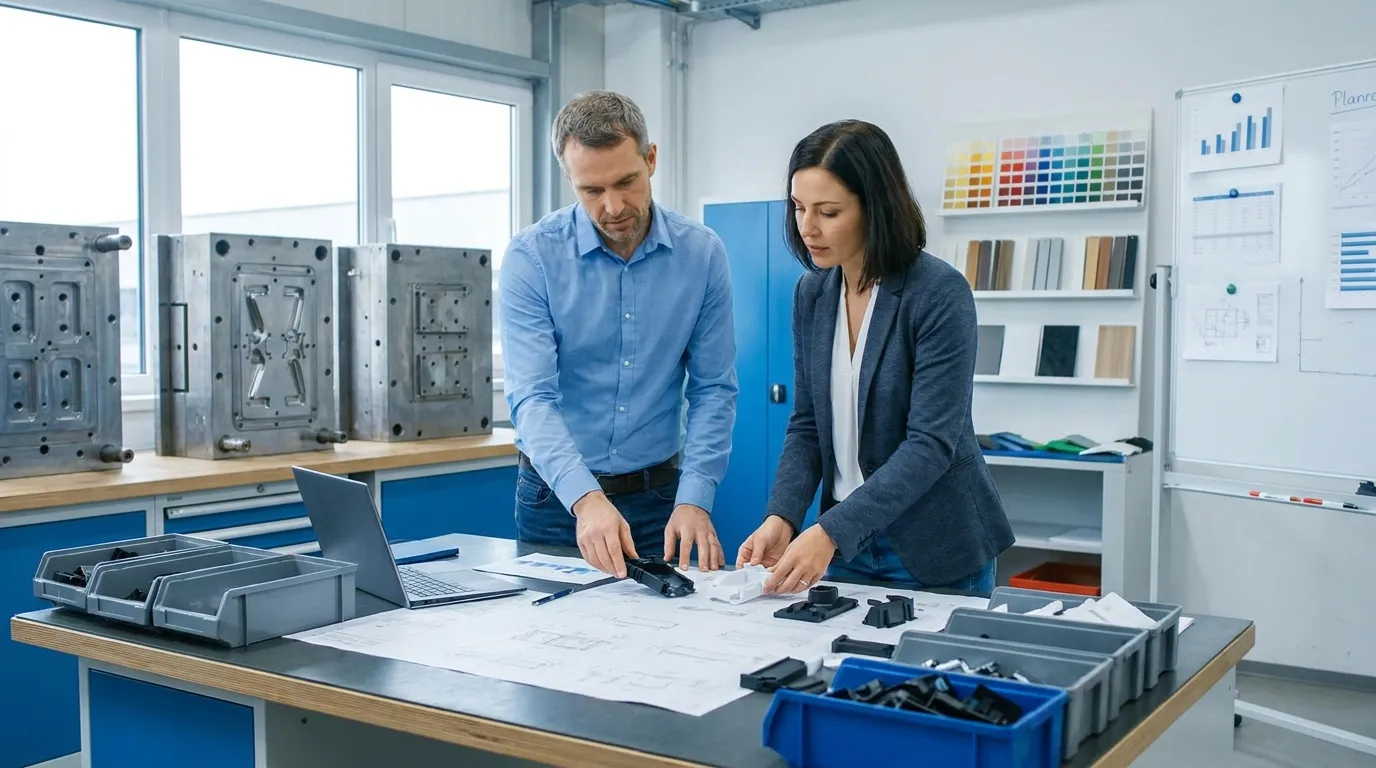
The right provider should have strong tooling capability, reliable quality control, and the ability to scale from prototype to mass production. The goal is not just manufacturing, but long-term production stability.
Answer capsule: The right injection molding provider should offer reliable tooling quality, consistent production control, and flexible scaling. You should also check engineering support, communication speed, and whether they can move your project from prototype to full production without rework.
- Do they support both prototype and production stages?
- Can they provide design for manufacturability (DFM) feedback?
- What quality control systems are in place?
- Can they scale production as demand grows?
- How transparent is their quotation process?
A strong supplier acts as a technical partner, not just a manufacturer. If a provider only accepts drawings without feedback, the risk of redesign and failure increases significantly. Quality systems and experience matter more than lowest price, especially for functional parts.
What mistakes should you avoid when ordering custom injection molded parts?
Most costly mistakes happen before production begins, usually in design and planning. Poor preparation leads to delays, redesigns, or failed tooling.
Answer capsule: Common mistakes include skipping design for manufacturability checks, choosing the wrong material, and ignoring tooling lifecycle cost. These issues often lead to delays, redesign expenses, or parts that do not perform as expected in real-world use.
- Poor manufacturability design (DFM issues)
- 実際の条件に対する誤った材料選択
- プロトタイプ金型を最終生産金型として使う
- 型の修正要件を無視する
- スケーリングの必要性を過小評価すること
One of the most expensive mistakes is committing to full production tooling before validating the design. Even small changes after tooling is built can significantly increase cost and delay the entire project.
When should you use injection molding instead of other manufacturing methods?
Injection molding is best when you need stable, high-volume production with consistent design requirements. It becomes cost-effective only when production scale justifies tooling investment.
Answer capsule: Injection molding is ideal for medium to high-volume production where consistency and unit cost matter. For low volumes or early testing, CNC machining or 3D printing is often more flexible and cost-efficient before committing to tooling.
Compared to other methods, 3D printing is better for early prototypes, CNC machining is better for low-volume precision parts, and injection molding is best when scaling production. The key factor is design stability and demand certainty.
If your design is still changing, molding is usually too early. If your product is stable and demand is predictable, injection molding becomes the most efficient manufacturing option.
総評
Choosing a plastic injection molding service is not just about production capability. It is about matching your product stage with the right manufacturing approach, from prototype validation to full-scale production. Each stage has its own tooling strategy, cost structure, and risk level.
If your design is still evolving, start small and validate first. If your product is stable and demand is clear, investing in proper tooling reduces long-term cost and improves consistency. The right decision comes down to timing, planning, and understanding how your product will scale over time.
よくある質問
What is plastic injection molding service?
It is a manufacturing process where molten plastic is injected into a mold to produce custom parts. It is widely used for creating precise and repeatable components for industries like automotive, 電子機器, and consumer goods.
Is injection molding suitable for small batches?
はい, but cost efficiency depends on volume. Small batches are possible using prototype or bridge tooling, but per-part costs are higher. It becomes more economical as production scale increases.
What materials are used in injection molding?
Common materials include ABS, ポリプロピレン, ポリカーボネート, and nylon. Each material has different strength, 柔軟性, 耐熱性, so selection depends on the product’s functional requirements.
How long does injection molding take?
Each production cycle takes seconds to minutes depending on part complexity. しかし, tooling development can take several weeks before mass production begins.
What industries use injection molding services?
It is widely used in automotive, 医療, 電子機器, パッケージング, and consumer goods industries. These sectors rely on it for producing consistent, high-quality plastic components at scale.
What is the biggest cost in injection molding?
The mold tooling is the largest upfront cost. 金型が完成した後, per-part production becomes significantly cheaper, especially at higher volumes.
Can injection molding produce complex shapes?
はい, it can produce highly complex and precise geometries. しかし, designs must be optimized for moldability to avoid defects and unnecessary cost increases.



サンシャインより書かれました
サンシャインで, 私たちは精密金型部品の専門製造およびサプライヤーです, プレスおよび射出成形用途向けの幅広い製品を提供しています. 私たちの主な焦点はパンチダイスです, イジェクターピンとスリーブ, ガイドポストとブッシング. 高度なCNC加工技術で, 厳格な品質管理, そして強力な生産能力, 私たちは信頼性を保証しています, 高精度部品, また、迅速かつ効率的なグローバル供給のための在庫の標準部品も併用しています.
ニュース
サービスを受けましょう
あらゆる予算に合った高品質な部品と、親切なスタッフが訓練されていて、訪問を有益で手間なく充実させてくれます.
