



Injection Mold Process: Step-by-Step Guide from Design to Production
Injection mold process describes the complete workflow used to design, manufacture, test, and mass-produce plastic parts using injection molding tools. The process includes DFM review, mold design, 機械加工, カビ試験, サンプリング, quality validation, and production ramp-up. Stable production depends on accurate tooling, controlled process parameters, and early defect prevention before full manufacturing begins.
Injection molding projects rarely fail because of one major issue. Most problems start with small design mistakes, rushed tooling decisions, or unstable sampling results. Understanding the full process helps buyers avoid delays, reduce tooling revisions, and improve production consistency. This guide explains each stage clearly, from early DFM review to final production approval.
What Is the Injection Mold Process?
Injection mold process refers to the complete workflow of designing, building, testing, and using a mold to mass-produce plastic parts. The process includes DFM review, 金型製造, サンプリング, quality approval, and stable production ramp-up.
The process starts long before molten plastic enters a mold cavity. Manufacturers first review the product design, evaluate moldability, and identify production risks. This early planning stage has a major effect on tooling quality, cycle stability, and long-term production cost.
Once the design is approved, the mold moves through machining, fitting, polishing, and assembly. After tooling is complete, manufacturers perform mold trials and sample inspections before releasing the tool for production. それによると IQSディレクトリ射出成形の概要, injection molding remains one of the most common manufacturing methods for high-volume plastic parts.
If you're new to tooling fundamentals, これだ plastic injection mold guide gives broader background on mold structures and manufacturing systems. また、レビューも可能です プラスチック型設計の基本 to understand how product geometry affects tooling decisions.
How Does the Injection Mold Process Work Step by Step?
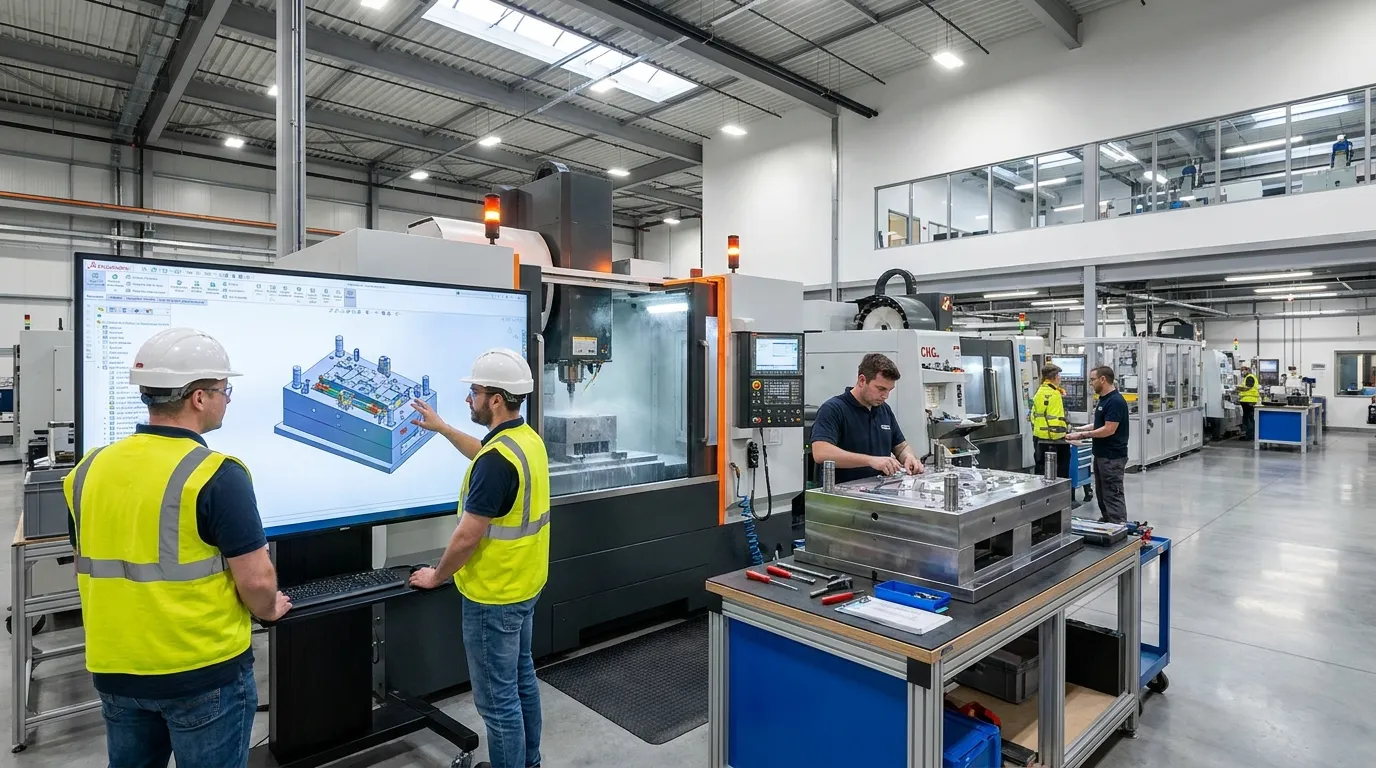
The injection mold process starts with design review and DFM analysis, followed by mold design, 機械加工, 集会, サンプリング, testing, and final production approval. Stable mass production begins only after part quality and cycle consistency are confirmed.
Most injection molding projects follow the same core sequence. The exact timeline changes based on complexity, tooling size, and production requirements, but the overall workflow stays similar across industries.
| 舞台 | 主な目的 | 共通出力 |
|---|---|---|
| DFMレビュー | モールディングリスクの特定 | 設計の推奨事項 |
| 金型設計 | 工具レイアウトを作成する | 3D型ファイル |
| 工具製造 | 型を作る | 加工金型部品 |
| カビ試験 | テスト型の性能 | T1サンプル部品 |
| 検証 | 品質の一貫性を確認する | 承認されたサンプル |
| 生産段階 | 製造の安定化 | フル生産量 |
設計審査とDFM(デザイン審査)
The first stage focuses on manufacturability. DFM, or Design for Manufacturing, checks whether the part can be molded consistently without excessive defects or tooling risk. Engineers review wall thickness, draft angles, undercuts, gate locations, and material flow before steel cutting begins.
A consumer electronics housing is a common example. If the housing wall thickness changes late in the project, the mold may require additional machining after sampling. That adds cost and delays production approval. Early DFM prevents many of these problems before tooling starts.
For a deeper breakdown of design optimization, review this guide on 射出成形 DFM プロセス.
金型製造
After DFM approval, mold manufacturing begins. Toolmakers machine steel blocks using CNC equipment and EDM processes to create cavities, cores, and detailed part geometry. 冷却チャネル, ejector systems, and alignment features are added during this stage.
Fast tooling is not always the best option. Rushed DFM review often creates larger delays later when mold corrections become necessary. A slightly longer design review usually saves time during sampling and production.
サンプリングと生産承認
Once tooling is assembled, manufacturers perform mold trials to evaluate part quality and machine stability. The first sample run is often called T1 sampling. Engineers inspect dimensions, cosmetic quality, 収縮, and molding consistency.
Mass production does not start immediately after T1 approval. Most projects require process adjustments and repeat testing before production becomes stable. This stage determines whether the mold can reliably support long-term manufacturing.
Why Is DFM Review Important Before Mold Manufacturing?
DFM review helps manufacturers identify molding risks before tooling begins. Early analysis reduces defects, prevents expensive steel modifications, and improves production consistency after sampling starts.
DFM review is one of the most important stages in the injection molding workflow. Once steel cutting starts, design changes become expensive and time-consuming. A simple geometry issue can require additional machining, insert replacement, or another round of mold trials.
次の通りです Protolabsの成形可能性ガイド, wall thickness consistency, draft angle design, and material flow all affect molding success. These factors also influence cooling time, part warpage, and cycle stability.
- 応力点を生み出す鋭い角
- 部品排出のためのドラフト角が不十分
- 壁の厚さが均一で沈み跡ができる原因
- ゲート配置不良が材料流に影響を与える
- 精密な公差が工具の複雑さを増す
A draft-angle correction is a good real-world example. A part may look acceptable in CAD, but without proper draft, the component sticks during ejection. Fixing that problem before machining prevents costly steel modifications later.
Low mold pricing can look attractive initially, but poor sampling stability usually increases long-term production cost and quality risk. Experienced suppliers spend more time reviewing manufacturability because stable production matters more than fast quoting.
デザイン最適化についてさらに学べますし、 型設計要件 before tooling approval.
What Happens During Injection Mold Manufacturing?
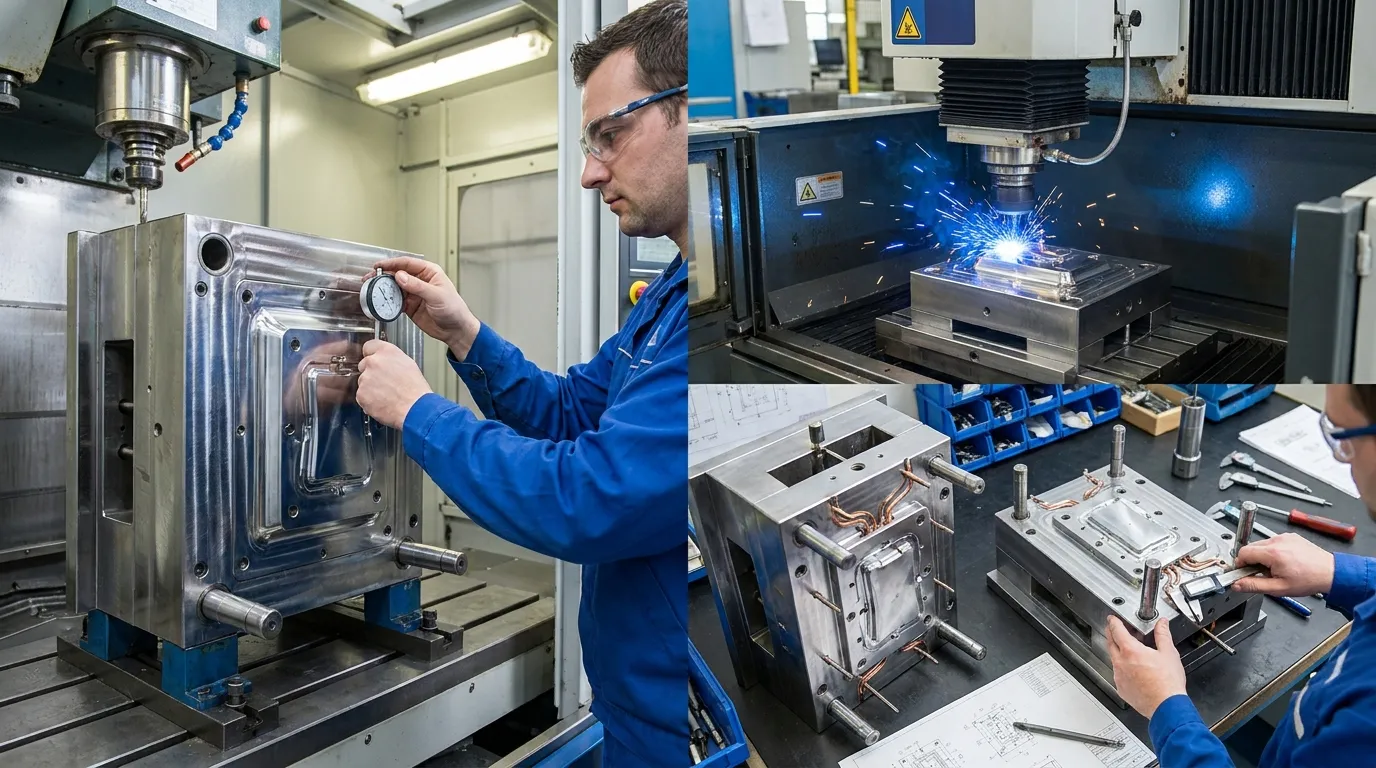
Injection mold manufacturing combines CNC machining, EDM処理, polishing, fitting, and assembly to produce a mold capable of repeatable production. Accuracy during this stage directly affects part quality, サイクルタイム, and mold lifespan.
Tool manufacturing transforms engineering files into a functional production mold. Most molds are built from hardened steel or aluminum, depending on expected production volume and part complexity.
機械加工とEDM
CNC machining removes large sections of steel and creates the primary mold structure. EDM, or Electrical Discharge Machining, handles finer details and sharp internal features that traditional machining cannot easily produce.
Complex automotive trim components often require both machining methods. Tight cosmetic surfaces, snap-fit details, and textured areas usually need additional EDM processing before polishing begins.
| 製造段階 | 目的 |
|---|---|
| CNC加工 | 型の構造を作る |
| EDM処理 | 詳細な幾何学を生成します |
| グラインド | 精密な表面の改善 |
| 研磨 | 表面仕上げの改善 |
| フィッティング | 金型部品のアライメント |
| 集会 | 最終型システムの構築 |
型の取り付けと研磨
After machining, technicians fit all mold components together and check alignment accuracy. Cooling systems, イジェクターピン, sliders, and guide components are installed during assembly. Surface polishing then improves cosmetic appearance and material flow.
A medical device enclosure is a good example. During sampling, cosmetic defects may appear near visible surfaces. Additional polishing is often required before final approval. 次の通りです 型の研磨プロセスに関する研究, surface finishing has a direct impact on molded part quality.
Manufacturers also verify mold movement and sealing during this stage. Poor alignment can cause flash defects, dimensional variation, or premature tool wear during production.
For additional tooling details, これだ 射出成形型工具ガイド explains how mold systems are structured.
What Happens During Mold Trial and Sampling?
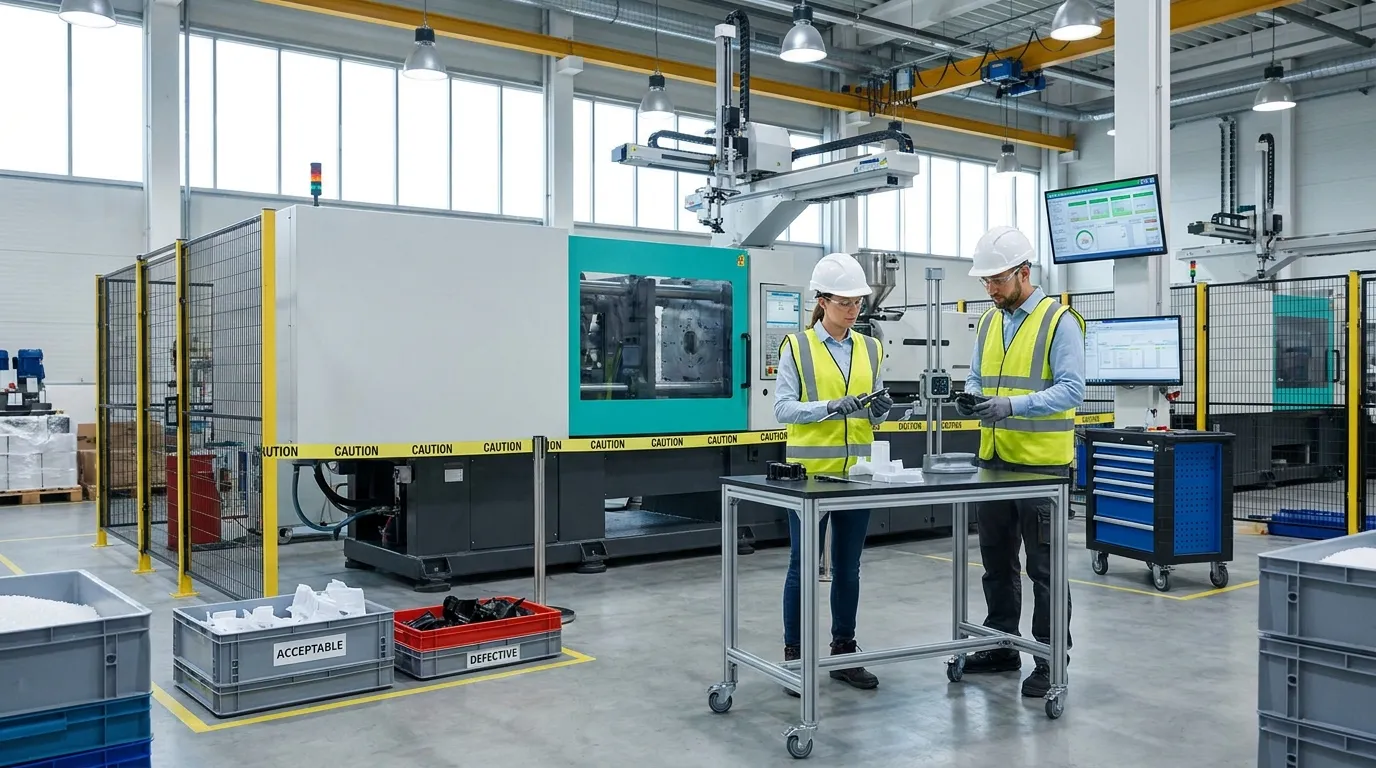
Mold trial and sampling verify whether the tool can consistently produce acceptable parts. Manufacturers evaluate dimensions, 欠陥, 収縮, and cycle stability before approving the mold for production.
Sampling is the point where theoretical design becomes real production output. The first mold trial checks whether the mold performs correctly under production conditions. Engineers monitor filling balance, cooling behavior, dimensional accuracy, and cosmetic quality.
T1 samples often reveal issues that were not visible during design review. Common problems include warpage, 陥没痕, ショートショット, フラッシュ, or uneven shrinkage. Manufacturers then adjust process settings or modify tooling before running another trial.
サンプリング中に見られる一般的な欠陥
| 欠陥 | 典型的な原因 | 共通の修正 |
|---|---|---|
| 陥没痕 | 厚い壁断面 | 壁の設計を調整する |
| フラッシュ | カビの密閉不良 | フィッティングの改善 |
| ワーページ | 不均一な冷却 | 冷却レイアウトの変更 |
| ショートショット | 物質の流れが悪い | ゲートの位置を調整する |
| 焼け跡 | 閉じ込められた空気 | 換気の改善 |
A production ramp-up scenario shows why this stage matters. One manufacturer completed tooling on schedule, but unstable cycle times caused inconsistent dimensions during sampling. The project needed additional process tuning before production approval could move forward.
Many buyers focus too heavily on mold completion dates, but production stability after sampling is what actually determines project success. A mold that ships quickly but fails during validation usually creates larger delays later.
Manufacturers also use this stage to verify customer specifications and inspection requirements. これ 射出成形の検証 resource explains how design decisions influence final part quality.
How Does Mass Production Start After Sampling?
Mass production starts after sampling results are approved and process parameters become stable. Manufacturers monitor cycle time, defect rates, and dimensional consistency before scaling to full production volume.
Production ramp-up focuses on consistency. Engineers lock machine parameters, validate repeatability, and monitor output quality before increasing manufacturing volume. This stage confirms that the process works reliably outside controlled trial conditions.
次の通りです Kaysunのプロセス開発ガイド, stable processing conditions help reduce variability and improve long-term manufacturing performance. Small changes in temperature, 圧力, or cooling time can significantly affect part quality.
- 安定したサイクル時間
- 一貫した寸法
- 制御欠陥率
- 材料性能検証
- 繰り返し可能な機械設定
An unstable process can delay mass production even when tooling is technically complete. One automotive project passed dimensional inspection during T1 trials, but cycle instability created inconsistent shrinkage during extended production runs. Additional process tuning delayed launch approval.
ここが 生産準備型設計 becomes important. Strong DFM planning makes production stabilization much easier after sampling.
What Delays Commonly Affect Injection Mold Projects?
Injection mold projects are commonly delayed by design revisions, tooling corrections, material shortages, and international shipping issues. Delays often happen after steel cutting because modifications require additional machining and validation.
Most mold projects do not fail because of one major event. Delays usually build from multiple smaller issues across design, 金型, サンプリング, and logistics.
| 遅延原因 | 起こるとき | 影響 | 予防方法 |
|---|---|---|---|
| 後期の設計改訂 | 金型の前後 | 追加加工 | 早期にDFMレビューを完了させてください |
| サンプリング欠陥 | T1試験中の | 再テスト | 工具の検証を慎重に行う |
| 資材不足 | 制作準備 | 遅延スケジューリング | サプライチェーンの早期確認 |
| 税関の遅延 | 国際航行 | 遅延配達 | 早めに書類を準備しましょう |
| サイクル不安定性 | 生産段階 | 承認の遅れ | プロセス設定の最適化 |
International logistics can also affect mold timelines. An automotive trim component shipped overseas may face inspection delays if customs documentation is incomplete. Information from CBPです そして Trade.gov shows that import processing and trade documentation can influence shipment timing.
Buyers should also understand that mold modifications after steel cutting are rarely quick fixes. Even small changes can require additional machining, polishing, fitting, and repeat sampling before approval.
How Can Buyers Reduce Risk Before Starting an Injection Mold Project?
Reducing injection molding risk starts with preparation. Buyers who clarify specifications early usually avoid expensive tooling changes later. Good communication during DFM and sampling stages also improves project stability.
A strong supplier should explain process risks clearly before production starts. If the supplier avoids discussing DFM limitations, tolerance concerns, or sampling expectations, that is usually a warning sign.
- 鋼材切断前にDFMレビューを確認しましょう
- 壁の厚さとドラフト角度を確認しましょう
- 化粧品の品質要件を早めに定義しましょう
- サンプル承認の期待を明確にする
- 改訂のための現実的なリードタイムを計画しましょう
- 生産前に材料の入手可能性を確認しましょう
- 検査および検証基準の確認
A practical example is a consumer electronics enclosure with cosmetic surface requirements. If the customer approves tooling before discussing polishing standards, additional rework may appear during T1 sampling. That creates extra delays and additional cost.
これ 射出成形計画チェックリスト can help buyers organize design and production expectations before tooling approval.
次に何をすべきか
The injection mold process works best when design review, 金型, サンプリング, and production planning are treated as one connected workflow. Problems caught early are usually manageable. Problems discovered after tooling or during unstable production often become expensive and time-consuming.
Before starting a new project, review manufacturability carefully and confirm how your supplier handles DFM, カビ試験, and production validation. Stable production matters more than fast tooling completion. A supplier with strong process control can reduce defects, improve delivery consistency, and help avoid unnecessary mold revisions later in the project lifecycle.
よくある質問
What is the injection mold process?
The injection mold process is the workflow used to design, manufacture, test, and use molds for producing plastic parts. It includes DFM review, 金型, カビ試験, quality validation, and mass production preparation.
How long does injection mold manufacturing take?
Injection mold manufacturing timelines vary based on complexity, revisions, and sampling requirements. Tooling and production ramp-up can extend project timelines across several weeks or months depending on mold size and validation needs.
Why is DFM important in injection molding?
DFM helps identify production risks before tooling starts. Early review reduces defects, minimizes costly tool modifications, and improves long-term production stability after sampling begins.
What happens during mold sampling?
Mold sampling checks whether the mold can consistently produce acceptable parts. Manufacturers inspect dimensions, 欠陥, 収縮, and cycle stability before approving the tool for production.
What causes injection molding delays?
Injection molding delays often come from design revisions, tooling corrections, logistics issues, or material shortages. Changes after steel cutting usually increase lead times because additional machining and validation are required.
How do manufacturers reduce molding defects?
Manufacturers reduce molding defects through DFM review, controlled process settings, sampling adjustments, and consistent quality monitoring. Stable machine parameters are important before scaling to full production volume.
共有:



サンシャインより書かれました
サンシャインで, 私たちは精密金型部品の専門製造およびサプライヤーです, プレスおよび射出成形用途向けの幅広い製品を提供しています. 私たちの主な焦点はパンチダイスです, イジェクターピンとスリーブ, ガイドポストとブッシング. 高度なCNC加工技術で, 厳格な品質管理, そして強力な生産能力, 私たちは信頼性を保証しています, 高精度部品, また、迅速かつ効率的なグローバル供給のための在庫の標準部品も併用しています.
ニュース
サービスを受けましょう
あらゆる予算に合った高品質な部品と、親切なスタッフが訓練されていて、訪問を有益で手間なく充実させてくれます.
