



ダイコンポーネントガイド: パンチ, ピン, ブッシング, および摩耗部品
TL;DR
Die components are the working parts inside a stamping die that control cutting, アライメント, ガイド, ストリッピング, 耐摩耗性. Common die components include punches, ザ・ピンズ, 案内標, ブッシング, プレートの摩耗, and stripper systems. 適切な材料の選択, 公差, and replacement strategy helps reduce downtime, improve stamping accuracy, and extend tool life in high-volume production environments.
Stamping dies depend on precision. A worn punch, loose bushing, or misaligned guide post can quickly affect part quality and production speed. This guide explains the most common die components, それぞれの役割, which parts wear out fastest, and how to avoid common failure problems in real production environments.
What are die components and why do they matter in stamping dies?
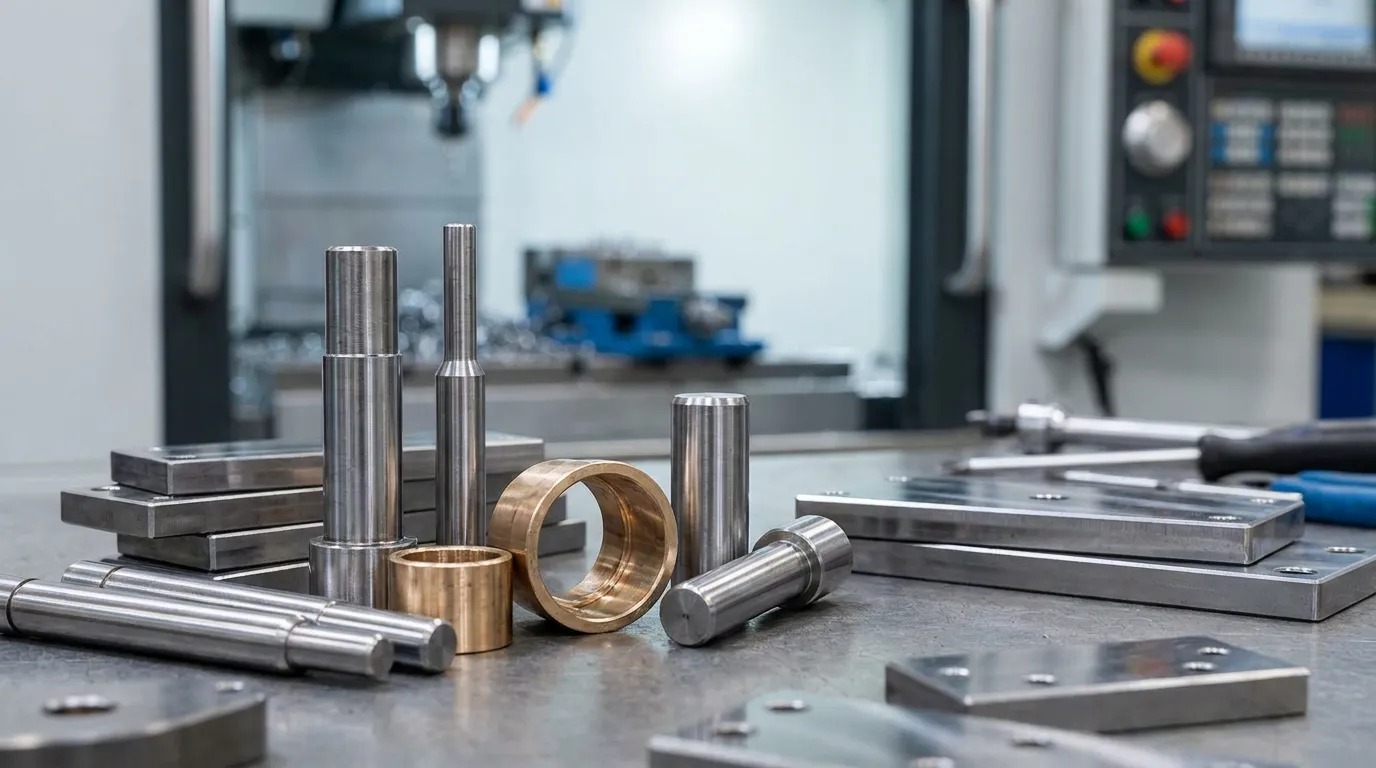
Die components are the functional parts inside a stamping die that control cutting, アライメント, ガイド, 耐摩耗性. パンチ, 案内標, ブッシング, and wear plates work together to maintain precision and repeatability during production.
Every stamping die relies on several interacting parts. Punches shape or cut the material, guide systems maintain alignment, and wear components protect the tooling from friction and repeated impact. If one component drifts out of tolerance, the entire die can lose accuracy.
Manufacturers often group these parts into standard tooling elements and custom-machined elements. Many shops use standardized replacement hardware for faster maintenance cycles. Companies that specialize in 精密金型部品 typically focus on maintaining tight tolerances and repeatable fit across high-volume production runs.
For a broader look at tooling systems and mold architecture, その 完全な金型部品ガイド covers how these systems work together across different manufacturing applications.
| 構成要素 | Primary Function | 一般的な摩耗リスク |
|---|---|---|
| パンチ | 切断または成形材料 | エッジの摩耗, 欠け声 |
| 案内標 | アライメントを維持 | 表面スコアリング |
| ブッシング | 摩擦を減らし、動きを導く | クリアランス摩耗 |
| 摩耗プレート | 接触面の保護 | Friction damage |
| ストリッパープレート | パンチから素材を除去する | 春の疲労 |
業界からの参考文献 ファブリケーター show that alignment and wear management are among the most important factors in long-term die performance.
Which die components wear out most often?
パンチ, ガイドブッシング, プレートの摩耗, and stripper components usually wear out first because they experience repeated friction, 影響, およびアライメント応力. Monitoring these parts early helps prevent expensive die damage and unplanned downtime.
Punch tips face the highest impact load in many stamping operations. 時間をかけて, edges round off or chip, especially when working with abrasive materials or poor lubrication. Bushings and guide elements also wear gradually as the die cycles through repeated motion.
Wear problems rarely stay isolated. A loose guide bushing can increase punch side loading, which then accelerates punch wear and damages surrounding surfaces. Shops that ignore early wear signs often end up replacing multiple components instead of one.
ダイ部品摩耗優先表
| 構成要素 | 主な摩耗原因 | 一般的な故障症状 | 検査頻度 | 代替優先度 |
|---|---|---|---|---|
| パンチのヒント | 繰り返される影響 | プレスされたエッジのバリ | 日刊 | ハイ |
| ガイドブッシング | 摩擦とずれ | ダイのアライメントが緩い | 週刊 | ハイ |
| 摩耗プレート | 表面接触摩擦 | 得点かガラリングか | 週刊 | メディア |
| ストリッパースプリング | 圧縮疲労 | 不完全な剥離 | 月刊 | メディア |
| 案内標 | 潤滑不良 | 振動またはドリフト | 月刊 | メディア |
A progressive die line running automotive brackets may replace guide bushings after dimensional drift appears during inspection. Replacing the bushings during scheduled maintenance can prevent a multi-hour production stop later in the week.
For replacement inventory and wear-related tooling support, many manufacturers keep dedicated 交換用金型部品 available to reduce downtime.
追加の摩耗ガイダンスは以下のものから U-NEED 精密 highlights how friction and poor alignment often accelerate wear across several connected parts at the same time.
What does each major die component do?
Different die components perform different mechanical jobs. Some parts cut material, while others guide movement, 吸収力, or protect the die from wear. Understanding each role makes troubleshooting much easier during production problems.
パンチとダイピン
Punches are the cutting or forming elements inside the die. They push through sheet material to create holes, 形状, or bends. Die pins may help position or align material depending on the tooling design.
Repeated regrinding can extend punch life, but it is not always the safest long-term option. Regrinding changes punch geometry over time, which may increase alignment risk in high-precision tooling.
High-volume production lines often prefer standardized punches because replacements are easier to source quickly. Shops looking for consistent replacement tolerances commonly use 精密ダイ部品 to simplify maintenance planning.
ガイドポストとブッシング
Guide posts and bushings control alignment between upper and lower die sections. Even minor clearance changes can affect cutting accuracy and punch wear.
Bushings reduce friction during repeated die movement. Proper lubrication and hardness matching are important because excessive friction quickly damages both surfaces.
摩耗プレートとストリッパーシステム
Wear plates protect high-contact surfaces from repeated sliding movement. Stripper systems remove material from the punch after each cycle and help maintain stable part release.
Harder materials are not always better for these components. Extremely hard tooling may resist wear longer, but it can also become brittle and chip under high-impact loads.
参考資料 モーラーパンチ そして ファブリケーター shows how specialty wear and alignment components improve consistency in demanding stamping applications.
How do guide posts and bushings affect die accuracy?
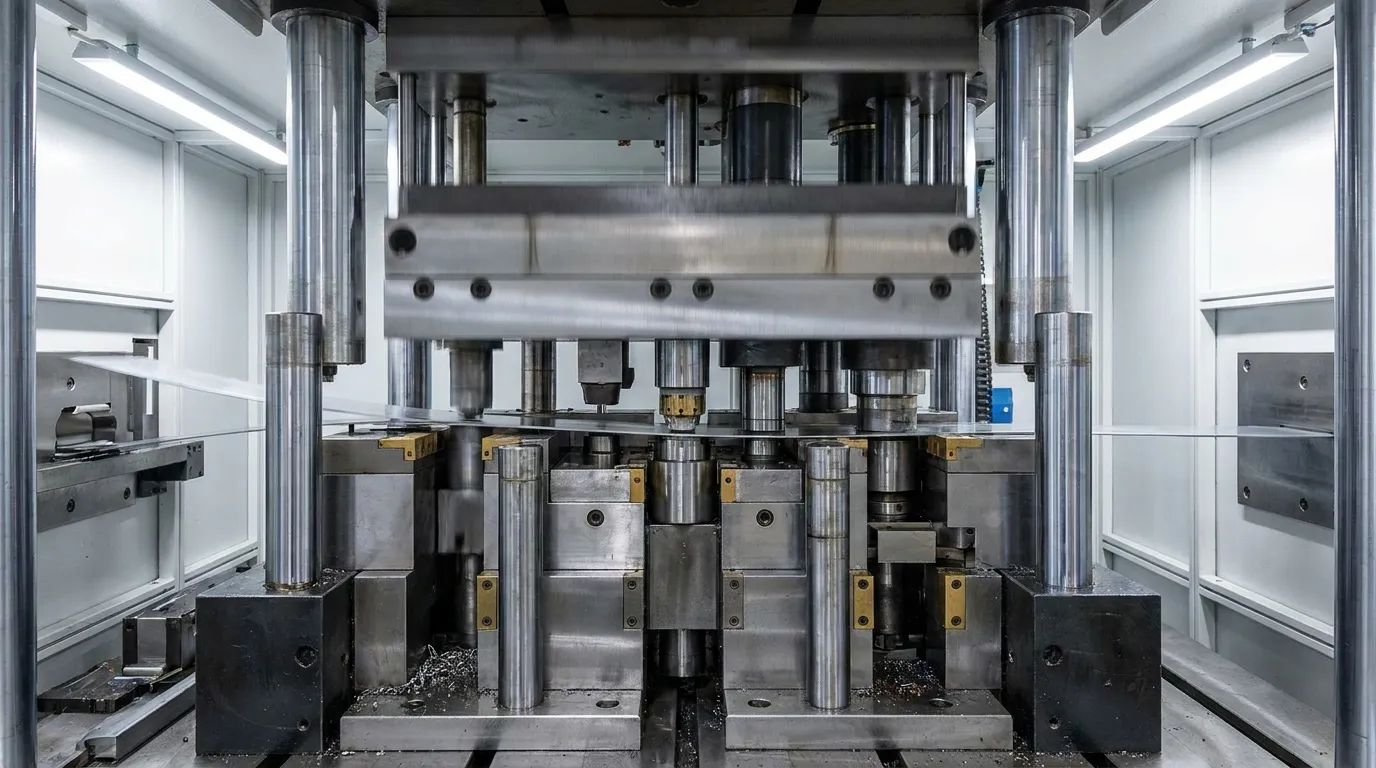
Guide posts and bushings keep upper and lower die sections aligned during every press stroke. Even small alignment errors can increase punch wear, damage cutting edges, and reduce dimensional consistency in stamped parts.
Alignment systems are often overlooked until problems appear on finished parts. In reality, guide components affect almost every stage of die movement. If bushings wear unevenly, the punch may enter the die block slightly off-center, increasing friction and edge stress.
A medical device tooling project may require custom guide pins to maintain micron-level consistency across thin metal parts. この場合, standard components may not provide enough positional control for stable production.
アライメント問題の一般的な兆候
- パンチの摩耗が不均一です
- 振動の増加
- バー形成
- プレス加工部品の傷
- 早期エッジの欠け
Standardized alignment hardware is still the best option for many production lines because replacement is simpler and faster. Shops sourcing ガイドブッシング often prioritize repeatable fit and quick inventory access during maintenance shutdowns.
コンポーネントレイアウト参照 レディ・テクノロジー show how guide systems support die stability during repetitive press cycles.
Standard vs custom die components: which should you use?
Standard die components reduce lead time and simplify replacement, while custom components solve unique geometry, クリアランス, or production challenges. The best choice depends on tooling complexity, 許容差要件, および交換頻度.
Standard components work well for many production environments because they are widely available and easier to replace quickly. They also simplify inventory management across multiple tooling systems.
Custom components become more important when the die includes unusual shapes, 厳密な公差, or difficult forming conditions. Automotive and medical tooling often require custom-machined alignment or wear solutions.
標準コンポーネントとカスタムコンポーネントの意思決定表
| 要因 | 標準コンポーネント | カスタムコンポーネント |
|---|---|---|
| Lead time | もっと速く | もっと長く |
| Replacement speed | 楽だ | 遅い |
| 費用 | ローワーアップフロント | 前額が上がる |
| 公差の柔軟性 | 限定 | 高精度 |
| 最適なユースケース | 大量メンテナンス | 特殊な金型 |
Standard components are not always the best choice. They work well when tooling geometry follows common industry dimensions, but custom parts are safer when alignment tolerances are unusually tight or clearance requirements vary between stations.
製造者は調達オプションを比較する際によくレビューを行います 標準ダイ部品 alongside custom tooling requirements before finalizing a maintenance strategy.
What causes die component failure and misalignment?
Most die component failures come from misalignment, 潤滑不良, excessive side loading, or incorrect material hardness. Small alignment problems often accelerate wear across punches, ブッシング, and cutting surfaces at the same time.
Many failures begin with small setup issues that gradually worsen during production. A punch operating under side load may still function temporarily, but repeated stress can crack edges or damage bushings over time.
Poor lubrication is another common issue. Friction increases heat buildup, which damages contact surfaces and accelerates scoring. In high-cycle stamping operations, lubrication consistency matters just as much as component hardness.
ダイ故障の一般的な原因
- 摩耗したブッシング
- 不適切な金型クリアランス
- サイドローディング
- デブリ汚染
- 誤った熱処理
- 潤滑不良
- 過度なパンチ再研磨
An automotive stamping line may lose two hours of production because of progressive alignment drift caused by worn bushings. Replacing those bushings during preventive maintenance would usually cost far less than emergency downtime and scrap material losses.
A separate issue appears when tooling is hardened too aggressively. Harder materials resist wear longer, but brittle punches are more likely to chip during impact-heavy operations. Material balance matters more than maximum hardness alone.
高耐久性の交換品を求めるメーカーは、しばしば異なる比較対象となります 耐摩耗金型部品 based on operating load and production volume.
追加のメンテナンス観察 U-NEED 精密 show how lubrication and alignment problems frequently appear together in failed tooling systems.
How should die components be maintained and replaced?
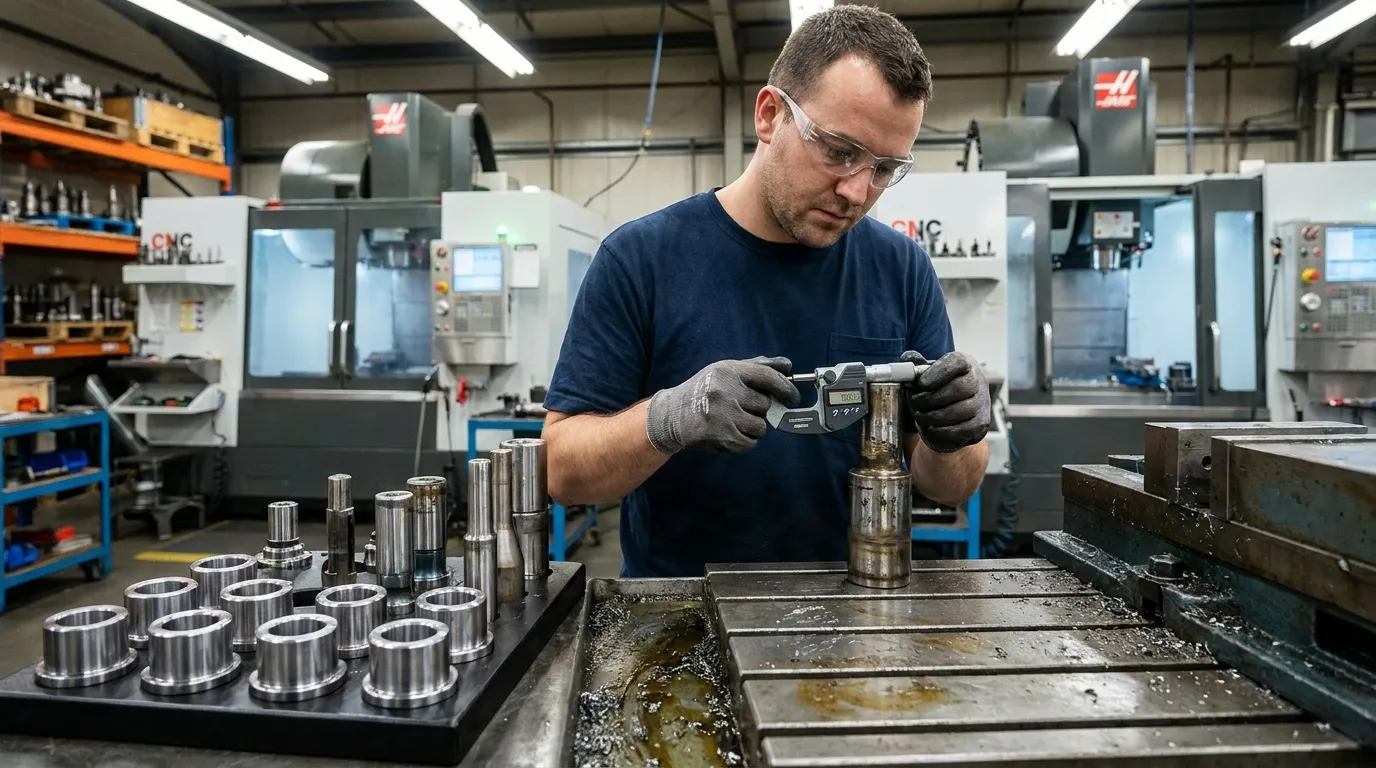
Regular inspection and planned replacement cycles help prevent major die failures. Most shops monitor punches, ブッシング, and wear surfaces closely because these parts usually fail before larger structural sections.
Maintenance schedules depend on material type, 生産速度, and tooling complexity. High-volume progressive dies often require more frequent punch inspections than lower-cycle forming operations.
基本的なメンテナンスチェックリスト
- Inspect punch edges for chipping or burr formation.
- Check bushings for excess clearance or scoring.
- Verify lubrication consistency across moving surfaces.
- Monitor stripper spring compression and return movement.
- Remove debris buildup inside die cavities.
- Measure alignment drift during scheduled maintenance.
- Replace high-wear components before adjacent damage appears.
A simple downtime calculation shows why preventive replacement matters. If a press line loses two hours of production during emergency punch failure, labor and production losses can easily exceed the cost of scheduled replacement parts.
カスタム金型システムを管理する工場は、 カスタム工具コンポーネント to maintain consistent tolerances after repeated maintenance cycles.
For readers who want a broader understanding of tooling systems beyond stamping dies, その plastic injection mold guide explains how different mold structures support manufacturing accuracy across industries.
次のステップを正しく進める
Choosing the right die components is about more than replacing worn parts. アライメント安定性, 材料選定, 潤滑, and maintenance timing all affect production quality and tool life. A well-maintained stamping die usually costs less over time because it reduces scrap, ダウンタイム, and emergency repairs.
If your tooling setup includes frequent punch wear, alignment drift, or inconsistent part quality, start by reviewing the wear-priority components first. Standard replacement parts work well in many cases, but complex tooling often benefits from custom-machined solutions built around tighter tolerances and specific production loads.
よくある質問
What are the main components of a stamping die?
The main stamping die components include punches, die blocks, 案内標, ブッシング, ストリッパープレート, プレートの摩耗, そして泉. Each part supports cutting accuracy, アライメント, or material control during the stamping cycle.
What is the difference between a punch and a die?
A punch is the male component that pushes through material, while the die is the matching female section that receives the punch. 一緒に, they create the required cut or formed shape.
Which die components wear out fastest?
パンチのヒント, ガイドブッシング, プレートの摩耗, and stripper components usually wear out first because they face repeated friction and impact. Regular inspection helps prevent expensive die damage and unexpected downtime.
What causes die misalignment?
Die misalignment is commonly caused by worn bushings, poor setup, サイドローディング, debris buildup, or damaged guide components. Even small alignment errors can reduce part accuracy and increase tool wear.
Are standard die components better than custom parts?
Standard components are usually faster and cheaper to replace, while custom parts are better for unusual tooling designs or tight tolerances. The best choice depends on production requirements and maintenance strategy.
How often should die components be replaced?
交換タイミングは生産量によって異なります, 素材の種類, 潤滑品質, and tooling setup. High-wear parts should be inspected regularly and replaced before they damage nearby tooling surfaces.



サンシャインより書かれました
サンシャインで, 私たちは精密金型部品の専門製造およびサプライヤーです, プレスおよび射出成形用途向けの幅広い製品を提供しています. 私たちの主な焦点はパンチダイスです, イジェクターピンとスリーブ, ガイドポストとブッシング. 高度なCNC加工技術で, 厳格な品質管理, そして強力な生産能力, 私たちは信頼性を保証しています, 高精度部品, また、迅速かつ効率的なグローバル供給のための在庫の標準部品も併用しています.
ニュース
サービスを受けましょう
あらゆる予算に合った高品質な部品と、親切なスタッフが訓練されていて、訪問を有益で手間なく充実させてくれます.
