



医療機器プラスチック射出成形: 成形部品の設計ヒント
Medical device plastic injection molding works best when part design decisions happen before tooling starts. Engineers should focus on wall thickness, ドラフト角, 滅菌適合性, 公差, and moldability early in development. Small geometry changes can prevent tooling revisions, validation delays, 製造上の欠陥, and unnecessary manufacturing costs later in the process.
Medical molded parts have far less room for design mistakes than consumer products. A feature that looks acceptable in CAD can still create warping, フラッシュ, sterilization failures, or tooling delays once production begins. This guide focuses on practical design decisions before mold manufacturing starts, so engineering teams can reduce risk and move into validation with fewer surprises.
What makes medical device plastic injection molding design different?

Medical device plastic injection molding requires stricter design control than standard consumer molding because geometry, material choice, 滅菌適合性, and validation requirements directly affect safety, compliance, and manufacturability.
Medical products must meet tighter quality expectations than most commercial plastic parts. A small dimensional issue can affect assembly, 不妊, fluid flow, または患者の安全. That changes how engineers approach geometry, 公差, and material selection from the beginning.
The regulatory side also affects design decisions. その FDA医療機器フレームワーク および以下の品質システム ISO 13485 increase the importance of process consistency and documentation. Molded parts need repeatable performance, not just successful prototypes.
Medical parts also face sterilization exposure that consumer products rarely encounter. Steam, radiation, or chemical sterilization can weaken plastics, distort geometry, or shorten product lifespan if the wrong resin is selected.
| 消費者用プラスチック部品 | 医療用成形部品 |
|---|---|
| 化粧品の品質重視 | 検証と安全性重視 |
| 中程度の許容範囲の期待 | 厳密な次元一貫性 |
| 書類要件の低減 | 厳格なプロセス文書化 |
| 限定的な滅菌曝露 | 繰り返しの滅菌曝露 |
| 設計変更の迅速化 | 制御された工学改訂 |
If your team still needs broader tooling knowledge, サンシャイン・プロの complete mold component guide explains the larger injection mold engineering process in more detail.
より広い範囲で見直すこともできます 医療機器成形プロセス before finalizing tooling decisions.
How do you know if a medical part is actually moldable?
A medical plastic part is considered moldable when its geometry supports consistent filling, 射出, 次元安定性, and validation without requiring excessive tooling complexity or repeated secondary operations.
Many medical parts fail during tooling because the original CAD model was designed around appearance or assembly first, then manufacturability second. A design can look clean on screen but still create sink marks, ショートショット, or difficult ejection once production begins.
The easiest way to evaluate moldability is to review geometry before tooling approval. Engineers should check wall transitions, アンダーカット, ドラフト角, ゲート配置, and cooling behavior early. Small adjustments during DFM review are far cheaper than modifying hardened tooling later.
工具の問題をよく生む特徴
Several features increase mold complexity quickly:
- サイドアクションを必要とする深いアンダーカット
- 鋭い内角
- 急激な壁厚遷移
- ドラフトのない平らな面
- 厚い壁に取り付けられた細いリブ
- ゲート位置を隠す外観の表面
A reusable surgical handle is a common example. The prototype may look correct during 3D printing, but once injection molding begins, missing draft angles can create ejection damage and surface drag marks. That often forces expensive tooling revisions after steel cutting has already started.
Complex undercuts and cosmetic geometry are not always the best choice for medical products. They may look acceptable in CAD, but they frequently increase tooling risk without improving device performance.
| 成形可能性チェック | なぜ重要なのか |
|---|---|
| 均一な壁厚 | 反りや沈み痕の軽減 |
| 適切な喫水角 | スムーズ排出を支える |
| 限定アンダーカット | 工具の複雑さを削減する |
| 安定型分断線 | 次元の再現性を向上させる |
| バリアフリーゲートの位置 | 詰め物の一貫性が改善されます |
For a broader overview of tooling structure, review these 射出成形の基本 before finalizing production tooling.
Which medical-grade plastics work best for molded parts?
The best plastic depends on the device’s sterilization method, durability requirements, 化学物質曝露, and regulatory needs. Polycarbonate, polypropylene, ポリエチレン, and PEEK are among the most common medical injection molding materials.
No single resin works for every medical application. Some plastics handle repeated sterilization well but cost more. Others reduce material cost but struggle with dimensional stability or long-term chemical exposure.
A disposable diagnostic housing, 例えば, may use polypropylene because it balances chemical resistance and cost. A reusable surgical component may need PEEK or polycarbonate to survive repeated sterilization cycles and mechanical stress.
A successful prototype does not automatically mean the design is production-ready. Some materials perform well during testing but lose strength or discolor after repeated sterilization exposure.
| 素材 | 最適な利用法 | Sterilization Compatibility | Main Limitation |
|---|---|---|---|
| Polypropylene (PP) | 使い捨てデバイス | Good | 剛性の低下 |
| Polycarbonate (PC) | 外科用ハウジング | Good | 応力割れのリスク |
| ポリエチレン (または) | チュービングおよび流体システム | 中程度 | 耐熱性の低下 |
| PEEK | 高性能デバイス | Excellent | コストの高さ |
| PVC | 柔軟な医療部品 | 中程度 | 規制上の制限 |
Material selection should also match manufacturing conditions. Clean room molding, 化学物質曝露, and long production runs all affect resin performance over time.
For more production context, Sunshine Pro’s guide to 医療用成形材料 explains how different medical plastics behave during manufacturing.
How do sterilization requirements change part design?
Sterilization requirements directly affect resin selection, 壁の厚さ, および長期次元安定性. A part that survives prototyping may still fail after repeated steam, radiation, or chemical sterilization cycles.
Sterilization affects more than material strength. It can change color stability, 表面仕上げ, 柔軟性, and dimensional accuracy over time. Engineers should evaluate sterilization early instead of treating it as a final production step.
Steam sterilization creates high heat exposure. Gamma radiation can weaken certain plastics. Chemical sterilization may create stress cracking in materials that already carry internal molding stress.
A disposable diagnostic housing offers a good example. One design used uneven wall thickness near a mounting feature. The part molded correctly during testing but warped after gamma sterilization because cooling behavior and shrinkage were inconsistent across the geometry.
| 滅菌方法 | デザイン上の懸念 | 推奨焦点 |
|---|---|---|
| 蒸気滅菌 | 熱歪み | 耐熱性材料 |
| ガンマ線 | 材料の脆性 | 放射線安定樹脂 |
| 化学的滅菌 | 応力クラッキング | 化学的適合性 |
| EtO滅菌 | 排気と残留物 | ジオメトリのアクセス性 |
Engineers should also avoid late-stage sterilization changes. Switching sterilization methods after tooling approval often creates expensive redesign work.
What wall thickness and draft angle rules reduce molding problems?
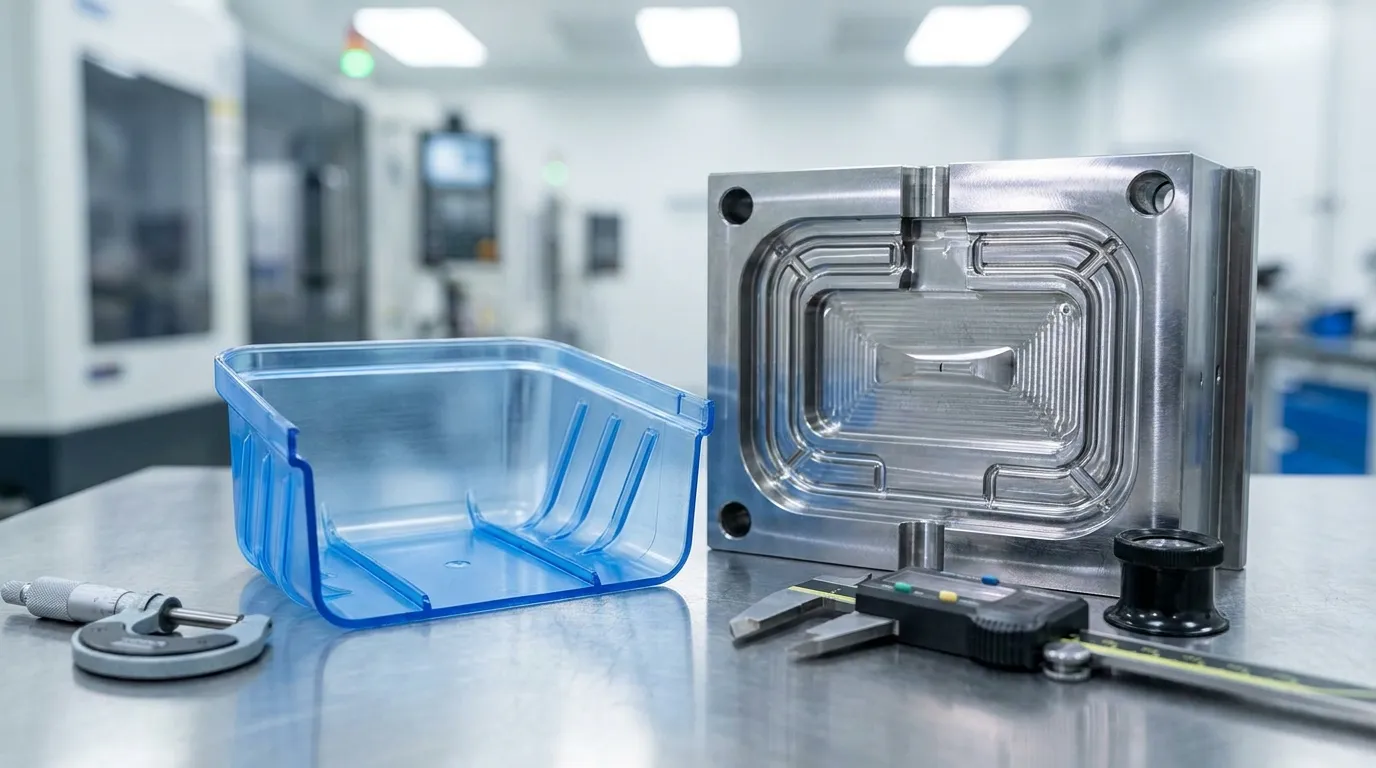
Consistent wall thickness and proper draft angles reduce warping, 陥没痕, フラッシュ, and ejection damage. Small geometry changes early in design often prevent expensive tooling modifications later.
Wall thickness controls how plastic cools and shrinks inside the mold. Large thickness differences create uneven cooling, which often leads to warping, 陥没痕, または次元変動.
Draft angles help the part release from the mold cleanly. Without enough draft, molded parts can drag across steel surfaces during ejection. That damages cosmetic finishes and increases cycle instability.
医療部品における一般的な幾何学的誤り
- 厚いボスが薄い壁に繋がっています
- ゼロドラフトの外観面
- 鋭い内角
- 適切なサポートのない深い肋骨
- 急激な壁厚遷移
A catheter component redesign showed how small geometry changes can improve manufacturability. The original design used deep side actions and tight corner transitions. After simplifying the geometry and improving draft angles, the manufacturer reduced tooling lead time and improved molding consistency.
| 幾何学の定則 | 推奨される実践 |
|---|---|
| 壁の厚さ | できるだけ均一に保つこと |
| ドラフト角 | すべての垂直面にドラフトを追加します |
| コーナー半径 | スムーズなトランジションを使いましょう |
| リブの厚さ | 隣接する壁よりも薄く保ちましょう |
| ボスのデザイン | 厚い素材の蓄積は避けましょう |
If you need deeper tooling context, Sunshine Pro’s guide to mold component design explains how part geometry affects mold performance.
How tight should tolerances really be for medical molded parts?
Not every medical molded feature requires ultra-tight tolerances. Over-constraining dimensions increases tooling complexity, inspection costs, and production risk without always improving device performance.
Many engineering teams apply tight tolerances across entire parts instead of focusing on critical dimensions. That approach increases tooling cost and slows production without adding functional value.
Critical dimensions should receive tighter control because they affect assembly, シーリング, fluid flow, または患者の安全. Cosmetic or non-functional features usually do not need the same tolerance level.
A reusable medical enclosure showed this clearly during production planning. The original drawing specified ±0.02 mm tolerances across several non-critical features. The tighter limits increased tooling complexity and inspection time but did not improve product function. Relaxing those dimensions simplified manufacturing and reduced production risk.
Tighter tolerances are not always safer in medical molding. Excessive dimensional restrictions can actually increase molding instability by narrowing acceptable processing windows.
| 機能タイプ | 推奨耐性戦略 |
|---|---|
| シール面 | Tight control |
| アセンブリインターフェース | 中程度から締め付け |
| 外観の特徴 | 中程度の制御 |
| 非関数面 | 標準成形公差 |
| 薄いフレキシブルセクション | 材料依存レビュー |
Material shrinkage also matters. Polypropylene, ポリカーボネート, and PEEK behave differently during cooling. Tolerance decisions should match actual molding behavior instead of CAD assumptions.
Long production runs can also create dimensional wear inside tooling. Sunshine Pro’s guide to 精密金型摩耗制御 explains how mold wear affects long-term consistency.
Which design mistakes cause molding defects in medical parts?
Many medical molding defects begin with avoidable design decisions. Uneven walls, 鋭い角, ゲート配置の不備, and unrealistic tolerances often create quality problems before production even begins.
Defects are often blamed on processing conditions, but part geometry usually creates the root problem. Poor cooling balance, difficult filling paths, and unstable ejection commonly trace back to early design decisions.
Medical parts are especially sensitive because validation requirements leave less room for process variation. A geometry problem that might be acceptable in consumer molding can become a major quality issue in regulated production.
| 欠陥 | 共通設計原因 |
|---|---|
| 陥没痕 | 厚い壁断面 |
| ワープ | 不均一な冷却 |
| フラッシュ | シャットオフジオメトリの不十分さ |
| ショートショット | 細い流れ経路 |
| 溶接線 | ゲート配置の不適切な問題 |
A medical startup experienced a validation delay after selecting material late in the tooling process. The original mold design worked for one resin family but created filling instability after the material switch. That forced redesign work during validation instead of before tooling approval.
Tool durability matters as well. Repeated molding stress, abrasive resins, and tight shutoffs increase wear over time. Sunshine Pro’s guide to カビの耐久性要因 explains how tooling performance affects long-term molding stability.
What should engineers confirm before medical mold manufacturing starts?
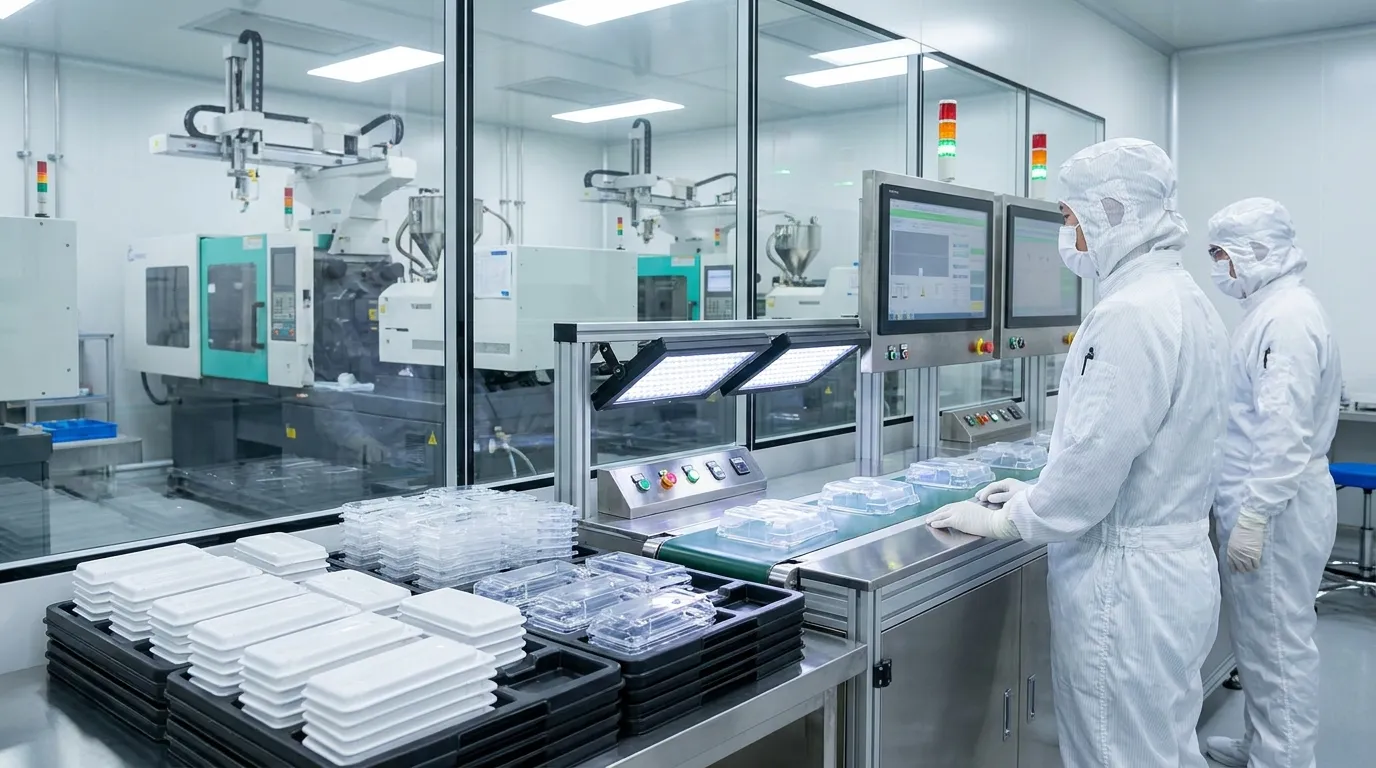
Teams should finalize manufacturability decisions before steel cutting begins. Once tooling enters production, even small design changes can increase lead times, validation work, and tooling cost.
The most important step is aligning product engineering, 金型, and manufacturing requirements before approvals are signed. 材料選択, sterilization strategy, ゲート配置, and tolerance expectations should all be reviewed together.
医療部品の成形性チェックリスト
| 工具前レビュー項目 | ステータスチェック |
|---|---|
| CADジオメトリの最終決定 | □ |
| ドラフト角度が確定 | □ |
| 均一な壁厚のレビュー | □ |
| 承認された滅菌方法 | □ |
| 樹脂選定が確定 | □ |
| 寛容戦略のレビュー | □ |
| ゲートの位置評価 | □ |
| 検証要件の文書化 | □ |
| 別れのラインが承認されました | □ |
| DFM審査完了 | □ |
金型メーカーが金型承認前に必要としている情報
Before tooling starts, provide:
- 最終CADファイル
- 材料仕様
- 滅菌の要件
- Expected production volume
- 外観上の要件
- 検証期待値
- 臨界寸法と公差
Late-stage changes create some of the biggest delays in medical injection molding projects. A material revision or geometry update after tool steel is cut can add weeks to the production schedule.
生産準備チームがSunshine Proのレビューを行えます 医療用工具準備 process to better align engineering and manufacturing expectations.
次に何をすべきか
Medical device plastic injection molding works best when manufacturability drives design decisions from the start. Small geometry adjustments, 現実的な公差, and early sterilization planning can prevent expensive tooling changes later.
Before approving a mold build, エンジニアリングと生産の両面から部品を見直しましょう. Ask whether every feature truly improves function, or simply increases tooling complexity. A cleaner, more stable design usually shortens validation time and improves long-term production consistency.
If your team is still evaluating tooling strategy, 材料選定, or mold engineering details, use the broader injection mold guides from Sunshine Pro to support the next phase of development.
よくある質問
医療用射出成形で一般的に使われるプラスチックとは何か?
Polycarbonate, polypropylene, ポリエチレン, PEEK, and PVC are commonly used in medical injection molding because they offer different balances of durability, 化学耐性, 滅菌適合性, and biocompatibility. The best option depends on the device application and regulatory requirements.
How long does it take to make a medical injection mold?
Production mold timelines commonly range from eight to twenty weeks depending on part complexity, 検証要件, キャビティカウント, および工具の改良. Design changes during tooling development often create the biggest delays.
Why is DFM important in medical injection molding?
DFM helps engineers identify geometry, 耐性, and tooling risks before manufacturing begins. Early DFM review reduces mold revisions, 製造上の欠陥, and validation delays.
Can sterilization damage injection molded medical parts?
はい. Some plastics lose strength, discolor, ワープ, or crack after repeated steam, radiation, or chemical sterilization exposure. Material selection and wall design should account for sterilization early in development.
What causes warping in medical molded parts?
Warping is commonly caused by uneven wall thickness, poor cooling balance, sharp geometry transitions, or material shrinkage variation. Consistent geometry usually improves dimensional stability.
Are tighter tolerances always better for medical parts?
いいえ. Excessively tight tolerances increase tooling complexity, inspection costs, and molding instability. Critical dimensions should receive tighter control while non-critical features should remain manufacturable.



サンシャインより書かれました
サンシャインで, 私たちは精密金型部品の専門製造およびサプライヤーです, プレスおよび射出成形用途向けの幅広い製品を提供しています. 私たちの主な焦点はパンチダイスです, イジェクターピンとスリーブ, ガイドポストとブッシング. 高度なCNC加工技術で, 厳格な品質管理, そして強力な生産能力, 私たちは信頼性を保証しています, 高精度部品, また、迅速かつ効率的なグローバル供給のための在庫の標準部品も併用しています.
ニュース
サービスを受けましょう
あらゆる予算に合った高品質な部品と、親切なスタッフが訓練されていて、訪問を有益で手間なく充実させてくれます.
