



金型部品ガイド: 種類, 機能, そして買い物チェックリスト
型の部品は、アライメントを制御する精密部品です, 冷却, 摂食, and ejection inside an injection mold. Buyers should compare component types, 材料等級, 公差, 硬度, and lead times before sending an RFQ. Standard parts reduce replacement costs and delivery risk, while custom components work better for specialized molds with tighter performance requirements.
A mold may look simple from the outside, but component quality decides how well it performs on the production floor. Poor ejector pins, weak guide bushings, or incorrect tolerances can lead to flash, くっつく, ダウンタイム, and expensive repairs. This guide explains the main mold component types, それぞれの役割, and what buyers should check before choosing a supplier or requesting a quote.
カビ部品とは何か、そしてなぜ重要なのでしょうか?
Mold components are the individual functional parts inside an injection mold, イジェクターピンも含む, ガイドブッシング, 冷却システム, および型の基礎. Their precision affects cycle time, 部品品質, アライメント精度, そしてカビの寿命.
Every injection mold uses multiple parts that work together during molding. These components guide mold movement, cool molten plastic, 完成部品の排出, and keep alignment stable during repeated production cycles. If one critical part wears out early, the entire mold can lose accuracy.
Standardized components also make maintenance easier. Factories can replace worn pins, ブッシング, or springs without redesigning the entire tool. That matters for high-volume production lines where every hour of downtime affects output and delivery schedules.
Buyers comparing suppliers should focus on more than machining price. 材料等級, hardness treatment, and dimensional consistency often determine whether a mold performs well after 100,000 cycles or after 1 million cycles.
For a broader overview of mold construction and tooling workflow, これらを見てください プラスチック射出成形の基本.
主な型の部品とは何か?
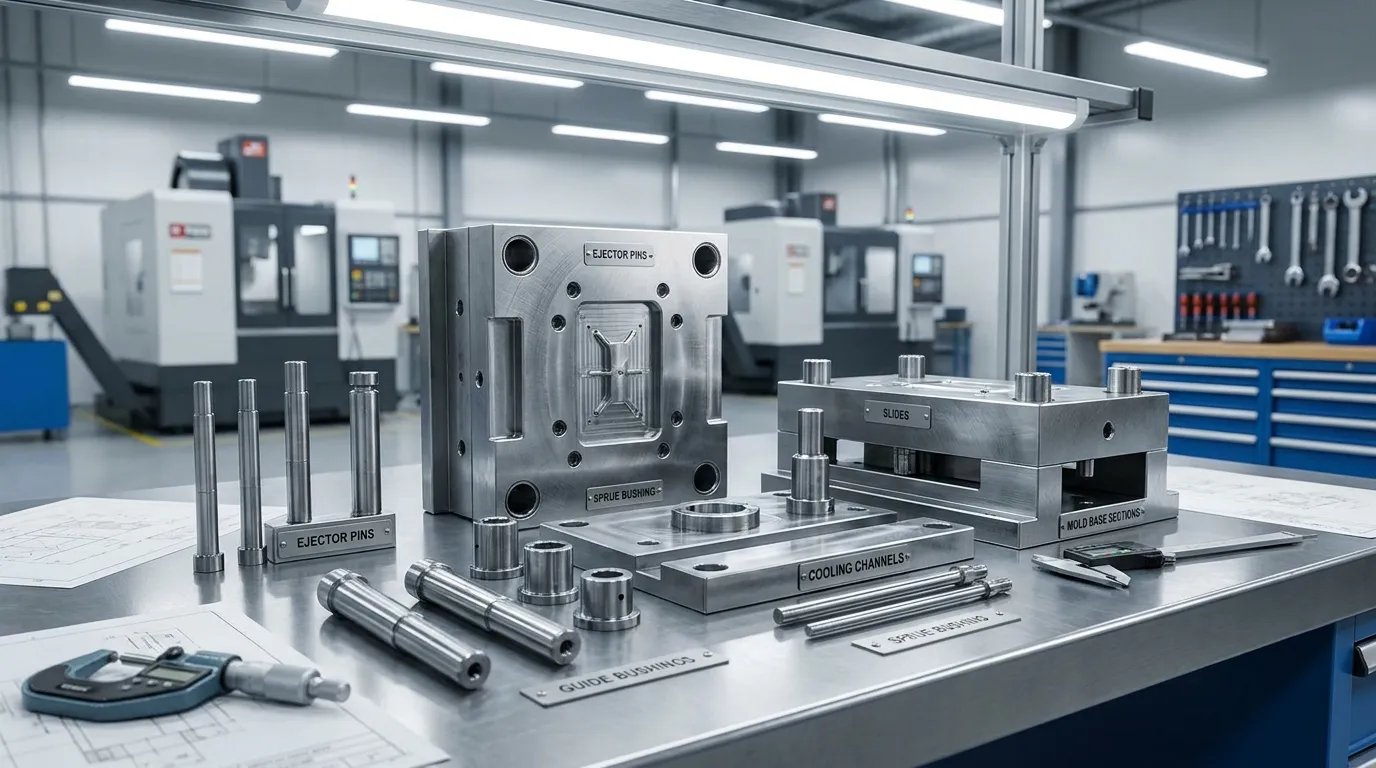
The main mold components include the mold base, guiding system, 冷却チャネル, 給餌システム, and ejection system. Each section controls a different part of molding performance, from alignment and resin flow to cooling efficiency and part release.
Most injection molds follow a similar structure, even when part geometry changes. Understanding these systems helps buyers compare molds and evaluate supplier capabilities more accurately.
| 構成グループ | 主な機能 | 共通点 |
|---|---|---|
| 型の基礎 | 金型全体の構造を支えています | Plates, clamps, 支柱 |
| ガイディングシステム | 開閉時の位置合わせを維持 | ガイドピン, ガイドブッシング |
| 給餌システム | 溶融樹脂をキャビティ内に導きます | スプルーブッシング, ランナー, 門 |
| 冷却システム | 型温度の制御 | 冷却チャネル, 設備 |
| 射出システム | 成形部品を安全に取り外します | イジェクターピン, 袖, ストリッパープレート |
According to industry references from FirstMold, cooling and ejection systems directly affect cycle consistency and molded part quality. Poor cooling design can increase warpage, while weak ejection systems may scratch finished surfaces.
排出成分
Ejector pins are among the most heavily used mold parts. They push finished plastic parts out of the cavity after cooling. Sleeve ejectors and stripper plates are also common in molds with deep or complex geometry.
An automotive supplier producing high-volume trim parts may replace ejector pins every 500,000 cycles. Upgrading to hardened coated pins often reduces replacement frequency and lowers maintenance downtime.
導引要素
Guide pins and guide bushings keep both mold halves aligned during operation. Misalignment can damage cavities, create flash, or increase wear on moving sections.
Standard guide systems are usually the safer choice for maintenance-heavy factories because replacement parts are easier to source quickly. Custom guide systems work best only when a mold requires specialized movement or tight space constraints.
For more detail on component categories and tooling systems, visit 金型コンポーネントシステム.
どの金型部品が最も早く摩耗しますか?
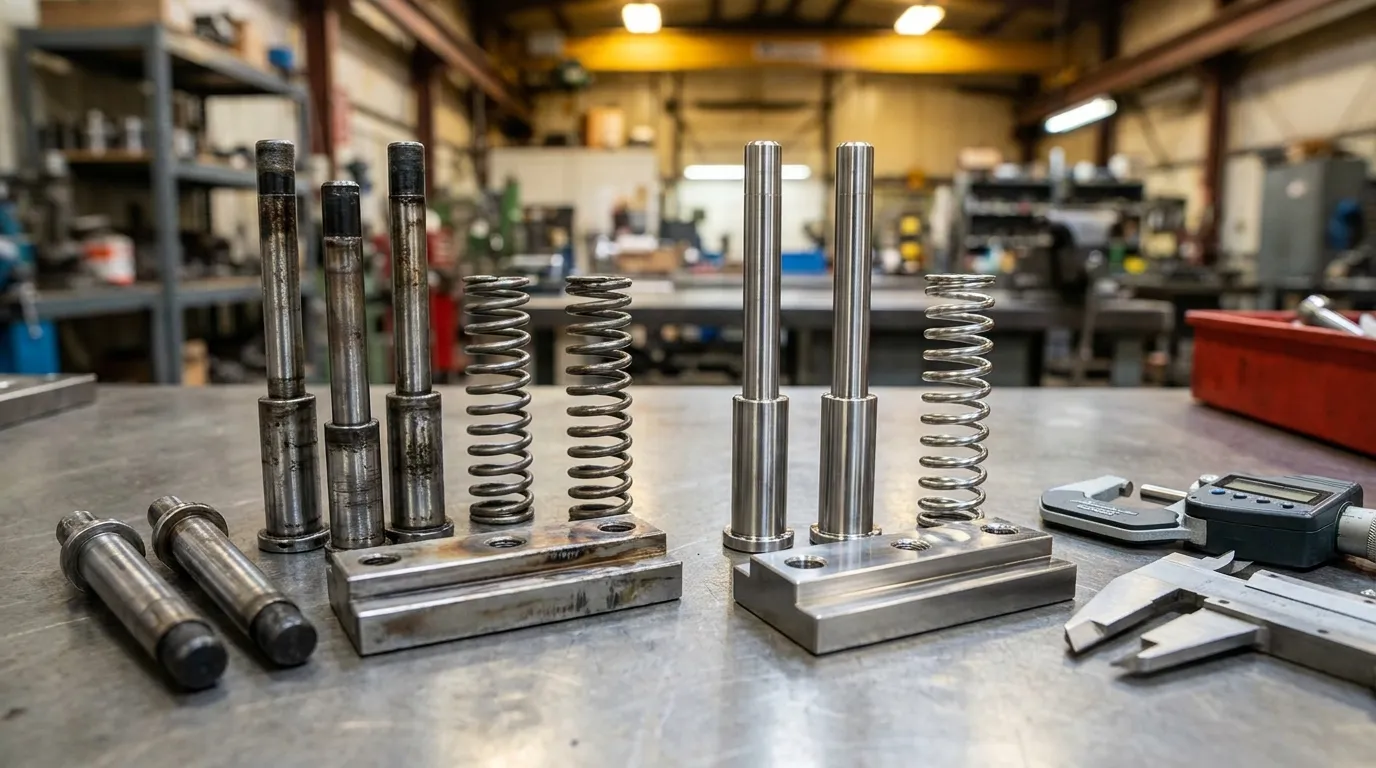
イジェクターピン, ガイドブッシング, スライド, and springs usually wear out faster because they face repeated friction, 熱, and movement. Buyers should check hardness, コーティング, マテリアルグレード, and replacement availability before ordering.
High-wear parts operate under constant pressure and repeated movement. Friction between sliding components slowly removes material, especially in molds running abrasive resins or high production volumes. Weak coatings or low-grade steel can accelerate wear even faster.
The most common wear-prone components include:
- イジェクターピン
- ガイドブッシング
- リターンスプリング
- スライドとリフター
- 研磨材に曝露されたコアピン
A medical mold buyer working in a humid cleanroom environment may choose stainless steel components to reduce corrosion risk. Standard carbon steel parts often degrade faster when moisture exposure is constant.
Extremely tight tolerances are not always beneficial. Over-specifying tolerances can increase machining cost and lead time without improving molded part quality. Buyers should match tolerance requirements to the actual application instead of requesting the highest precision by default.
Preventive maintenance also matters. Replacing inexpensive wear components early usually costs far less than repairing damaged cavities or mold bases later.
標準型とカスタム型の部品: which is better?
Standard mold components are faster and cheaper to replace, while custom components work better for specialized geometry or high-performance molds. 最適な選択は生産量によって異なります, 公差, および保守優先事項.
Many buyers assume custom components always improve mold performance. それは必ずしも正しいわけではありません. Standard components reduce sourcing complexity, メンテナンスの簡素化, and lower emergency replacement costs for most production environments.
Custom components become useful when a mold requires unusual geometry, limited installation space, or advanced movement systems. メディカル, 航空宇宙, and multi-cavity tooling often require more customization than general consumer product molds.
標準とカスタムの意思決定表
| 要因 | 標準コンポーネント | カスタムコンポーネント |
|---|---|---|
| 費用 | 下 | 高く |
| リードタイム | もっと速く | 遅い |
| 代替品の入手可能性 | 簡単だ | 限定 |
| メンテナンス | シンプル | より専門的です |
| 精密柔軟性 | 中程度 | 高く |
| 最適なユースケース | 一般生産型 | 特殊な金型 |
The cheapest mold components often create the highest long-term production cost. 頻繁な交代, alignment issues, and downtime can easily exceed the savings from a lower initial purchase price.
A factory producing packaging parts around the clock may prefer standardized guide bushings because emergency replacements are easier to source locally. A specialized medical mold may justify custom components because dimensional stability is more critical than replacement convenience.
金型部品に一般的に使われる材料とは何か?
Tool steel is the most common material for mold components because it handles pressure, 熱, and repeated movement well. Stainless steel and coated alloys are also used when corrosion resistance or wear protection is important.
Material selection depends on production volume, 樹脂タイプ, および運用条件. Components exposed to abrasive glass-filled plastics usually require harder steel grades than molds running softer resins.
| 材料 | 共通利用 | 主な利点 |
|---|---|---|
| 硬化工具鋼 | イジェクターピン, カラー | 高い耐摩耗性 |
| ステンレス鋼 | 医療環境および湿度の高い環境 | 耐腐食性 |
| 合金鋼 | スライドとムービングシステム | 靭性 |
| 窒化鋼 | 高摩擦部品 | 表面硬度 |
Heat treatment matters as much as the steel itself. Improper hardening can lead to cracking, 変形, or uneven wear during production cycles. Buyers should confirm hardness specifications in the RFQ instead of assuming all suppliers use the same standards.
A supplier quoting low-cost components without hardness certification may create future maintenance problems. That risk increases in high-volume automotive or electronics production where molds cycle continuously for long periods.
購入者はRFQを送る前に何を確認すべきか?
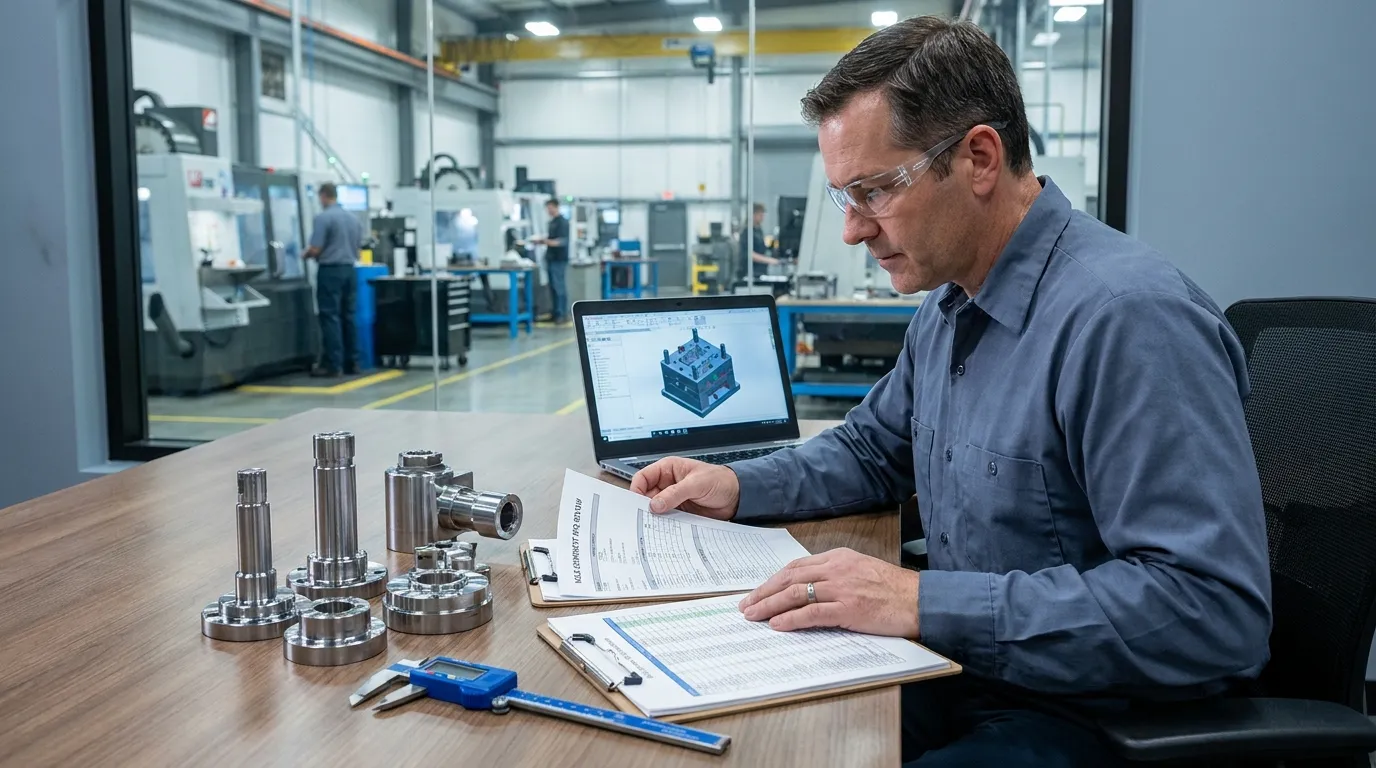
Before sending an RFQ for mold components, buyers should confirm tolerances, 鋼材グレード, 硬度, コーティング, delivery lead time, 検査基準, および代替機の入手可能性. Missing specifications often cause fit problems and production delays.
Many RFQ problems start with incomplete technical details. Suppliers may quote different materials, 公差, or coatings if specifications are unclear. That makes pricing difficult to compare accurately.
A procurement team comparing two RFQs may discover one supplier omitted hardness specifications entirely. The lower quote can look attractive at first, but the long-term wear risk may be much higher.
買い手RFQチェックリスト
| 確認事項 | なぜ重要なのか |
|---|---|
| 材料等級 | 耐摩耗性への影響 |
| 硬度範囲 | 寿命への影響 |
| 許容範囲の要件 | フィットの問題を防ぐ |
| 表面仕上げ | 滑らかな動きをサポートします |
| コーティングの種類 | 摩擦と摩耗の軽減 |
| 検査基準 | 寸法精度の確認 |
| 最小起訂量 | 購買の柔軟性への影響 |
| リードタイム | 生産計画の助けになります |
| 代替品の入手可能性 | ダウンタイムリスクの低減 |
サプライヤーに必要なRFQ詳細
Most suppliers need clear drawings, production volume estimates, resin information, and dimensional tolerances before quoting accurately. Surface finish requirements and expected mold life should also be included early.
Factories ordering overseas should ask about inventory availability before approving production. Long machining queues or material shortages can extend delivery schedules significantly.
If you're comparing overseas manufacturing partners, Aと共に働く カスタム金型部品サプライヤー that provides engineering support and inspection documentation can reduce sourcing risk.
How do lead times and customs delays affect mold component sourcing?
Lead times for mold components depend on machining complexity, 在庫の入手可能性, and international shipping processes. Incorrect documentation or HS codes can delay customs clearance and disrupt mold maintenance schedules.
Production delays often come from logistics issues rather than machining itself. Custom parts usually require longer manufacturing windows, while stock components can ship quickly if inventory is available.
Industry estimates from Aprios show complex injection mold tooling can require lead times of several weeks, especially when multiple machining operations and heat treatment processes are involved.
A shipment of replacement mold accessories may also get delayed during customs clearance if HS codes or paperwork are incomplete. One overseas buyer experienced maintenance downtime after guide bushings were held for classification review during import processing.
カビ成分調達チェックリスト
- 注文前に在庫状況を確認してください
- HSコードの正確性を確認してください
- 税関書類要件の確認
- 摩耗部品のバックアップ在庫を維持
- 早めに予定の発送スケジュールをリクエストしてください
- 故障が発生する前に交換スケジュールを計画しましょう
Factories running high-volume production lines often keep spare ejector pins, ブッシング, and springs on-site. Waiting for emergency overseas shipments can stop production for days.
How do you evaluate a mold component supplier?
A reliable mold component supplier should provide consistent tolerances, clear material specifications, stable lead times, and responsive technical support. Buyers should evaluate long-term reliability instead of comparing price alone.
Strong suppliers usually maintain quality control systems and provide dimensional inspection records. They should also explain steel grades, heat treatment methods, and coating options clearly during quotation discussions.
サプライヤー評価表
| 評価エリア | チェックすべきこと |
|---|---|
| 品質管理 | 検査報告書, measurement process |
| 材料検証 | Steel certifications, hardness data |
| 加工能力 | 精密公差範囲 |
| 在庫深度 | 標準部品の入手可能性 |
| リードタイムの安定性 | 現実的な納品見積もり |
| エンジニアリングサポート | RFQの説明と技術的助言 |
| 代替支援 | 予備部品の入手可能性 |
Suppliers serving automotive or electronics production often maintain stricter tolerance consistency because those industries depend on repeatability. Buyers working with complex molds should ask how dimensional deviations are handled during inspection.
For examples of how component choices vary across industries, これらをレビューしてください 射出成形の応用.
次のステップを正しく進める
Choosing the right mold components is not only about matching dimensions on a drawing. 素材の品質, 代替計画, リードタイム, and supplier consistency all affect long-term production performance.
Start by identifying which components experience the most wear in your molds. Then compare suppliers based on technical capability, 在庫支援, and inspection standards instead of price alone. A well-planned RFQ usually prevents more problems than it creates.
If your production depends on stable cycle times and reliable maintenance scheduling, investing in higher-quality mold components often saves money over the full life of the tool.
よくある質問
What are the main parts of an injection mold?
The main parts of an injection mold include the mold base, 空洞, core, 冷却システム, 給餌システム, and ejection system. Each section supports molding accuracy, パートリリース, and cycle efficiency.
What does an ejector pin do?
An ejector pin pushes the molded plastic part out of the cavity after cooling. Poor ejector pin quality can cause sticking, 引っかき傷, or inconsistent ejection during production.
What materials are mold components made from?
Most mold components are made from hardened tool steel, ステンレススチール, or wear-resistant alloy steel. Material choice depends on production volume, 樹脂の研磨性, 腐食曝露, および必要な公差.
カビ部品はどのくらい持ちますか?
Mold component lifespan depends on material quality, メンテナンス, molding pressure, and production cycles. High-wear parts like ejector pins and bushings usually require replacement more often than mold bases.
What causes mold component failure?
Mold components commonly fail because of friction, 潤滑不良, incorrect hardness, 腐食, またはアライメントの問題. Using low-grade materials or incorrect tolerances also increases premature wear risk.
Should I choose standard or custom mold components?
Standard components are easier to replace and usually cost less, while custom components support specialized mold geometry or tighter tolerances. The best choice depends on mold complexity and production goals.



サンシャインより書かれました
サンシャインで, 私たちは精密金型部品の専門製造およびサプライヤーです, プレスおよび射出成形用途向けの幅広い製品を提供しています. 私たちの主な焦点はパンチダイスです, イジェクターピンとスリーブ, ガイドポストとブッシング. 高度なCNC加工技術で, 厳格な品質管理, そして強力な生産能力, 私たちは信頼性を保証しています, 高精度部品, また、迅速かつ効率的なグローバル供給のための在庫の標準部品も併用しています.
ニュース
サービスを受けましょう
あらゆる予算に合った高品質な部品と、親切なスタッフが訓練されていて、訪問を有益で手間なく充実させてくれます.
