



型排出ピン: スムーズな部品リリースのためのピンの選び方
Mold ejector pins control how molded parts release from the mold after cooling. Choosing the right pin type, 素材, サイズ, and placement helps prevent sticking, pin marks, 歪み, および排莢力の不均一. Standard pins work for many molds, but sleeve ejectors, coated pins, and optimized layouts improve release performance in high-volume or complex molding applications.
A poorly designed ejection setup can ruin an otherwise good mold. Parts stick, surfaces show stress marks, and production slows down from bent pins or uneven release force. That’s why mold ejector pin selection matters far beyond basic part removal. The right layout protects part quality, reduces downtime, and keeps cycles stable during long production runs.
What do mold ejector pins actually do during part release?
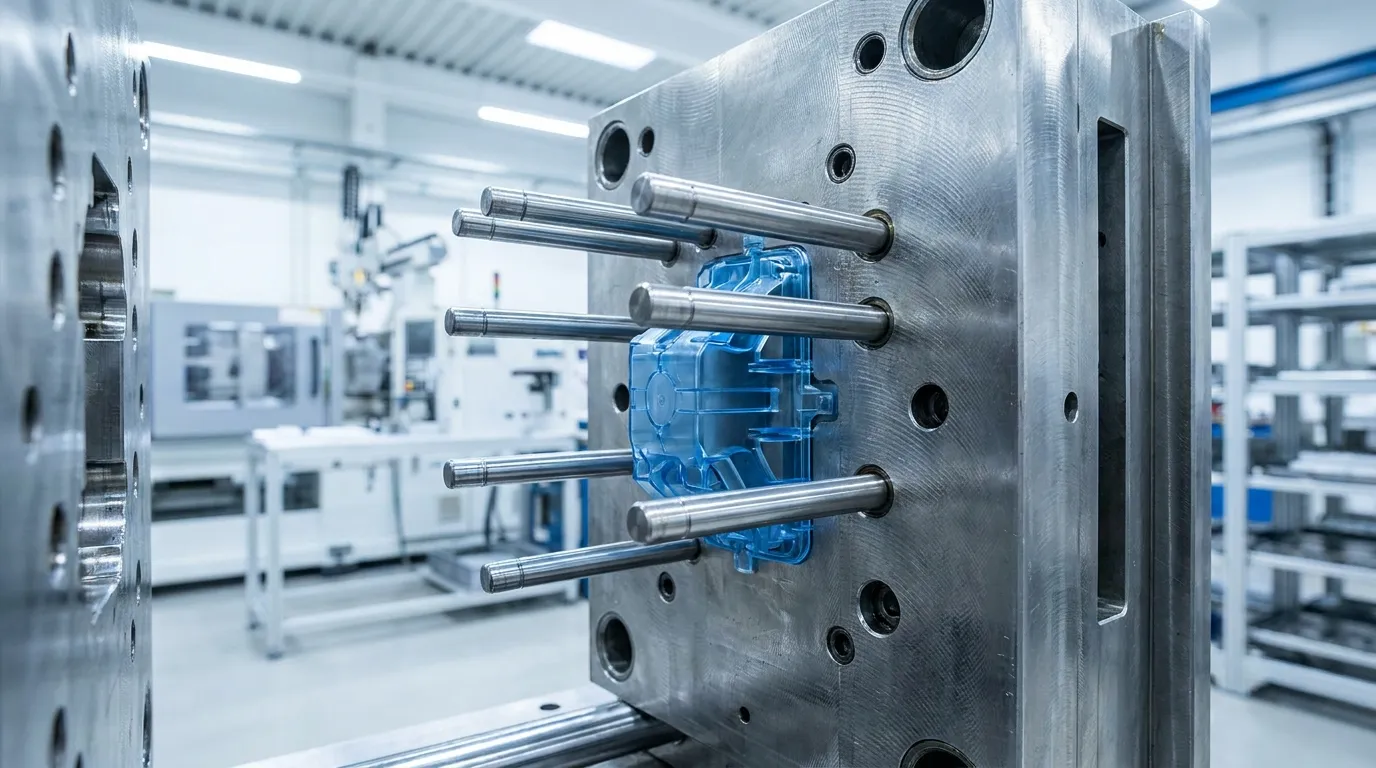
Mold ejector pins push cooled parts off the mold core using controlled force. Correct pin sizing and placement reduce sticking, 変形, stress marks, and uneven release that can damage molded parts or shorten mold life.
Ejector pins are part of the mold’s ejection system. プラスチックが冷めて型が開いた後, the pins push the part away from the core so it can drop safely or move to the next handling step.
The process sounds simple, but release force has to stay balanced. If too much force concentrates in one area, the part can warp or crack. Poor pin placement can also leave visible circles or white stress marks on finished surfaces.
High-cycle molds depend on stable ejection to maintain consistent production. 次の通りです 最初の型, ejector systems directly affect release reliability and mold durability during repeated production cycles.
多くのメーカーはまず全体を見直します 射出成形エジェクターシステム before adjusting pin layouts for specific parts.
Why does ejector pin placement matter so much?
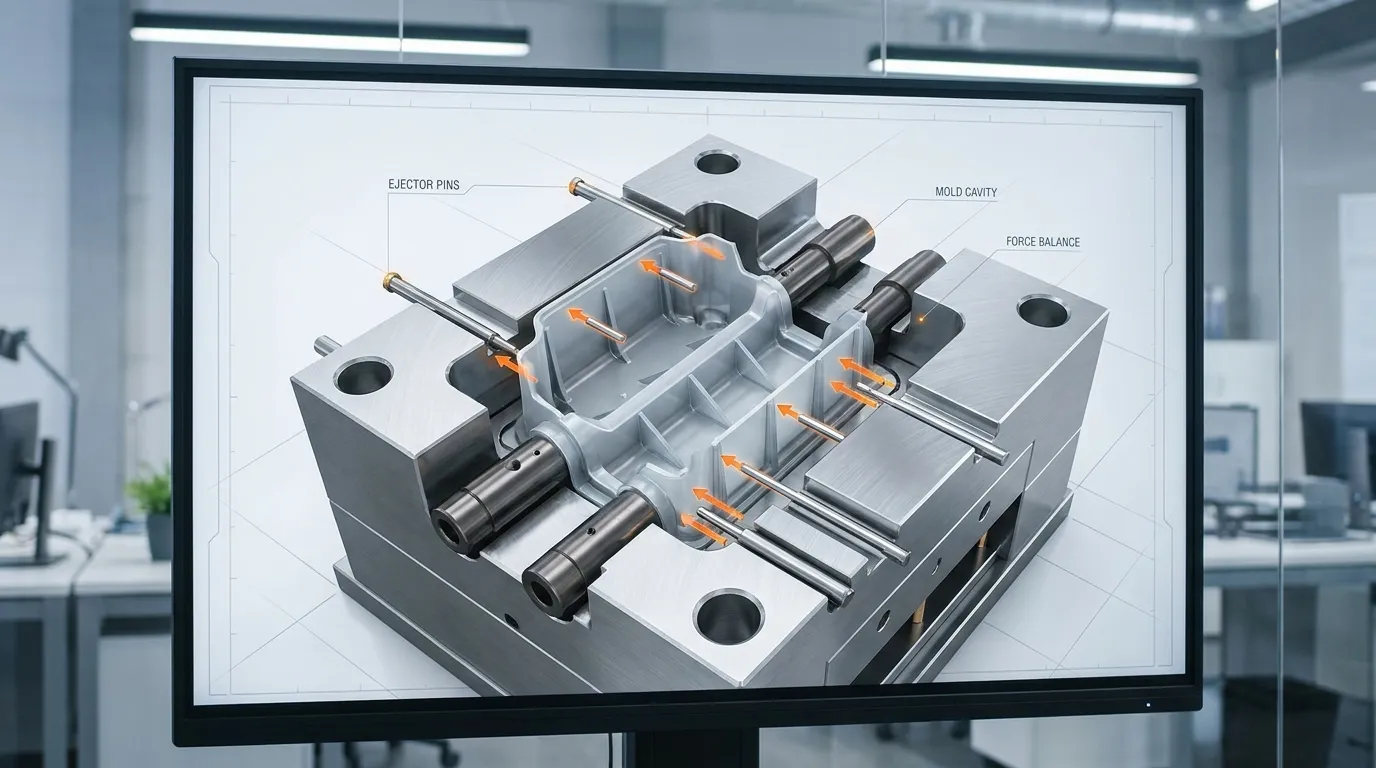
Ejector pin placement matters because uneven release force can warp parts, create white stress marks, or leave visible pin impressions. Pins should support strong structural areas while avoiding cosmetic surfaces and thin unsupported walls.
Placement affects how force travels through the molded part during ejection. Strong ribs, ボス, and thicker sections usually handle ejection pressure better than thin cosmetic walls.
Thin-wall products are especially sensitive. A small electronics housing, 例えば, may develop whitening near the ejector area if the pin pushes against unsupported plastic. Even when the mold opens correctly, uneven pressure can distort the part during release.
排出時に部品がくっつく共通の場所
Parts often stick around:
- 深い肋骨
- 高いコア
- テクスチャ付き表面
- 強いドラフト角度
- 薄い円筒形の特徴
These areas create more friction during release. 次の通りです アコカビ, balanced ejection helps reduce release resistance and surface defects.
| 部品特徴 | 共通リスク | より良いピン戦略 |
|---|---|---|
| 薄い壁 | ストレスマーク | 力の分布を広げる |
| 深い肋骨 | スティック | リブの根元近くにピンを置く |
| 化粧表面 | 目に見える痕跡 | ピンを隠し場所に移動させる |
| 高いコア | 不均一なリリース | スリーブエジェクターの使用 |
| 大きな平らな部分 | ワープ | ピンを均等に広げる |
より詳細な金型構造や力の分布に関するトピックは、より広い範囲に分類されます プラスチック射出成形の基本 reference rather than this focused guide.
How do you choose the right mold ejector pin type?
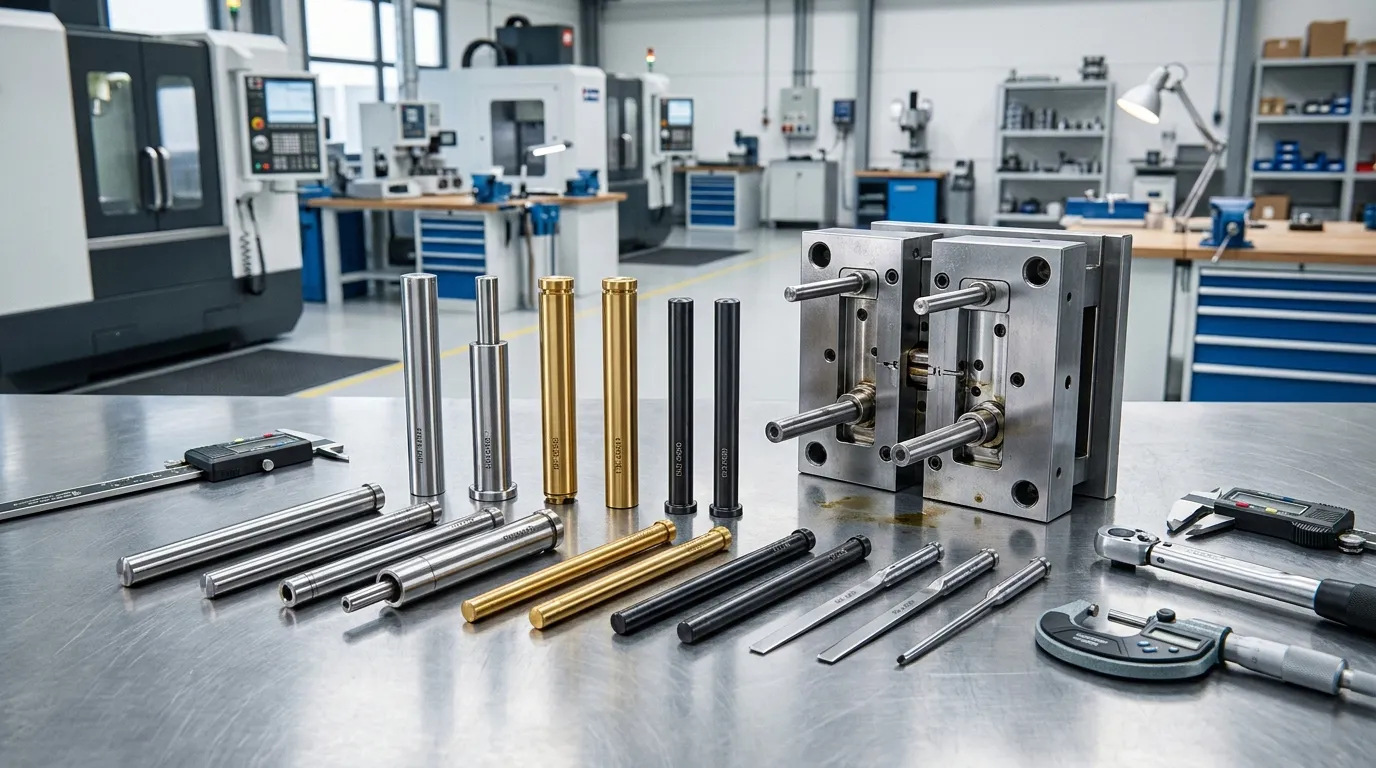
The best mold ejector pin type depends on part geometry, 樹脂挙動, 外観の要件, and cycle volume. Standard straight pins handle general molding, while sleeve ejectors, coated pins, and vented designs solve more specialized release problems.
Straight ejector pins work well for many common molds. They’re simple, コスト効率の良い, and easy to maintain. それでも, they are not always the safest choice for difficult geometries.
A deep cylindrical cap mold, 例えば, may deform during release if standard pins apply uneven pressure around the core. その場合, sleeve ejectors distribute force more evenly and reduce distortion risk.
| エジェクタータイプ | 最適な利用法 | 主な利点 |
|---|---|---|
| ストレートピン | 一般的な金型 | シンプルで経済的 |
| スリーブエジェクター | 円筒形コア | 均等な力の分布 |
| ブレードイジェクター | 細い肋骨 | 狭い空間でのより良いサポート |
| ベンテッドエジェクター | ガストラップエリア | 空気の放出が改善されています |
| コーティングされたピン | 研磨樹脂 | 摩耗と摩擦の減少 |
次の通りです 修道女の男, ejector pin standards and hardness levels play a major role in long-term mold reliability.
If you need a broader comparison of styles and configurations, このガイドは イジェクターピンの種類 covers additional ejector variations.
Which ejector pin materials and coatings perform best?
Hardened steel ejector pins work for most molds, but DLC or PVD coatings improve wear resistance and reduce friction in high-cycle molds or abrasive resin applications. Material selection should match production volume and resin behavior.
Most standard molds use hardened tool steel ejector pins because they balance strength, 耐摩耗性, およびコスト. For low-volume production, that’s often enough.
High-cycle molds using abrasive materials create different conditions. Glass-filled resin, 例えば, increases friction and can wear standard pins faster than many buyers expect. Some mold shops switch to DLC-coated pins to reduce maintenance intervals and extend service life.
コーティングされたイジェクターピンが追加費用に見合う場合
- 生産量は多い
- 樹脂にはガラス繊維や充填剤が含まれています
- ピンは高摩擦の領域を通過します
- 耐腐食性が重要です
- メンテナンスのダウンタイムはコストがかかります
次の通りです アコカビ, DLC and PVD coatings can reduce friction and improve wear resistance in demanding molding conditions.
Material selection should also match the broader tooling environment. Many buyers compare ejector materials alongside other 精密金型部品 during mold design reviews.
How many ejector pins does a mold need?
Mold ejector pin quantity depends on part size, 壁の厚さ, 幾何学, and release resistance. The goal is balanced ejection force with minimal cosmetic impact, not simply adding as many pins as possible.
There’s no universal pin count formula. A small packaging cap may need only a few pins, while a large automotive panel may require a carefully distributed layout across multiple support points.
Adding more pins is not always the correct fix for sticking parts. Poor force balance often creates bigger problems than low pin quantity. Extra pins can also leave more visible marks on finished surfaces.
A multi-cavity packaging mold provides a good example. One mold may release center cavities cleanly while outer cavities stick or warp. 多くの場合, the issue comes from uneven force distribution rather than insufficient pin count.
イジェクターピン配置決定表
| カビの状態 | 推奨アプローチ | 無視した場合の主なリスク |
|---|---|---|
| 大きな平らな部分 | ピンを均等に広げる | ワープ |
| 薄壁ハウジング | 弱い部分を支える | ストレスホワイトニング |
| ディープコアの特徴 | スリーブイジェクターを使います | 歪み |
| 高い外観仕上げ | ピンの隠し位置 | 目に見える痕跡 |
| マルチキャビティ型 | バランスキャビティフォース | 不均一なリリース |
For a broader overview of mold system planning, many engineers review a complete 型の成分選択 resource before finalizing ejector layouts.
What problems happen when ejector pins are selected incorrectly?
Incorrect ejector pin sizing or placement often causes pin marks, くっつく, bent pins, and uneven release force. Most ejection problems come from poor force distribution rather than defective pins alone.
Poor ejector performance usually appears as a visible molding defect first. The part may show circular impressions, white stress marks, 歪み, or inconsistent release behavior between cycles.
Long unsupported pins can also bend during production. This often happens when release resistance becomes too high for the selected diameter. Poor alignment or excessive friction increases the problem further.
なぜ成形部品にイジェクターピンの跡が現れるのか
Pin marks happen when pressure concentrates in small areas during release. 化粧表面, 薄い壁, and poor cooling conditions make the marks easier to see.
A thin-wall electronics housing is a common example. If pins push near unsupported cosmetic sections, the plastic can whiten or deform during ejection even when molding temperatures remain correct.
なぜイジェクターピンは生産中に曲がるのか
Bent pins usually indicate excessive force or poor support. Long slender pins are more vulnerable because they flex under repeated load.
次の通りです テクウェル・マシナリー, incorrect ejector settings and release timing can also contribute to ejection failures during molding operations.
射出失敗トラブルシューティングチェックリスト
| 可視問題 | 原因としては | ピン関連の問題 | 推奨修正案 |
|---|---|---|---|
| ピンマーク | 集中力 | 接触面積が小さい | 分布の増加 |
| 白色ストレスマーク | 薄い支持なしの壁 | 配置の悪さ | ピンを強い場所に移動させる |
| 曲げられたピン | 過剰な抵抗 | 直径が小さい | ピンのサポートを強化する |
| 不均一なリリース | 不均衡なレイアウト | 間合いが悪い | 多くのポイントのリバランス |
| 粘着部分 | 高摩擦 | 排莢器の種類が誤り | スリーブピンやコーティングピンを使います |
多くの金型工場は詳細にこれらの問題を解決してくれます イジェクターピンのトラブルシューティング reviews before redesigning the entire mold.
When should you use sleeve ejectors or special ejector designs?
Standard straight pins handle many molds well, but specialty ejectors solve problems that simple pins cannot. 円筒形コア, narrow ribs, and trapped air zones often need more specialized solutions.
Sleeve ejectors work best around round cores because they apply force evenly around the feature. They reduce distortion on caps, tubes, and deep cylindrical parts. Blade ejectors support narrow ribs and thin sections where standard round pins would leave concentrated stress.
Vented ejectors help release trapped gas during molding. Air-assisted systems may also improve release in difficult geometries with heavy vacuum or friction conditions.
| 特殊設計 | 最適アプリケーション | 主な利点 |
|---|---|---|
| スリーブイジェクター | 円形コア | 圧力を解放することさえ |
| ブレードイジェクター | 細い肋骨 | より良い狭支 |
| 排気式エジェクター | ガストラップ | 換気の改善 |
| エアアシスト | 高真空放出 | 摩擦の減少 |
For more advanced configurations, some mold builders compare additional 特殊なエジェクター解 before selecting final tooling components.
What should mold buyers confirm before approving ejector pin layouts?
Before approving mold ejector pin layouts, buyers should verify force balance, cosmetic surface protection, maintenance accessibility, and resin compatibility. Early review prevents expensive mold modifications after steel cutting or production startup.
Pin layouts should be reviewed before machining begins. Changes after steel cutting can increase lead times, tooling cost, そして生産遅延.
次の通りです アプリオス, mold complexity directly affects production timelines. Catching ejection issues early helps avoid redesign work later.
買い手承認チェックリスト
- ピンが見た目を避けているか確認してください
- 薄い壁の周りの支持点を確認してください
- 力のバランスを取る
- メンテナンスのアクセシビリティを見直す
- ピンの素材を樹脂タイプにマッチさせる
- ディープコアのサポートを確認してください
- 研磨作業における摩耗リスクの確認
多くの購入者はより広い範囲でレビューも行います 射出成形計画 requirements before approving final tooling layouts.
次のステップを正しく進める
Good ejection design protects more than part release. It affects cosmetic quality, 型の生命, maintenance cost, and cycle consistency across the entire production run. Small pin placement mistakes can create expensive problems once production starts.
The best mold ejector pins setup depends on part geometry, 樹脂挙動, 生産量. Standard pins work well in many molds, but specialty ejectors, better force distribution, and upgraded coatings often improve long-term reliability. 型を承認する前に, review the ejection layout carefully and confirm the system fits the actual molding conditions instead of relying on default pin placement.
よくある質問
What is an ejector pin in injection molding?
An ejector pin is a hardened metal component that pushes a molded part out of the mold after cooling. It applies controlled force to release the part without damaging the mold or the finished surface.
What causes ejector pin marks on plastic parts?
Ejector pin marks usually appear when force concentrates in small areas or pins are placed on cosmetic surfaces. Poor cooling, insufficient draft angle, or uneven release force can make the marks more visible.
型にはイジェクターピンがいくつあるべきか?
The correct number depends on part size, 壁の厚さ, 幾何学, and release resistance. The goal is balanced force distribution without adding unnecessary visible pin locations.
Which ejector pin material lasts longest?
Hardened tool steel ejector pins usually provide the best durability for high-cycle molding. DLC or PVD coatings can extend service life further in abrasive resin or high-friction applications.
When should sleeve ejectors be used?
Sleeve ejectors work best around cylindrical cores or round features where standard pins cannot distribute force evenly. They reduce distortion risk on tubular and deep-core molded parts.
Why do ejector pins bend during production?
Ejector pins usually bend because of uneven release force, アライメント不良, excessive resistance, or unsupported pin length. Incorrect pin diameter selection can also increase bending risk.



サンシャインより書かれました
サンシャインで, 私たちは精密金型部品の専門製造およびサプライヤーです, プレスおよび射出成形用途向けの幅広い製品を提供しています. 私たちの主な焦点はパンチダイスです, イジェクターピンとスリーブ, ガイドポストとブッシング. 高度なCNC加工技術で, 厳格な品質管理, そして強力な生産能力, 私たちは信頼性を保証しています, 高精度部品, また、迅速かつ効率的なグローバル供給のための在庫の標準部品も併用しています.
ニュース
サービスを受けましょう
あらゆる予算に合った高品質な部品と、親切なスタッフが訓練されていて、訪問を有益で手間なく充実させてくれます.
