



金型部品の耐摩耗性: 材料, コーティング, and Heat Treatment
Wear resistance in mold components depends on choosing the right steel, コーティング, and heat treatment for the molding environment. Abrasive plastics, sliding contact, and high production cycles can quickly damage cores, 空洞, およびエジェクターシステム. Hardened tool steels, 窒化物, and wear-resistant coatings help reduce maintenance, improve dimensional stability, and extend mold life when matched correctly to the application.
Mold wear is one of the biggest reasons injection molds lose accuracy over time. Gates begin to flash, sliders start galling, and polished surfaces lose consistency. Many of these failures are preventable with better material selection and surface engineering. This guide explains how wear develops in mold components, which materials perform best, and how coatings and heat treatment affect long-term tooling performance.
What causes wear in mold components?
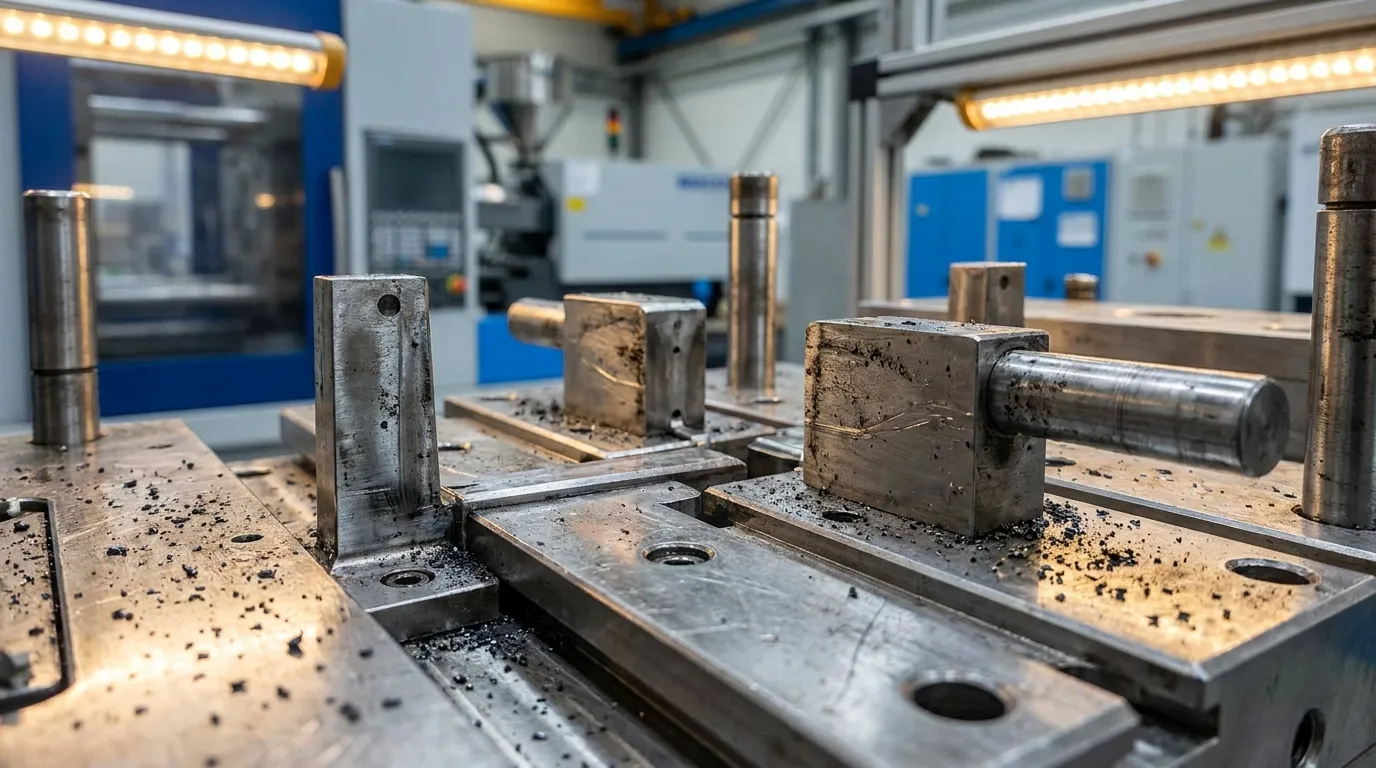
Wear resistance in mold components depends on controlling abrasion, 摩擦, and surface fatigue. ガラス充填樹脂, poor lubrication, and repeated cycling accelerate wear on cores, 空洞, イジェクターピン, and sliding components.
Most mold wear comes from repeated friction between steel surfaces and abrasive plastic flow. Filled engineering plastics are especially damaging because glass fibers and mineral additives scrape the mold surface during every injection cycle. 時間をかけて, this removes material from gates, カラー, and shutoff surfaces.
研究によれば、 サイエンスダイレクト, wear resistance is affected by hardness, 強度, 表面粗さ, and material structure. In mold tooling, those properties work together rather than independently.
金型における研磨剤と接着剤の摩耗
Abrasive wear happens when hard particles cut into the mold surface. This is common with glass-filled nylon, flame-retardant compounds, and mineral-filled resins. Gate inserts and runner transitions usually show the first signs of damage.
Adhesive wear happens when two metal surfaces rub against each other under pressure. Slides, リフター, and ejector systems are common failure points. If lubrication is poor, the surfaces may begin galling, which creates scratches, drag marks, and dimensional drift.
| 摩耗タイプ | 共通の原因 | 典型的なカビの領域 |
|---|---|---|
| 研磨摩耗 | ガラス充填樹脂 | 門, 空洞, カラー |
| 接着性摩耗 | スライド金属接触 | Slides, リフター, エジェクター |
| 表面疲労 | 繰り返しの自転車 | Shutoffs, moving inserts |
| 腐食性摩耗 | 攻撃的な添加物 | Vent areas, 空洞 |
Is hardness the same as wear resistance?
Hardness improves resistance to indentation, but wear resistance depends on toughness, 表面状態, 潤滑, and coating performance. Extremely hard mold steels can still fail if brittleness increases.
Hardness and wear resistance are closely related, but they are not identical properties. A harder steel usually resists scratching and abrasive damage better than a softer steel. それでも, extremely high hardness can reduce toughness and increase cracking risk under impact or cyclic stress.
研究について議論された シルコテック explains that wear performance depends on the entire surface system. Material structure, friction conditions, コーティング, and operating loads all affect long-term durability.
This matters in mold manufacturing because the hardest steel is not always the safest choice. A high-impact mold with moving slides may perform better with slightly lower hardness and better toughness. That tradeoff often reduces unexpected downtime and expensive repairs.
For molds that require advanced thermal processing, a detailed overview of 金型熱処理 can help clarify how hardness targets affect mold performance.
| 財産 | 改善点 | 潜在的なリスク |
|---|---|---|
| 高硬度 | 耐摩耗性 | 脆さ |
| 高靭性 | ひび割れ耐性 | 摩耗が速くなる |
| 表面コーティング | 摩擦の減少 | 基材が弱い場合のコーティング破損 |
Which mold components experience the most wear?
Gate areas, イジェクターピン, slides, and core features typically wear fastest because they experience concentrated friction, 圧力, and repeated resin flow. Abrasive fillers like glass fiber increase damage significantly.
Not every mold component wears at the same rate. High-contact and high-flow areas usually fail first, especially in molds running abrasive engineering plastics. Concentrated pressure and repeated motion accelerate material loss over time.
The following components typically require the highest wear resistance:
- 高速樹脂流路にさらされるゲートインサート
- 反復的なスライド動作を伴うイジェクターピン
- 薄壁形状を扱うコアピン
- サイドアクション圧力下のスライドとリフター
- ガラス充填材の成形キャビティ
A mold producing glass-filled nylon electrical connectors may show gate wear after only 250,000 cycles if the tooling steel is untreated. 多くの場合, nitrided H13 steel lasts significantly longer than untreated H13 under the same production conditions.
For a broader overview of mold architecture and tooling functions, その 型の部品ガイド explains how these parts interact during injection molding cycles.
Which mold steels offer the best wear resistance?
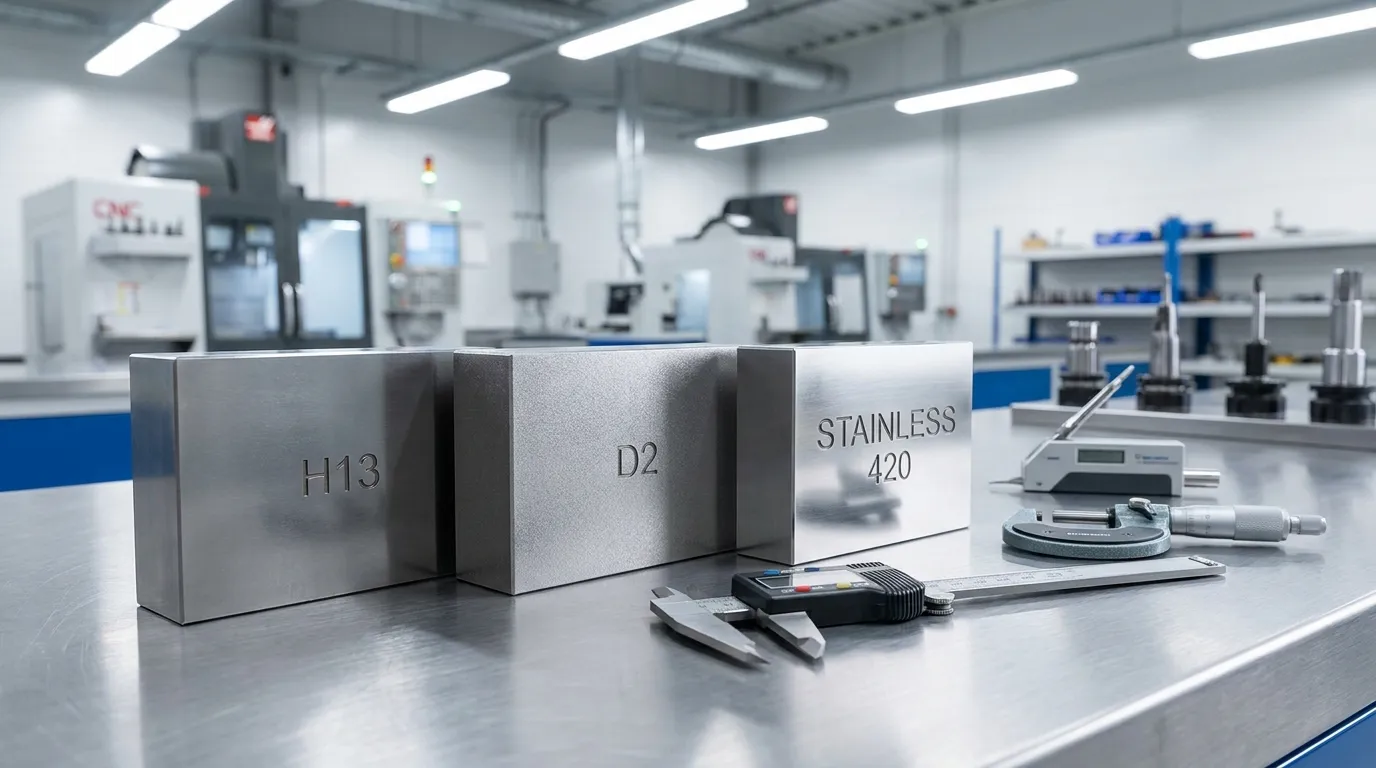
High-wear molding applications often use hardened tool steels like H13, D2, and powder metallurgy grades. The best choice depends on resin abrasiveness, 腐食曝露, polish requirements, and expected cycle count.
Tool steel selection affects both mold life and maintenance cost. Different steels perform better under different molding conditions, especially when abrasive or corrosive plastics are involved.
H13 is one of the most common mold steels because it balances hardness, タフネス, and machinability. D2 offers higher abrasion resistance but can become brittle in impact-heavy applications. Stainless grades like S136 improve corrosion resistance, though some stainless steels have lower wear performance than hardened tool steels.
研究 スタイニハルト notes that many austenitic stainless steels prioritize corrosion resistance over abrasion resistance. That distinction matters in molds running aggressive fillers or high-cycle production.
ガラス充填プラスチック用の鋼の選択
Glass-filled materials create extreme abrasive wear near gates and thin flow channels. Standard pre-hardened steels often wear too quickly in these environments. Powder metallurgy steels or nitrided H13 are more common choices for long production runs.
A cosmetic housing mold creates another tradeoff. Extremely hard tooling may improve wear life, but it can also complicate polishing and surface finishing. そういう場合, balanced hardness and polishability are usually safer than maximum hardness.
| スチールグレード | 強み | 制限 | 最適な利用法 |
|---|---|---|---|
| H13 | 靭性と熱安定性 | Moderate wear resistance | 一般生産型 |
| D2 | 高い耐磨性 | 靭性の低下 | 研磨樹脂 |
| S136 | 耐腐食性 | 一部の工具鋼よりも摩耗が低い | 医療用および化粧型 |
| CPM鋼 | 優れた摩耗性能 | コストの高さ | 大量研磨成形 |
For readers comparing broader tooling systems, その プラスチック型の基本 page explains how mold design choices affect long-term production performance.
How do coatings improve mold wear resistance?
Surface coatings improve mold wear resistance by reducing friction, surface fatigue, and abrasive damage. Coatings work best when matched with the correct substrate hardness and molding application.
Coatings protect the mold surface rather than changing the entire steel structure. They are commonly used in high-cycle molds where sliding friction or abrasive resin flow causes premature wear.
Physical vapor deposition (PVD) coatings create thin, hard surface layers that reduce friction and improve abrasion resistance. ダイヤモンド様炭素 (DLC) coatings are often used on sliding components because they reduce galling and sticking. Nitriding improves surface hardness by diffusing nitrogen into the steel surface.
摩耗試験ガイダンスによると、 TWIグローバル, pin-on-disc testing is commonly used to evaluate coating wear performance under friction conditions.
コーティングが早期に破損した場合
Coatings are not a substitute for poor steel selection. A premium coating applied to weak substrate material often fails faster than properly hardened tool steel without coating. Surface preparation and heat treatment quality still matter.
A high-volume automotive mold may use coated slides to reduce galling and maintenance downtime. If the base steel lacks sufficient hardness, the coating can crack or delaminate under repeated pressure.
| コーティングの種類 | 主な利点 | 一般的な用途 |
|---|---|---|
| PVDコーティング | 摩耗の減少 | 門, カラー |
| DLCコーティング | 摩擦の減少 | Slides, エジェクター |
| 窒化 | 表面硬化 | 一般的な金型工具 |
| クロームメッキ | Corrosion protection | 選択された空洞面 |
外観仕上げが必要な金型は、コーティングと特殊な処理を組み合わせていることが多いです 表面仕上げのオプション to maintain appearance quality and reduce polishing frequency.
Which heat treatments improve wear resistance in mold tooling?
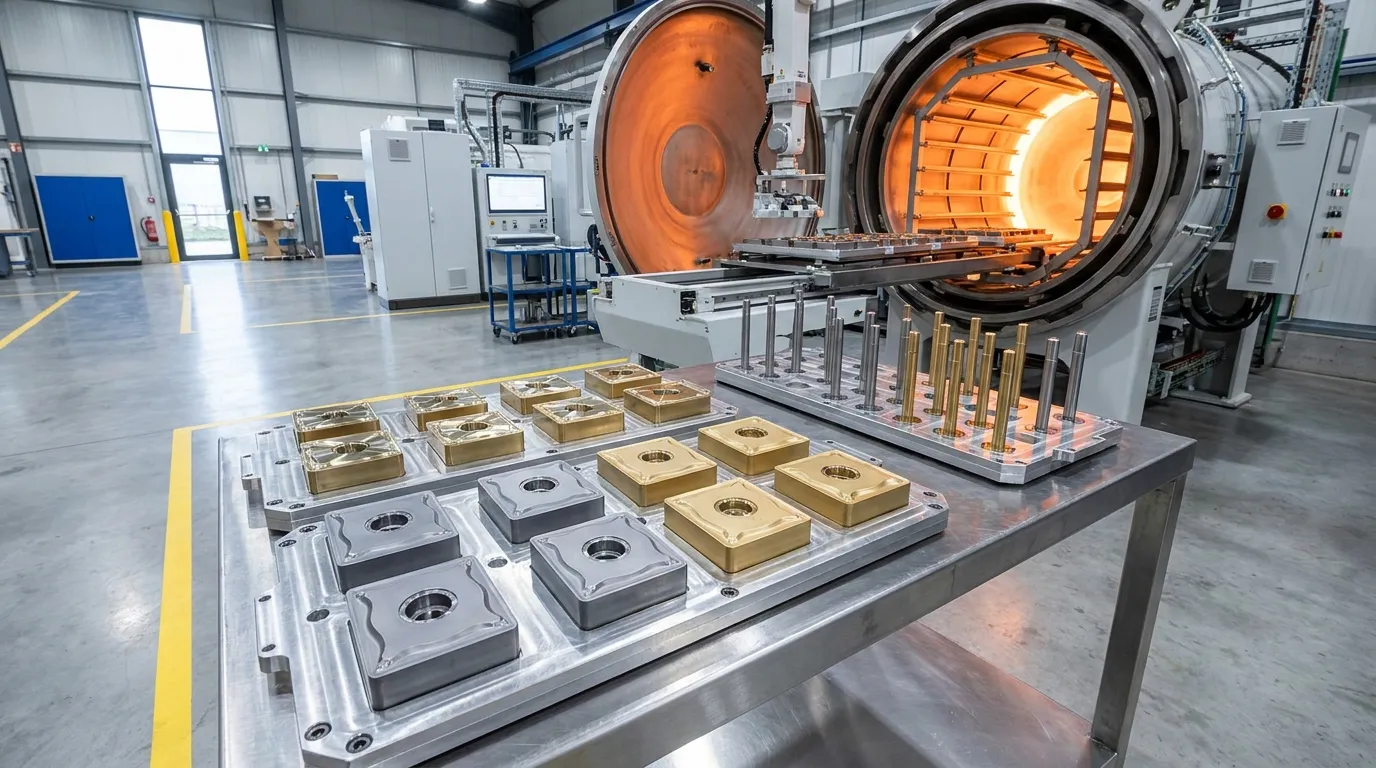
Heat treatment improves mold wear resistance by increasing surface hardness and stabilizing the steel structure. The wrong process can also increase brittleness, 歪み, or cracking risk.
Heat treatment changes the internal structure of the steel. In mold manufacturing, this process affects hardness, タフネス, 次元安定性, and long-term durability.
Vacuum hardening is commonly used because it limits oxidation and supports consistent hardness throughout the mold component. Tempering follows hardening and helps reduce brittleness by relieving internal stress. Case hardening and nitriding improve surface hardness without fully hardening the entire part.
なぜ射出成形で窒化が一般的なのか
Nitriding creates a hard outer layer while maintaining a tougher core underneath. That balance works well for slides, エジェクターシステム, and components exposed to repeated friction. It also reduces distortion risk compared to some deeper hardening processes.
A mold running mineral-filled flame-retardant resin may experience rapid ejector pin wear. 多くの場合, nitrided ejector systems extend maintenance intervals and reduce galling problems.
| 熱処理 | 主な利点 | 共通リスク |
|---|---|---|
| 真空硬化 | 均一硬度 | 制御されていない場合の歪み |
| テンパリング | ストレス解消 | 過剰の場合、硬度が低下します |
| 窒化 | 表面耐摩耗性 | 限られた深さ |
| ケースハードニング | 硬い外装 | プロセス複雑性 |
詳細な説明 熱処理プロセス methods can help engineers match steel grades with suitable hardening strategies.
How do abrasive plastics reduce mold life?
Abrasive engineering plastics can rapidly damage mold surfaces, especially around gates and high-flow regions. Glass-filled resins often require upgraded steel grades, コーティング, or nitrided surfaces.
Filled plastics behave differently from standard commodity resins. Glass fibers, flame retardants, and mineral additives increase friction against the mold surface during every injection cycle. High-flow regions typically show wear first.
Glass-filled nylon is one of the most common causes of premature mold wear. Gates lose dimensional accuracy, core surfaces become rougher, and flash begins appearing earlier in production runs.
| 樹脂タイプ | 摩耗リスク | 一般的な推奨事項 |
|---|---|---|
| 標準PP | 低め | 事前硬化鋼 |
| ガラス充填ナイロン | ハイ | 硬化または窒化鋼 |
| 難燃性化合物 | 中〜高 | 被覆金型 |
| 鉱物充填樹脂 | ハイ | 耐摩耗インサート |
A low-volume prototype mold may avoid expensive coatings because production volume does not justify premium treatment costs. High-volume production molds usually benefit from stronger wear protection because maintenance downtime becomes far more expensive over time.
Processing temperatures, 射出圧力, and resin flow speed also influence wear behavior. Following proper 成形ガイドライン can help reduce unnecessary tooling stress.
How do you choose the right wear-resistance strategy?
The best wear-resistance strategy balances tooling cost, 生産量, 樹脂の研磨性, and maintenance downtime. Overengineering the mold can waste budget, while underengineering increases repair frequency.
There is no single material or coating that works for every mold. The correct choice depends on resin type, expected cycle count, 外観の要件, and budget limitations.
High-volume automotive tooling usually justifies premium steels and coatings because downtime costs are high. Prototype molds and short production runs often use lower-cost tooling strategies instead.
カビ摩耗決定表
| 制作シナリオ | 推奨鋼材 | コーティングまたは処理 | メンテナンスリスク |
|---|---|---|---|
| 低量プロトタイプ | 事前硬化鋼 | 最小限の治療 | 中程度 |
| 化粧用ハウジングカビ | S136 | 軽度窒化 | 低〜中等 |
| ガラス充填ナイロン型 | H13またはCPM鋼 | 窒化またはPVD | 低め |
| 高速自動車型 | D2またはCPM鋼 | DLCかPVD | 非常に低い |
| 鉱物充填樹脂型 | Hardened tool steel | 窒化 | 中程度から低度 |
A mold producing abrasive parts around the clock may recover coating costs quickly through reduced maintenance. On the other hand, a short-run mold may never recover that added expense.
ツールのROIを評価する読者は、より広い範囲で比較できます 工具コスト分析 factors when deciding how much wear protection makes financial sense.
What maintenance signs indicate poor wear resistance?
Poor wear resistance usually appears gradually before major tooling failure occurs. Early warning signs include flash, 次元ドリフト, polishing frequency increases, and rough surface finishes.
Slides and ejector systems may begin sticking or galling. Gates can lose edge definition, especially in molds processing abrasive fillers. Surface scratches and drag marks often appear before more serious dimensional issues develop.
摩耗故障トラブルシューティングチェックリスト
| 症状 | 合理的な理由 | 推奨修正案 | 緊急性 |
|---|---|---|---|
| シャットオフ時のフラッシュ | Surface wear | リワークかよりハードなインサート | ハイ |
| スライド上のグラリング | 潤滑不良やコーティング破損 | 再塗装または窒化処理 | メディア |
| 頻繁な研磨 | Abrasive resin wear | 鋼材やコーティングのアップグレード | メディア |
| ラフキャビティ仕上げ | 表面疲労 | 表面処理のレビュー | メディア |
| イジェクターピンの詰まり | 接着性摩耗 | 表面処理がハード | ハイ |
Preventive maintenance matters as much as material selection. Even premium tooling can wear prematurely if lubrication, 冷却, or processing conditions are poorly controlled.
次のステップを正しく進める
Choosing the right wear resistance strategy starts with understanding the molding environment. 樹脂の研磨性, 生産量, 表面仕上げの要件, and maintenance expectations all affect tooling decisions.
Many mold failures come from mismatched material choices rather than poor manufacturing. Harder steel is not always better, and coatings are not magic fixes for weak substrates. The most reliable molds use balanced engineering decisions across steel selection, 熱処理, and surface protection.
If your mold is already showing gate wear, 腹立たしい, または次元ドリフト, reviewing the tooling material and treatment process is usually the best place to start.
よくある質問
What is wear resistance in mold components?
Wear resistance is the ability of a mold component to resist material loss caused by friction, abrasion, and repeated molding cycles. Better wear resistance helps molds maintain dimensional accuracy and surface quality during longer production runs.
Does higher hardness always improve wear resistance?
いいえ. Higher hardness can improve abrasion resistance, but excessive hardness may reduce toughness and increase cracking risk. Mold performance depends on balancing hardness, タフネス, コーティング, および運用条件.
Which mold steel is best for glass-filled plastics?
Hardened tool steels such as H13, D2, and some powder metallurgy grades are commonly used for abrasive glass-filled materials. The best option depends on corrosion exposure, polish requirements, および予想生産量.
How do coatings improve mold life?
Coatings reduce friction, surface fatigue, and abrasive wear on mold surfaces. Properly matched coatings can extend maintenance intervals and reduce premature wear in high-cycle molding applications.
What causes rapid wear in injection molds?
研磨樹脂, poor lubrication, 滑り摩擦, and high production cycles are common causes of rapid mold wear. Glass fibers and mineral fillers are especially damaging to gates, カラー, and sliding surfaces.
Is nitriding good for mold components?
はい. Nitriding improves surface hardness and wear resistance while maintaining core toughness. It is commonly used for slides, エジェクターシステム, and tooling exposed to repetitive friction.
共有:



サンシャインより書かれました
サンシャインで, 私たちは精密金型部品の専門製造およびサプライヤーです, プレスおよび射出成形用途向けの幅広い製品を提供しています. 私たちの主な焦点はパンチダイスです, イジェクターピンとスリーブ, ガイドポストとブッシング. 高度なCNC加工技術で, 厳格な品質管理, そして強力な生産能力, 私たちは信頼性を保証しています, 高精度部品, また、迅速かつ効率的なグローバル供給のための在庫の標準部品も併用しています.
ニュース
サービスを受けましょう
あらゆる予算に合った高品質な部品と、親切なスタッフが訓練されていて、訪問を有益で手間なく充実させてくれます.
