



Plastic Injection Mold Design: DFM Checklist for Stronger Plastic Parts
Plastic injection mold design depends on good DFM decisions before tooling starts. Consistent wall thickness, proper draft angles, balanced ribs, smooth corner transitions, and clean ejection planning help prevent sink marks, warping, short shots, and mold wear. A practical DFM checklist reduces tooling revisions, improves part strength, and helps manufacturers move into production with fewer delays and quality problems.
A plastic part can look perfect in CAD and still fail during production. Small geometry choices often create sink marks, ejection problems, or expensive tooling changes once steel cutting begins. That’s why DFM, short for design for manufacturability, matters early. This guide walks through the key checks engineers use before approving a plastic part for injection molding, with practical examples you can apply before sending a design to tooling.
What is plastic injection mold design and why does DFM matter?
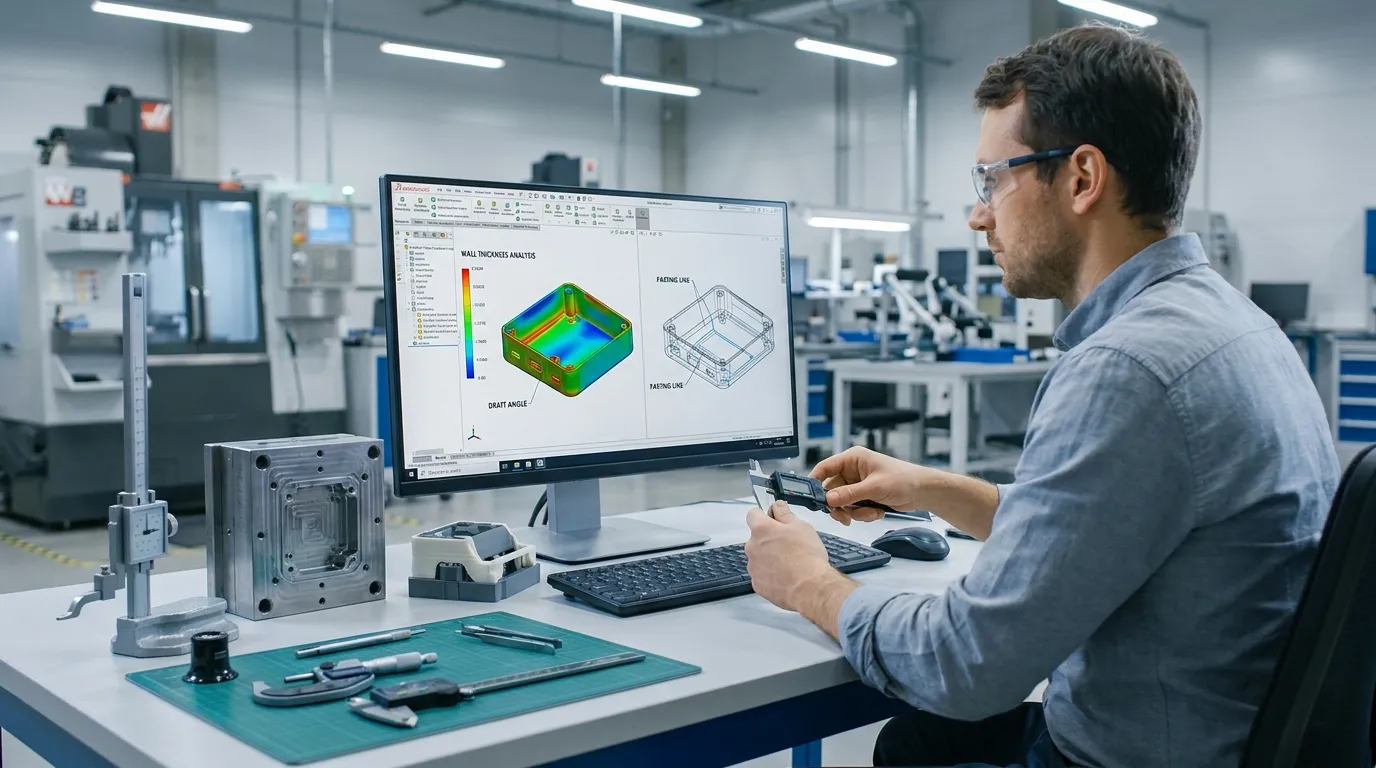
Plastic injection mold design works best when DFM decisions happen before tooling starts. 壁の厚さ, draft, ribs, and ejection features directly affect defects, cycle time, tooling complexity, and part consistency.
Plastic injection mold design is the process of shaping a part so it can be manufactured reliably inside an injection mold. DFM focuses on reducing production risks before the mold is machined. 次の通りです カスタムパートネット, geometry choices directly affect cooling behavior, shrinkage, and defect risk during molding.
A strong DFM review looks beyond appearance. Engineers check whether plastic can flow evenly, cool consistently, and eject cleanly from the mold. Even small changes to wall transitions or rib placement can improve part quality and reduce tooling revisions later.
Many product teams wait too long to review manufacturability. That usually increases cost because mold modifications after steel cutting are slower and more expensive than CAD updates early in development.
- Are wall sections consistent?
- Does every vertical face include draft?
- Are ribs sized correctly?
- Will the part eject without scuffing?
- Are undercuts necessary?
If you need a broader tooling overview, review this 射出成形設計の基本 guide before moving into detailed DFM checks.
What wall thickness works best for injection molded parts?
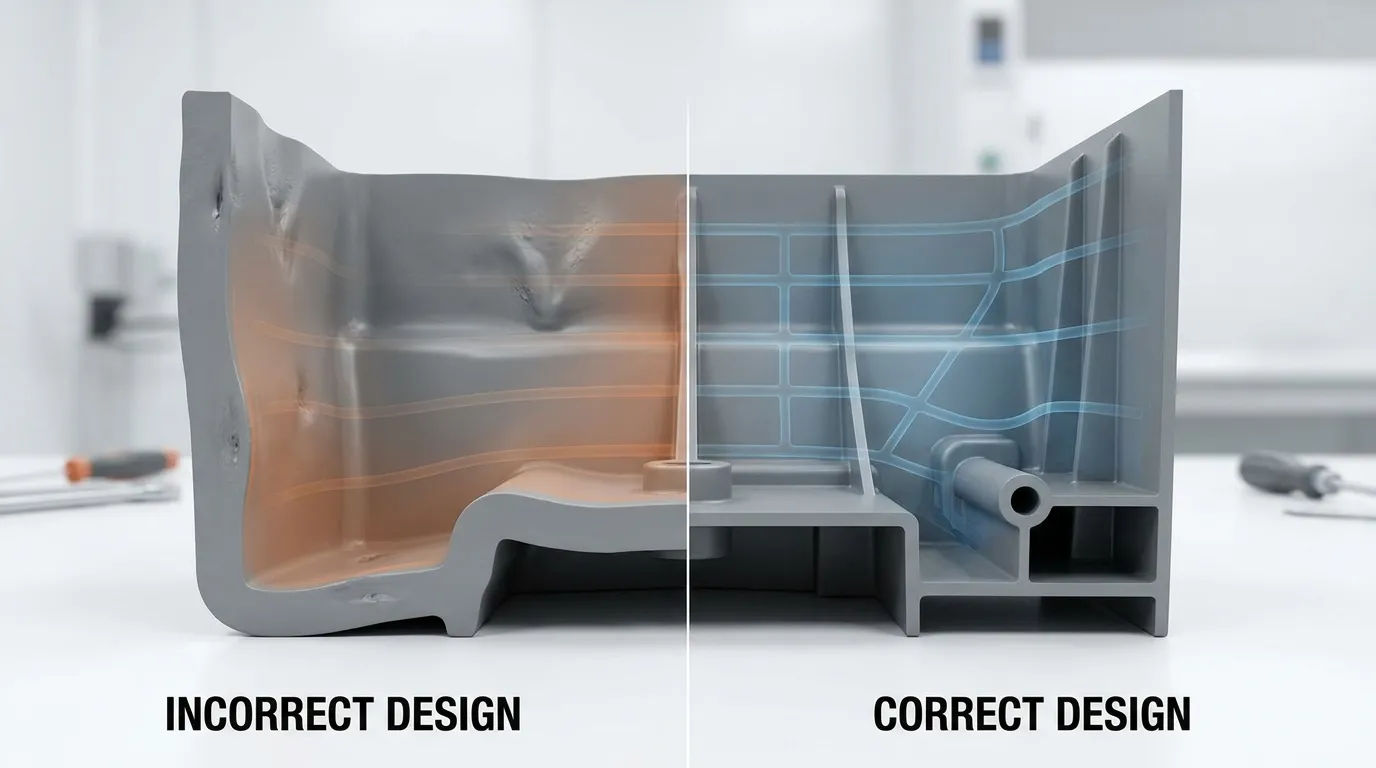
Consistent wall thickness improves plastic flow, 冷却バランス, および次元安定性. Thick sections often create sink marks and warping, while abrupt thickness changes increase internal stress and molding defects.
Wall consistency matters more than maximum thickness. Plastic shrinks as it cools, and uneven cooling creates distortion. Thick sections hold heat longer than thin sections, which increases the risk of sink marks and warped geometry.
A common mistake is adding extra wall thickness to improve strength. Thick walls are not always the best solution. In many cases, properly designed ribs create better stiffness with fewer molding defects.
A handheld electronics housing is a good example. One design used ribs that matched full wall thickness. During molding, the rib area cooled unevenly and created visible sink marks on the outer cosmetic surface. Reducing rib thickness solved the issue without reducing strength.
What causes sink marks in thick wall sections?
Sink marks happen when thicker areas shrink more during cooling. 大きすぎるリブ, bosses, and sudden wall transitions usually create the biggest problems.
| 設計条件 | 予想される結果 | より良いアプローチ |
|---|---|---|
| 厚い壁断面 | 陥没痕 | 壁の厚さを一定に保ちます |
| 突然の壁の遷移 | 内部応力 | 漸進的な移行を活用してください |
| 全厚リブ | 表面歪み | 薄い補強リブを使いましょう |
| 重いコーナー質量 | 不均一な冷却 | コーナー半径を加える |
これ 型設計の考慮事項 resource explains how geometry affects manufacturability across different tooling situations.
Why are draft angles critical for clean part ejection?
Draft angles help molded parts release from the tool without dragging or surface damage. Even small draft improvements can reduce ejection force, cosmetic defects, and mold wear during high-volume production.
Draft creates a slight taper on vertical surfaces so parts can separate from the mold during ejection. Without draft, the plastic drags against the mold wall and increases friction during release.
Zero-draft walls may look acceptable in CAD, but they often create real production problems. Surface scratching, sticking, and ejector stress become more common as cycle counts increase. プロトラブ notes that manufacturable geometry improves production consistency and tooling efficiency.
Textured surfaces need even more draft because texture increases contact area inside the mold. A medical enclosure with textured side walls experienced repeated ejection scratches during production testing. Adding draft solved the issue without changing the product appearance.
- すべての垂直壁にドラフトを加えてください
- テクスチャーのある表面のドラフトを増やす
- 深いリブをよくチェックしてください
- 排莢装置の位置を早期に確認してください
- 鋭い内角は避けましょう
For tight-tolerance products, this 精密成形公差 guide explains how geometry affects dimensional accuracy.
How should ribs and bosses be designed for strength without defects?
Ribs improve stiffness without increasing overall wall thickness when they are properly proportioned. Oversized ribs or unsupported bosses commonly create sink marks, cosmetic distortion, and uneven cooling.
Ribs are one of the safest ways to strengthen a plastic part. They improve stiffness without adding excessive material mass. The key is controlling rib dimensions so cooling remains balanced.
Many cosmetic defects come from oversized ribs hidden behind visible surfaces. Engineers often assume thicker ribs mean stronger parts, but oversized reinforcement usually creates more shrinkage problems during cooling.
リブ厚のガイドライン
A practical rule is keeping rib thickness smaller than the surrounding wall section. Balanced geometry improves cooling and reduces visible surface distortion.
| 特徴 | 推奨される実践 | 無視した場合のリスク |
|---|---|---|
| リブの厚さ | 主壁より薄い | 陥没痕 |
| リブの高さ | 中程度のアスペクト比 | 充填の問題 |
| 肋骨間隔 | 間隔の均等化 | 不均一な収縮 |
| リブの角 | 半径を加える | 応力集中 |
ボス補強のミス
Bosses often fail because they are unsupported or connected to thick wall sections. A cosmetic packaging cap warped after molding because one side used a heavy reinforced boss design. Redistributing the support ribs balanced cooling and corrected the distortion.
Unsupported bosses can also crack during assembly. Adding gussets or connecting ribs usually improves durability without increasing overall wall thickness.
For complex molded components, this 精密成形部品 page shows how controlled geometry supports stable production quality.
Which part features increase mold complexity and tooling cost?
アンダーカット, deep ribs, sharp corners, and inaccessible geometry often require more complex tooling. These features increase machining time, maintenance requirements, and mold cost while raising defect risk.
Some design features force the mold to include sliders, lifters, or deep core structures. These mechanisms increase mold complexity and usually extend lead time. それによると 射出成形プロセスの概要, mold geometry directly affects tooling structure and manufacturing difficulty.
Undercuts should only be used when the product function truly requires them. Many cosmetic undercuts add tooling complexity without improving product performance.
An appliance housing is a common example. A late-stage cosmetic undercut required additional side actions inside the mold. That change increased tooling cost and delayed production approval because the mold needed redesign work.
特徴と工具の複雑さ表
| 特徴 | 製造リスク | コスト影響 | より良い代替案 |
|---|---|---|---|
| 化粧品のアンダーカット | サイドアクション | ハイ | 幾何学を簡素化する |
| 鋭い角 | 応力集中 | メディア | 半径を加える |
| 深く狭い肋骨 | 埋める難易度 | メディア | より短い補強リブ |
| 厚いボス | 陥没痕 | メディア | ガセットサポート |
| ゼロドラフトウォール | 排出問題 | メディア | ドラフトテーパーを追加 |
これ 工具設計プロセス resource explains how geometry choices affect mold engineering decisions.
How do engineers review a plastic part before tooling approval?
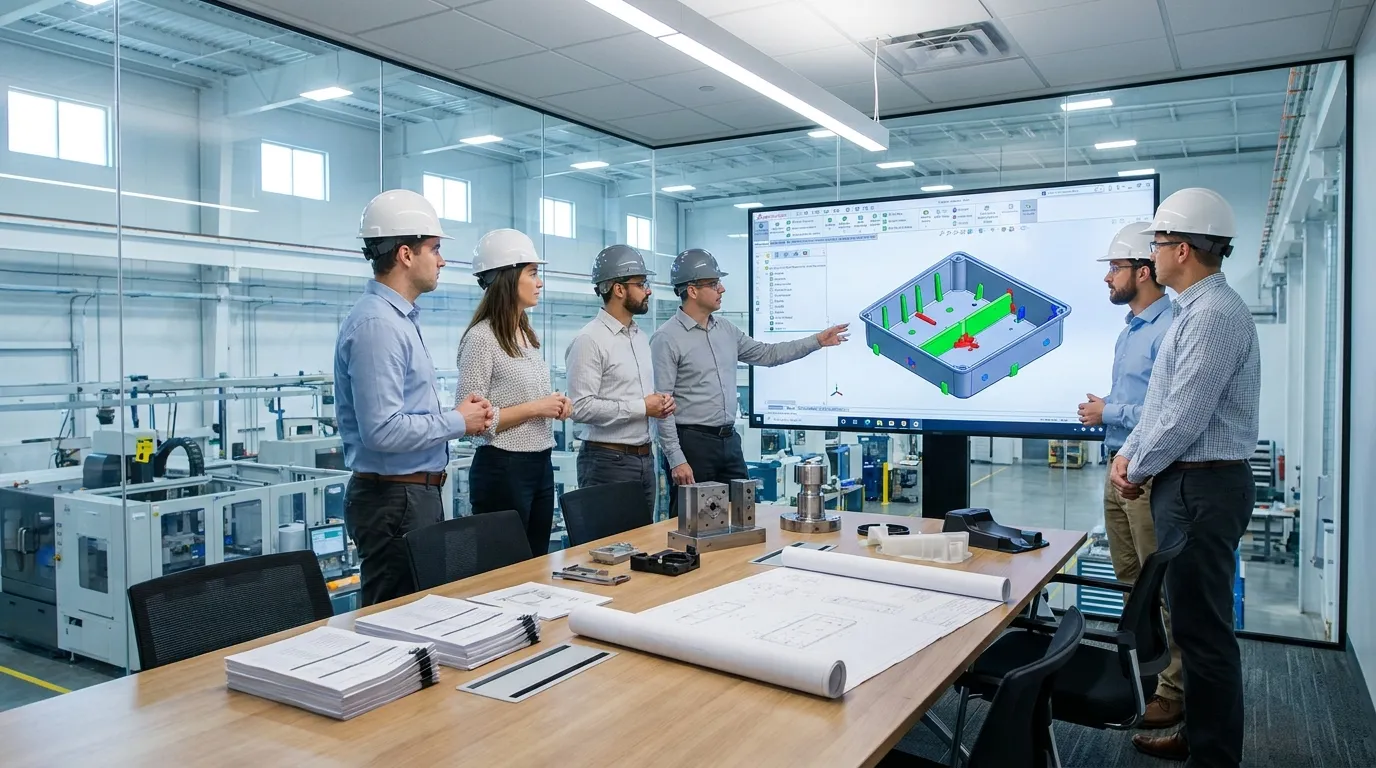
A proper injection molding DFM review checks wall consistency, draft, ribs, gates, parting lines, shrinkage, and ejection before steel cutting begins. Early corrections prevent expensive mold modifications later.
Most engineering teams follow a structured review before releasing tooling for machining. The goal is finding geometry risks before they become manufacturing delays.
A strong DFM process reviews the entire molding cycle, not just the CAD shape. Engineers evaluate how plastic fills the cavity, cools, shrinks, and ejects during production.
ツール加工前のDFMチェックリスト
| チェックリストエリア | エンジニアレビュー |
|---|---|
| 壁の厚さ | 一貫性と移行ゾーン |
| ドラフト | すべての垂直壁の排出クリアランス |
| リブとボス | 厚さ比と支持構造 |
| コーナー | 半径と応力集中 |
| 別れ際 | 型分離の実現可能性 |
| 門 | 流量バランスと外観への影響 |
| 射出 | ピンの位置とリリース力 |
| アンダーカット | サイドアクションやリフターの必要性 |
A product team manufacturing consumer electronics reduced tooling revisions by running this review before steel cutting. The team identified uneven wall transitions and corrected them in CAD instead of modifying hardened tooling later.
Many manufacturers also use mold flow analysis during this stage. Simulation helps identify filling problems, trapped air, and shrinkage risks before production begins.
For broader process planning, this DFMのワークフロー guide covers additional mold engineering considerations.
If you need a larger manufacturing overview, a 完全射出成形ガイド can help connect DFM decisions with the full tooling lifecycle.
What are the most common DFM mistakes in plastic part design?
Most molding defects come from a small group of repeat design mistakes. These problems usually appear during cooling, 射出, or dimensional inspection after production begins.
One of the most common mistakes is treating CAD appearance as proof of manufacturability. A part can look correct visually while still creating flow imbalance, sink marks, or difficult ejection conditions inside the mold.
一般的なDFMトラブルシューティング表
| 設計ミス | 生産上の問題 | より良い解決策 |
|---|---|---|
| ドラフトなし | 射出時の詰まり | ドラフト角度を加える |
| 厚い壁断面 | 陥没痕と反り | 壁の一貫性を保つ |
| 鋭い内角 | 応力集中 | 半径を加える |
| 大きすぎるリブ | 外観歪み | リブの厚さを減らす |
| サポートのないボス | 組み立て中のひび割れ | ガセットやリブを追加してください |
| 過剰なアンダーカット | 高い金型コスト | 幾何学を簡素化する |
これ 高精度成形 overview explains why small geometry adjustments matter for repeatable production quality.
次のステップを正しく進める
Good plastic injection mold design starts long before the mold is machined. Most production problems can be traced back to early geometry decisions involving wall thickness, draft, ribs, or ejection planning. A practical DFM review helps teams catch those risks while changes are still inexpensive.
Before approving tooling, review the part as a manufacturing engineer would. Check cooling behavior, ejection paths, reinforcement geometry, and mold complexity together. Small adjustments during design often prevent major tooling revisions later and help production move faster with fewer defects.
よくある質問
What is DFM in injection molding?
DFM in injection molding means designing plastic parts so they can be manufactured efficiently and consistently. It helps reduce defects, tooling changes, cycle time issues, and production cost before tooling begins.
What wall thickness is best for injection molding?
Consistent wall thickness usually performs better than thick sections with large transitions. Balanced walls improve cooling, reduce sink marks, and help maintain dimensional stability during molding.
Why is draft angle important in injection molding?
Draft angles help parts release from the mold without sticking or surface damage. Proper draft reduces ejection force and helps maintain surface quality during production.
What causes sink marks in injection molded parts?
Sink marks usually happen when plastic cools unevenly in thick sections or oversized ribs. Reducing local mass and improving wall consistency helps prevent visible surface depressions.
How do undercuts affect mold cost?
Undercuts often require sliders, lifters, or additional tooling mechanisms. These features increase mold complexity, machining time, メンテナンス, and production cost.
How do you avoid warping in plastic parts?
Warping is reduced by maintaining uniform wall thickness, balanced cooling, and proper rib placement. Uneven shrinkage is one of the main causes of part distortion.
共有:



サンシャインより書かれました
サンシャインで, 私たちは精密金型部品の専門製造およびサプライヤーです, プレスおよび射出成形用途向けの幅広い製品を提供しています. 私たちの主な焦点はパンチダイスです, イジェクターピンとスリーブ, ガイドポストとブッシング. 高度なCNC加工技術で, 厳格な品質管理, そして強力な生産能力, 私たちは信頼性を保証しています, 高精度部品, また、迅速かつ効率的なグローバル供給のための在庫の標準部品も併用しています.
ニュース
サービスを受けましょう
あらゆる予算に合った高品質な部品と、親切なスタッフが訓練されていて、訪問を有益で手間なく充実させてくれます.
