



精密金型部品: 高精度型アセンブリガイド
Precision mold components improve mold alignment, 再現性, and long-term production stability by maintaining tight tolerances across repeated manufacturing cycles. ガイドポストなどの構成要素, ブッシング, イジェクターピン, and inserts directly affect flash control, dimensional consistency, 耐摩耗性, そしてカビライフ. Choosing the right materials, hardness levels, and fit tolerances helps reduce downtime, minimize repairs, and maintain reliable high-volume production.
High-accuracy molds depend on more than cavity design alone. The quality and fit of each internal component determine how consistently the mold performs after thousands or even millions of cycles. アライメント不良, 不均一な摩耗, and loose tolerances often start with small component failures that grow into expensive production issues. Understanding which precision parts matter most helps buyers and engineers build more stable mold assemblies from the start.
What are precision mold components?
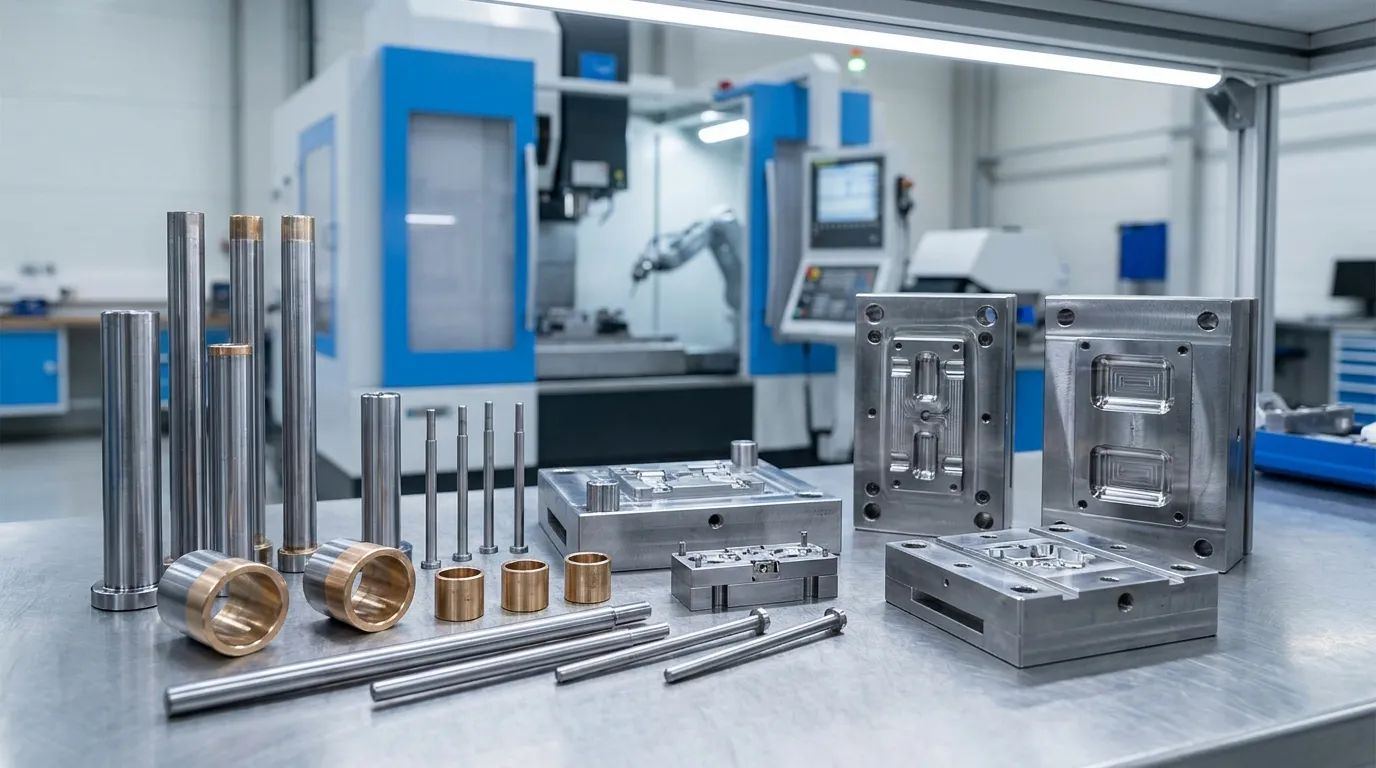
Precision mold components are high-tolerance parts used to maintain alignment, 再現性, and dimensional stability inside mold assemblies. Components like guide posts, ブッシング, イジェクターピン, and inserts directly affect mold accuracy, 耐摩耗性, and production consistency over long manufacturing cycles.
These components are machined and ground to tight tolerances so mold halves close accurately during every production cycle. Even small alignment errors can create flash, 不均一な摩耗, or dimensional variation in molded parts. That is why high-cycle molds rely heavily on precision-fit internal systems.
| 構成要素 | 主な機能 |
|---|---|
| 案内標 | 型の半分を整列させる |
| ブッシング | 移動中の摩耗を減らす |
| イジェクターピン | リリース成形部品 |
| 挿入物 | 重要な部品の特徴を形成する |
| スリーブ | エジェクター運動のサポート |
| キャビティとコア | 最終製品の形を整える |
Manufacturers often combine hardened tool steels and carbide materials to improve wear resistance in these areas. 次の通りです Nidecの精密成形部品概要, precision-fit mold elements are widely used in applications requiring stable dimensional control and repeatable production accuracy.
For a broader overview of mold system architecture, その 完全な金型部品ガイド explains how these assemblies fit into the larger injection molding process.
関連作品も調べてみてください 金型コンポーネントシステム used in different tooling configurations.
Which precision mold components affect alignment the most?
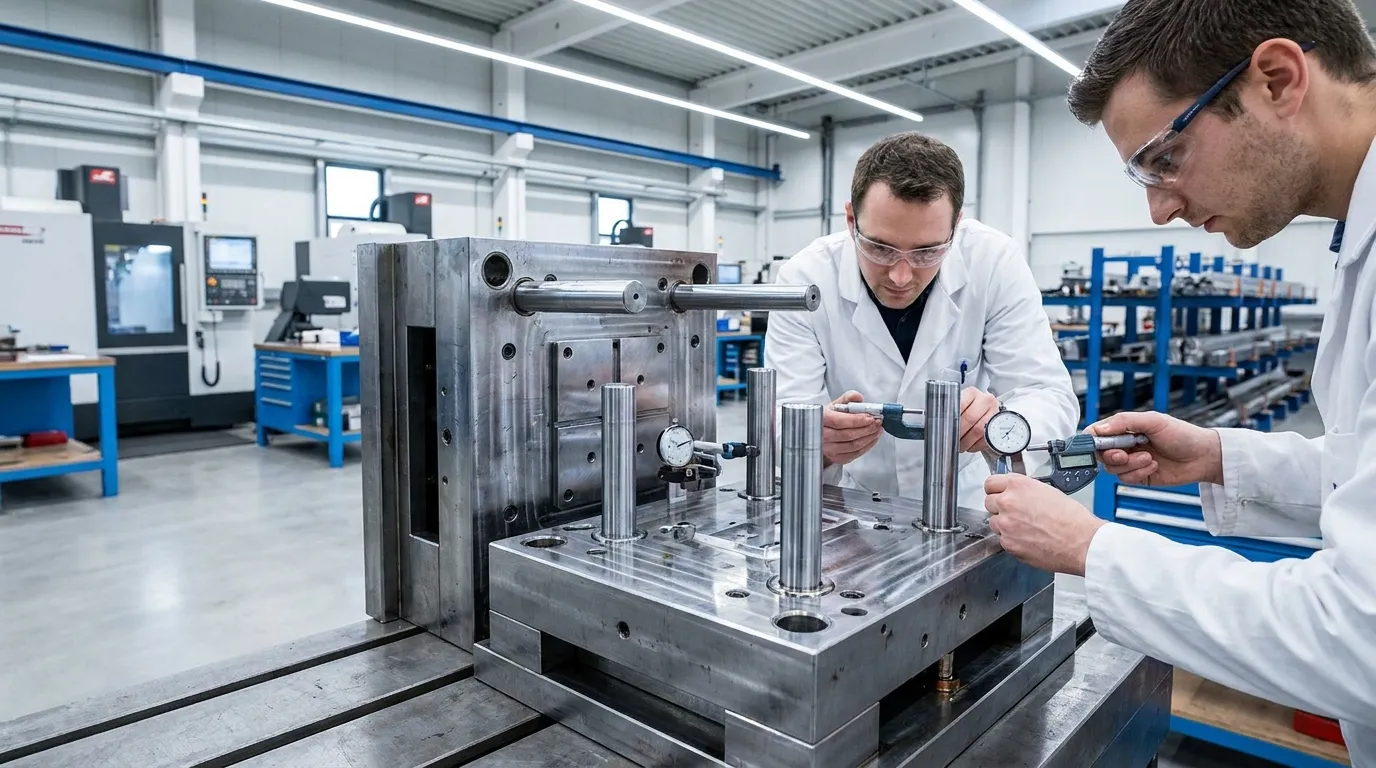
案内標, ブッシング, and precision inserts have the biggest impact on mold alignment because they control cavity positioning during repeated production cycles. Poor fit or premature wear in these components increases flash risk, 次元変動, and mold instability.
Alignment problems rarely begin with major mold damage. In most cases, wear starts gradually inside guide systems or mating surfaces. Once movement develops between mold halves, the cavity no longer closes consistently, and defects become harder to control.
ガイドポストとブッシング
Guide posts and bushings absorb repeated opening and closing movement during every molding cycle. これらの部品が不均一に摩耗する場合, the mold halves can shift slightly during closure. That small shift may create flash, バー, or part mismatch over time.
A high-cycle automotive grille mold is a common example. After extended production, worn bushings can create enough play to cause visible flashing along long cosmetic edges. Replacing only the worn guide system often restores part quality without rebuilding the full mold.
インサートとキャビティ
Precision inserts also affect alignment because they maintain cavity positioning in critical areas. Loose insert fit can create variation in wall thickness or gate geometry, especially in medical or electronics molds.
Low-cost insert systems are not always the best choice. They may reduce initial tooling cost, but frequent replacement and production instability often erase those savings during long production runs.
精密部品故障リスク表
| 構成要素 | 共通摩耗問題 | 生産症状 | 推奨アップグレード |
|---|---|---|---|
| 案内標識 | Surface wear | 別れ線での点滅 | 硬化ガイドシステム |
| ブッシング | クリアランス成長 | 型の不一致 | 精密グラウンドブッシング |
| 挿入 | エッジの摩耗 | 次元変動 | カーバイドインサート |
| Ejector pin | 苛立たしい | 部品の貼り付け | 研磨された硬化ピン |
厳密公差の金型を扱うメーカーは、しばしば 精密ガイドシステム to reduce long-term alignment drift.
How do tight tolerances improve repeatability in mold assemblies?
Tight component tolerances reduce movement between mating mold parts during repeated cycles. Better fit improves cavity alignment, stabilizes ejection, reduces flashing, and helps maintain consistent part dimensions during long production runs.
Repeatability matters most in high-volume production. A mold that performs well for 5,000 cycles may still fail in long-term production if clearances grow too quickly. Precision-ground components slow that wear progression by minimizing friction and movement between mating surfaces.
Tolerance control becomes especially important in molds with thin walls or cosmetic surfaces. Even minor cavity shift can affect appearance, フィット感, or sealing performance. Medical device molds often use tighter ejector pin tolerances to avoid surface marks during part release.
- より安定したキャビティアライメント
- フラッシュおよびバリ形成の減少
- より良い次元一貫性
- より滑らかな排出サイクル
- メンテナンス頻度の低下
Over-specifying one component rarely fixes the entire system. Tight tolerances only help when the full mold assembly can maintain alignment consistently. A precision insert paired with a worn guide system still creates instability during production.
多くの金型サプライヤーが提供しています 厳密公差型部品 specifically designed for long-cycle production environments.
What materials and hardness levels work best for precision mold parts?
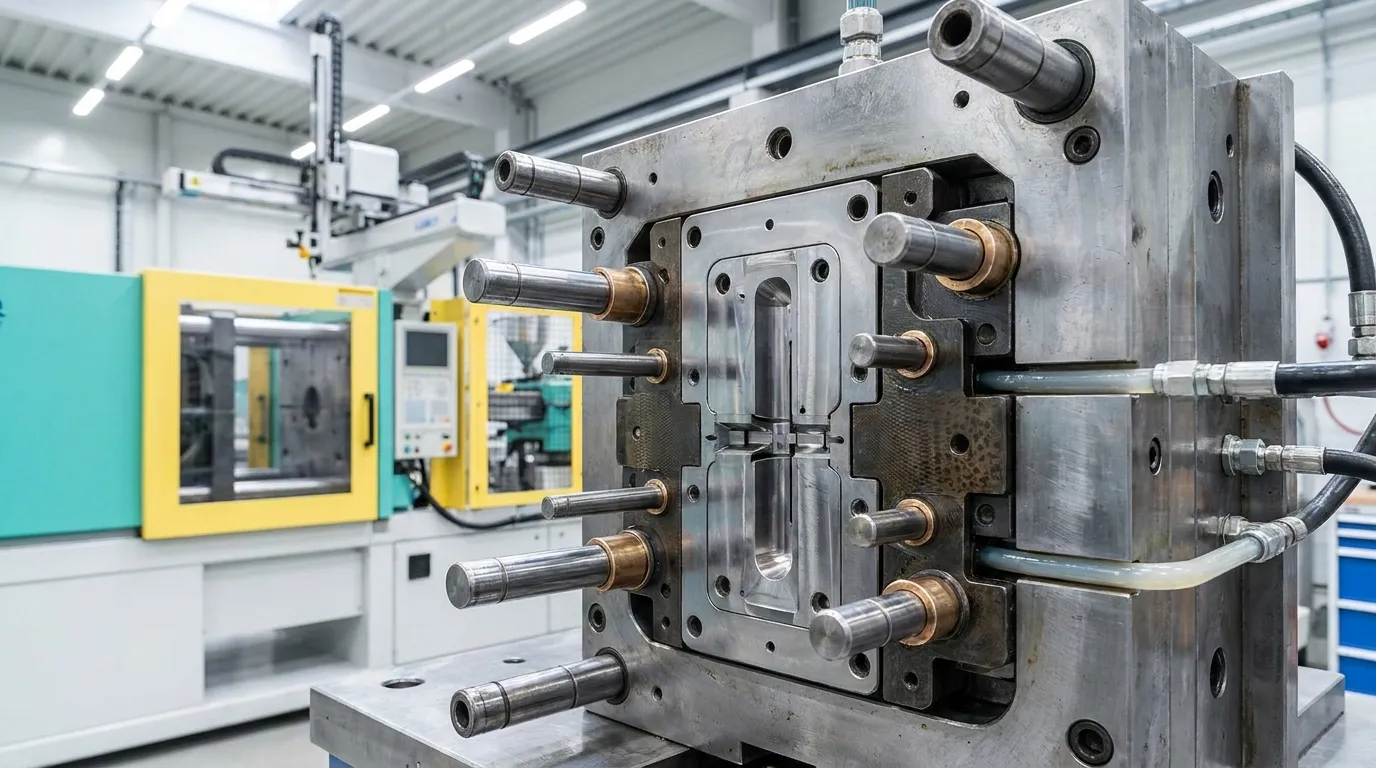
Material selection affects wear resistance, thermal stability, and service life in precision mold assemblies. Carbide components offer superior wear resistance, while hardened tool steels balance toughness, 機械化の可行性, and long-cycle durability.
Material choice depends on cycle volume, molding conditions, および必要な公差. High-speed production creates friction and heat that quickly damage softer components. Harder materials hold dimensional accuracy longer under those conditions.
| 素材 | Typical Advantage | 共通利用 |
|---|---|---|
| SKD11 | 耐摩耗性 | インサートとパンチ |
| SKH51 | 耐熱性 | 高速金型 |
| Carbide | 極めて硬い | 精密挿入 |
| Tool steel | バランスの取れた靭性 | 一般的な金型システム |
次の通りです iPROS精密部品参照, carbide and hardened tool steels are commonly selected for applications requiring long wear life and dimensional stability.
Heat treatment quality matters just as much as raw material selection. Poorly controlled hardening can create distortion or cracking, especially in precision-ground components. Buyers should ask suppliers about hardness range, 検査方法, and traceability before approving production.
Consumer electronics molds often highlight this issue clearly. One housing mold using upgraded carbide inserts reduced replacement frequency significantly because the insert edges resisted wear during continuous production.
If material durability is a priority, これらは 精密金型材料 are commonly used in high-accuracy assemblies.
When do standard mold components stop being reliable?
Standard mold components often become unreliable in high-cycle, tight-tolerance, or medical-grade applications where wear accumulates quickly. Precision-ground or custom-fit components improve alignment stability and reduce downtime in these demanding environments.
Standard catalog components work well in many general-purpose molds. They are cost-effective and easy to replace. Problems usually appear when production cycles increase, tolerances tighten, or molded parts require strict cosmetic consistency.
Medical molding is one example where standard systems often struggle. 次の通りです 医療用射出成形要件の指針, repeatable dimensional control and traceability are critical in regulated production environments.
標準部品と精密部品の意思決定表
| 制作状況 | 標準コンポーネント | 精密部品 |
|---|---|---|
| 低量型工具 | 通常は許容範囲です | オプション |
| 化粧表面 | 中程度のリスク | おすすめ |
| 医療部品 | しばしば不十分 | 優遇 |
| ハイサイクル型 | 摩耗が速くなる | より良い長期的安定性 |
| 厳密な公差 | クリアランスの問題の可能性 | より高い再現性 |
A common mistake is delaying component upgrades until visible defects appear. By that stage, wear may already affect cavities, インサート, or shut-off surfaces. Replacing guide systems earlier often costs far less than repairing damaged mold sections later.
How do precision components extend mold life?
Precision components extend mold life by reducing friction, ミスアライメント, and uneven wear during repeated production cycles. Better fit between moving parts helps the mold maintain stable operation longer without frequent adjustments or repairs.
Long-cycle molds place constant stress on guide systems, ejector assemblies, and mating surfaces. Once clearances begin increasing, wear spreads quickly across neighboring components. That chain reaction shortens overall tooling life.
A production mold running one million cycles illustrates this clearly. In one automotive application, worn guide bushings caused cavity mismatch and flashing along cosmetic surfaces. Replacing the guide system restored alignment and delayed a far more expensive cavity rebuild.
カビのライフ改善チェックリスト
- ハイサイクル型には硬化ガイドシステムを使用してください
- インサート素材を生産量に合わせる
- イジェクターピンの摩耗を定期的に点検してください
- 空洞の損傷が起こる前に摩耗したブッシングを交換してください
- 一定の潤滑スケジュールを保ちましょう
- 予防保全中のアライメントを監視する
Low-cost ejector systems often become the first major wear point in fast-cycle production. That is especially true in molds using aggressive ejection timing or thin-wall parts. Upgrading those systems early usually improves production stability and reduces downtime.
追加で確認することもできます 耐摩耗型部品 commonly used to improve tooling durability.
What should buyers evaluate before sourcing precision mold components?
Buyers should evaluate tolerance capability, 熱処理品質, 材料のトレーサビリティ, 検査方法, and delivery consistency before selecting a precision mold component supplier. These factors affect both mold stability and long-term production reliability.
A supplier's machining accuracy matters, but inspection capability matters just as much. Precision components should include documented dimensional checks, hardness verification, and repeatable manufacturing controls.
- 許容範囲
- 研磨精度
- 熱処理の粘度
- 材料認証
- 表面仕上げの品質
- 配送信頼性
- Replacement lead times
Production scheduling also affects sourcing decisions. Delayed component delivery can hold up mold trials, validation runs, or customer approvals. Some manufacturers now build extra inspection and logistics planning into production schedules to reduce tooling delays, as discussed in 最近のカビ生産計画分析.
Import timing may also affect tooling schedules in some regions. Buyers handling overseas shipments should review applicable customs and trade documentation requirements before finalizing delivery timelines. その バングラデシュ税関の指針 is one example of how import procedures can influence manufacturing lead times.
Before selecting a supplier, it also helps to compare available カスタム金型部品サプライヤー capabilities against actual production requirements instead of choosing based on price alone.
次のステップを正しく進める
Precision mold components directly affect alignment stability, dimensional consistency, そしてカビライフ. Small differences in fit, 硬度, or wear resistance often become major production issues after extended cycles. That is why component selection should match the actual operating conditions of the mold, not just the initial tooling budget.
If your application involves tight tolerances, 外観表面, medical parts, or high-cycle production, it is worth reviewing the full guide system, ejector assembly, and insert strategy before launch. Choosing the right precision mold components early usually reduces downtime, lowers maintenance costs, and keeps production more stable over time.
よくある質問
What are precision mold components?
Precision mold components are high-tolerance parts used to maintain alignment, 安定性, and dimensional accuracy inside mold assemblies. Common examples include guide posts, ブッシング, イジェクターピン, インサート, and cavities.
Why are guide posts and bushings important?
Guide posts and bushings keep mold halves aligned during repeated opening and closing cycles. アライメント不良は摩耗を増やします, flash defects, and dimensional inconsistency during production.
What materials are commonly used for precision mold parts?
Carbide and hardened tool steels like SKD11 and SKH51 are commonly used because they provide strong wear resistance and dimensional stability. Material choice depends on cycle volume, 許容差要件, および運用条件.
How do ejector pins affect molding quality?
Ejector pins affect part release consistency and surface quality during mold opening. Poorly fitted or worn ejector pins can create marks, sticking problems, or uneven ejection force.
When should custom mold components be used?
Custom mold components are usually necessary when standard catalog parts cannot maintain required tolerances, fit conditions, or production durability. They are common in medical, 自動車, and high-cycle tooling applications.
How do precision components improve mold life?
Precision components reduce friction, ミスアライメント, and uneven wear during repeated cycles. Better fit and surface finish help molds maintain stable operation for longer production runs.



サンシャインより書かれました
サンシャインで, 私たちは精密金型部品の専門製造およびサプライヤーです, プレスおよび射出成形用途向けの幅広い製品を提供しています. 私たちの主な焦点はパンチダイスです, イジェクターピンとスリーブ, ガイドポストとブッシング. 高度なCNC加工技術で, 厳格な品質管理, そして強力な生産能力, 私たちは信頼性を保証しています, 高精度部品, また、迅速かつ効率的なグローバル供給のための在庫の標準部品も併用しています.
ニュース
サービスを受けましょう
あらゆる予算に合った高品質な部品と、親切なスタッフが訓練されていて、訪問を有益で手間なく充実させてくれます.
