



プラスチック型部品: 射出成形の標準部品
Plastic mold parts include standardized components like ejector pins, 袖, 案内標, and bushings used in injection molds. Buyers should compare wear resistance, 公差, 素材の品質, and supplier lead times before purchasing. Standard components usually reduce maintenance delays and replacement costs, while custom parts work better for specialized mold designs. Keeping critical spare parts in stock also helps prevent downtime caused by shipping or customs delays.
Mold performance depends on more than cavity design. The small components inside the mold often determine maintenance frequency, production uptime, および再調達コスト. Buyers who choose the wrong ejector pins, ガイドブッシング, or sleeves can face alignment issues, unexpected wear, and sourcing delays. This guide explains how to compare standard plastic mold parts before placing an order or approving a tooling build.
What are standard plastic mold parts?
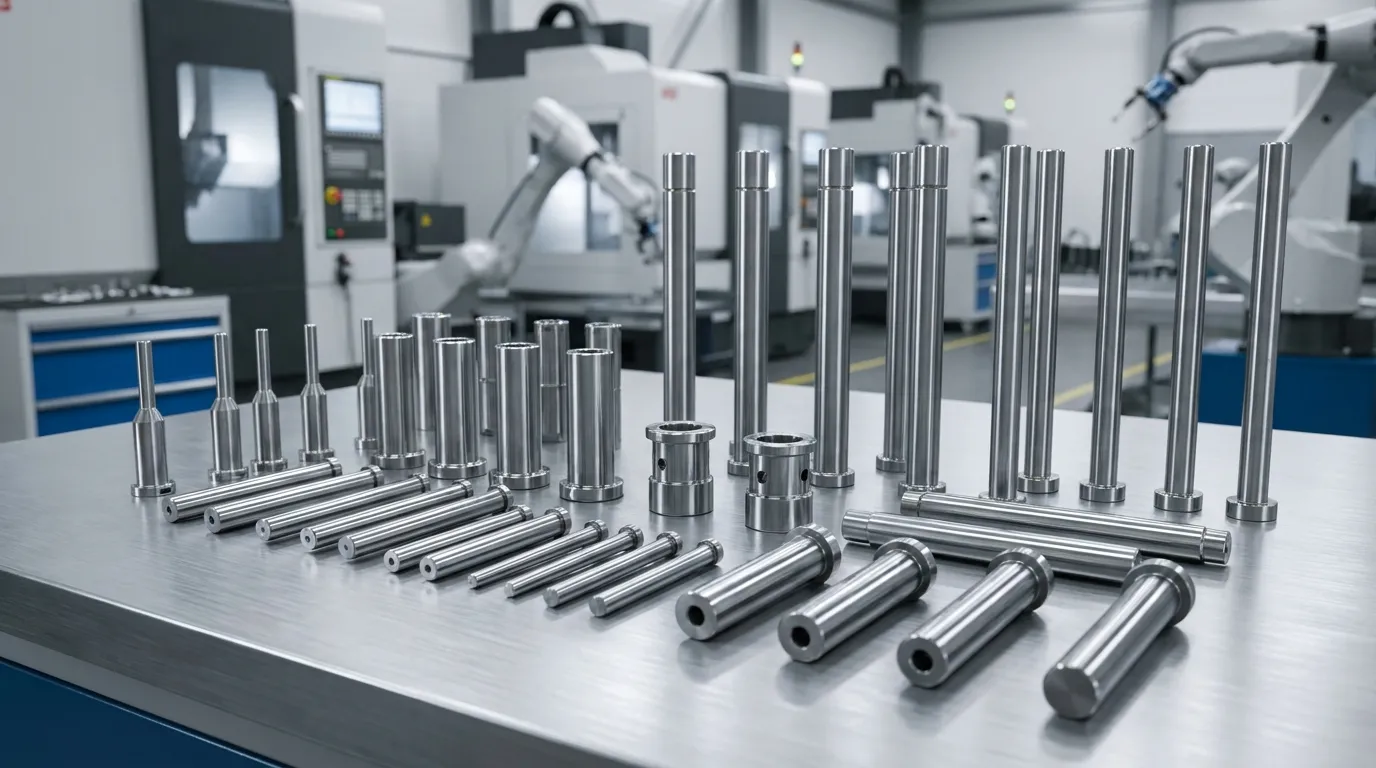
Standard plastic mold parts are pre-manufactured components such as ejector pins, 袖, 案内標, and bushings used across injection molds. Buyers choose them to simplify maintenance, reduce lead times, and improve replacement consistency.
Standard mold components are designed around common dimensions and tolerances. Instead of machining every part from scratch, mold builders use standardized pieces that can be replaced quickly during maintenance or production repairs.
These components support mold alignment, part ejection, wear control, and overall production stability. Many manufacturers prefer standardization because replacement inventory is easier to manage across multiple tools and production lines.
For a broader look at mold systems and terminology, これを見てください complete mold component guide.
| Common Mold Part | Primary Function |
|---|---|
| イジェクターピン | Push finished parts out of the mold |
| イジェクタースリーブ | Support ejection around cores |
| 案内標 | Maintain mold alignment |
| ガイドブッシング | Reduce alignment wear |
| リターンピン | Reset ejector systems |
| Core pins | Form internal features |
Standardization also helps maintenance teams. If multiple molds use the same guide bushings or ejector sleeves, replacement becomes faster during shutdowns or emergency repairs.
Which mold components wear out most often?
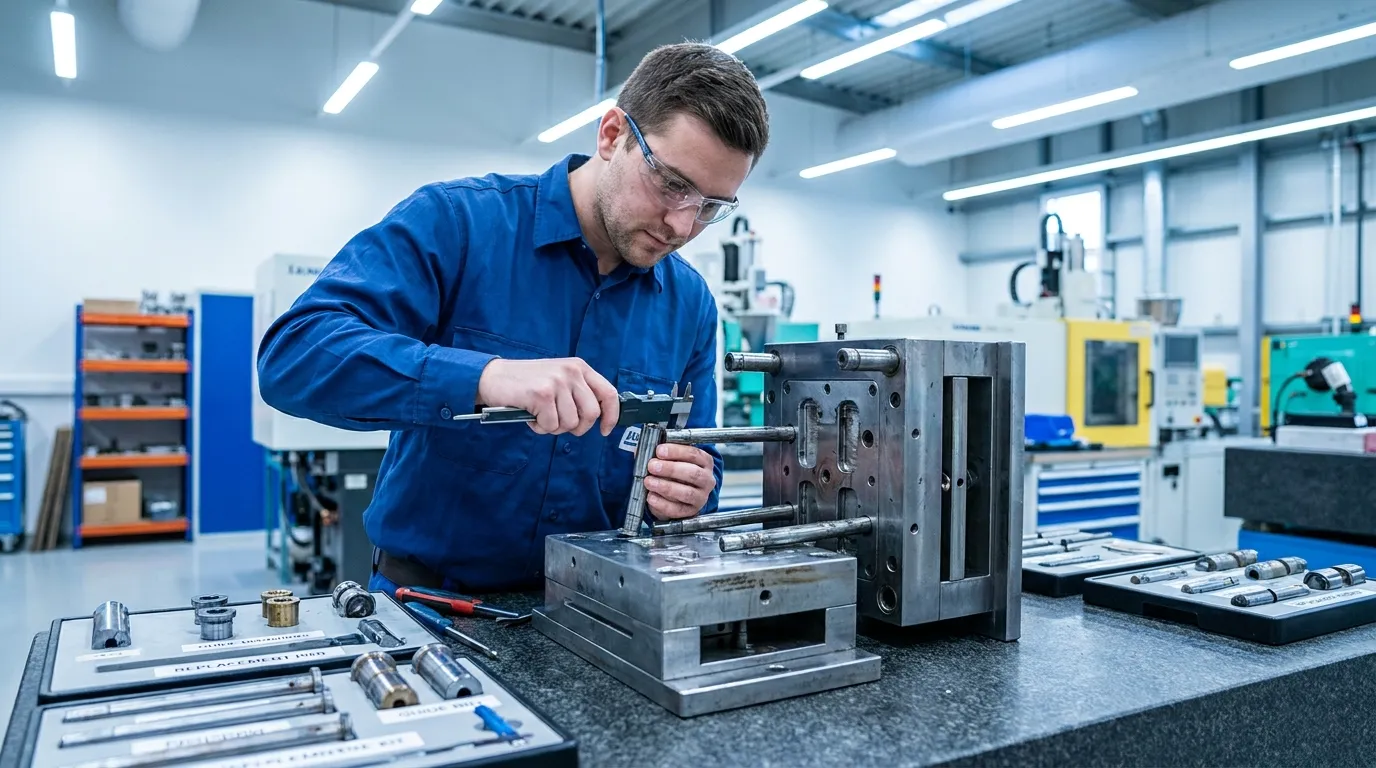
イジェクターピン, 袖, and guide bushings are among the most frequently replaced mold components because they operate under repeated friction, 圧力, and alignment stress. Buyers should prioritize wear resistance and replacement availability when sourcing these parts.
High-wear components usually sit in areas with constant movement or friction. Ejector systems cycle every time the mold opens, while guide systems absorb alignment loads during clamping. 時間をかけて, this repeated movement creates wear that affects precision and part quality.
Abrasive resins can accelerate damage. A consumer electronics mold using glass-filled plastic may wear through low-grade ejector pins much faster than expected. In high-cycle production, buyers often switch to higher-hardness steel grades to extend replacement intervals.
高摩耗型の金型部品チェックリスト
- Ejector pins exposed to repeated cycling
- Ejector sleeves operating around moving cores
- Guide bushings handling mold alignment pressure
- Core pins exposed to abrasive resin flow
- Alignment components affected by vibration or misalignment
Downtime costs also change replacement strategy. One production manager calculated that a single day of downtime cost more than keeping several sets of spare guide pins and sleeves in inventory. That made preventive stocking easier to justify.
You can explore additional 型着損部品 commonly replaced during maintenance cycles.
Should you choose standard or custom mold components?
Standard mold components usually reduce lead time and simplify maintenance, while custom parts work better for specialized geometries or unique production requirements. The best choice depends on production volume, 交換周波数, and mold complexity.
Standard parts work well for most injection mold applications because they are easier to source and replace. Buyers can often reduce maintenance downtime by choosing widely available dimensions and configurations.
型に特殊な形状が必要な場合、カスタム部品が必要になります, non-standard movement, or specialized cooling and ejection layouts. 医療, 航空宇宙, and highly engineered automotive molds often need custom features that standard catalogs cannot support.
Standard mold parts are not always the best option. They reduce lead time and simplify maintenance, but custom components are often safer for unusual geometries or specialized production environments.
Standard vs Custom Mold Parts Decision Table
| 要因 | 標準コンポーネント | カスタムコンポーネント |
|---|---|---|
| Lead time | Usually shorter | Often longer |
| Replacement speed | もっと速く | 遅い |
| Upfront cost | 下 | 高く |
| Maintenance flexibility | 楽だ | より専門的です |
| Compatibility | Broad | 限定 |
| Precision customization | 中程度 | ハイ |
An automotive mold project may use standard guide bushings to shorten replacement lead times during planned shutdowns. In contrast, a medical device mold might require custom ejector layouts because of strict geometry and surface requirements.
For more specialized tooling options, これらをレビューしてください カスタム金型アクセサリー before finalizing your design.
How do ejector pins and sleeves affect mold performance?
Ejector pins and sleeves directly affect part release consistency, 型の摩耗, and production uptime. Poor fit or incorrect hardness can increase friction, create flash issues, and shorten mold service life.
Ejector systems control how finished parts leave the cavity after cooling. If pin sizing or alignment is incorrect, the mold may produce sticking, uneven marks, or damaged surfaces. Small tolerance issues can become major production problems during high-volume runs.
Sleeves are commonly used around round cores or deep cylindrical features. They distribute ejection force more evenly than standard pins in certain applications. Buyers should compare hardness, 表面仕上げ, and fit accuracy before selecting either option.
When should you upgrade to higher-hardness ejector pins?
Higher-hardness ejector pins make sense when molds run abrasive materials, high cycle counts, or elevated temperatures. Low-cost ejector pins can increase downtime costs later because softer materials wear faster under repeated friction.
A consumer electronics supplier using glass-filled resin upgraded to hardened ejector pins after repeated wear caused sticking and flash defects. The replacement cost increased slightly, but production interruptions dropped significantly.
If-Then Selection Table
| If this condition exists | Consider this solution |
|---|---|
| Abrasive resin wear | Hardened ejector pins |
| Deep cylindrical cores | イジェクタースリーブ |
| Frequent alignment issues | Precision guide systems |
| High-cycle production | Wear-resistant tool steel |
| Surface marking problems | Improved pin finish |
Buyers comparing ejection systems should also review available ejector pin systems before locking final specifications.
Which materials are commonly used in plastic mold parts?
Tool steel selection affects wear resistance, 次元安定性, corrosion performance, そしてカビライフ. Buyers should match component materials to production volume, 樹脂タイプ, and operating temperature instead of choosing solely on price.
Most standard mold components use hardened tool steel because it handles repeated pressure and friction well. Stainless grades may be used when corrosion resistance matters, especially in molds exposed to moisture-sensitive or corrosive materials.
Heat treatment also changes performance. Proper hardening improves wear resistance and extends service life, but excessive hardness can increase brittleness in certain applications.
| Material Type | Typical Advantage | 共通利用 |
|---|---|---|
| Hardened tool steel | 耐摩耗性 | イジェクターピン, ブッシング |
| Stainless steel | Corrosion protection | 医療環境および湿度の高い環境 |
| Heat-treated alloy steel | Strength and toughness | High-load components |
Material quality matters most in high-cycle environments. A low-cost guide bushing may work for limited production, but repeated cycling can quickly increase clearance and alignment wear.
What tolerances matter most when selecting mold parts?
Tolerances affect alignment, フィット感, wear patterns, および置換整合性. Even small dimensional differences can create flashing, くっつく, or premature component wear during production.
Guide systems require especially tight tolerance control because alignment errors increase friction across the mold. Ejector systems also depend on proper clearance to prevent sticking or uneven movement.
Critical Tolerance Areas
- Guide post and bushing fit
- Ejector pin clearance
- Surface finish consistency
- Alignment accuracy between moving halves
- Replacement compatibility across molds
Buyers sometimes focus only on material hardness and overlook fit accuracy. That creates avoidable maintenance problems later. A properly fitted standard component often performs better than a harder but poorly matched replacement part.
For additional tolerance and tooling guidance, これらをレビューしてください precision mold standards 仕様を最終決定する前に.
What sourcing and customs issues delay mold part delivery?
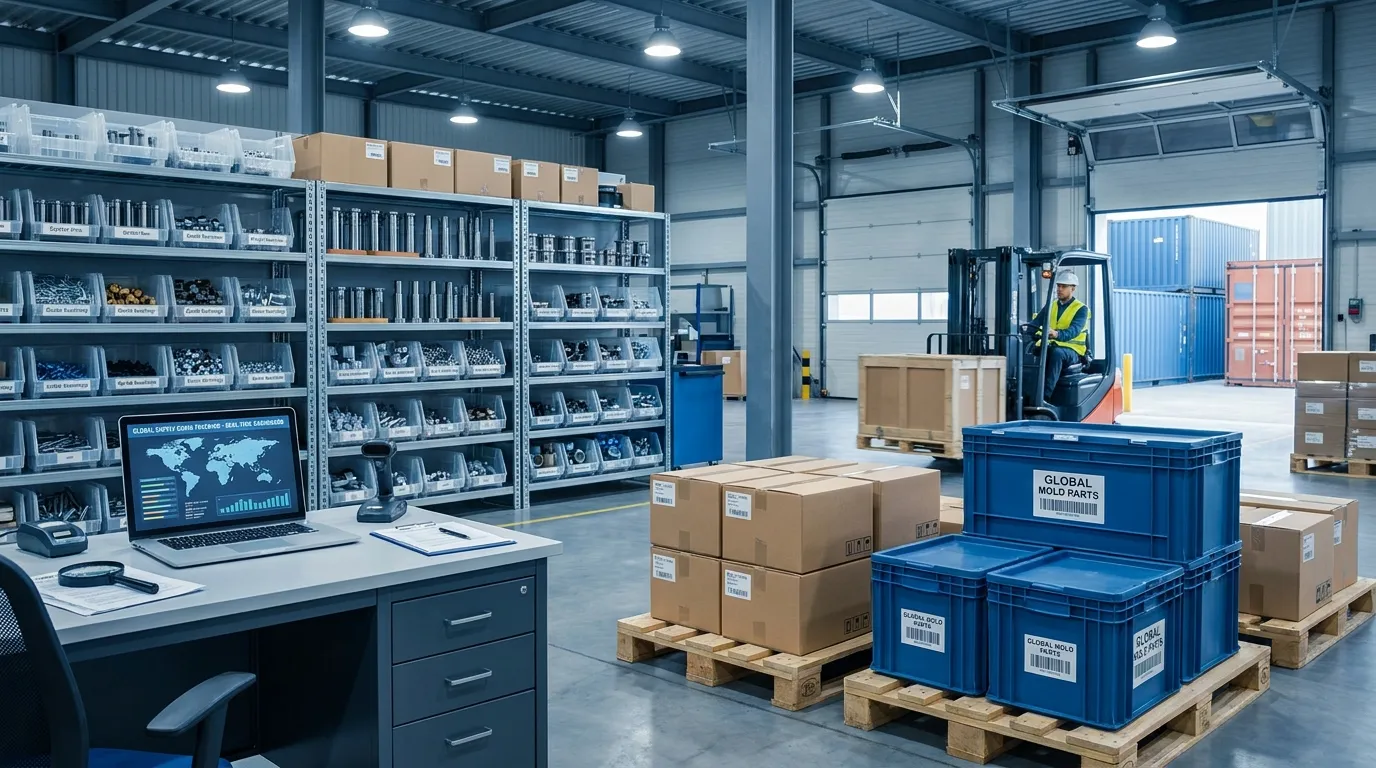
Mold part delivery delays often come from incomplete customs documentation, incorrect classifications, production bottlenecks, or low inventory availability. Buyers can reduce delays by standardizing parts, confirming documentation early, and maintaining critical spare stock.
Lead times for mold components involve more than manufacturing. 国際航行, 税関通関, and inventory shortages can delay replacement parts long after production is complete.
According to customs compliance guidance from NG Terminal, shipment holds increasingly come from documentation and compliance problems rather than port congestion alone.
How customs compliance affects mold component imports
Incorrect HS classifications, incomplete paperwork, or missing compliance details can delay industrial component imports. Bangladesh customs updates for industrial imports also show how documentation requirements continue changing for international shipments through バングラデシュ税関.
Production scheduling creates another risk. 研究 Ulitech Precision explains how tooling timelines already include machining, 検証, and approval stages before shipment even begins.
カビ成分調達チェックリスト
- Confirm part specifications before ordering
- Verify HS codes and customs paperwork
- Check supplier inventory availability
- Keep spare high-wear components in stock
- Avoid single-source custom replacements when possible
Overseas sourcing only works well when replacement planning is already in place. Buyers who rely on one custom component supplier without backup inventory create unnecessary production risk.
You can also review broader mold component sourcing considerations before planning large tooling orders.
Which mold parts should you keep in stock?
Buyers should keep high-wear and high-risk mold components in stock, especially ejector pins, 袖, ガイドブッシング, およびアライメント部品. Spare inventory reduces emergency downtime and protects production schedules during shipping or customs delays.
すべての金型部品にバックアップ在庫が必要なわけではありません. Focus first on parts with high wear rates, long replacement lead times, or major production impact if failure occurs.
Medical production teams often keep spare ejector sleeves available because customs delays can interrupt regulated manufacturing schedules. 多くの場合, carrying a small inventory costs far less than unexpected downtime.
Mold Spare Inventory Checklist
| 構成要素 | Wear Frequency | Downtime Risk | Suggested Stock Level |
|---|---|---|---|
| イジェクターピン | ハイ | ハイ | Multiple sets |
| ガイドブッシング | メディア | ハイ | Backup set |
| イジェクタースリーブ | ハイ | メディア | Backup set |
| Core pins | メディア | メディア | Limited backup |
| Alignment parts | メディア | ハイ | Backup set |
Injection molding timelines already include tooling and validation stages, 次の通りです Evok Plastic Molding. Delayed replacement parts can extend those timelines even further if critical components are unavailable.
Additional planning tips are available in this guide to spare mold parts for production maintenance teams.
買い手は金型部品の供給者をどのように評価すべきか?
Price matters, but supplier consistency matters more. Buyers should compare tolerance control, inventory availability, 品質システム, and delivery reliability before approving a supplier.
A sourcing team comparing two vendors may find one supplier offers lower pricing but no stocked inventory. If emergency replacement parts require extended manufacturing time, the cheaper option can become more expensive during downtime.
サプライヤー評価チェックリスト
- Material certification availability
- Inventory depth for standard components
- Tolerance control capability
- Production consistency
- Replacement lead times
- Quality inspection process
- Communication responsiveness
Supplier capability also affects scaling. Industry sourcing guidance from The Rodon Group highlights the importance of production capacity and operational consistency when evaluating manufacturing partners.
If you're reviewing suppliers across broader tooling systems, これだ plastic injection mold guide can help connect component decisions to overall mold production planning.
次に何をすべきか
Choosing the right plastic mold parts comes down to reliability, 代替計画, and production fit. Standard components often reduce maintenance delays and simplify inventory management, but custom solutions still matter for specialized tooling.
Start by identifying the highest-wear components in your molds. Then compare material quality, 公差制御, and supplier inventory support before ordering. Buyers who standardize critical components and maintain spare inventory usually reduce downtime risk and simplify long-term maintenance planning.
よくある質問
What are mold components?
Mold components are the replaceable parts used inside injection molds, イジェクターピンも含む, ブッシング, 袖, 案内標, and inserts. They support alignment, part ejection, 耐摩耗性, and overall mold performance.
What are ejector pins used for?
Ejector pins push finished plastic parts out of the mold cavity after cooling. Proper pin selection helps prevent sticking, surface damage, and uneven ejection during production.
What is the difference between standard and custom mold parts?
Standard mold parts use common dimensions and specifications, while custom parts are built for unique tooling requirements. Standard components usually reduce replacement delays and simplify maintenance planning.
What materials are used for mold components?
Mold components commonly use hardened tool steel, ステンレススチール, and heat-treated alloy materials. Material selection depends on wear resistance, 腐食曝露, 生産量, and resin type.
How long do mold components last?
Mold component lifespan depends on production volume, 素材の品質, メンテナンス, and molding conditions. High-wear parts like ejector pins and bushings usually require replacement more often than structural mold sections.
What causes injection mold delays?
Injection mold delays often come from tooling revisions, inventory shortages, customs clearance issues, and production bottlenecks. Highly customized components can increase replacement lead times and sourcing risk.



サンシャインより書かれました
サンシャインで, 私たちは精密金型部品の専門製造およびサプライヤーです, プレスおよび射出成形用途向けの幅広い製品を提供しています. 私たちの主な焦点はパンチダイスです, イジェクターピンとスリーブ, ガイドポストとブッシング. 高度なCNC加工技術で, 厳格な品質管理, そして強力な生産能力, 私たちは信頼性を保証しています, 高精度部品, また、迅速かつ効率的なグローバル供給のための在庫の標準部品も併用しています.
ニュース
サービスを受けましょう
あらゆる予算に合った高品質な部品と、親切なスタッフが訓練されていて、訪問を有益で手間なく充実させてくれます.
