



精密射出成形: 耐性, Repeatability, および品質管理
Precision injection molding is a manufacturing method used to produce plastic parts with extremely tight tolerances, stable repeatability, and strict quality control. It relies on controlled machine settings, high-accuracy molds, and continuous monitoring to keep parts consistent across large production runs. This makes it essential for industries like medical devices, 電子機器, and automotive, where even small deviations can affect performance or assembly.
Precision injection molding is not just about making small plastic parts. It’s about making identical parts, every single time, within extremely tight limits. That level of control is what separates standard molding from precision-grade production. In industries where fit, 機能, and reliability matter, even tiny variations can cause real problems. Understanding how this process works is key before choosing it for production.
What makes injection molding “precision” in the first place?
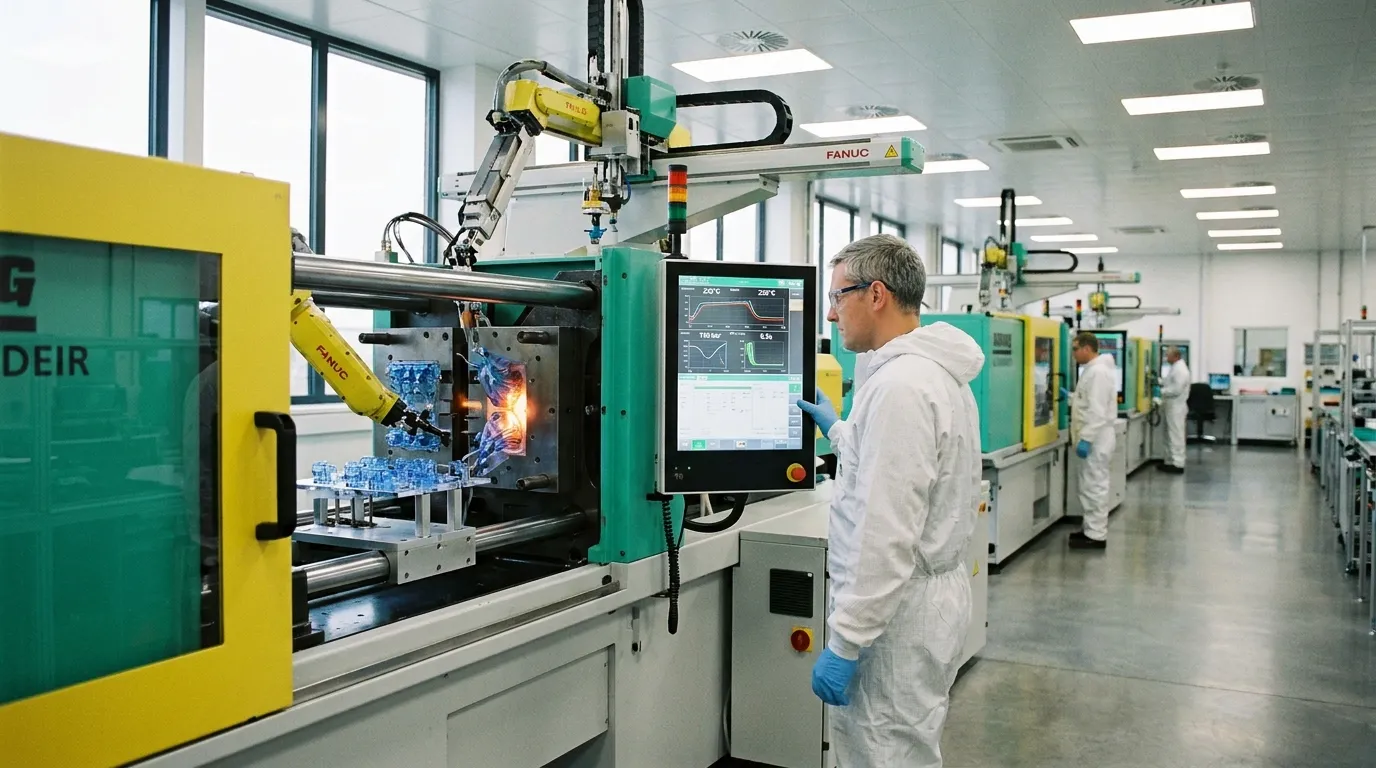
Precision injection molding is defined by its ability to produce parts with extremely tight dimensional control and consistent repeatability across production cycles. It focuses less on basic shaping and more on controlling variation at every stage of production.
Instead of just filling a mold with plastic, the process tightly controls pressure, 温度, cooling rate, and injection timing. 目的はシンプルです: every part must match the same dimensions within a very small tolerance range. This is what separates it from standard molding, where small variations are more acceptable.
The difference also comes from equipment and tooling. Precision systems use high-accuracy molds, advanced machine calibration, and controlled environments. Even small changes in melt behavior or cooling can affect final dimensions, so everything is tightly monitored.
業界の説明によると、例えば EI販売, this approach is essential when parts must fit together perfectly or perform in sensitive assemblies where deviation is not acceptable.
How tight are tolerances in precision injection molding really?
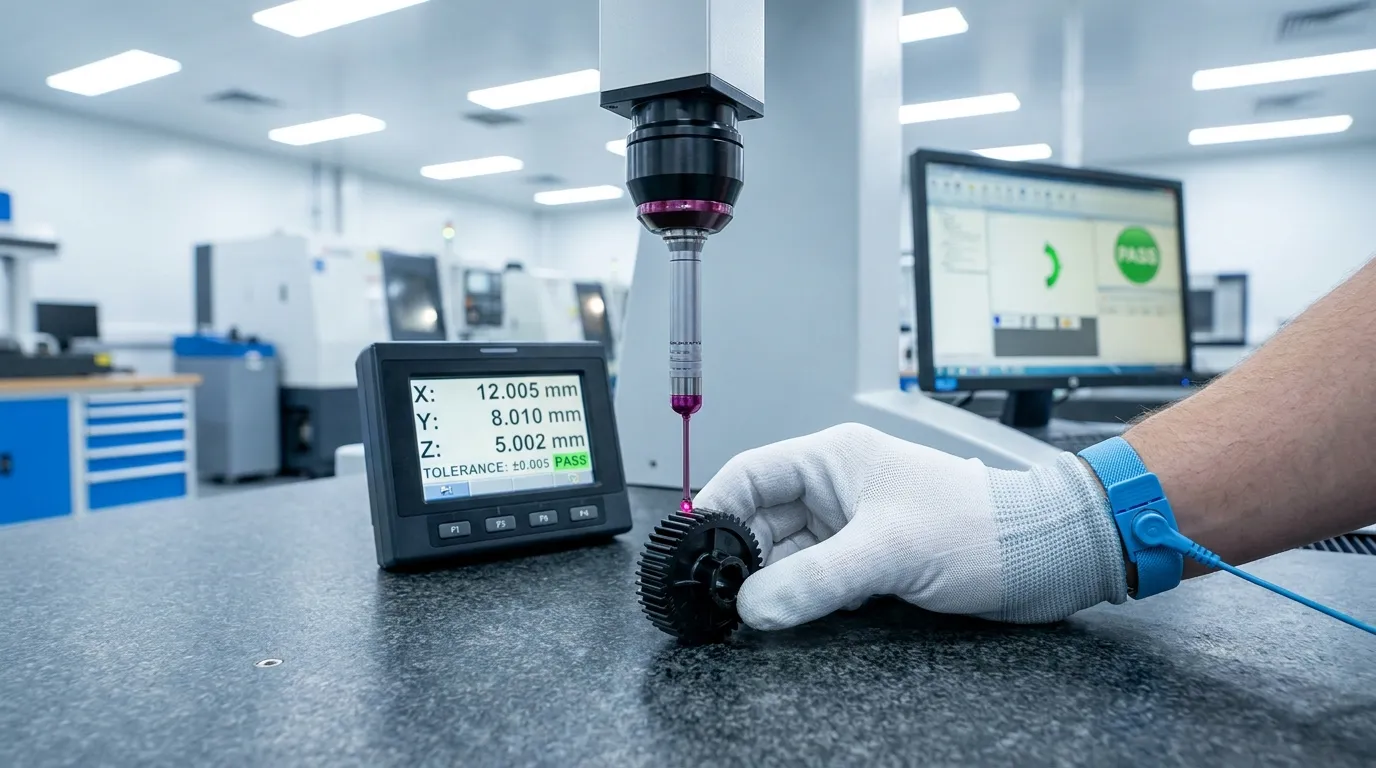
Precision injection molding typically achieves tolerances as tight as ±0.01 mm depending on part design, 素材, and process stability. しかし, maintaining this level consistently depends on mold quality and production control.
In real production, tolerance performance is influenced by material shrinkage, 型の摩耗, および熱安定性. That means even parts made from the same mold can vary slightly if conditions drift over time.
Here’s how tolerance levels generally compare:
| 応用レベル | 典型的な許容範囲 | 注記 |
|---|---|---|
| 標準成形 | ±0.1 mm以上 | 一般消費者向け部品 |
| 高精度成形 | ±0.05mm | 組み立てがタイトなフィット |
| 精密成形 | ±0.01 mm or better | 重要な機能部品 |
例えば フォックスモールド explain that precision molding is not just about hitting tight specs once, but maintaining them consistently across long production runs.
That consistency is what makes tolerance control valuable in real manufacturing environments.
What actually keeps every molded part identical over time?
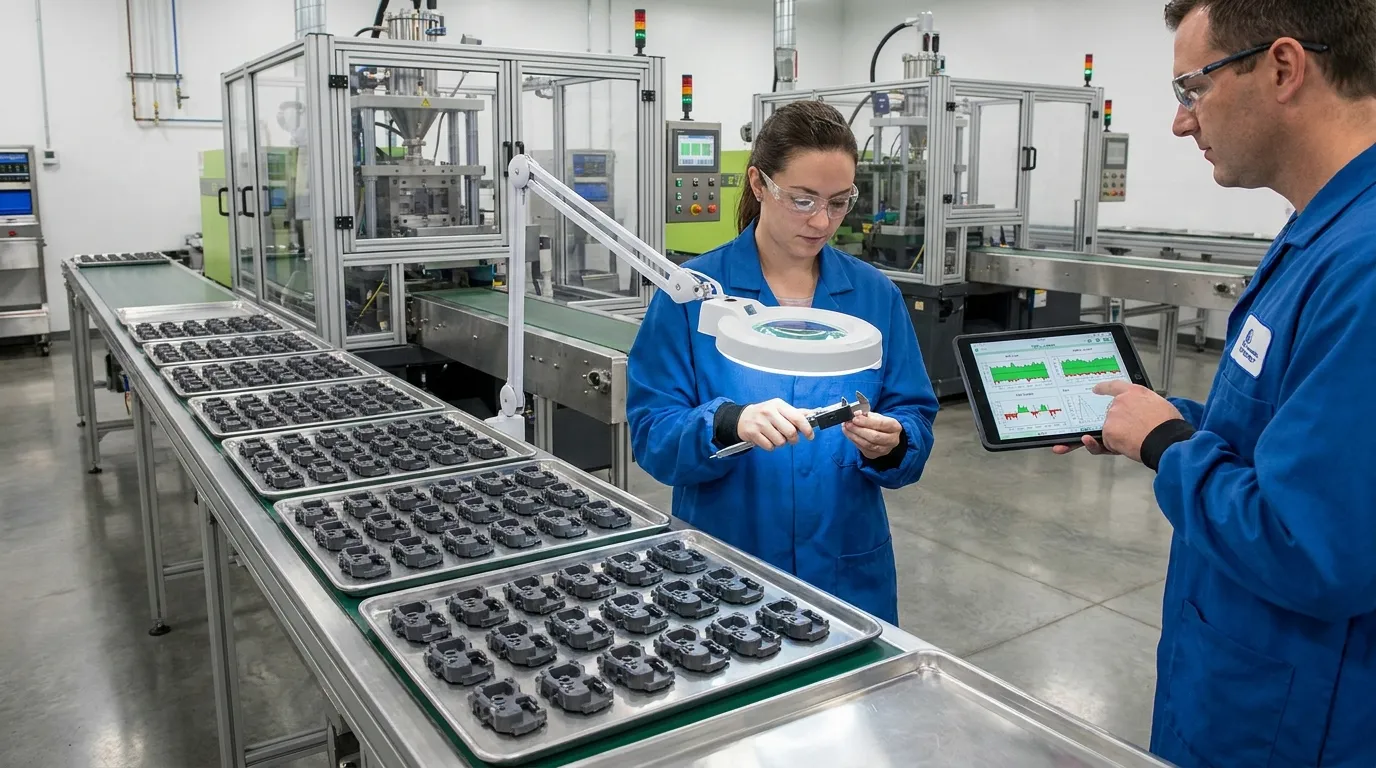
Repeatability in precision injection molding is achieved through strict control of machine parameters, mold stability, and continuous process monitoring.
The injection molding machine controls injection pressure, melt temperature, and cycle timing with high accuracy. Even small variations can affect part dimensions, so modern systems use closed-loop control to reduce drift.
Mold design also plays a major role. High-precision molds are built to resist deformation under repeated thermal and mechanical stress. If the mold changes shape, repeatability quickly drops.
機械と金型の繰り返し性における役割
- Machine systems: control pressure, 速度, and temperature stability
- Mold systems: キャビティ形状と熱的安定性の維持
- プロセス監視: 出力に影響を与える前に小さな偏差を検出します
以下で説明されています。 ENGELの精密成形システム, stable interaction between these elements is what keeps parts consistent in high-volume production.
Why do precision molded parts still vary or fail?
Even in precision injection molding, variation can occur due to material behavior, 型の摩耗, or unstable process conditions.
One of the main causes is material shrinkage. Different plastics cool at different rates, and small changes in cooling conditions can shift final dimensions.
Mold wear is another factor. Over long production cycles, cavity surfaces slowly change, which can affect critical measurements even if the change is microscopic.
- 冷却中の材料収縮不均一性
- 生産サイクルにおける熱変動
- 長距離走行後の金型空洞の摩耗
- 圧力または注入速度ドリフト
These issues usually appear gradually rather than suddenly. Parts may still look correct but slowly drift out of tolerance over time if not monitored.
How is quality controlled in precision injection molding production?
Quality control in precision injection molding relies on continuous inspection, statistical monitoring, and process feedback systems.
One common method is statistical process control (SPC), which tracks production measurements over time. If values begin to drift, adjustments are made before parts go out of specification.
Inspection is also performed frequently using precision tools such as coordinate measuring machines (CMMs(CMM)) or optical measurement systems. This ensures consistency across batches rather than relying only on final checks.
- インラインチェックは早期のバリエーションを捉えます
- サンプリングはバッチの一貫性を保証します
- SPCシステムは長期ドリフトを検出します
以下に記載されています ファブリックの精密成形概要, combining monitoring with measurement systems is key to stable high-volume production.
生産システムについてさらに詳しく学びましょう。 プラスチック射出成形サービス概要.
When does precision injection molding actually make sense?
Precision injection molding makes sense when part performance depends on exact fit, アライメント, or repeatable function across large volumes.
If small variations do not affect function, standard molding is usually more cost-effective. But when deviation leads to assembly issues or failure, precision becomes necessary.
This is common in industries like medical devices, 電子機器, and automotive sensors where accuracy directly impacts performance.
- 緊密な機械組立
- 電気コネクターシステム
- 医療機器ハウジング
- 光学部品またはセンサー部品
Precision molding increases cost due to tighter control and tooling requirements, so the decision should always balance function and budget.
製造オプションを探る カスタム射出成形サービス.
次に何をすべきか
Precision injection molding is about control, 一貫性, and predictable performance. When your product depends on tight tolerances and stable repeatability, this process becomes essential rather than optional.
The key is understanding when precision actually matters. Some parts can tolerate small variation without issue, while others cannot. Evaluating that early helps avoid unnecessary cost and production risk. If you're planning a project, comparing tolerance needs before tooling decisions are locked in can save significant time and expense.
よくある質問
What is precision injection molding?
It is a manufacturing process that produces plastic parts with extremely tight tolerances and high repeatability. It is used when standard injection molding cannot meet strict dimensional or functional requirements in final assemblies.
What tolerance can precision injection molding achieve?
It can reach tolerances as tight as ±0.01 mm depending on part geometry and material behavior. しかし, consistent results depend on mold quality, 機械校正, and stable processing conditions.
What industries use precision injection molding?
It is commonly used in medical devices, automotive systems, 電子機器, and aerospace components. These industries require exact part fit and reliable long-term performance.
Why is precision injection molding expensive?
It requires high-precision molds, advanced machines, and strict process monitoring systems. These factors increase setup time and production cost compared to standard injection molding.
How is repeatability maintained in precision molding?
Repeatability is maintained by controlling temperature, 圧力, and injection speed while using stable molds and continuous process monitoring systems. Small deviations are detected early and corrected.
精密射出成形における欠陥の原因?
Common causes include material shrinkage variation, 型の摩耗, thermal instability, and process drift over time. These factors can slowly push parts out of tolerance if not controlled.
When should I choose precision injection molding?
You should choose it when part function depends on tight fit, アライメント, or consistent performance. If small variations do not affect performance, standard molding may be more cost-effective.



サンシャインより書かれました
サンシャインで, 私たちは精密金型部品の専門製造およびサプライヤーです, プレスおよび射出成形用途向けの幅広い製品を提供しています. 私たちの主な焦点はパンチダイスです, イジェクターピンとスリーブ, ガイドポストとブッシング. 高度なCNC加工技術で, 厳格な品質管理, そして強力な生産能力, 私たちは信頼性を保証しています, 高精度部品, また、迅速かつ効率的なグローバル供給のための在庫の標準部品も併用しています.
ニュース
サービスを受けましょう
あらゆる予算に合った高品質な部品と、親切なスタッフが訓練されていて、訪問を有益で手間なく充実させてくれます.
