



型用の精密部品: 精度と耐摩耗性が重要な場合
Precision components for molds are high-tolerance parts that improve alignment, repeatability, and wear resistance in injection mold systems. Components such as guide posts, イジェクターピン, and bushings need tight dimensional control to reduce flash, uneven wear, and part variation. The right material, コーティング, and inspection process can extend mold life and maintain stable production quality across long manufacturing runs.
A mold can look well-built on paper and still fail in production because of small component inaccuracies. ミスアライメント, surface wear, and tolerance drift often start with the parts that guide, ポジション, and eject material inside the mold. For manufacturers running high-volume production, precision components are not just about tighter machining. They affect maintenance costs, scrap rates, and long-term mold stability.
What are precision components in mold manufacturing?
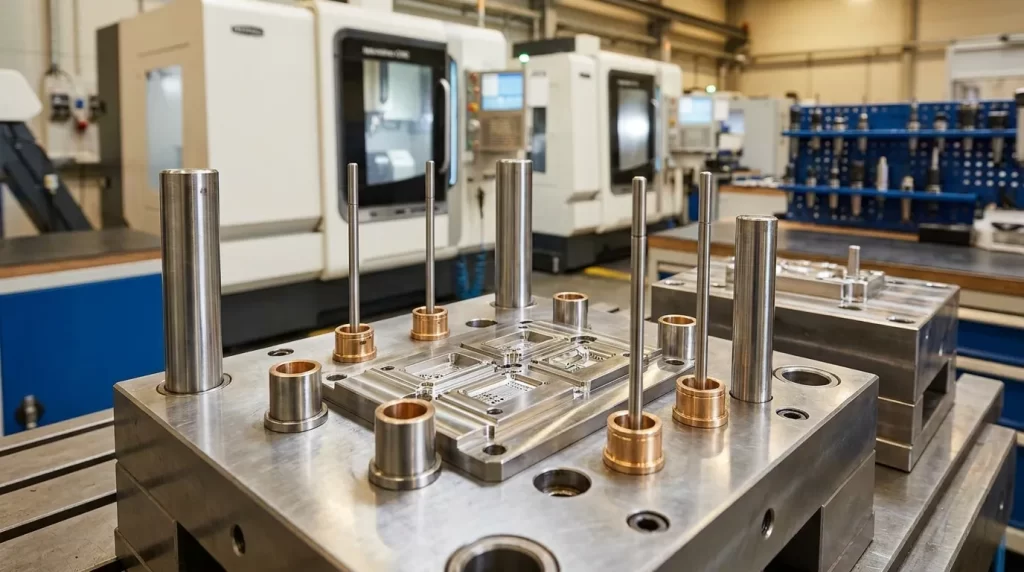
Precision components in molds are high-tolerance parts designed to maintain alignment, repeatability, and dimensional accuracy during repeated production cycles. They reduce variation, minimize wear-related defects, and improve mold lifespan.
金型製造において, precision components refer to parts that must maintain exact positioning under repeated mechanical stress. These components include guide posts, ブッシング, イジェクターピン, 袖, and cavity inserts. Even a small dimensional shift can create flash, くっつく, or inconsistent plastic parts.
The need for precision becomes more obvious in high-cycle molds. A mold producing thousands of parts each day cannot rely on loose-fitting components. Wear increases quickly when alignment drifts, especially in molds processing abrasive resins or thin-wall parts.
Manufacturers often use hardened tool steels, 精密研削, EDM加工, and advanced inspection systems to maintain dimensional consistency. A broader overview of mold systems and component categories is available in this 完全な金型部品ガイド.
For buyers comparing suppliers, the key issue is not just machining capability. It is whether the supplier can maintain repeatability over long production runs using properly engineered 精密金型部品.
Which mold components require the highest precision?
ガイドシステム, エジェクター部品, and cavity alignment parts usually require the highest precision because even small dimensional variation can create flash, ミスマッチ, 早期摩耗, or unstable part quality.
Not every mold component needs micron-level tolerances. Some areas are far more sensitive to dimensional variation than others. Guide systems and moving parts usually experience the highest stress and alignment pressure during production.
ガイドシステム
Guide posts and bushings control mold alignment during opening and closing. If these parts wear unevenly, cavity surfaces may no longer match correctly. That often causes flash on finished parts or visible mismatch lines.
Automotive trim molds are a common example. A guide-post tolerance difference as small as ±0.01 mm can affect visible surface quality on exterior plastic parts.
エジェクターシステム
Ejector pins and sleeves require smooth movement and consistent positioning. Excess friction or slight misalignment increases wear and can damage molded parts during ejection.
In high-volume electronics production, ejector pins often fail early because of short cycle times and repeated friction contact. Poor alignment accelerates galling and surface scoring.
| カビ構成要素 | なぜ精度が重要なのか | Common Failure Risk |
|---|---|---|
| 案内標 | 型の整列を維持 | フラッシュとミスマッチ |
| ブッシング | 動きの安定性を制御する | 不均一な摩耗 |
| イジェクターピン | クリーンパーツリリースをサポートしています | ピンの刺し |
| コアインサート | 寸法精度を維持 | 部品の不整合 |
| スリーブ | 摩擦の動きを減らします | 表面スコアリング |
メーカーの調達 型のアライメント部品 should focus on repeatability and wear performance instead of chasing the tightest possible tolerance everywhere.
What tolerance range is considered high precision for mold components?
High-precision mold components commonly operate within ±0.01 mm tolerance or tighter depending on mold complexity, 樹脂タイプ, and production volume requirements.
Tolerance requirements depend on the mold application. Thin-wall packaging molds and medical molds usually require tighter dimensional control than general consumer products. 次の通りです アットゥル・インターナショナル, precision machining applications often operate within ±0.01 mm tolerance ranges.
That does not mean every component should be machined to the tightest possible limit. Ultra-tight tolerances are not automatically better. If the mold application does not require them, they can increase cost without improving production stability.
| アプリケーションタイプ | 典型的な公差要件 |
|---|---|
| 一般的な金型部品 | ±0.02 mm |
| 精密アライメント部品 | ±0.01 mm |
| 薄壁モールディング | ±0.005mm |
| 医療用またはマイクロモールディング | Below ±0.005mm |
Tolerance planning should match actual production conditions. High-volume molds processing abrasive materials usually benefit more from stable wear resistance than from unnecessary ultra-fine tolerances.
Why does wear resistance matter in injection molds?
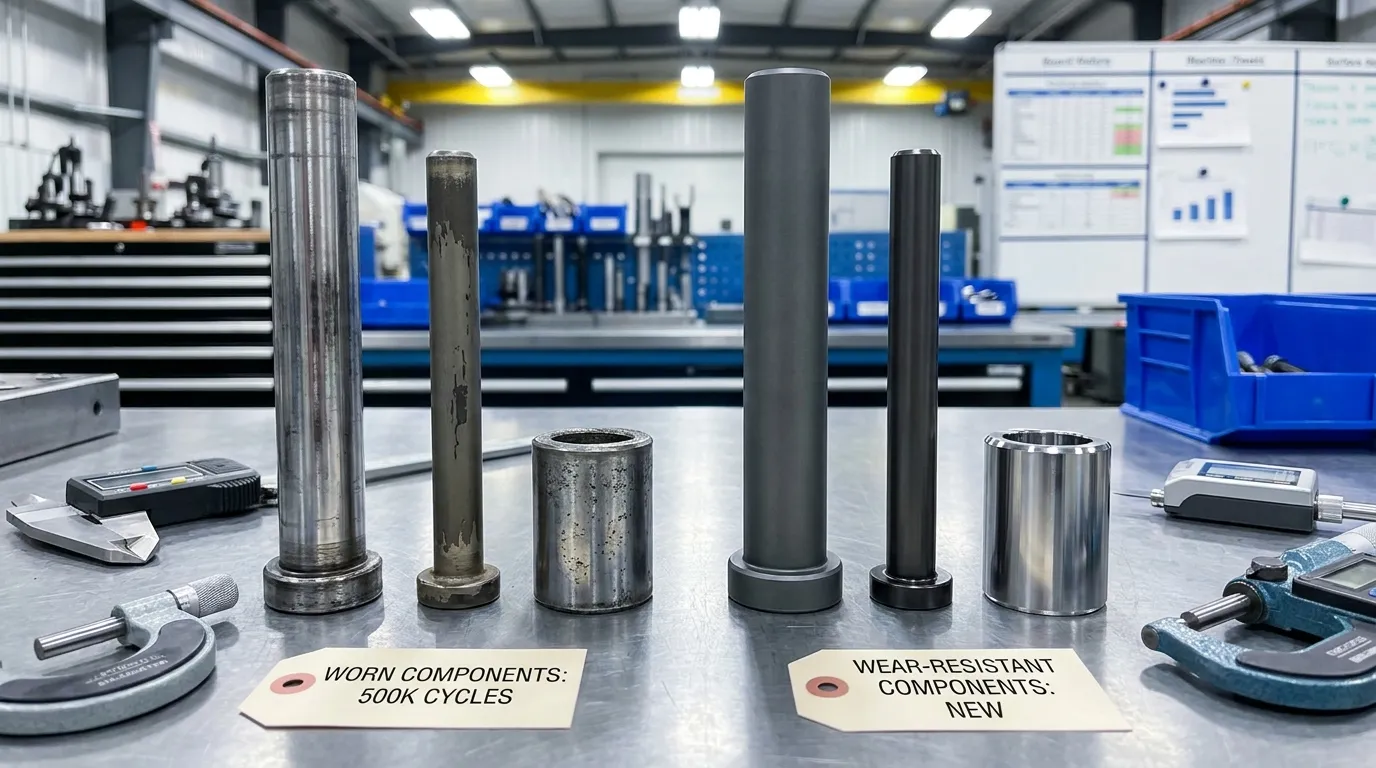
Wear resistance directly affects mold lifespan, サイクル安定性, および部品の整合性. Poor wear performance increases maintenance frequency, 次元ドリフト, and the risk of flash or sticking during production.
Mold components experience repeated friction, 圧力, and heat during production. 時間をかけて, these forces remove material from contact surfaces and reduce alignment accuracy. Once wear begins, dimensional variation spreads quickly through the entire mold system.
Abrasive plastics make the problem worse. Glass-filled resins and engineering plastics create higher friction loads that accelerate surface damage. Components that start with weak hardness or poor surface treatment often fail much earlier than expected.
共通摩耗点
The most common wear locations include:
- ガイドポストとブッシング
- イジェクターピン
- スライドコア
- 遮断面
- スリーブとムービングインサート
Coatings help, but they cannot compensate for poor alignment or weak base material selection. A nitrided surface on a poorly fitted guide system will still wear unevenly under repeated load.
金型摩耗故障チェックリスト
| 警告サイン | 原因としては | 推奨行動 |
|---|---|---|
| 成形部品にフラッシュ | アライメント摩耗 | 検査ガイドシステム |
| ピンの刺し | 表面のガリング | イジェクターピンの交換またはコーティング |
| 不均一な空洞摩耗 | 硬度の低さ | 材料等級のアップグレード |
| 表面スコアリング | Friction damage | 潤滑の改善 |
| 頻繁なメンテナンス | 弱い耐摩耗性 | コーティング戦略のレビュー |
メーカーの比較のために 耐摩耗型部品, the better long-term choice is often the component that reduces downtime rather than the one with the lowest purchase price.
Which materials and coatings improve mold component lifespan?
High-grade tool steels combined with surface treatments like nitriding or PVD coatings improve hardness, 摩擦を減らす, and extend the operating life of precision mold components under repeated production stress.
Material selection affects both wear resistance and dimensional stability. Hardened tool steels are common because they maintain strength under repeated mechanical load. Surface treatments improve resistance to friction and abrasion without changing the entire component structure.
Nitriding is widely used because it hardens the outer surface while maintaining core toughness. PVD coatings reduce friction and improve release performance on moving parts.
| 材料またはコーティング | 主な利点 | Typical Use |
|---|---|---|
| Tool steel | 高硬度 | コアコンポーネント |
| 窒化 | 表面耐摩耗性 | ガイドシステム |
| PVDコーティング | 摩擦の減少 | イジェクターピン |
| 熱処理 | Dimensional stability | 構造部品 |
A supplier comparison often shows the real value of coatings. One production facility using coated bushings reduced maintenance intervals compared with untreated steel bushings operating under the same cycle conditions.
Custom precision components are valuable for high-cycle or complex molds, but standard parts are often the smarter choice for easier maintenance and replacement. Buyers evaluating 耐久性のある金型部品 should balance lifespan, replacement speed, and total operating cost.
How are precision mold components inspected and verified?
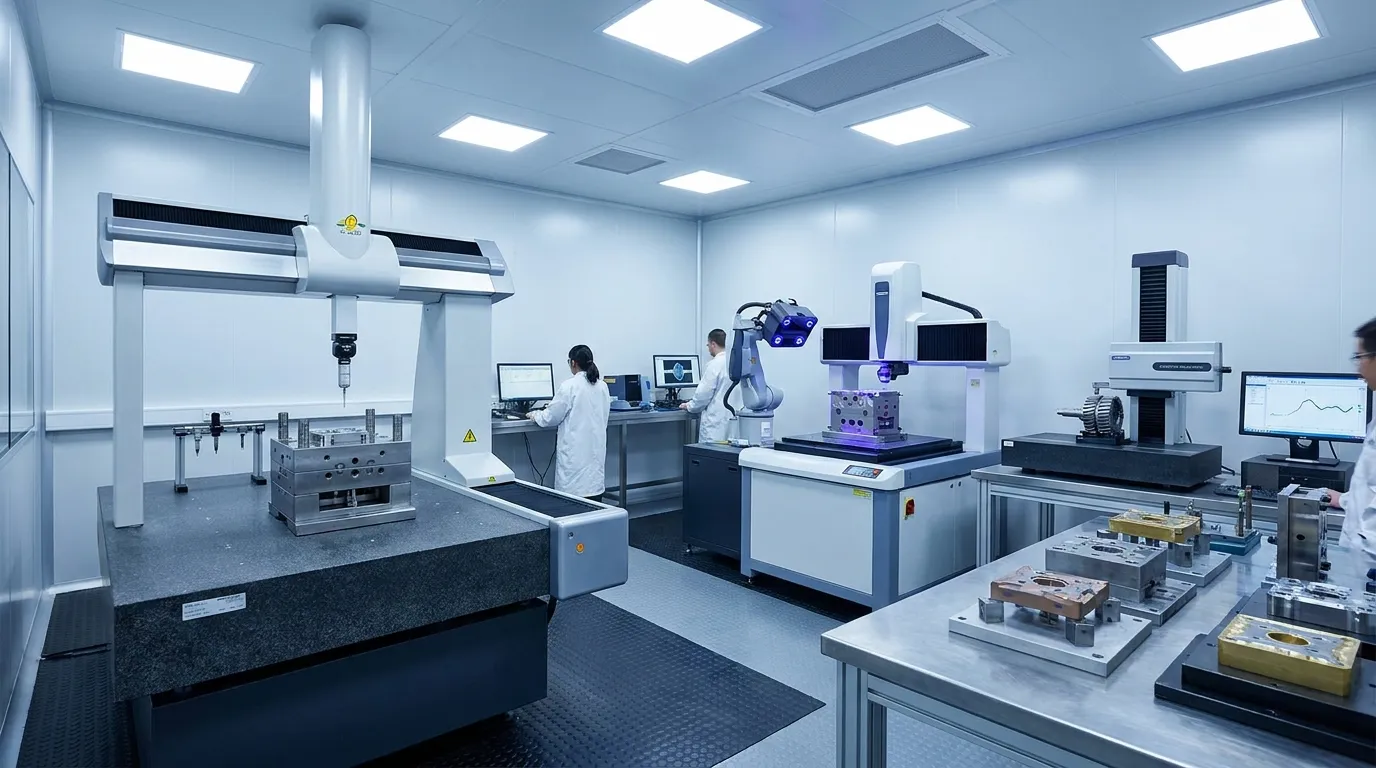
Manufacturers verify precision mold components using contour measurement systems, optical inspection, and dimensional metrology tools to confirm tolerance accuracy and surface conformity before production use.
Inspection matters because even small dimensional variation can affect mold performance. Most suppliers use multiple verification methods depending on component complexity and tolerance requirements.
次の通りです 峰辺三見, precision manufacturing depends heavily on dimensional consistency and stable machining accuracy.
典型的な検査プロセス
- ノギスまたはマイクロメートルを用いた初期寸法測定
- CMMや等高線測定システムによる精密検証
- 摩耗痕や仕上げ欠陥の表面検査
- 出荷前の最終再現性検証
Optical inspection systems are common for smaller components with complex geometry. Contour measuring equipment helps verify profiles and edge accuracy on inserts and precision-fit parts.
Inspection also helps identify process drift before it becomes a production issue. In thin-wall molding, a ±0.01 mm alignment variation can create inconsistent cavity fill and visible defects across thousands of parts.
Are custom precision components always better than standard parts?
Custom precision components are not always the best choice. They work well for demanding molds with tight tolerances or unusual geometry, but standard components are often easier to replace and maintain during regular production.
The decision depends on production volume, 複雑性, および保守戦略. A custom component may improve cycle stability in a high-volume automotive mold, but it can also increase lead time and replacement cost.
精度と標準部品の意思決定表
| 状況 | より良い選択 | なぜか |
|---|---|---|
| 大量生産 | カスタム精密部品 | より良い長期的安定性 |
| シンプルな消費者向け製品 | 標準部品 | より迅速な代替 |
| 厳密な公差成形 | カスタムパーツ | 改良されたアライメント |
| 頻繁なメンテナンス環境 | 標準部品 | 調達の容易さ |
| 複雑な金型形状 | カスタムパーツ | より良いフィット感と性能 |
A buyer producing low-volume consumer products may gain little value from expensive custom alignment systems. 一方で, medical or electronics molds often justify higher precision because downtime and defect rates carry much higher production costs.
The smarter approach is matching component strategy to production conditions instead of assuming tighter tolerance always improves results.
How do sourcing and customs delays affect precision component supply?
Precision mold components often have longer sourcing timelines because they require specialized machining, 検査, and export documentation. Customs delays can add another layer of risk when replacement parts are needed quickly.
Shipment documentation matters more in 2026 because import systems are stricter in several regions. The EU’s Import Control System 2 (ICS2) requires more detailed shipment information for imported goods.
A common problem is vague shipment labeling. One supplier described mold components simply as “machine parts,” which delayed customs clearance because the classification lacked enough detail.
精密部品出荷チェックリスト
- 発送前にHSコードの正確性を確認してください
- 詳細な部品説明を活用してください
- 材料の書類の確認
- 必要に応じて寸法仕様を含める
- 目的地の適合要件を確認する
- 出荷前に輸入書類を確認しましょう
次の通りです DHLの税関遅延に関するガイダンス そして最近のこと CBPの業界速報, incomplete documentation remains a major cause of shipping disruption.
次に何をすべきか
Choosing the right precision components comes down to production stability, 耐摩耗性, and realistic tolerance requirements. The best option is not always the tightest or most expensive part. It is the component that maintains accuracy over time without creating unnecessary maintenance cost or sourcing delays.
If you are reviewing mold performance problems, start with alignment systems, エジェクター部品, and wear surfaces first. Those areas usually reveal the earliest signs of dimensional drift. For a broader understanding of mold systems and applications, これだ plastic injection mold guide provides additional context on how molds are designed and used across production environments.
よくある質問
What are precision components used for in molds?
Precision components maintain alignment, 寸法精度, and repeatability inside mold systems. They help reduce defects, improve consistency, and extend mold lifespan during repeated production cycles.
What tolerance is considered high precision in mold manufacturing?
High precision in mold manufacturing commonly means tolerances around ±0.01 mm or tighter depending on the application. Critical mold areas may require even smaller variation for stable production.
Which mold components wear out the fastest?
イジェクターピン, guide systems, and high-friction contact surfaces usually experience the fastest wear. 潤滑不良, ミスアライメント, and abrasive materials accelerate failure.
Are coated mold components worth the cost?
Coated components often last longer and reduce friction in high-cycle production environments. The added cost is usually justified when downtime or replacement frequency becomes expensive.
How are precision mold parts inspected?
Manufacturers use contour measuring systems, optical inspection equipment, and dimensional metrology tools to verify tolerances and surface quality. Inspection confirms repeatability before production use.
Can standard mold components replace custom precision parts?
Standard components work well for many general applications, but custom parts are often necessary for tight tolerances, unusual geometries, or high-volume production stability.



サンシャインより書かれました
サンシャインで, 私たちは精密金型部品の専門製造およびサプライヤーです, プレスおよび射出成形用途向けの幅広い製品を提供しています. 私たちの主な焦点はパンチダイスです, イジェクターピンとスリーブ, ガイドポストとブッシング. 高度なCNC加工技術で, 厳格な品質管理, そして強力な生産能力, 私たちは信頼性を保証しています, 高精度部品, また、迅速かつ効率的なグローバル供給のための在庫の標準部品も併用しています.
ニュース
サービスを受けましょう
あらゆる予算に合った高品質な部品と、親切なスタッフが訓練されていて、訪問を有益で手間なく充実させてくれます.
