



Mold Design for Injection Molding: Key Decisions That Affect Cost and Quality
Mold design for injection molding affects tooling cost, part quality, サイクルタイム, そしてカビの寿命. Decisions like cavity count, 冷却レイアウト, 換気, ゲート配置, and mold steel selection determine whether a tool runs efficiently or creates recurring defects, 遅延, and maintenance problems. Buyers should match mold design choices to production volume, 許容差要件, and long-term manufacturing goals before approving tooling.
A mold can look good on paper and still create expensive production issues later. Small design decisions often determine whether parts run consistently for years or require constant adjustments and repairs. Understanding those tradeoffs early helps buyers avoid redesign delays, unnecessary tooling costs, and quality problems that are difficult to fix after steel cutting begins.
Which mold design decisions affect cost and quality the most?
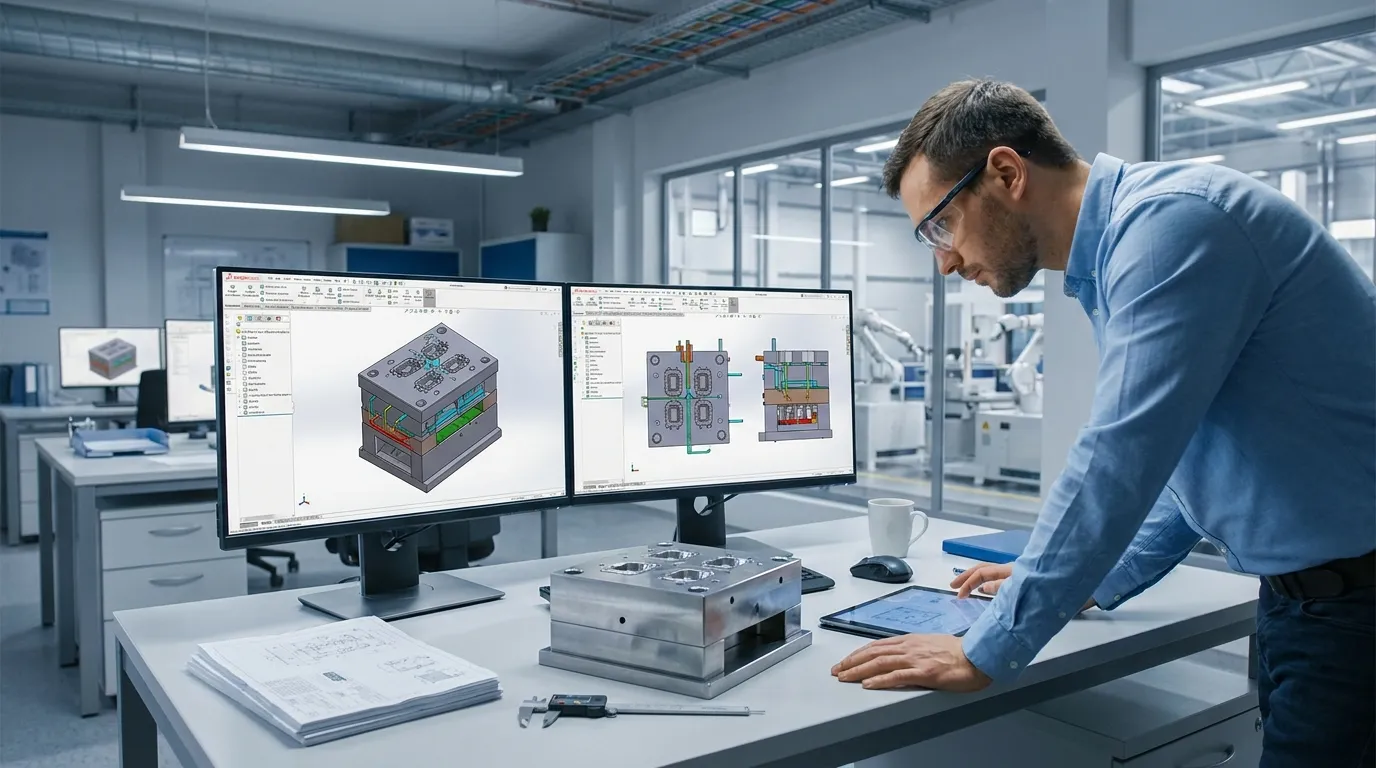
Mold design for injection molding directly affects tooling cost, part quality, サイクルタイム, そしてカビライフ. Decisions like cavity count, 冷却レイアウト, ゲート配置, and steel selection influence both upfront tooling expense and long-term production stability.
The biggest mold design decisions usually involve cavity count, 冷却レイアウト, 換気, 門の位置, and mold material. These factors control how evenly plastic flows, how quickly parts cool, and how consistently dimensions stay within tolerance.
Poor decisions in any of these areas can increase scrap rates, maintenance time, and cycle delays. A mold with weak cooling design, 例えば, may still produce acceptable parts, but the machine may need slower cycle times to prevent warpage and sink marks.
For buyers new to tooling projects, reviewing basic 射出成形設計の基本 before approving production can prevent costly revisions later.
金型設計トレードオフ表
| 設計選択 | 初期費用への影響 | 品質への影響 | サイクルタイムの影響 | メンテナンスへの影響 |
|---|---|---|---|---|
| マルチキャビティ型 | 高く | 正しくバランスを取れば出力の安定性が向上します | 総生産量の高速化 | より複雑なメンテナンス |
| 高度な冷却チャネル | 高く | 歪みや沈み跡の減少 | 短いサイクル | 長期的な調整を低くする |
| 硬化鋼工具 | 高く | より良い次元安定性 | 長期にわたる安定 | 工具寿命の延長 |
| シンプルな換気設計 | 下 | 焼け跡やフラッシュのリスクが高い | 処理が遅くなることがあります | さらなるトラブルシューティング |
| 最適化されたゲート配置 | 中程度 | より良い詰め物と見た目 | より安定した生産 | 改訂件数の減少 |
A common mistake is assuming the most complex mold automatically delivers the best value. Multi-cavity molds and ultra-tight tolerances can improve output, しかし同時に、バランスの要件も高めます, inspection effort, and repair complexity. In lower-volume programs, simpler tooling often produces a better return.
For broader terminology and tooling concepts, その 金型部品ガイド provides a more complete overview of mold structures and functions.
How does cavity count change tooling cost and production economics?
Multi-cavity molds reduce per-part cost at higher production volumes, but they increase tooling complexity, balancing requirements, maintenance effort, and inspection demands. Lower-volume projects often benefit more from simpler single-cavity tooling.
Cavity count directly affects both tooling investment and production efficiency. A single-cavity mold costs less upfront and is easier to maintain, but it produces fewer parts per cycle. Multi-cavity molds increase output and reduce unit cost over time, especially in large production runs.
The tradeoff is complexity. Multi-cavity molds require balanced filling, more precise cooling, and tighter process control. If one cavity starts producing inconsistent parts, the entire production run can become harder to manage.
| 型の種類 | ベスト・フォー | 主な利点 | Main Limitation |
|---|---|---|---|
| シングルキャビティ | 試作機, low-volume runs | 金型コストの削減 | 出力の低下 |
| 2〜4の空洞 | 中規模生産 | コストと処理量のバランス | メンテナンスが増えました |
| 高空洞生産型 | 大規模製造 | 大規模での最低単位コスト | 複雑なバランスと検査 |
A startup consumer electronics company may only need 20,000 units in the first year. In that situation, a simpler aluminum single-cavity tool could launch production faster and avoid unnecessary tooling expense. A hardened steel eight-cavity mold may only make sense after demand becomes predictable.
生産戦略を比較する買い手はよくレビューします カスタム成形生産支援 options to estimate when higher-output tooling becomes financially practical.
Should you choose aluminum or hardened steel molds?
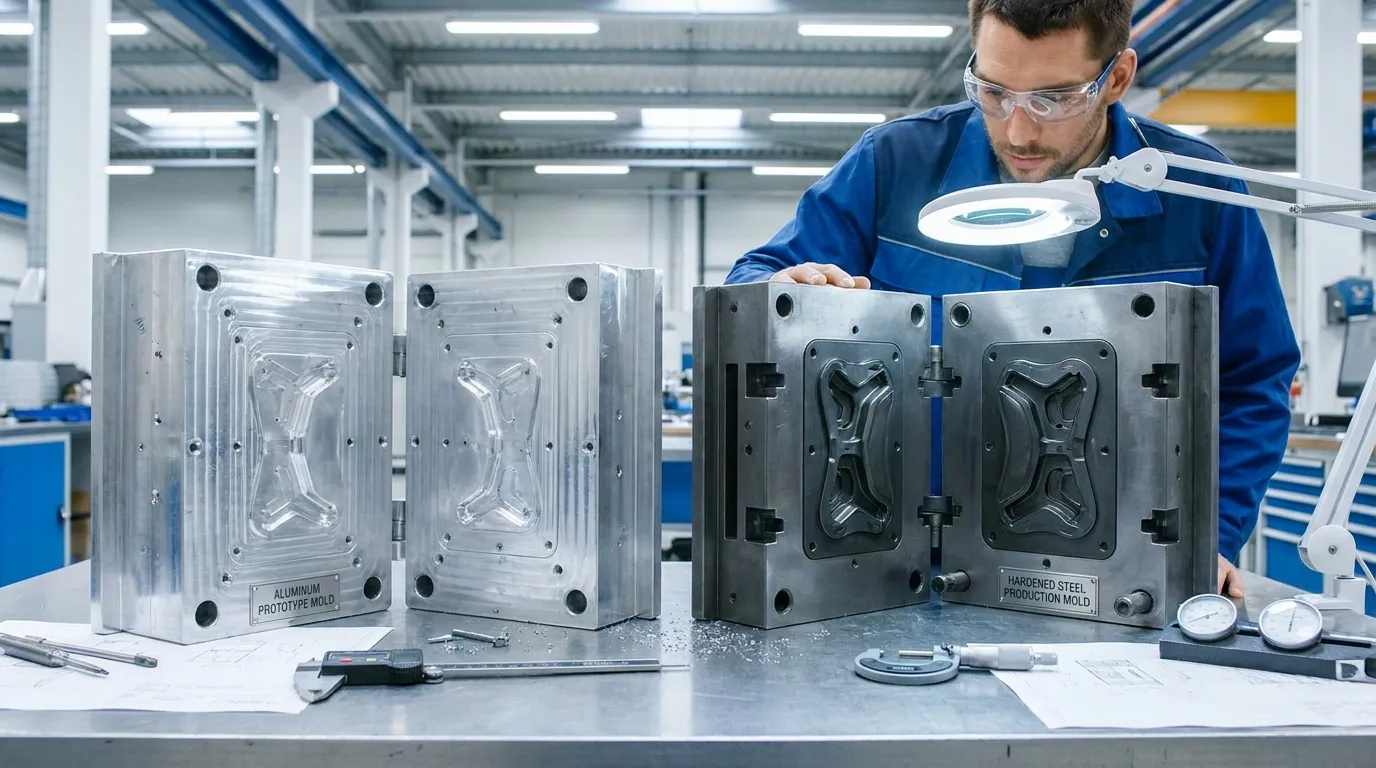
Aluminum molds reduce tooling lead time and upfront cost, making them suitable for prototypes and low-volume production. Hardened steel molds cost more initially but deliver longer tool life, better wear resistance, and stronger dimensional consistency.
The right tooling material depends on expected production volume, 樹脂タイプ, and precision requirements. Aluminum molds are easier and faster to machine, which helps companies launch products quickly. Hardened steel molds require more investment but hold tolerances better during long production runs.
According to a Texas A&M mold design reference, hardened steel tooling generally provides better wear resistance and longer operational life than softer tooling materials. エンジニアリングガイド also notes that tooling selection should match production demand and material conditions.
アルミニウムの金型が意味を持つ場合
Aluminum tooling works well for prototypes, ブリッジの生産, and lower-volume industrial parts. It can reduce lead times significantly, which matters when a product launch deadline is tight.
A low-volume industrial product may only need 10,000 parts annually. その場合, paying for hardened steel tooling may extend ROI far beyond what the project requires.
硬化鋼がより安全な時代
Steel molds become the safer option when production volume increases or tolerances become stricter. メディカル, 自動車, and electronics projects often require stable dimensions across long production runs.
A medical device supplier producing sealing components may need extremely consistent dimensions across millions of cycles. In that situation, hardened steel helps maintain repeatability while reducing wear-related variation over time.
より厳密な公差用途を評価する企業は、しばしば比較します 高精度成形 requirements before selecting final tooling materials.
Why do cooling channel design and venting matter so much?
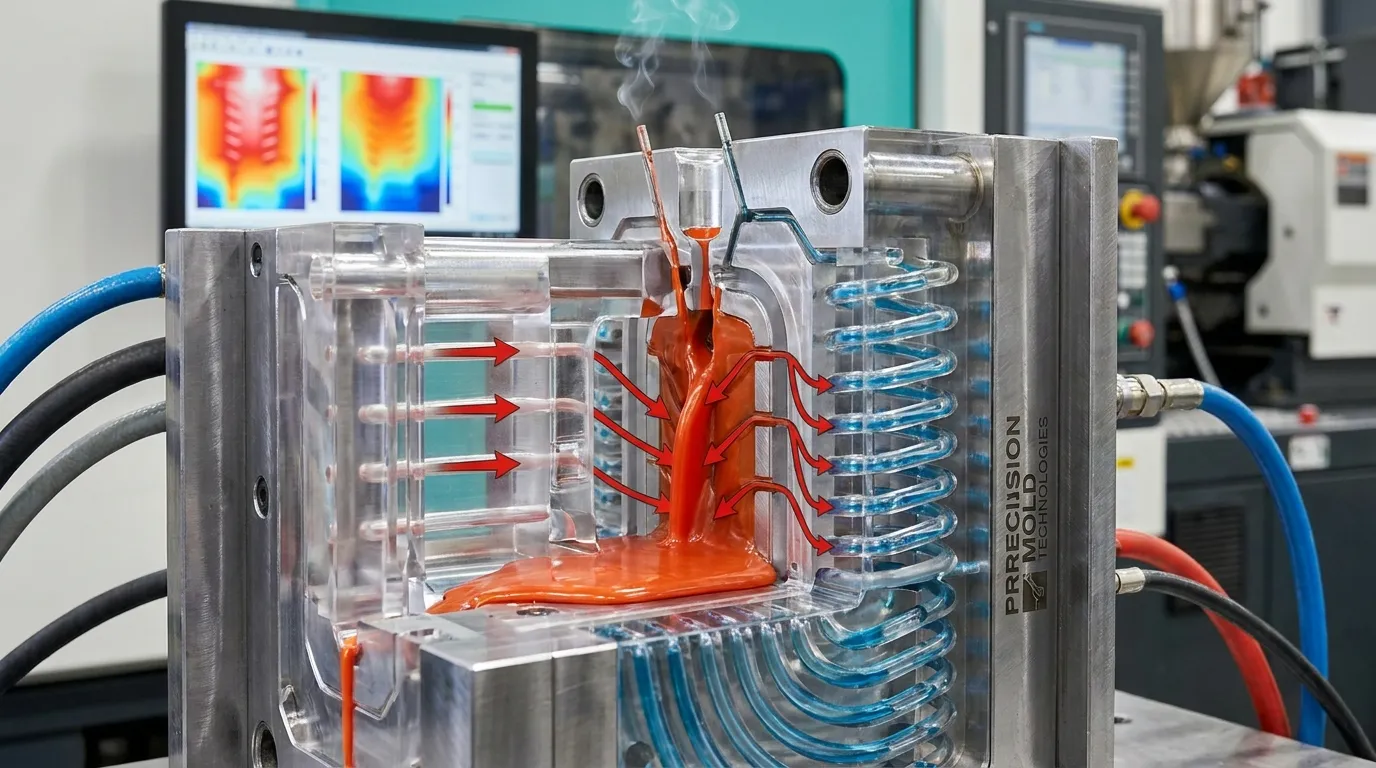
Cooling layout and venting strongly influence cycle time, 次元安定性, and defect prevention. Poor cooling creates uneven shrinkage and warpage, while poor venting traps gas that can cause burn marks, フラッシュ, and incomplete filling.
Cooling channels control how heat leaves the mold during production. 冷却が不均一な場合, different sections of the part shrink at different rates. That creates warpage, 陥没痕, and dimensional variation.
Research on injection molding process behavior has shown that cooling consistency strongly affects warpage and final part stability. Studies examining molding variation continue to link cooling conditions to dimensional accuracy and repeatability. 成形変異の最近の分析 highlights how process and cooling variables contribute to distortion problems.
Venting is equally important. Trapped gas creates pressure pockets during filling, which can lead to burn marks, ショートショット, or flash around the parting line.
よくある冷却および排気の問題
- 不均一な冷却が歪みを引き起こします
- 排気不良はガスの閉じ込めを生み出します
- 温度管理が不安定になるとサイクル時間が遅くなる
- 過剰な注入圧力はフラッシュリスクを高めます
- 冷却配置が弱いと寸法安定性が低下します
A packaging manufacturer dealing with long cycle times may initially try increasing machine speed. 多くの場合, redesigning cooling channels produces better results because the mold removes heat more efficiently. That improves output without increasing stress on the machine.
寸法一貫性に注力する企業はよくレビューを行います 精密成形プロセス strategies to improve cooling performance and production stability.
How do draft angles, 別れ線, and gate placement affect manufacturability?
喫水角度, ゲート配置, and parting line decisions determine how easily parts release from the mold and how consistently resin flows. Poor choices increase flash, 外観上の欠陥, maintenance needs, および工具の改良.
These features may seem minor during design review, but they strongly influence long-term manufacturability. Draft angles help parts release from the mold cleanly. ドラフトが足りない, parts can stick during ejection and damage surfaces over time.
Gate placement controls how molten resin enters the cavity. Poor gate locations create uneven filling patterns, visible flow marks, and inconsistent shrinkage. Parting line placement also affects flash risk and cosmetic appearance.
欠陥を増やすゲート配置ミス
Gates positioned too close to cosmetic surfaces can leave visible marks or uneven flow patterns. Gates placed in areas with restricted flow may also create weld lines and weak points.
A redesign delay often starts here. One supplier may cut steel before confirming optimal gate placement. If testing later reveals uneven filling, the tool may require welding and re-machining. 次の通りです 工具のタイムラインガイダンス, late-stage tooling changes frequently extend project schedules.
なぜ別れのラインの場所が重要なのか
Parting lines determine where mold halves separate. Poor placement increases flash risk and may create visible seams on cosmetic surfaces.
This is one area where overengineering can backfire. Extremely complex parting line designs may improve appearance slightly, but they can also increase maintenance difficulty and tooling cost. Simpler layouts often provide better long-term production stability.
より広範なツール戦略を評価するチームはレビューできます 金型金型の決定 before finalizing manufacturability requirements.
When does high-precision mold design actually pay off?
High-precision tooling is valuable when assemblies, sealing surfaces, or strict tolerances are critical. For many consumer products, excessive precision increases tooling and inspection costs without delivering meaningful functional benefits.
Precision tooling increases machining time, 検査要件, and maintenance effort. That investment makes sense for parts that must fit tightly within assemblies or maintain sealing performance under load.
Medical devices, electronics housings, and precision connectors often require strict dimensional control. そういう場合, higher tooling precision reduces assembly issues and improves long-term consistency.
| アプリケーションタイプ | 精度要件 | 推奨工具のアプローチ |
|---|---|---|
| 消費者向けパッケージ | 中程度 | 標準生産工具 |
| 医療用シーリング部品 | 非常に高い | 硬化鋼精密金型 |
| 家電用ハウジング | ハイ | 精密制御型 |
| 産業用部品 | 中程度 | 簡易耐用型金型 |
High-precision tooling is frequently oversold for general consumer products. A basic storage container or industrial cover may function perfectly within standard tolerances. Adding extreme precision only increases machining and inspection costs without improving performance.
A medical device manufacturer producing fluid-control components faces a different situation. Small dimensional variation can affect sealing performance, so tighter process control becomes necessary. Buyers handling those applications often review 精密工具の要件 before approving mold construction.
What should buyers review before approving mold production?
Tooling approval should happen only after manufacturability, 冷却, 材料選定, and tolerance requirements are fully reviewed. Changes after steel cutting often create delays, extra machining costs, and longer validation cycles.
生産承認前のことです, buyers should confirm that the DFM review addresses part geometry, ゲート配置, 換気, 冷却レイアウト, and maintenance access. Missing details in these areas usually become expensive problems later.
カビ承認チェックリスト
- DFM審査完了
- ゲート設置場所が承認されました
- 冷却レイアウトの検証済み
- 樹脂素材が確認
- 公差要件の記載
- メンテナンスの期待をレビューしました
- 生産量の仮定の検証
- 外観の期待が承認されました
A late gate change can easily delay a project by several weeks if tooling modifications require welding and re-machining. That risk becomes larger on multi-cavity production molds because balancing conditions also change after revisions.
生産準備を進める製造業者はしばしば連携を図ります 射出成形の支持 early to reduce redesign risk and improve tooling approval accuracy.
次のステップを正しく進める
Good tooling decisions are usually practical, not extreme. The best mold design for injection molding balances production volume, quality expectations, サイクルタイム, maintenance demands, and long-term cost control. A simpler mold may outperform a more expensive design if the production requirements do not justify added complexity.
工具の承認前に, review the full production plan, not just the initial quote. Ask how the mold will handle maintenance, 次元安定性, 検査要件, and future production scaling. Small design choices made early often determine whether a tool performs reliably for years or creates recurring production problems.
よくある質問
How long does it take to make an injection mold tool?
Injection mold lead time depends on mold complexity, キャビティカウント, and tooling material. Prototype aluminum molds may take only a few weeks, while hardened steel production molds usually require longer engineering, 機械加工, and validation time.
What determines the cost of plastic molding?
Mold complexity, キャビティカウント, mold steel, 許容差要件, and expected production volume all affect tooling cost. Advanced cooling systems and tighter tolerances also increase machining and inspection requirements.
Why is tooling DFM important in injection molding?
Tooling DFM identifies manufacturability risks before steel cutting begins. Early review helps reduce redesign delays, tooling modifications, cycle time inefficiencies, and recurring production defects.
What causes warpage in injection molding?
Warpage usually results from uneven cooling, inconsistent shrinkage, ゲート配置の不備, or material flow imbalance. Mold cooling design and process stability both affect dimensional accuracy.
Should I use aluminum or steel injection molds?
Aluminum molds work well for prototypes and low-volume production because they reduce tooling cost and lead time. Steel molds are better for high-volume production, 研磨材料, and long-term dimensional consistency.
How many cavities should an injection mold have?
The right cavity count depends on production volume, cycle time goals, tooling budget, and quality control requirements. Higher cavity counts improve throughput but also increase tooling complexity and maintenance demands.



サンシャインより書かれました
サンシャインで, 私たちは精密金型部品の専門製造およびサプライヤーです, プレスおよび射出成形用途向けの幅広い製品を提供しています. 私たちの主な焦点はパンチダイスです, イジェクターピンとスリーブ, ガイドポストとブッシング. 高度なCNC加工技術で, 厳格な品質管理, そして強力な生産能力, 私たちは信頼性を保証しています, 高精度部品, また、迅速かつ効率的なグローバル供給のための在庫の標準部品も併用しています.
ニュース
サービスを受けましょう
あらゆる予算に合った高品質な部品と、親切なスタッフが訓練されていて、訪問を有益で手間なく充実させてくれます.
