



パンチピンの擦り傷防止: クリアランス, 終える, およびコーティング
Galling happens when metal from the workpiece adheres to the punch tip during shearing, leaving a rough buildup that scratches parts, dulls the cutting edge, and shortens tool life. The fix depends on which type of galling you're dealing with — clearance, 表面仕上げ, and coatings each solve a different piece of the problem, and using the wrong one wastes time and tooling budget.
このガイドは、より広い範囲から始めます パンチダイズガイド (推論) leaves off. That resource covers die types, 材料, and general clearance principles; here, the focus narrows specifically to why punch pins gall and how to stop it from recurring.
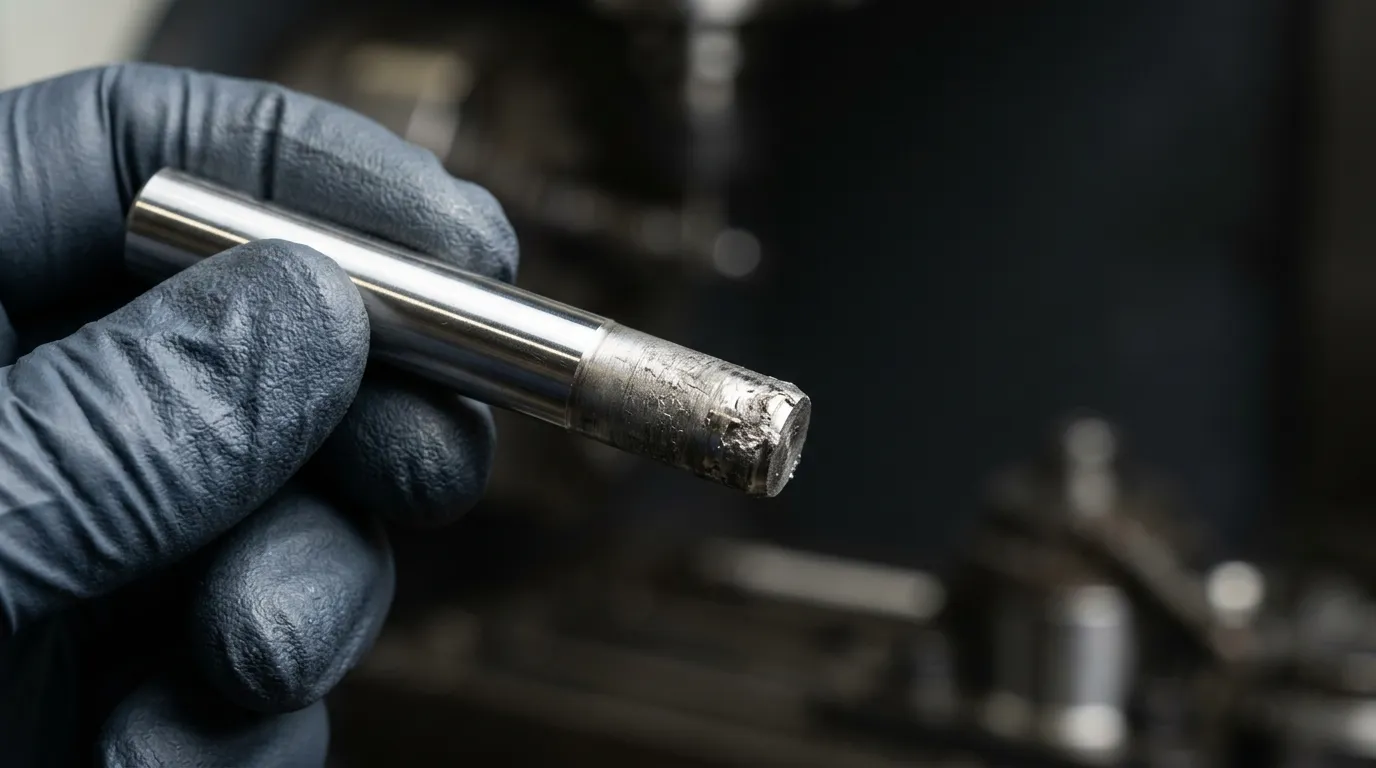
パンチピンの擦り付けの種類の診断
Not all galling looks or behaves the same way, and the visible pattern tells you where to start fixing it.
接着性の虫毛 — small particles of the workpiece material weld onto the punch surface under pressure and heat, building up a rough patch that grows with each stroke.
研磨性の擦り込み — hard inclusions or scale in the workpiece material scrape against the punch, wearing it down rather than depositing material on it.
腐食性ガリング — less common, this occurs when a chemical reaction between the punch surface and workpiece (often from lubricant breakdown or moisture) accelerates surface degradation.
ファブリケーターによる技術的分析 苛立たしい失敗 notes that adhesive galling is the most frequent type in stamping operations, largely because friction and localized heat are difficult to eliminate entirely in high-speed punching.
If you're also seeing stripping problems — parts hanging up on the punch instead of clearing the die — that's usually a downstream symptom of galling that's already progressed past the early stage. Insufficient or incompatible lubricant often makes any of these three types worse, so checking lubricant condition is a reasonable first step before adjusting the tooling itself.
If the punch tip is chipping or cracking rather than building up material, that's a separate failure mode — see プレス金型のパンチ破損 for that diagnosis instead.
むしろ防止のための正しいダイクリアランスの設定
Clearance is the single most commonly cited fix for galling, and for good reason: too little clearance increases contact pressure and heat, which is exactly what drives adhesive galling.
Clearance requirements shift with material hardness and thickness. Mate's ガリング防止ガイダンス points to a combination of increased die clearance and a small back taper — typically around 2° total, split evenly per side — as an effective remedy when galling is persistent rather than occasional.
| Material Type | Typical Clearance (% of Stock Thickness) | 注記 |
|---|---|---|
| 軟鋼 | ~10% | 業界の基本的な経験則 モーラーパンチ |
| Stainless steel | 15–20% | 硬度が高いほど摩擦と熱が増加します |
| アルミニウム | 8–12% | 素材は柔らかいですが、接着剤が溜まりやすい |
| ガリングしやすい応用 | 20–30% | Mateの工具推奨に基づくバックテーパーと組み合わせて |
Back taper works by reducing the contact area between the punch flank and the sheared edge as the punch travels through the material, which lowers the friction that drives adhesive buildup. This is a geometric change to the punch itself, not just a die adjustment, so it's worth discussing with whoever handles your tooling specification.
Tool steel hardness also plays a role here: harder steels resist the surface deformation that starts adhesive galling, but very hard, brittle steels can be more prone to abrasive wear if the workpiece contains hard inclusions. Matching hardness to the specific failure type you diagnosed earlier matters more than simply choosing the hardest available steel.
表面仕上げの改善による擦り傷の軽減
A rougher punch surface gives workpiece material more microscopic points to adhere to, so improving finish directly reduces adhesive galling risk — and it's also how you remove galling that's already present.
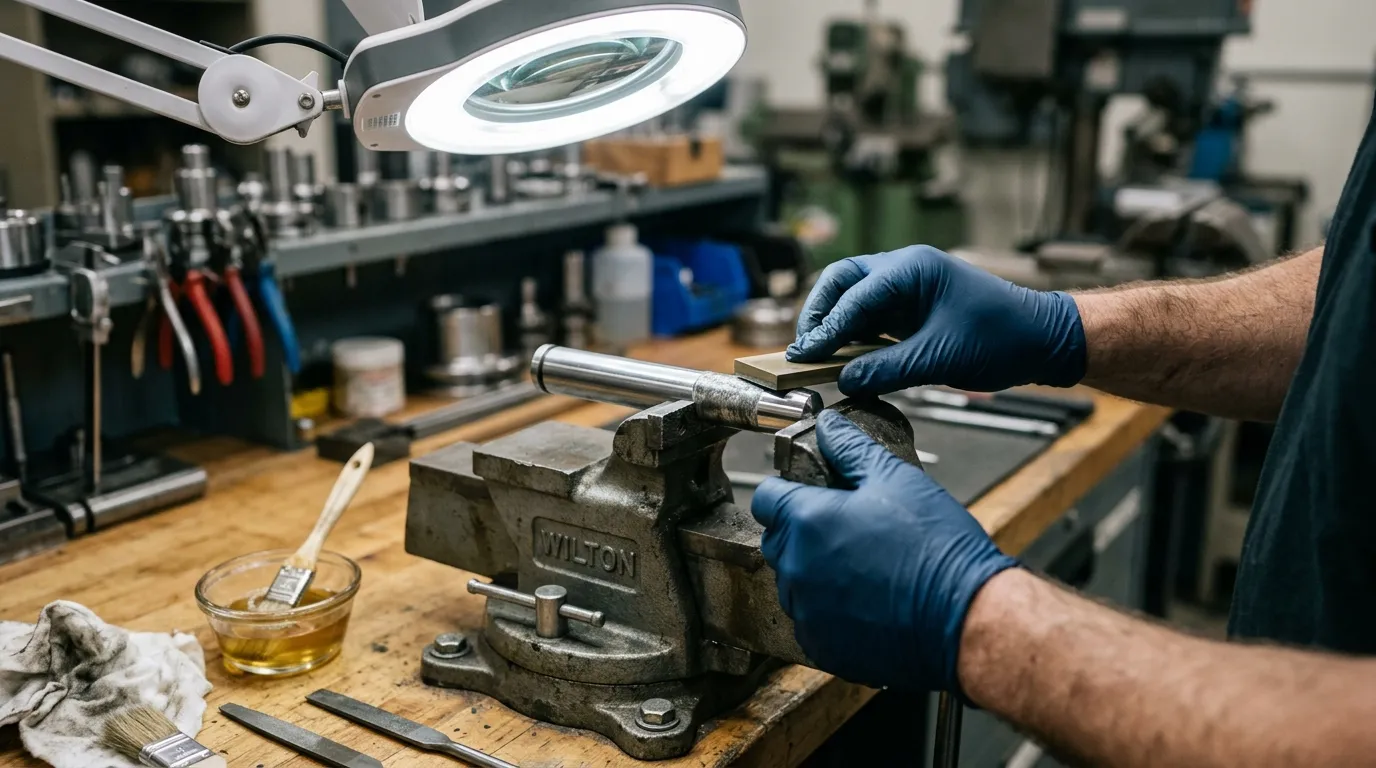
For removing existing buildup, the process generally follows these steps:
Inspect the punch tip under magnification to confirm galling rather than chipping or wear.
Stone or polish the affected area lightly, working in the direction of the original finish rather than across it.
Re-measure the punch profile to confirm dimensions haven't drifted from the polishing.
Reapply lubricant appropriate to the workpiece material before returning the punch to service.
Sunshine's punch and pin manufacturing supports surface finishes as smooth as Ra0.4, which is a relevant benchmark if you're specifying a replacement or reworked punch pin rather than hand-polishing an existing one.
For punches that have galled repeatedly despite polishing, a full regrind may restore geometry more reliably than spot polishing — パンチピン研ぎと再研磨 covers when a regrind is the better option versus a quick polish.
摩擦耐性のためのコーティングの選択
Coatings reduce the friction coefficient between the punch and the workpiece, which helps prevent the localized adhesion that starts adhesive galling. But they work best as a supplement to correct clearance and finish, not a replacement for them.
| コーティングの種類 | 主な利点 | 典型的なトレードオフ |
|---|---|---|
| ティン (窒化チタン) | 良好な汎用硬性と摩擦低減 | 研磨材に対する激しい接着剤の擦り込みには効果が劣ります |
| CrN (クロム窒化物) | ステンレスやアルミニウムの接着剤摩耗に対する耐性が向上 | TiNよりやや低い硬度 |
| DLC (Diamond-Like Carbon) | Very low friction coefficient, strong adhesive-galling resistance | コストの高さ, more sensitive to substrate finish quality |
A caution worth taking seriously: as noted in industry commentary on 引き鋼の表面コーティング, applying a coating over a punch with incorrect clearance or a poor base finish often just delays the problem rather than solving it. Coating a punch that's already galling from bad clearance can mask the symptom for a short run before the underlying issue reappears.
Heat treatment is a related lever worth mentioning here: Sunshine's heat treatment process increases hardness by roughly 30%, which improves impact and wear resistance independent of any coating applied afterward. That's a useful option to raise with a supplier when a punch needs both better hardness and a coating.
早期の虫病検出のためのメンテナンスチェックリスト
Catching galling early keeps a polish job from turning into a full regrind or replacement. Build these checks into routine tooling inspection:
Inspect punch tips visually every scheduled changeover, looking for a dull or rough patch near the cutting edge.
Track part quality — burrs, rough hole edges, or inconsistent stripping often show up before galling is visible on the punch itself.
Confirm lubricant type and application rate match the current workpiece material, especially after switching stock.
Re-check die clearance after any regrind, since repeated sharpening gradually changes the punch profile.
Flag punches that gall repeatedly on the same material for a clearance or coating review rather than repeatedly polishing the same spot.
If you're evaluating how a punch pin fits into the broader tooling assembly, ザ ダイ部品ガイド covers how punch pins interact with guide bushings and other components that also affect alignment and wear.
Persistent galling despite correct clearance and finish is usually a signal to discuss a coating or a specification change — that conversation is easiest with a supplier who can quote both the regrind and the coating option together, so you're not solving the problem in two separate steps.



サンシャインより書かれました
サンシャインで, 私たちは精密金型部品の専門製造およびサプライヤーです, プレスおよび射出成形用途向けの幅広い製品を提供しています. 私たちの主な焦点はパンチダイスです, イジェクターピンとスリーブ, ガイドポストとブッシング. 高度なCNC加工技術で, 厳格な品質管理, そして強力な生産能力, 私たちは信頼性を保証しています, 高精度部品, また、迅速かつ効率的なグローバル供給のための在庫の標準部品も併用しています.
ニュース
サービスを受けましょう
あらゆる予算に合った高品質な部品と、親切なスタッフが訓練されていて、訪問を有益で手間なく充実させてくれます.
