



パンチピンの表面仕上げの摩耗およびリリースに関する要件
Surface finish is one of the most overlooked specifications on a punch pin, yet it directly controls two separate performance outcomes: how long the pin resists wear, and how cleanly it releases the slug or formed material after each stroke. A typical punch pin surface finish requirement calls for a fine, controlled roughness value achieved through precision grinding or lapping, not simply the tightest number available. Punch pins are one of several die components covered in our ダイ部品ガイド (推論), but the finish spec deserves its own explanation because getting it wrong causes two very different failure modes: premature wear on one side, and sticking or galling on the other.
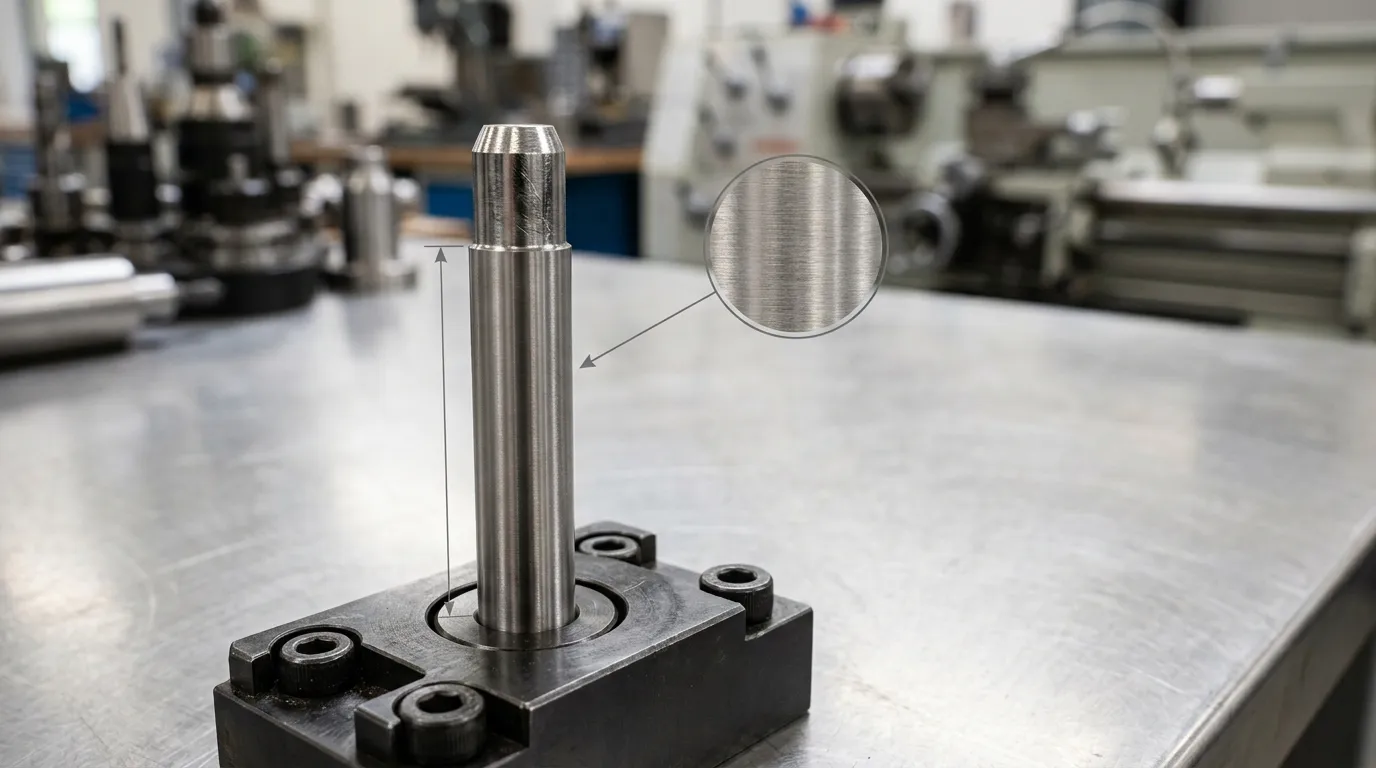
パンチピンの推奨表面仕上げ値
Punch pin surface finish is almost always specified as a roughness average (ラー), expressed in micrometers or microinches, rather than as a visual or subjective grade. Sunshine's punches and pins are manufactured to a Ra0.4 finish with tolerances held within ±0.002mm, giving a concrete benchmark for what a precision-ground punch pin surface looks like in practice.
とはいえ, "the right finish" depends on the application. A punch pin running high cycle counts against abrasive sheet stock needs tighter control than one used in low-volume, low-friction operations. For context, general machining references classify finer finishes (roughly 0.8 µm Ra and below) as suitable for sealing or precision-fit surfaces, while coarser grades are reserved for non-critical faces. Punch pins typically sit toward the finer end of that range because their working surface is in constant, repeated contact with the workpiece.
| フィニッシュレベル | 近似ラー | パンチピンでの典型的な使用法 |
|---|---|---|
| 細かい/精密さ | ≤0.4–0.8 μm Ra | High-cycle stamping, tight-tolerance holes, 研磨材料 |
| 標準 | 00.8–1.6 μm Ra | 中程度のサイクルカウントによる汎用プレス |
| 粗い | >1.6 µm Ra | 非臨界または低周波演算 |
パンチピン表面仕上げの実現方法
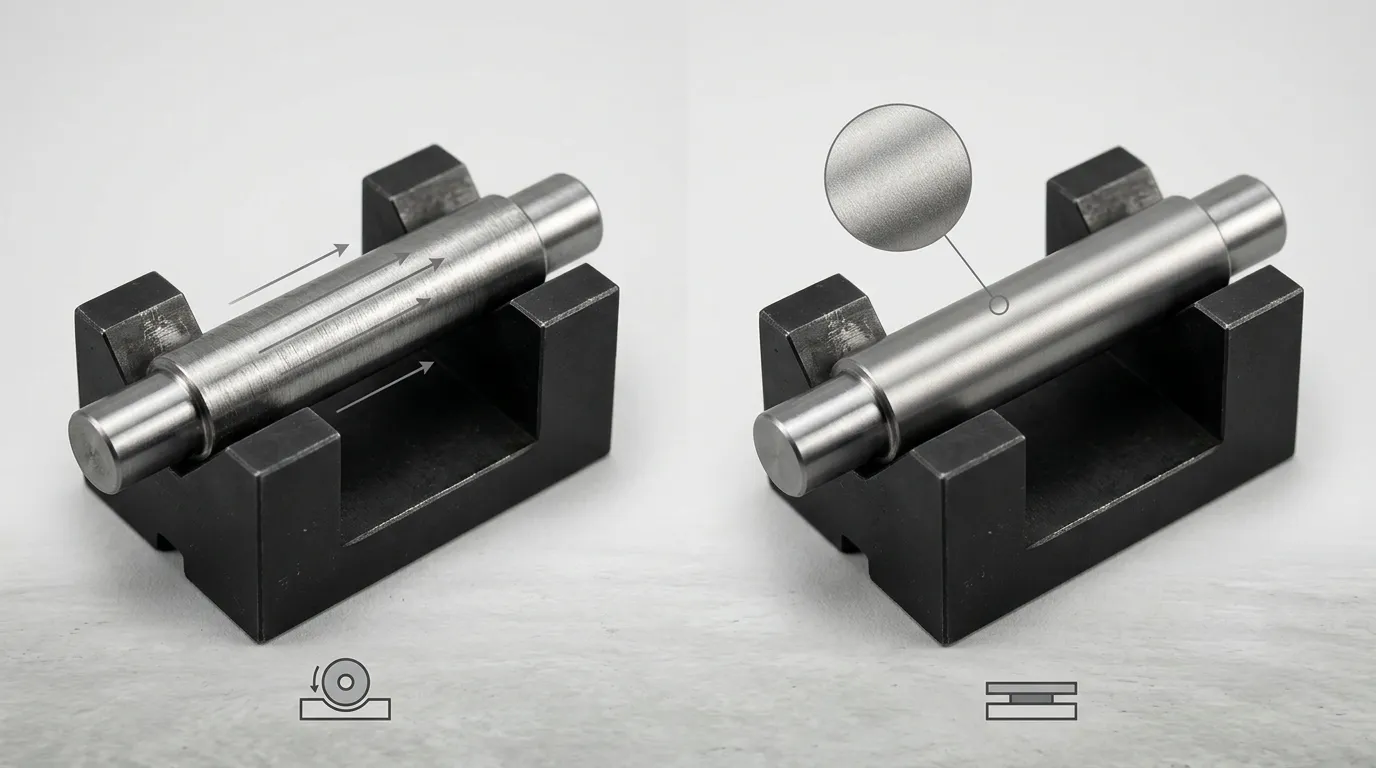
Two processes account for most punch pin finishing: grinding and lapping. Grinding removes material with an abrasive wheel and is typically applied along a specific orientation on the pin's working diameter; this orientation influences how the finish behaves under friction, since grind lines running parallel to the direction of material flow can affect how smoothly the slug slides off the tip. Lapping is a slower, finer-abrasive process usually reserved for tight-tolerance inner diameters or where an especially uniform, directionless finish is needed.
| 方法 | 典型的な用途 | 結果 |
|---|---|---|
| グラインド | 一般的なパンチピン加工面 | ほとんど, repeatable finish; orientation-dependent friction behavior |
| ラップ | 厳密公差ボアまたは高精度面 | Very fine, uniform finish with minimal directional pattern |
Neither process is inherently "better." The choice depends on the tolerance class, the pin's geometry, and whether the application is more sensitive to wear or to release performance.
なぜ表面仕上げが摩耗寿命を決定するのか
Surface roughness has a direct, measurable relationship to wear. A rougher surface increases friction at the punch-workpiece interface, which accelerates material loss at the tip and along the working diameter with every stroke. Research on punching tool durability has shown that adhesive wear behavior is influenced by both surface roughness and the presence of low-friction coatings, confirming that finish is not a cosmetic detail but a performance variable, as documented in a 表面粗さとパンチング工具の摩耗に関する大学の研究.
Finish alone does not determine wear resistance. Sunshine pairs its ground and lapped punch pins with a heat treatment process that increases hardness by roughly 30%, which works alongside the surface finish to extend service life rather than replacing the need for a controlled finish.
なぜ表面仕上げがクリーンな部品やスラッグリリースに影響を与えるのか
Release performance is the second half of the finish equation, and it is easy to get backwards. A surface that is too rough can grip the slug or scrap material instead of letting it drop away cleanly, leading to double hits, jammed slugs, or marked parts. Less intuitively, a surface finish that is mismatched to the application, such as one that is inconsistent or improperly oriented, can also promote galling: localized adhesive transfer of material onto the punch surface that roughens it further and compounds the release problem over time.
Punch-die clearance plays a supporting role here. Even a well-finished punch pin can struggle with release if clearance is set incorrectly, though clearance itself is a separate design decision from surface finish and is covered in more depth elsewhere in our punching resources.
仕上げ要件と施工条件のマッチング
Rather than treating surface finish as a single fixed number, it helps to think in terms of what the application demands.
| 応用因子 | 仕上げの考慮 |
|---|---|
| High-cycle, continuous stamping | 耐久性の進行を遅らせるために、より細かい仕上げを好みます |
| 研磨またはコーティングされたシート材料 | Favor a finer, more uniform finish to reduce adhesive wear risk |
| 低頻度または短期間生産 | 標準仕上げで追加費用なしで十分であることが多いです |
| 厳密公差穴の生産 | 一貫性のためには、挽くよりもラッピングが好まれることがあります |
These are general guidelines rather than fixed rules, since the correct finish for a given job depends on the specific material, 印刷速度, and tolerance class involved. For more information on how punching die design interacts with tooling choices, see our パンチダイズガイド.
コーティングと耐摩耗処理に関する注記
Coatings are sometimes used alongside surface finish to further reduce wear, since a smooth, well-finished substrate gives a coating a better surface to bond to. This is a general industry practice rather than a claim about any specific coating offered here, and buyers should confirm coating options directly with their tooling supplier.
パンチピン表面仕上げの検証
Once a finish requirement is set, it needs to be confirmed rather than assumed. Verification typically involves measuring roughness against the specified Ra value and checking that the finish is consistent across the working surface, not just at a single sample point. For a detailed walkthrough of what to check and how, see our パンチピン検査チェックリスト.
Surface finish problems are also worth distinguishing from a separate but related failure mode: outright breakage. A worn or poorly finished punch pin degrades gradually, while breakage tends to be sudden and mechanical in origin. If you're troubleshooting a punch pin failure, our guide on プレス金型のパンチ破損 covers that distinct failure pattern.
Getting the surface finish right is less about chasing the smallest possible Ra number and more about matching the finish, and the process used to achieve it, to how the punch pin will actually be used. Checking your current tooling against the benchmarks above, and against the inspection checklist linked earlier, is a practical next step before specifying or reordering punch pins for your application.



サンシャインより書かれました
サンシャインで, 私たちは精密金型部品の専門製造およびサプライヤーです, プレスおよび射出成形用途向けの幅広い製品を提供しています. 私たちの主な焦点はパンチダイスです, イジェクターピンとスリーブ, ガイドポストとブッシング. 高度なCNC加工技術で, 厳格な品質管理, そして強力な生産能力, 私たちは信頼性を保証しています, 高精度部品, また、迅速かつ効率的なグローバル供給のための在庫の標準部品も併用しています.
ニュース
サービスを受けましょう
あらゆる予算に合った高品質な部品と、親切なスタッフが訓練されていて、訪問を有益で手間なく充実させてくれます.
