



タブレットの工具保管に関する損傷防止のベストプラクティス
Tablet punches and dies should not move directly from cleaning into an unmarked drawer or shared container. A controlled storage process should include complete cleaning and drying, condition inspection, suitable corrosion protection, individual separation, clear identification, environmental monitoring, and a release check before reuse.
This guide focuses specifically on storing upper punches, lower punches, and dies. Readers who need broader context on tooling categories can refer to タブレットプレスの金型タイプ.
Effective tablet tooling storage must control four risks:
- 身体的接触と取り扱いによる損傷
- Corrosion, 水分, and condensation
- 製品, cleaner, or lubricant contamination
- ツールセットの識別およびステータスエラー
A cabinet can organize tooling, but it cannot correct incomplete drying, unidentified damage, an incompatible protectant, or poor handling.
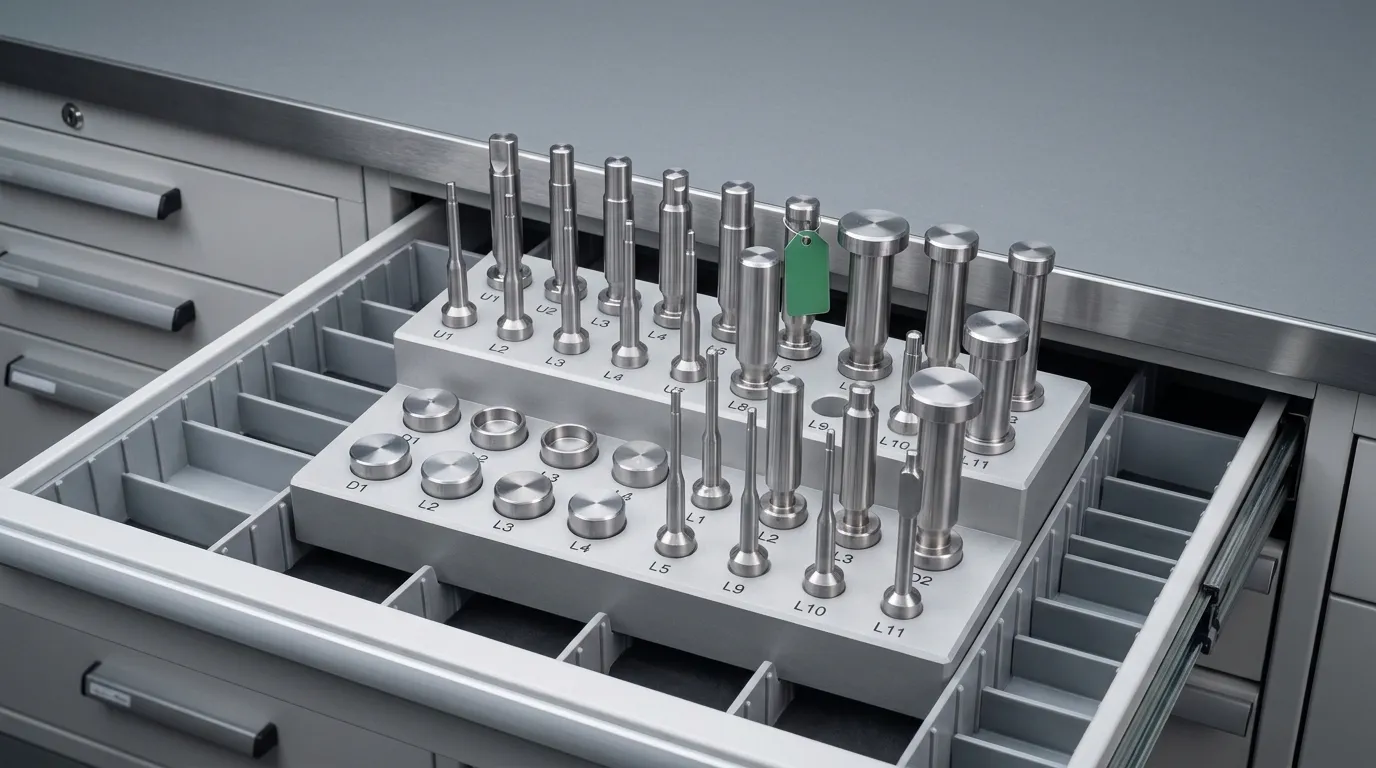
まずは管理された事前保管プロセスから始めましょう
Storage begins when the tooling leaves the tablet press, not when the storage container is closed.
Use a defined sequence:
- Move the tooling in a protected tray or case.
- Clean it using the facility’s approved procedure.
- Dry every surface completely.
- Inspect the full punch-and-die set.
- Record its condition and completeness.
- Assign a released, restricted, or quarantined status.
- Apply an approved storage protectant when required.
- Place each component in its designated storage position.
The procedure should identify who performs each step, which materials are approved, what records are required, and who can release the tooling for future use. For pharmaceutical operations subject to U.S. requirements, 21 CFR 211.67 requires written procedures for equipment cleaning and maintenance, including responsibilities, schedules, methods, 材料, 検査, and protection before use.
すべての工具面を清掃し乾燥してください
Remove tablet residue, cleaning-agent residue, old lubricant, and visible contamination before storage. Pay particular attention to:
- パンチカップとチップ
- エンボス加工や彫刻された特徴
- パンチキーと凹み部分
- ダイボアとエッジ
- 洗濯後に水が残る場所
A tool that appears dry externally may still retain moisture in a cup, ボア, キーウェイ, or recessed identification mark. Protective oil or grease should never be applied over retained water because the coating may trap moisture against the metal surface.
その 世界保健機関(WHO)の清掃検証ガイダンス states that cleaned equipment should be stored dry and that storage periods and conditions before reuse should be addressed in the validated process.
The actual cleaner, drying method, and acceptance criteria should come from the facility’s approved procedure and the tooling material or coating supplier. One process should not be assumed suitable for every tool steel or surface treatment.
セットを検査し、そのステータスを割り当ててください
Inspection should occur before a heavy protectant is applied because oil or grease may make small surface defects harder to see.
Check for:
- 腐食や変色
- Chips, dents, 引っかき傷, or impact marks
- Damaged punch tips, カップ, or embossing
- コーティングの損傷や剥がれ
- ダイエッジ周辺のバリ
- ダイボア内部の珍しい痕跡
- 識別が欠落または判読不能
- パンチを外したり死んだりする
- 誤った取り扱いの証拠
Reconcile the number of upper punches, lower punches, and dies against the set record. An incomplete or unidentified set should not enter normal released storage.
Tooling with visible damage, uncertain identity, incomplete cleaning records, or unknown protectant status should be segregated for further assessment.
接触や取り扱いによる損傷を防ぐ
Metal-to-metal contact is one of the most preventable storage risks. Punches can be damaged when they strike one another inside loose bins, shift in an oversized tray, or rest directly on precision surfaces.
The storage system should prevent:
- パンチ同士の接触
- パンチ・トゥ・ダイコンタクト
- 死から死への影響
- パンチチップやカップに体重をかけること
- 引き出しやトレイを開けたときの動き
- 輸送中の緩い部品の転がり
Precision features requiring particular protection include punch tips, カップ, エンボス加工, 表, バレル, 鍵, die edges, そしてダイボア.
脆弱な工具面を分離し支持する
Each component should have a stable position that supports it without placing unnecessary pressure on a critical working surface.
Suitable supports may include:
- フィット型金型インサート
- 番号付きトレイの位置
- 個別のスリーブをきれいにしてください
- 脱落しない仕切り板
- 専用に設計された引き出しオーガナイザー
Insert materials should be cleanable, 安定, nonabrasive, and compatible with approved cleaners and storage protectants. Dirty, absorbent, 損傷, or shedding foam can introduce particles, retain moisture, or abrade polished surfaces.
Loose storage in a shared metal or plastic bin should be avoided, even when the tools have been coated with oil. Lubrication does not prevent impact damage.
There is no universally correct rule that every punch must be stored vertically or horizontally. Orientation should be selected according to:
- パンチ幾何学
- オーガナイザーのデザイン
- 安定性
- 先端とカップの保護
- 工具サプライヤーの指示
- 除去時の安全なアクセス
The correct orientation is the one that securely supports the component and prevents movement or loading on vulnerable areas.
内部輸送中の工具を保護する
Damage may occur before the tooling reaches the cabinet. Use a dedicated tray or transport case when moving components between:
- タブレット印刷機
- 清掃エリア
- 検査所
- メンテナンスルーム
- 工具・保管エリア
Every component should be secured before movement. Carrying several loose punches by hand or placing them together on an unprotected trolley creates unnecessary impact and drop risk.
A transport case should not automatically be treated as a long-term storage system. Its enclosure, insert material, 清潔さ, moisture control, and labeling must still be evaluated.
Control Corrosion, 水分, and Condensation
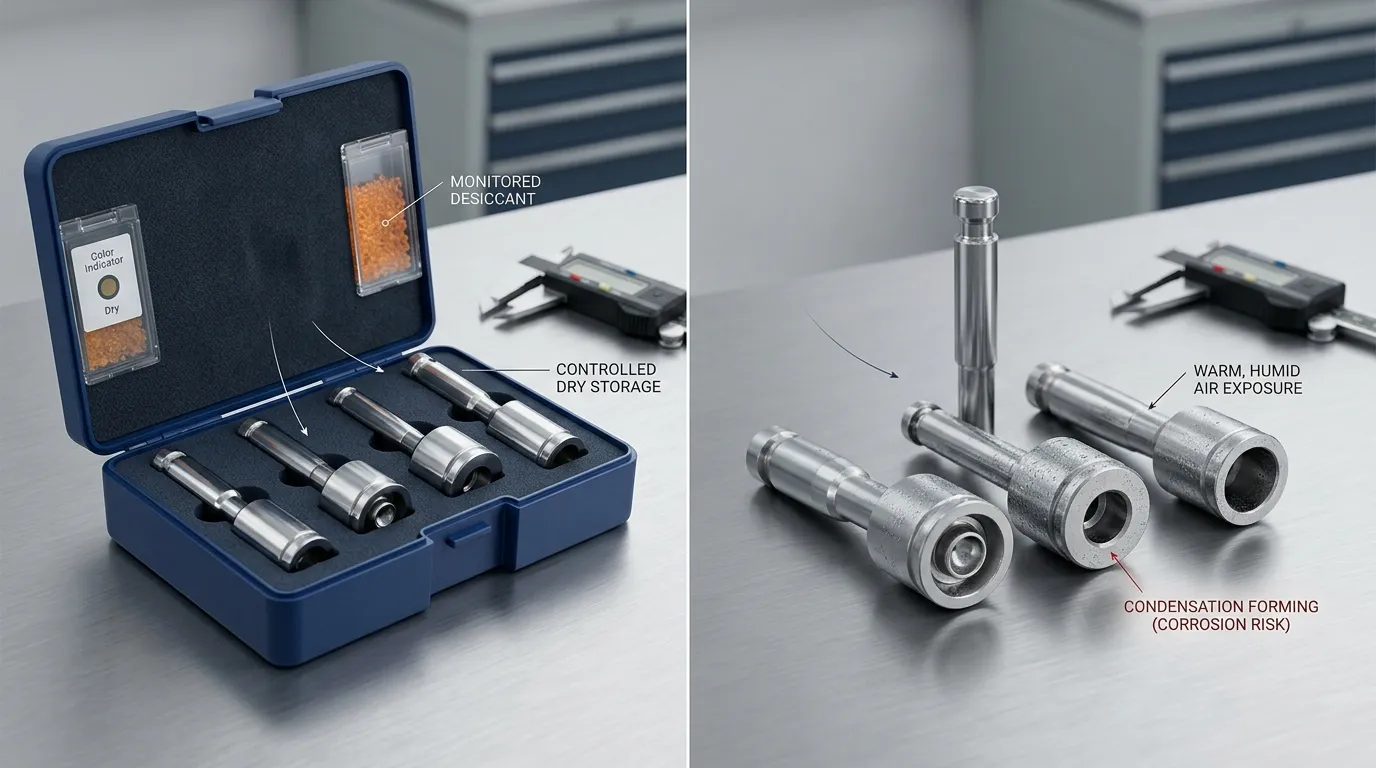
Corrosion risk is influenced by more than room humidity. Relevant factors include:
- 工具鋼と熱処理
- 表面仕上げ
- コーティング状態
- 残留製品や洗浄薬品
- 取り扱いによる塩分
- 貯水
- 大気汚染物質
- 温度変化
- 保存期間
- 保護剤の適合性
Complete drying remains the first corrosion-control step. A cabinet or desiccant cannot reliably compensate for tools stored while still damp.
The storage area should be clean, ドライ, and protected from repeated environmental changes. Avoid locations close to wash stations, uncontrolled exterior walls, chemical vapors, leaking utilities, or frequently opened exterior doors.
Room or enclosure limits should be defined through a facility risk assessment using actual tooling materials, コーティング, local climate, storage duration, and monitoring capability. One temperature or relative-humidity value should not be presented as universally correct for every facility.
部屋や容器の移行時の結露防止
Condensation can form when cooler metal is exposed to warmer, humid air. This means tooling can become wet even when it was dry inside its previous room or container.
Risk increases when:
- 冷蔵庫はすぐに暖かい部屋で開けられます
- 工具は温度差が大きい領域間を移動します
- エアコンの効いた部屋は湿った外気を取り入れる
- 環境変動時に容器は繰り返し開封されます
Where a significant temperature difference exists, follow an approved equilibration procedure before opening the enclosure. If visible moisture appears, stop the process, dry and reinspect the tooling, and determine whether the event requires quarantine.
一般的な金属保存ガイダンス アメリカ合衆国. National Park Service identifies moisture, 汚染物質, temperature changes, and unsuitable storage materials as factors that can accelerate metal deterioration. Those principles are useful for understanding corrosion mechanisms, although pharmaceutical facilities must establish their own qualified limits and procedures.
Use Protectants, Desiccants, and VCI Materials Carefully
A storage protectant may reduce corrosion risk, but it must be selected for the specific tooling and storage conditions.
Confirm:
- 工具鋼とコーティングの適合性
- 塗布厚さ
- 意図された保存期間
- 製品接触の影響
- 除去手順
- よりクリーンな互換性
- 残留リスク
- 検査要件
An operating lubricant intended for short production intervals may not provide suitable long-term corrosion protection. 逆に, a heavy long-term protectant may require more extensive removal and re-cleaning before the tool returns to production.
Desiccants can help inside an appropriately sealed enclosure, しかし、メンテナンスフリーではありません. Their performance depends on:
- 囲いの漏れ
- 乾燥剤容量
- 既存の水分負荷
- 保存期間
- 交換または再生スケジュール
- Condition indicators, where used
Volatile corrosion inhibitor materials may be considered for some enclosed applications, but their compatibility, safety documentation, replacement interval, coating effects, and product-contact implications must be reviewed first.
| 制御 | 適切な使用方法 | 主な制限 |
|---|---|---|
| 保管保護剤 | 互換性のある金属表面に一時的な保護フィルムを貼る | Must be removable and compatible with the tool, コーティング, cleaner, and product-contact process |
| 乾燥剤 | 適切な密閉された飼育環境内での湿気低減 | 飽和状態や漏れやすい容器で使用すると効果が低下します |
| VCIの資料 | 密閉環境での補助的な腐食制御 | Requires chemical, コーティング, 安全, and process compatibility review |
| 密閉された箱 | 地元でのほこりや環境変化からの保護 | Does not compensate for wet tooling, failed seals, or missing monitoring |
ツールセットとリスクに合った保管システムを選択してください
The best storage system depends on tool geometry, set size, storage duration, room conditions, access frequency, and contamination controls.
Evaluate these features before selecting a tray, box, drawer, or cabinet:
- 各コンポーネントごとに個別の位置
- 作業面に圧力をかけずに安定した支持を得られます
- 適切な工具フォーマット寸法
- 洗浄可能で剥がれにくいインサート材料
- ほこりや偶発的な接触からの保護
- 十分な積載能力
- 明確なラベル表示と位置番号付け
- 安全な引き出しや蓋の操作
- 目視検査が容易です
- 必要に応じてアクセス制御
- 保護剤および洗浄剤との適合性
Tooling format matters because inserts designed for one punch diameter, 長さ, or head geometry may not safely support another.
Compare Trays, Boxes, Drawers, Cabinets, and Transport Cases
| ストレージオプション | 最適な用途 | 強み | 制限とチェック |
| 適合トレイ | セットの組織化と個人の分離 | Good visibility, counting, and position control | ほこりや湿気を防ぐために外側の囲いが必要かもしれません |
| 密閉された箱 | 地域の環境保護 | ほこりと外部の水分交換を制限する | シールの状態や内部湿度は引き続き監視が必要です |
| 引き出しオーガナイザー | 頻繁なアクセスと集中型セット保管 | 効率的な検索と明確な位置番号付け | 引き出しの動きで部品がずれてはなりません |
| 金型キャビネット | 中央工具室の組織 | アクセス制御および複数セットをサポートします | Still requires suitable trays, インサート, and environmental control |
| 輸送ケース | 作業エリア間の保護された移動 | ハンドリングと落下リスクの低減 | さらなる評価なしには長時間の保管には適さない可能性があります |
A cabinet alone is not the storage control. The complete system includes the room, enclosure, 挿入, identification method, protectant, monitoring process, and release procedure.
識別, Track, and Segregate Every Tool Set
Physical protection is only one part of tablet tooling storage best practices. A perfectly preserved tool can still create a production problem if it is mixed with another set, stored under the wrong status, or returned without a complete record.
Each punch-and-die set should have:
- 一意の集合識別子
- 定義された保管場所
- 既知の成分数
- 番号付けされたポジションは役に立ちました
- 清掃および検査の記録された状況
- 使用された保護剤の詳細
- 保管日
- レビューまたは再検査の要件
- 明確な解放または隔離状態
セットの取得と解放に必要な情報を記録する
A practical storage record may contain:
| 記録フィールド | 目的 |
| ツールセットID | 部品を正しい仕様と履歴に結びつけます |
| 製品または図面参照 | 誤ったタブレット設計やプレスセットアップでの使用を防ぐ |
| 工具形式 | オーガナイザーと機器の互換性を確認する |
| 成分数 | 欠損または代替された工具の特定 |
| 清掃日 | 準備完了後のショー |
| 検査状況 | セットが受け入れられたか制限されたかを確認します |
| 使用保護剤 | 互換性や削除の意思決定をサポートします |
| 保管場所 | 検索を管理し、追跡可能にします |
| 審査要件 | 保存状態を再評価すべき時刻を示します |
| 現状 | 隔離された金型の設置を防ぐ |
The exact fields should match the facility’s quality system. Facilities operating under U.S. drug-manufacturing requirements can also review 21 CFR 211.182 for equipment cleaning, メンテナンス, and use-record expectations.
Quarantine Damaged, Incomplete, or Unidentified Tooling
Normal storage is not appropriate when the set has:
- 目に見える腐食
- Chips, dents, 引っかき傷, or impact marks
- 損傷したエンボス加工
- コーティング破損の疑い
- 欠落した構成要素
- 読み取れない、または不確かな同一性
- 清掃状況不明
- 説明のつかない湿気現象
- 容器の損傷やシールの失敗
- 未確認のプロテクター
Record the reason for quarantine and keep the tooling physically or electronically separated from released sets. Refer it for qualified assessment rather than returning it to the press.
Detailed repair, 改修, and replacement limits belong in a separate engineering decision process. Once that resource is available, the quarantine section can link readers to the planned tablet tooling refurbishment criteria page.
短期および長期保存のコントロール調整
Storage between nearby production runs may not require the same preservation method as tooling held for an extended or uncertain period. The distinction should be defined by the facility rather than by a universal number of days.
| 意思決定要因 | 短い保存間隔 | より長く、または不確実な保存間隔 |
| 囲い | Protected tray, drawer, or approved box may be sufficient | より管理された飼育環境が必要になる場合があります |
| プロテクタント | 光認証された保護は、定められた間隔に適している場合があります | 長期保護剤は評価が必要かもしれません |
| 環境モニタリング | 通常の工具室の操作に従います | 囲いや部屋の監視を強化することも正当化される場合があります |
| 乾燥剤またはVCI | 環境が必要としない限り、多くの場合不要です | 適合する密閉保管の評価が検討されることがあります |
| 検査 | 次回の使用前に必ず確認してください | 記録された保存状態のレビューをスケジュールしてください |
| 復帰 | 状態を確認し、必要に応じて保護具を外してください | 再清掃やより詳細な点検が必要になる場合があります |
素材, コーティング, local climate, storage history, and product-contact requirements should control the decision. Longer storage does not justify applying excessive grease or an incompatible corrosion inhibitor.
保管された工具を点検し、再利用前にリリースしてください
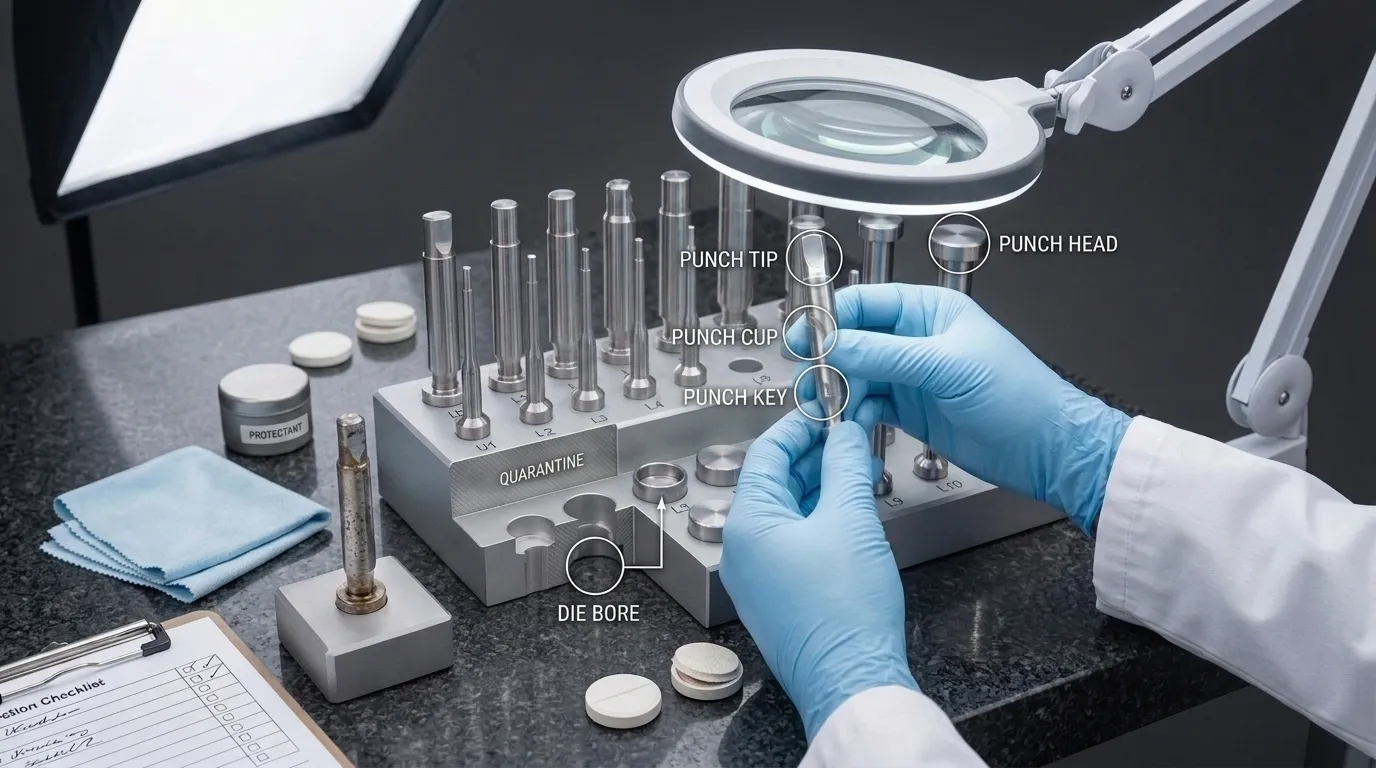
Storage controls can fail. Containers can leak, desiccants can become saturated, protectants can break down, labels can detach, and components can shift.
Inspection frequency should consider:
- 保存期間
- 工具の材料とコーティング
- 部屋の安定性
- 囲いの種類
- 保護指示
- 乾燥剤の状態
- 過去の腐食事象
- アクセス頻度
- 環境遠征
リスクベースの貯蔵状態チェックをスケジュールする
During a stored-condition review, check for:
- 腐食や染み
- 目に見える水分
- 粉塵または残留物
- 損傷したシール
- 乾燥剤が枯渇しています
- シフトまたは接触する部品
- 挿入劣化
- 欠落した工具
- 誤ったラベル
- 状況や場所の説明のつかない変化
Do not assign one universal monthly, quarterly, or annual interval. The inspection schedule should be documented and justified by the actual risk.
使用前リリースチェックを完了してください
Before installation:
- Confirm the tool-set identity and specification.
- Reconcile the component count.
- Inspect punch tips, カップ, 表, 鍵, die edges, そしてダイボア.
- Check for corrosion, 変色, 水分, チップス, and coating damage.
- Remove the storage protectant using the approved method.
- Re-clean the tooling when required.
- Confirm that the set has released status.
- Record completion of the inspection.
An intact box does not prove that the tooling inside is ready for production.
タブレットの工具保管ミスを避ける
| ミス | 生じるリスク | より良いコントロール |
| 湿った状態で工具を保管する方法 | Corrosion, 染色, または汚染 | 保護前に完全に乾燥させていることを確認してください |
| 残留物の上に油を塗る | 汚染を捕捉し、状態を隠す | まずは清掃して点検してください |
| 共有のルーズビンの使用 | 影響, scratching, and mixed components | 個別にフィットした体位を使いましょう |
| 汚れたフォームや脱落フォームの使用 | Particles, retained moisture, and abrasion | Use cleanable, compatible inserts |
| コーティングされた工具が保護を必要としないと仮定した場合 | コーティングの損傷や露出した部分は依然として劣化する可能性があります | コーティングごとの指示に従ってください |
| 乾燥剤を無期限に放置すること | 飽和後の偽りの自信 | 囲いの計画に従って点検して交換してください |
| 公開セットと隔離セットのミキシング | 不適切な金型の誤装 | 明確な地位と物理的な隔離を活用しましょう |
| 温度遷移を無視する | 冷たい金属表面での結露 | 均衡の制御とエクスカーション後の検査 |
| 保管場所から直接ツールを返品する方法 | Undetected damage, 残留物, or identity errors | 使用前のリリースチェックを文書化してください |
保管プロセスを工具室の標準作業手順(SOP)に組み込む
A repeatable tablet tooling storage procedure should define:
- 責任者
- 承認された清掃および乾燥方法
- 検査およびステータス基準
- 承認された容器およびインサート材料
- 保護剤の選択および除去方法
- 施設が定める環境制限
- 監視装置とレビュー頻度
- ストレージ-ロケーション制御
- 必須記録
- 検疫およびエスカレーション手続き
- 環境外出反応
- 使用前リリース責任
- 訓練および変更管理の要件
Regulations and guidance differ by market and application. Use FDA and WHO sources as applicable references, then align the final SOP with local requirements, the facility’s quality system, and supplier documentation.
材料ごとの要件を工具サプライヤーと確認してください
General storage guidance cannot replace material- and design-specific information. Before approving a protectant, 挿入, or long-term preservation method, 確認してください:
- 実際の工具鋼
- 表面コーティングまたは処理
- 化学的制限
- 互換性のあるプロテクター
- 承認された除去方法
- 繊細な先端やエンボス加工のサポート要件
- 特殊なジオメトリに対するストレージ制限
サンシャインプロズ タブレットプレス金型 page identifies punches and dies, high-speed steel as an available material, and customization based on size, 素材, and press or mold pairing. The company also states that custom tooling can be processed from drawings or samples.
For material-specific questions, replacement tooling, or a custom punch-and-die requirement, お問い合わせ:SunshinePro with the tooling drawing, サンプル, 資料情報, and application details.



サンシャインより書かれました
サンシャインで, 私たちは精密金型部品の専門製造およびサプライヤーです, プレスおよび射出成形用途向けの幅広い製品を提供しています. 私たちの主な焦点はパンチダイスです, イジェクターピンとスリーブ, ガイドポストとブッシング. 高度なCNC加工技術で, 厳格な品質管理, そして強力な生産能力, 私たちは信頼性を保証しています, 高精度部品, また、迅速かつ効率的なグローバル供給のための在庫の標準部品も併用しています.
ニュース
サービスを受けましょう
あらゆる予算に合った高品質な部品と、親切なスタッフが訓練されていて、訪問を有益で手間なく充実させてくれます.
