



自動車用射出成形: 耐久性プラスチック部品の金型要件
Automotive injection molding requires tooling that can maintain dimensional stability, 外観の一貫性, and repeatable part quality through long production runs. Automotive molds face thermal cycling, vibration-related stress, 研磨材料, and tight tolerance requirements. 硬化鋼工具, balanced cooling channels, proper venting, and preventive maintenance help manufacturers produce durable automotive plastic parts with stable surface finishes and longer mold life.
Automotive suppliers cannot treat vehicle parts like standard consumer plastics. A dashboard panel, grille, or under-hood housing may go through years of heat, 振動, UV exposure, および機械的応力. Tooling decisions directly affect whether those parts stay dimensionally stable and visually consistent after hundreds of thousands of cycles.
What makes automotive injection molding different from standard plastic molding?
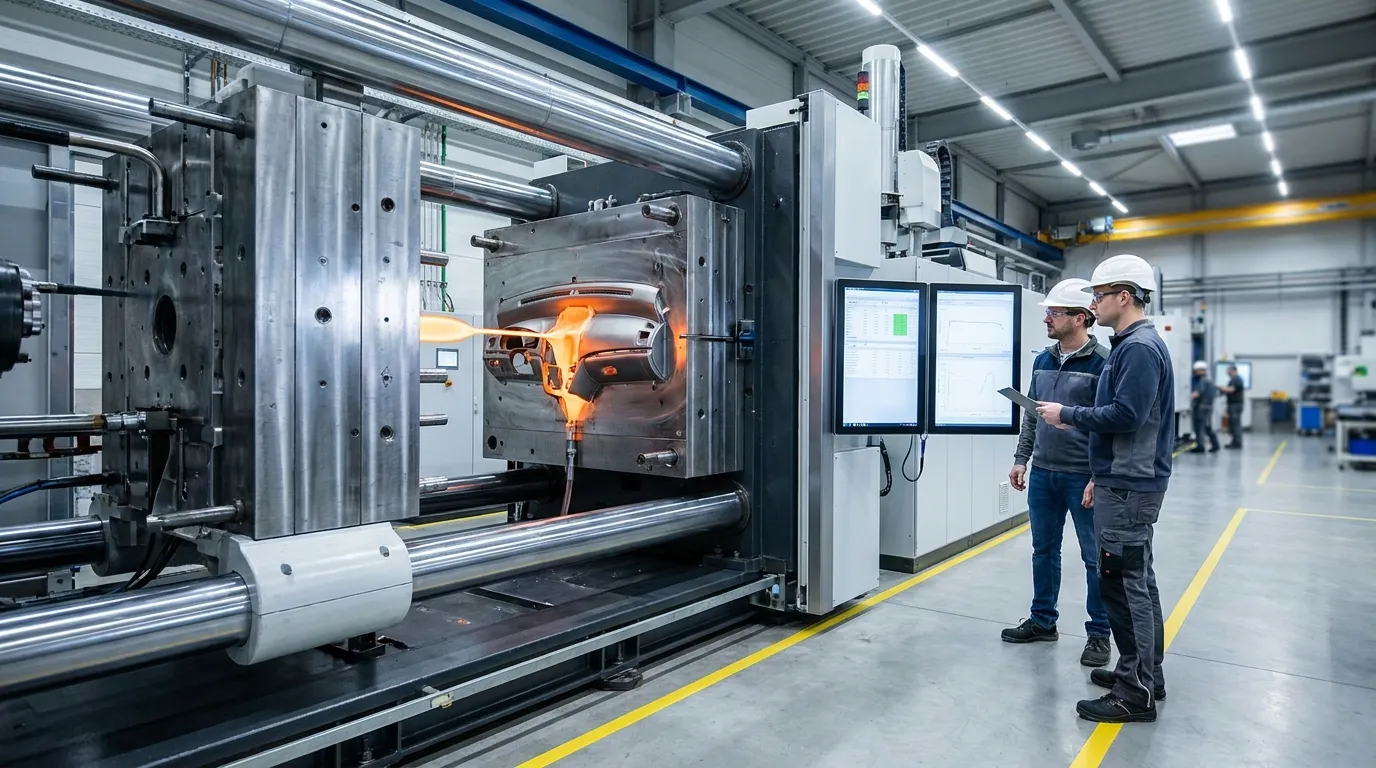
Automotive injection molding requires stronger tooling because vehicle parts must survive heat, 振動, UV exposure, and long production runs without losing dimensional accuracy or cosmetic quality. Standard consumer-product molds usually face lower stress and shorter production demands.
Automotive parts often stay in service for years under changing temperatures and constant vibration. Interior trim pieces must fit tightly without rattling. Exterior components need stable surface finishes even after long UV exposure. Under-hood parts may experience repeated thermal cycling that pushes both the resin and the mold harder than standard commercial applications.
Production volume also changes the tooling strategy. Automotive programs commonly run for hundreds of thousands or even millions of cycles. Softer tooling materials may wear too quickly under those conditions, especially when using glass-filled engineering plastics.
| 標準プラスチック成形 | 自動車用射出成形 |
|---|---|
| 生産量の減少 | 大量生産 |
| 基本的な外観基準 | 厳格な表面仕上げの一貫性 |
| 限定的な熱曝露 | 繰り返しの熱循環 |
| 低次元要求 | 厳密な組立公差 |
| 製品の寿命が短い | 長期的な耐久性の期待 |
This is why many automotive suppliers invest heavily in hardened tooling, プロセス制御, and preventive maintenance. 次の通りです インターテック, automotive plastic components often require extensive validation and testing to maintain quality standards across production.
If you need a broader overview of mold construction, その 金型設計の基本 page explains the core structure behind injection mold systems.
Which automotive parts place the highest demands on injection molds?
Automotive parts exposed to heat, 振動, UV light, or cosmetic inspection place the greatest demands on injection molds. ダッシュボード, グリル, ランプハウジング, and under-hood components require stable tooling that can maintain tight tolerances across long production runs.
Not every automotive component stresses a mold equally. Large cosmetic panels often create the biggest challenges because they combine appearance requirements with dimensional accuracy. Even a small amount of warpage can create fitment problems during assembly.
Lamp housings are another demanding application. Poor cavity polishing or inconsistent cooling can create gloss variation that becomes visible immediately under light reflection. Exterior grilles and trim pieces also need stable surface texture retention throughout the mold lifecycle.
| 自動車部品 | 主な工具チャレンジ |
|---|---|
| ダッシュボードパネル | ワープ制御 |
| ランプハウジング | 光沢の一貫性 |
| 外部グリル | 紫外線関連の表面品質 |
| エンジンルーム | 熱抵抗 |
| インテリアトリムパネル | 厳密な次元フィット |
| HVAC部品 | 長期的再現性 |
A dashboard molding project is a good example. Uneven cooling channels can create shrinkage differences across the part surface. The result may look flat at first, then distort slightly after installation. That small dimensional shift often causes alignment issues during vehicle assembly.
Manufacturers working across different industries often apply similar precision principles. その 射出成形の応用 resource shows how tooling requirements change between product categories.
Why do mold steel selection and hardness matter in automotive production?
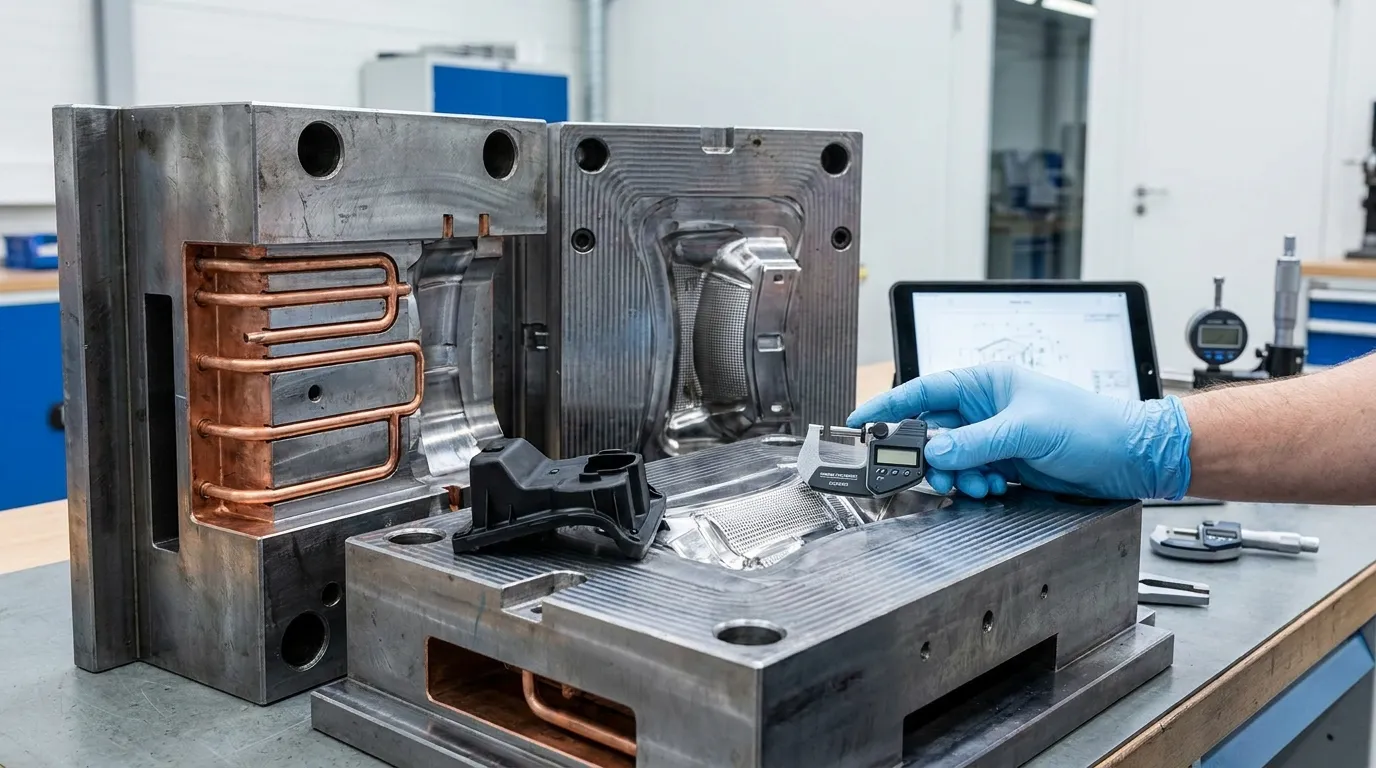
Mold steel selection affects wear resistance, cavity stability, surface finish retention, および長期的な生産の安定性. Automotive programs with high volumes or abrasive resins usually require hardened steel tooling instead of softer aluminum molds.
Tooling material directly affects how long a mold can maintain quality standards. Automotive molds frequently run abrasive materials such as glass-filled nylon, which can wear softer cavity surfaces quickly. Once cavity wear starts, dimensional drift and cosmetic defects become harder to control.
Hardened steel tooling costs more upfront, but it usually performs better for long automotive programs. It handles repeated thermal cycling more consistently and maintains cavity precision over larger production volumes.
| 工具材料 | 最適なユースケース | Main Limitation |
|---|---|---|
| アルミニウム金型 | 試作機と短期生産 | 摩耗が速くなる |
| 事前硬化鋼 | 中規模生産 | Moderate wear resistance |
| 硬化鋼 | 長期自動車プログラム | 初期コストの高さ |
アルミ金型がまだ意味のある時代に
Aluminum tooling is not always the wrong choice. It works well for prototype validation, ブリッジ金型, and low-volume production where lead time matters more than extreme mold lifespan.
That said, low tooling cost can become expensive later if the mold cannot maintain dimensional consistency. A softer mold running glass-filled resin may require repeated repairs, re-polishing, or cavity corrections much earlier than expected.
A supplier that understands long-term tooling performance should explain these tradeoffs clearly instead of defaulting to the cheapest option. その 型の部品ガイド provides a broader look at the components that affect tooling durability.
How do automotive manufacturers maintain dimensional stability in molded parts?
Dimensional stability in automotive injection molding depends on balanced cooling, stable cavity temperatures, controlled shrinkage, and repeatable process settings. Poor tooling design can cause warpage, fitment issues, and inconsistent assembly performance.
Automotive assemblies leave little room for dimensional variation. Interior trim pieces, HVAC housings, and console components often need to align precisely with surrounding parts. Even small dimensional movement can create visible gaps or assembly stress.
Cooling design plays a major role in dimensional control. If one area of the cavity cools faster than another, the part may shrink unevenly. This is a common cause of warpage in large automotive panels.
自動車部品における歪みの一般的な原因
- 不均一な冷却チャネル配置
- ゲート配置の不適切な問題
- 樹脂の収縮不均一
- 過剰な注入圧力
- 不安定な金型温度制御
A dashboard warpage issue illustrates the problem well. One supplier used uneven cooling channels near the center of a large panel. The part initially passed inspection, but slight dimensional movement appeared after installation. The issue traced back to inconsistent cooling rates across the cavity.
Manufacturers also use mold-flow analysis to predict shrinkage and filling behavior before production begins. Stable process settings help maintain repeatability after the tool moves into long production cycles.
| 次元安定性係数 | なぜ重要なのか |
|---|---|
| バランス冷却 | 不均一な収縮を軽減します |
| 安定したキャビティ温度 | 再現性の向上 |
| 制御されたゲート配置 | 内部ストレスの軽減 |
| 一貫したプロセス設定 | 部品寸法を維持 |
| 樹脂選択 | 縮小行動への影響 |
Companies producing tight-tolerance parts in other industries face similar challenges. その デバイス・モールド・プレシジョン page shows how precision tooling practices support dimensional consistency.
What tooling features improve surface finish and cosmetic quality?
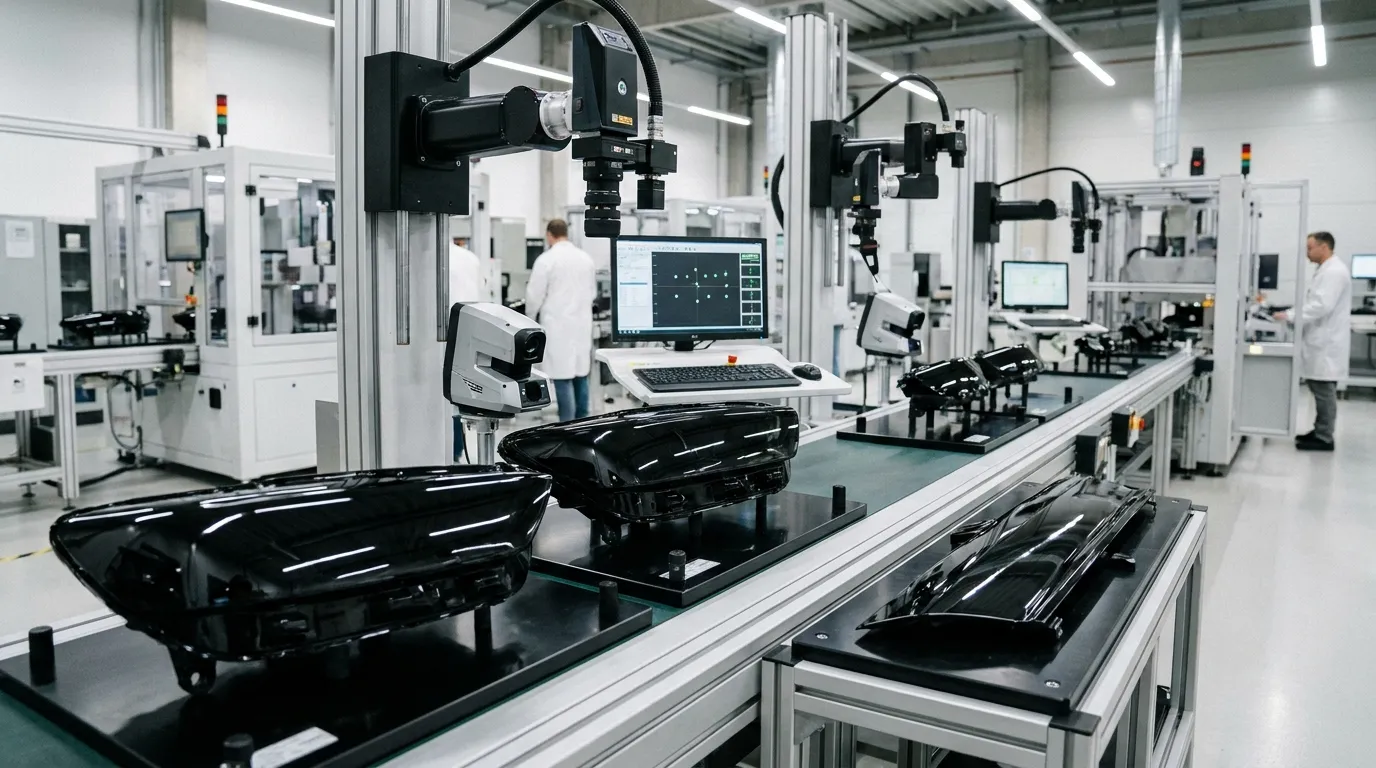
Automotive surface quality depends heavily on tooling precision. Proper polishing, 換気, cavity alignment, and gate positioning help manufacturers reduce weld lines, gloss variation, and visible cosmetic defects across large production runs.
Cosmetic automotive parts require stable tooling surfaces. Poor polishing can create texture inconsistency, while weak venting may trap gases and leave visible marks on finished components.
Lamp housings provide a clear example. A supplier may choose a premium resin, but weak cavity polishing can still create uneven gloss reflection across the part surface. In automotive applications, even small cosmetic variation becomes noticeable under direct lighting.
表面仕上げチェックリスト
- キャビティ研磨の標準を一貫して維持しましょう
- ガスの痕跡が閉じ込められるのを減らすための換気設計
- 溶接線の視認性を最小限に抑えるための位置ゲート
- 長時間の生産時のキャビティ摩耗を監視する
- 金型温度を安定させて光沢を安定させる
Surface finish problems are often tooling problems, not material problems. A well-designed mold can improve appearance consistency even when production volume increases significantly.
For industries that also require tight cosmetic control, その プラスチック製デバイス金型 resource shows how precision tooling supports clean surface quality.
How does production volume affect automotive tooling strategy?
Production volume changes nearly every tooling decision in automotive injection molding. Low-volume programs may justify softer tooling, while long-run automotive production usually requires hardened steel, preventive maintenance planning, and stable multi-cavity performance.
A prototype tool and a million-cycle automotive production mold serve very different purposes. Short-run programs often focus on speed and lower upfront cost. Long-run automotive programs prioritize consistency and predictable maintenance intervals.
Multi-cavity tooling becomes more important as production demand increases. When cavity balancing is poor, one cavity may fill differently from another. That variation can create dimensional inconsistency across the same production run.
マルチキャビティ金型が必要になる場合
Multi-cavity molds make sense when production demand is high enough to justify the added tooling complexity. They improve output efficiency, but they also increase the need for balanced flow paths and stable process control.
A trim panel production project highlights this issue well. One cavity produced slightly different shrinkage because the flow path was less balanced. The result was inconsistent fitment during assembly checks.
自動車用金型決定表
| 生産量 | 推奨工具 | 典型的なカビの生活 | 共通応用 | メンテナンス頻度 |
|---|---|---|---|---|
| Under 10,000 parts | アルミニウム金型 | 短期的 | プロトタイプ検証 | 低め |
| 10,000 100まで,000 parts | 事前硬化鋼 | 中期的 | 橋の生産 | 中程度 |
| 100,000+ parts | 硬化鋼 | 長期的には | 自動車のフル生産 | 定期予防保守 |
Tooling revisions can also extend lead times significantly. 次の通りです エヴォック・ポリテック および ユリテック, design changes during tooling development often increase production delays and adjustment costs.
What shortens the lifespan of automotive injection molds?
Automotive injection molds wear out faster when abrasive resins, poor maintenance practices, excessive injection pressure, or uncontrolled thermal cycling damage cavity surfaces and critical mold components.
Automotive molds operate under demanding conditions for long periods. Glass-filled engineering plastics are especially hard on cavity surfaces because the reinforcing fibers gradually erode softer tooling materials.
Thermal cycling creates another long-term issue. Repeated heating and cooling can affect cavity stability, especially if the mold lacks proper temperature management. 時間をかけて, this may reduce dimensional accuracy or create flash issues around part edges.
自動車の金型故障チェックリスト
| 摩耗源 | 目に見える症状 | 原因としては | 是正措置 | 保守優先 |
|---|---|---|---|---|
| Abrasive resin wear | 次元ドリフト | ガラス充填材料 | 硬化空洞面 | ハイ |
| 換気口のメンテナンスが不十分だった | 焼け跡 | ガストラップ | クリーンベントチャネル | ハイ |
| 過剰な注入圧力 | フラッシュ形成 | プロセスの不均衡 | プロセス設定を調整する | メディア |
| 熱循環応力 | 表面亀裂 | 不安定な温度制御 | 冷却管理の改善 | ハイ |
| キャビティ研磨摩耗 | 光沢の不整合 | 長期生産期間 | キャビティ面の再研磨 | メディア |
Preventive maintenance matters more in automotive molding than many buyers realize. 次の通りです エスカテック, tooling lifespan depends heavily on maintenance quality, 運用条件, および材料選定.
購入者は自動車用射出成形サプライヤーをどのように評価すべきか?
Choosing the right supplier requires more than comparing tooling quotes. Automotive programs need stable production systems, long-term maintenance capability, and consistent quality control.
A supplier should be able to explain how they manage dimensional stability, cavity wear, 冷却バランス, and preventive maintenance. If those conversations stay vague, the tooling strategy may not be mature enough for demanding automotive programs.
工具を承認する前に尋ねるべき質問
- What mold steel is recommended, and why?
- How will the supplier manage cavity wear?
- What maintenance schedule is planned?
- Has mold-flow analysis been completed?
- How are dimensional tolerances verified during production?
A low tooling quote is not always the safest choice. Some suppliers reduce cost by using softer tooling materials or simplifying cooling design. That may work for short runs, but long automotive programs often expose those compromises later.
Buyers should also look for evidence of precision manufacturing discipline. Suppliers serving industries with tight tolerance requirements often develop stronger process controls. その 精密製造プロセス page provides a useful example of how structured manufacturing practices support consistency.
次のステップを正しく進める
Automotive injection molding depends heavily on tooling quality, especially when parts must maintain appearance, 次元安定性, and long-term durability across large production runs. 型鋼の選択, 冷却バランス, maintenance planning, and cavity design all affect the final result.
Before approving a new automotive program, review how the supplier handles wear resistance, プロセス制御, and preventive maintenance. A stronger tooling strategy usually costs less over the full life of the program because it reduces rework, 次元ドリフト, and production interruptions.
よくある質問
What is automotive injection molding?
Automotive injection molding is a manufacturing process that forms vehicle plastic parts by injecting molten resin into precision molds. It is commonly used for dashboards, トリムパネル, ランプハウジング, グリル, and structural plastic components that require repeatable quality.
What plastics are commonly used in automotive injection molding?
Common automotive molding materials include ABS, ポリプロピレン, ナイロン, ポリカーボネート, and glass-filled engineering plastics. Material choice depends on heat resistance, impact strength, 外観の品質, and dimensional stability requirements.
How long do automotive injection molds last?
Automotive injection molds can last from hundreds of thousands to more than one million cycles depending on mold steel quality, メンテナンスの実践, 樹脂の研磨性, および運用条件. Hardened steel tooling usually provides the longest service life.
Why is hardened steel used for automotive molds?
Hardened steel is used because automotive production often involves high volumes, 研磨材料, and strict dimensional requirements. It improves wear resistance, cavity stability, and long-term surface finish consistency.
What causes warpage in automotive molded parts?
歪みは通常、冷却の不均一さから発生します, ゲート配置の不備, inconsistent material shrinkage, または不安定なプロセス設定. Balanced cooling channels and controlled mold temperatures help reduce distortion.
Which automotive parts are commonly injection molded?
Common injection molded automotive parts include dashboards, bumpers, トリムパネル, グリル, ランプハウジング, HVAC部品, and interior consoles. Many modern vehicles rely heavily on molded plastic components to reduce weight and improve manufacturing efficiency.



サンシャインより書かれました
サンシャインで, 私たちは精密金型部品の専門製造およびサプライヤーです, プレスおよび射出成形用途向けの幅広い製品を提供しています. 私たちの主な焦点はパンチダイスです, イジェクターピンとスリーブ, ガイドポストとブッシング. 高度なCNC加工技術で, 厳格な品質管理, そして強力な生産能力, 私たちは信頼性を保証しています, 高精度部品, また、迅速かつ効率的なグローバル供給のための在庫の標準部品も併用しています.
ニュース
サービスを受けましょう
あらゆる予算に合った高品質な部品と、親切なスタッフが訓練されていて、訪問を有益で手間なく充実させてくれます.
