



Mold Guide Pins: アライメント, 使用歴, and Selection Guide
Mold guide pins keep injection mold halves aligned during every opening and closing cycle. Proper guide pin selection reduces flashing, prevents cavity and core damage, improves repeatability, and extends mold life. High-cycle molds usually need hardened guide pins, matched bushings, and consistent lubrication to reduce wear and maintain alignment accuracy over long production runs.
A mold can have excellent cavity design and still fail early if alignment is inconsistent. Guide pins control how mold halves meet during every cycle, which directly affects wear, 点滅, 次元一貫性, and maintenance cost. Understanding how these components work helps tooling buyers and maintenance teams avoid expensive repair problems before they grow into full mold rebuilds.
What do mold guide pins do during mold operation?
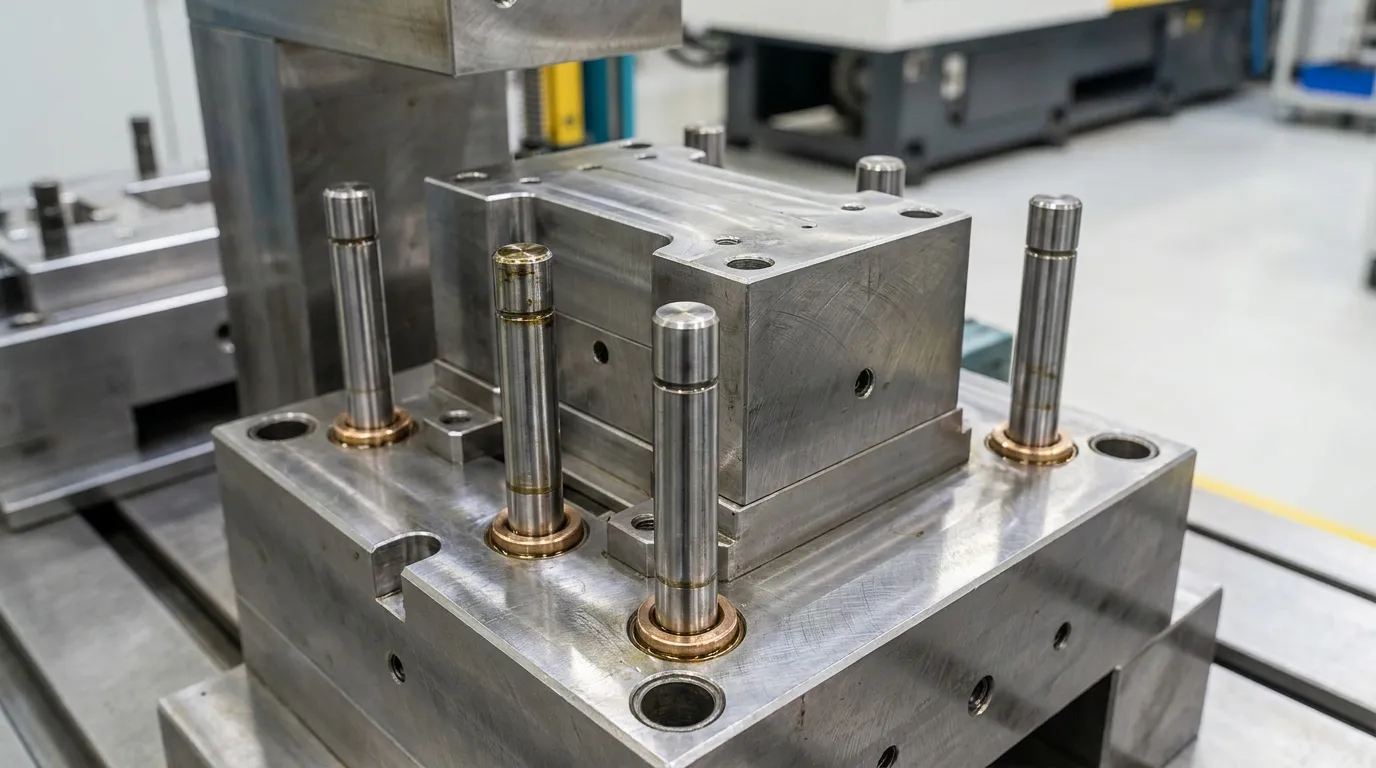
Mold guide pins keep the mold halves aligned during opening and closing cycles. Proper alignment prevents cavity damage, フラッシングの軽減, improves repeatability, and extends mold life by minimizing uneven wear.
Guide pins are precision-machined cylindrical components installed in the mold base. During mold closing, the pins enter matching guide bushings and help both mold halves align correctly before clamping pressure builds. This protects cavity edges, カラー, and other precision surfaces from impact damage.
Without proper alignment, even small positioning errors can create uneven stress across the mold. 時間をかけて, that stress increases wear and may create flashing or dimensional variation in molded parts. This becomes more noticeable in high-cycle production where molds open and close thousands of times per day.
Guide pins also improve movement consistency during production. In precision molds, repeatable alignment helps maintain stable part quality and smoother mold movement. If you need a broader overview of how alignment fits into the full tooling system, Sunshine’s guide to 射出成形構造 explains how these components work together inside a complete mold assembly.
Why does guide pin alignment affect mold life?
Poor guide pin alignment increases uneven stress across the mold. 時間をかけて, this accelerates cavity wear, damages cores, creates flashing defects, and shortens the usable life of high-cycle tooling.
Guide pins do more than position mold halves. They help distribute movement evenly during closing and opening. When alignment drifts, side loading increases across cavity surfaces and moving components. That extra friction slowly damages precision areas that are expensive to repair.
A common example appears in high-cycle packaging molds. A small amount of guide pin wear may initially create light flashing near the parting line. If the problem continues, cavity edges begin wearing unevenly, and repair costs rise quickly.
Standard guide pin systems are not always enough for high-cycle precision molds. Lower-cost setups may reduce tooling cost at the beginning, but they often increase maintenance frequency later. Precision molds with tight tolerances usually benefit from hardened materials and tighter fit control.
| アライメント条件 | 共通結果 | 長期的なカビリスク |
|---|---|---|
| 適切なアライメント | 安定した型閉鎖 | 摩耗率の低下 |
| 軽微なガイドピンの摩耗 | ライトフラッシュ | 不均一な空洞応力 |
| 潤滑不良 | 摩擦の増加 | ガルリングと得点 |
| 重度のずれ | コアまたはキャビティへの衝撃 | 大規模なカビ修理 |
For a broader look at tooling relationships, Sunshine’s overview of 金型コンポーネントシステム covers how alignment components interact with the rest of the mold assembly.
How do guide pins and guide bushings work together?
Guide pins provide alignment movement while guide bushings control friction and support. The fit between both parts directly affects mold smoothness, wear rate, and long-term alignment accuracy.
Guide pins and guide bushings operate as a matched system. The guide pin enters the bushing during mold closing, which keeps movement controlled and centered. If the fit becomes too loose, alignment accuracy drops. If the fit is too tight, friction increases and wear accelerates.
Lubrication also affects how these parts perform together. Standard systems rely on oil or grease to reduce friction between the pin and bushing surface. Poor lubrication increases scoring and surface damage, especially in high-speed molds.
| 構成要素 | 主な機能 | 共通摩耗問題 |
|---|---|---|
| ガイドピン | アライメントの移動を指示します | 表面スコアリング |
| Guide bushing | 運動を支え、安定させる | 内部摩耗 |
| 潤滑層 | 摩擦を減らす | ドライランニングによるダメージ |
Precision medical molds often use tighter tolerances and hardened guide systems because dimensional consistency is critical. Small alignment errors that might be acceptable in low-precision parts can create rejection problems in medical or electronic components.
What causes mold guide pins to wear out early?
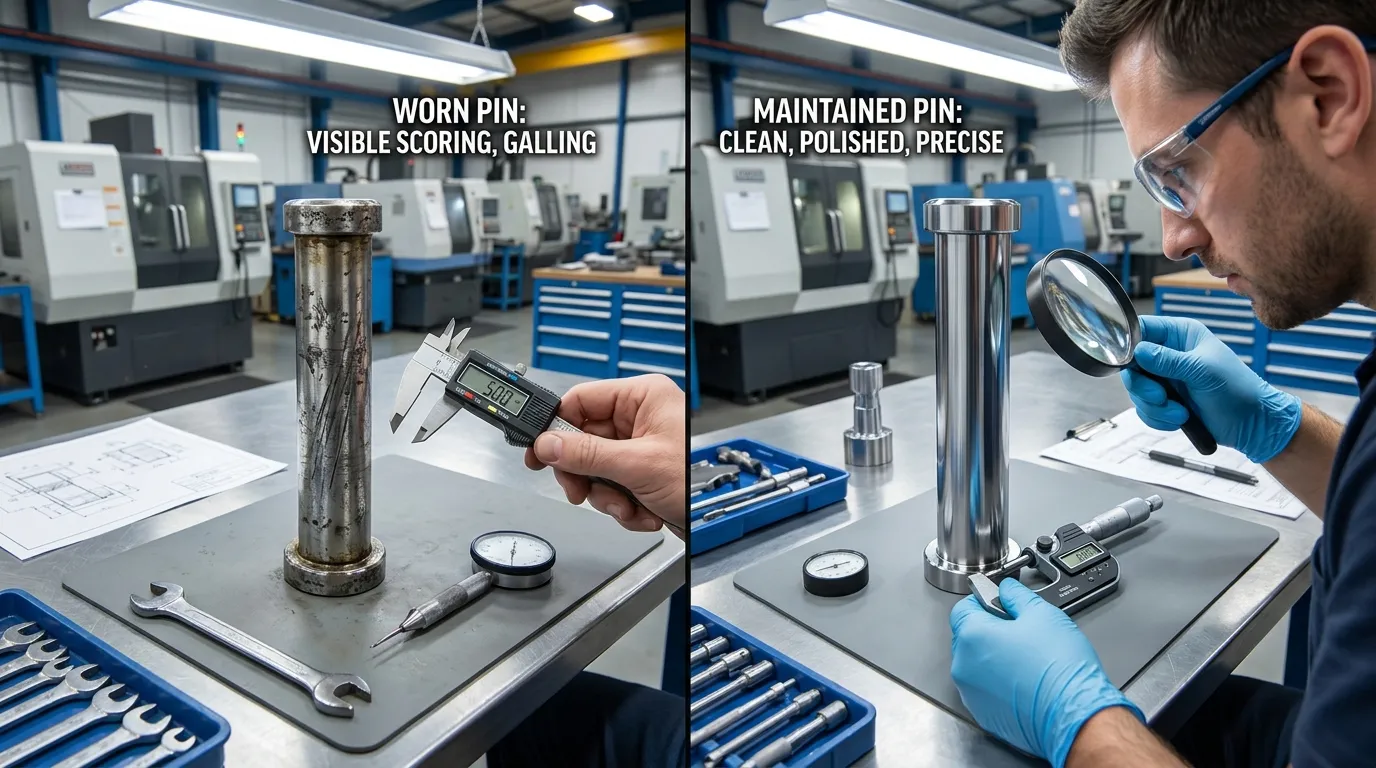
Early guide pin wear usually comes from poor lubrication, 汚染, or incorrect fit. Misalignment increases side loading, which accelerates scoring, 腹立たしい, and uneven wear inside the mold.
Guide pins rarely fail suddenly. Most wear problems develop slowly through friction, 汚染, or poor maintenance habits. Once surface wear begins, alignment quality decreases and additional damage spreads across nearby components.
A common maintenance issue appears in dusty production environments. Dirt or resin contamination enters the guide system and scratches the guide pin surface during repeated cycling. This creates rough movement and increases wear inside the bushing.
よく見られる摩耗症状の確認
- ガイドピン表面の傷や傷跡
- ピンの片側付近の不均一な摩耗パターン
- 成形部の周りにフラッシュが点滅しています
- 大まかな型の開閉動作
- 潤滑による変色の増加
- 金型サイクル中の騒音
Oil-less systems reduce lubrication maintenance, but they are not maintenance-free. Contamination and poor fit can still shorten guide pin life. In some environments, a properly lubricated standard system may last longer than a poorly maintained oil-less setup.
ガイドピン摩耗トラブルシューティング表
| 症状 | 原因としては | カビのリスク | 推奨修正案 |
|---|---|---|---|
| 表面スコアリング | 潤滑不良 | 摩耗が速くなる | 潤滑スケジュールの改善 |
| 不均一な摩耗 | ミスアライメント | フラッシングとキャビティ応力 | アライメントフィットの検査 |
| むきむくような痕跡 | 過剰摩擦 | 押収された移動 | 損傷した部品の交換 |
| ラフモールドの動き | 汚染 | ブッシング損傷 | 清掃・点検システム |
| フラッシング欠陥 | 摩耗したガイドフィット | 次元不整合 | 摩耗したピンやブッシングを交換してください |
Wear patterns often affect more than one component. Teams investigating alignment issues may also benefit from reviewing 精密コアピンの摩耗 because similar wear conditions can affect multiple tooling areas at the same time.
How do you select the right mold guide pin setup?
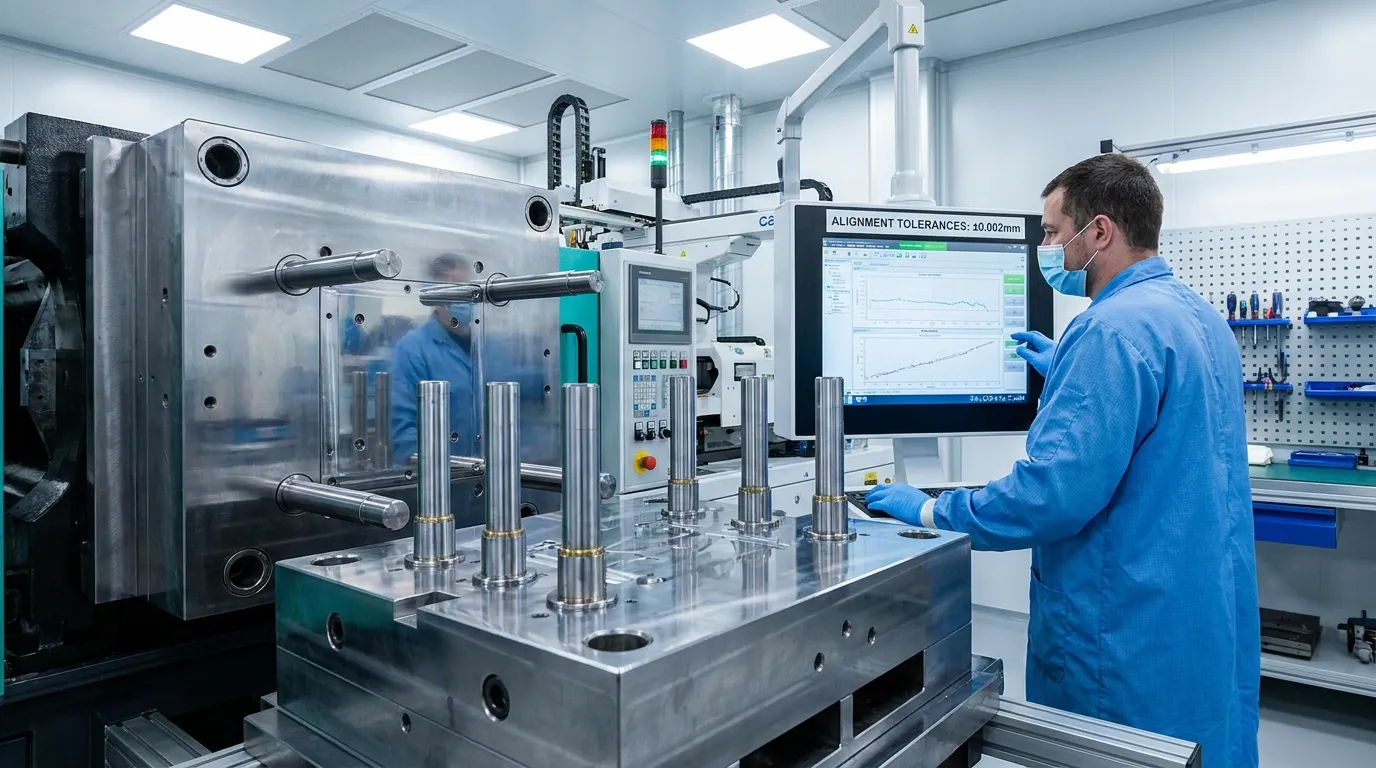
The right mold guide pin setup depends on mold size, production cycles, アライメント精度, and maintenance conditions. High-cycle molds usually require hardened materials, より厳密な公差, and more reliable lubrication systems.
Guide pin selection should match the mold’s operating conditions. A low-volume prototype mold does not need the same alignment system as a high-speed production mold running continuously across multiple shifts.
Material hardness matters because guide pins experience repeated contact and side loading. Hardened tool steels such as SUJ2 are commonly used because they provide better wear resistance under repeated cycling conditions.
標準と精密ガイドピンシステムの比較
| カビの状態 | 推奨セットアップ | 潤滑戦略 | 予想摩耗レベル |
|---|---|---|---|
| 低量型工具 | 標準ガイドピン | 手動潤滑 | 中程度 |
| ハイサイクル包装型 | 硬化精密ピン | 定期潤滑 | 下 |
| 精密医療型 | 厳密公差システム | 制御潤滑 | 非常に低い |
| 埃っぽい生産エリア | オイルレスまたはシールシステム | メンテナンスの削減 | 汚染の程度によります |
A practical example appears in consumer packaging molds. High-cycle production can create side loading and wear quickly, especially when molds operate at fast cycle times. Using hardened guide pins with controlled lubrication often reduces downtime compared to lower-cost standard setups.
Replacing worn guide pins early is usually cheaper than waiting for visible cavity damage. Small alignment problems can become expensive mold repairs quickly, especially in molds with precision cavity surfaces.
If your project involves different tooling environments or production sectors, Sunshine’s guide to 射出成形の応用 shows how mold requirements change across industries.
Are oil-less guide pin systems worth using?
Oil-less guide pin systems reduce lubrication maintenance, but they are not the best option for every mold. Their performance depends heavily on contamination levels, cycle frequency, and alignment precision requirements.
These systems usually use self-lubricating bushings or specialized surface materials that reduce the need for manual lubrication. They work well in environments where regular lubrication is difficult or where excess oil could contaminate products.
| システムタイプ | 主な利点 | Main Limitation |
|---|---|---|
| 標準潤滑システム | 初期コストの低減 | 定期的なメンテナンスが必要です |
| オイルレスシステム | 潤滑作業の削減 | 汚染に敏感 |
| 精密硬化システム | 耐摩耗性の向上 | 高い工具コスト |
A dusty production area highlights the difference clearly. Oil-less systems may reduce grease buildup that traps debris, but contamination can still damage alignment surfaces if cleaning intervals are ignored. In cleaner environments, lubricated precision systems may provide longer service life and smoother movement.
What maintenance practices extend guide pin life?
Regular inspection and lubrication are the most effective ways to extend guide pin life. Small alignment problems become expensive mold repairs when wear is ignored for too long.
Preventive maintenance keeps alignment problems from spreading into cavity or core damage. Most guide pin wear starts as a small surface issue that grows gradually over thousands of cycles.
Maintenance teams should inspect guide pins during scheduled mold servicing. 表面仕上げ, 潤滑条件, and movement smoothness all provide early warning signs before major alignment failure develops.
ガイドピンの交換が必要なサイン
- 目に見える得点やむきつき
- 不均一な摩耗痕
- ブッシング内部の緩いフィット
- フラッシュの問題が突然現れる
- 振動や動きの抵抗の増加
- 繰り返しの潤滑変色
A common repair scenario involves delayed replacement. A mold may continue running after light flashing appears, but continued operation can damage cavity edges and increase downtime later. Replacing worn guide pins early often prevents larger repair costs.
Maintenance planning also overlaps with other tooling components. Teams reviewing broader wear conditions can compare alignment-related movement issues with 金型メンテナンスコンポーネント used throughout the mold system.
How do guide pins affect molding quality and repeatability?
Guide pin condition directly affects molding consistency. Stable alignment keeps cavity surfaces positioned correctly during injection and clamping, which helps maintain dimensional accuracy across production cycles.
When guide pins wear unevenly, the mold halves may shift slightly during injection pressure. Even small movement changes can create flashing, inconsistent wall thickness, または次元変動. Precision molds are especially sensitive to these alignment changes.
A medical molding example shows why this matters. Precision medical components often require tight dimensional repeatability. Hardened guide systems with tighter tolerances help maintain stable cavity positioning and reduce variation between production runs.
Guide pins also affect mold movement smoothness. Stable movement reduces stress on nearby tooling components and helps maintain repeatable cycle performance over long production runs. Manufacturers focused on high-precision parts often evaluate alignment together with 精密成形精度 because both directly influence finished part quality.
次のステップを正しく進める
Choosing the right mold guide pins comes down to operating conditions, maintenance discipline, および精度要件. A standard setup may work well for lower-volume tooling, but high-cycle molds often need tighter tolerances, hardened materials, and more consistent lubrication practices.
Before selecting a guide system, review cycle volume, contamination risks, メンテナンスアクセス, and required part accuracy. Small alignment decisions affect wear, 点滅, ダウンタイム, and mold life more than many buyers expect. A properly matched guide pin system usually saves money long before the mold reaches the repair bench.
よくある質問
What happens when mold alignment fails?
Mold alignment failure can cause flashing, cavity damage, 不均一な摩耗, および次元不整合. Continued operation with poor alignment may also damage cores, ブッシング, and other precision mold components.
How often should mold guide pins be replaced?
交換タイミングは生産量によって異なります, lubrication quality, and mold precision requirements. High-cycle molds usually need more frequent inspection because even small wear patterns can affect alignment accuracy early.
What material is best for mold guide pins?
Hardened tool steels such as SUJ2 are commonly used for mold guide pins because they resist wear during repeated cycling. The best material still depends on production volume, lubrication conditions, and required precision.
Do guide pins need lubrication?
Most standard guide pin systems require lubrication to reduce friction and wear. Oil-less systems reduce maintenance demands, but they still need proper fit and contamination control to perform reliably.
Can worn guide pins cause flashing?
はい, worn guide pins can allow slight mold movement during clamping and injection. Even small alignment shifts may create flashing and dimensional inconsistency in precision molded parts.
What is the difference between guide pins and guide bushings?
Guide pins direct mold alignment movement, while guide bushings support the pin and control friction during operation. Both components work together to maintain smooth movement and positioning accuracy.



サンシャインより書かれました
サンシャインで, 私たちは精密金型部品の専門製造およびサプライヤーです, プレスおよび射出成形用途向けの幅広い製品を提供しています. 私たちの主な焦点はパンチダイスです, イジェクターピンとスリーブ, ガイドポストとブッシング. 高度なCNC加工技術で, 厳格な品質管理, そして強力な生産能力, 私たちは信頼性を保証しています, 高精度部品, また、迅速かつ効率的なグローバル供給のための在庫の標準部品も併用しています.
ニュース
サービスを受けましょう
あらゆる予算に合った高品質な部品と、親切なスタッフが訓練されていて、訪問を有益で手間なく充実させてくれます.
