



Injection Molding Automotive Parts: 材料, 公差, およびQC
Injection molding automotive parts requires balancing material strength, dimensional tolerances, 外観, and inspection consistency. Automotive manufacturers commonly use PP, ABS, nylon, and PC/ABS blends based on heat exposure, 耐衝撃性, and surface requirements. Reliable production depends on stable tooling, controlled molding conditions, 寸法検査, and quality-control systems that reduce warpage, assembly-fit issues, and cosmetic defects.
Automotive plastic components do more than reduce vehicle weight. They also affect assembly accuracy, cabin appearance, 耐久性, および長期的なパフォーマンス. A dashboard trim panel and an under-hood bracket may use the same molding process, but they need very different materials, 公差, および検査方法. Understanding those differences helps buyers avoid costly production problems before tooling starts.
What automotive parts are commonly made with injection molding?
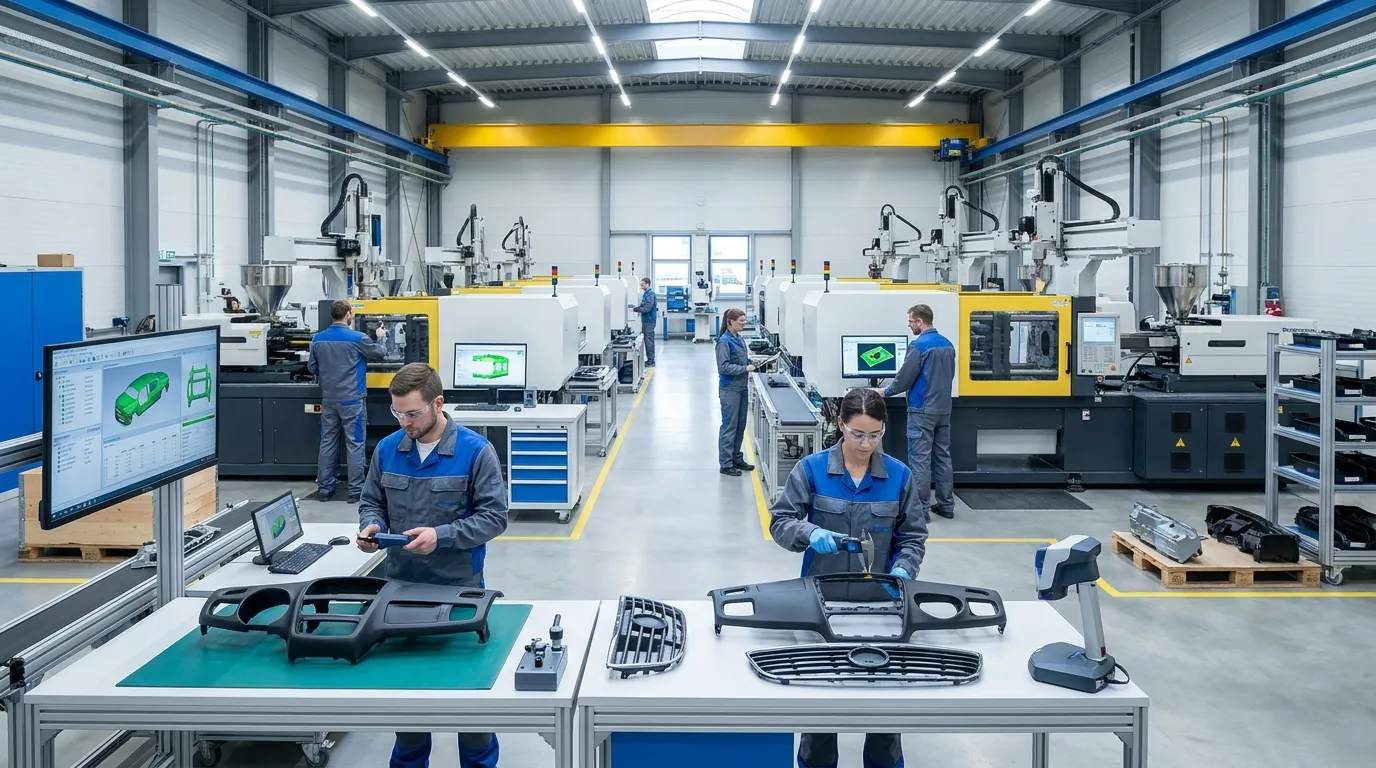
Automotive injection molding is widely used for dashboards, グリル, ランプハウジング, trims, クリップ, and under-hood components because it supports repeatable high-volume production with tight dimensional control and strong surface consistency.
Automotive manufacturers use injection molding for both visible and functional parts. Interior components often include dashboards, center-console trims, air vent bezels, and door panels. Exterior applications include bumper trims, mirror housings, and front grilles. Under-hood parts may include clips, reservoirs, and electrical housings.
Many of these components require complex geometry and repeatable dimensions. 次の通りです Fictivの自動車モールディング概要, injection molding is widely used because it supports high production volumes with consistent part quality.
| Part Type | 一般的な例 | 主な優先事項 |
|---|---|---|
| 内装 | Dashboard trim, bezels | 表面仕上げ |
| 外観 | Grilles, mirror covers | 紫外線耐性 |
| 機能的部品 | Clips, 住宅 | 次元フィット |
| エンジンルーム下部部品 | Reservoirs, brackets | 耐熱性 |
Visible parts usually have stricter cosmetic standards than hidden structural parts. A small weld line on an internal clip may pass inspection, but the same defect on a dashboard trim piece can trigger rejection.
評価を行う企業へ 自動車成形ソリューション, it’s important to separate cosmetic and functional requirements early. The molding process may be similar, but quality expectations are not.
Which materials are best for automotive injection molded parts?
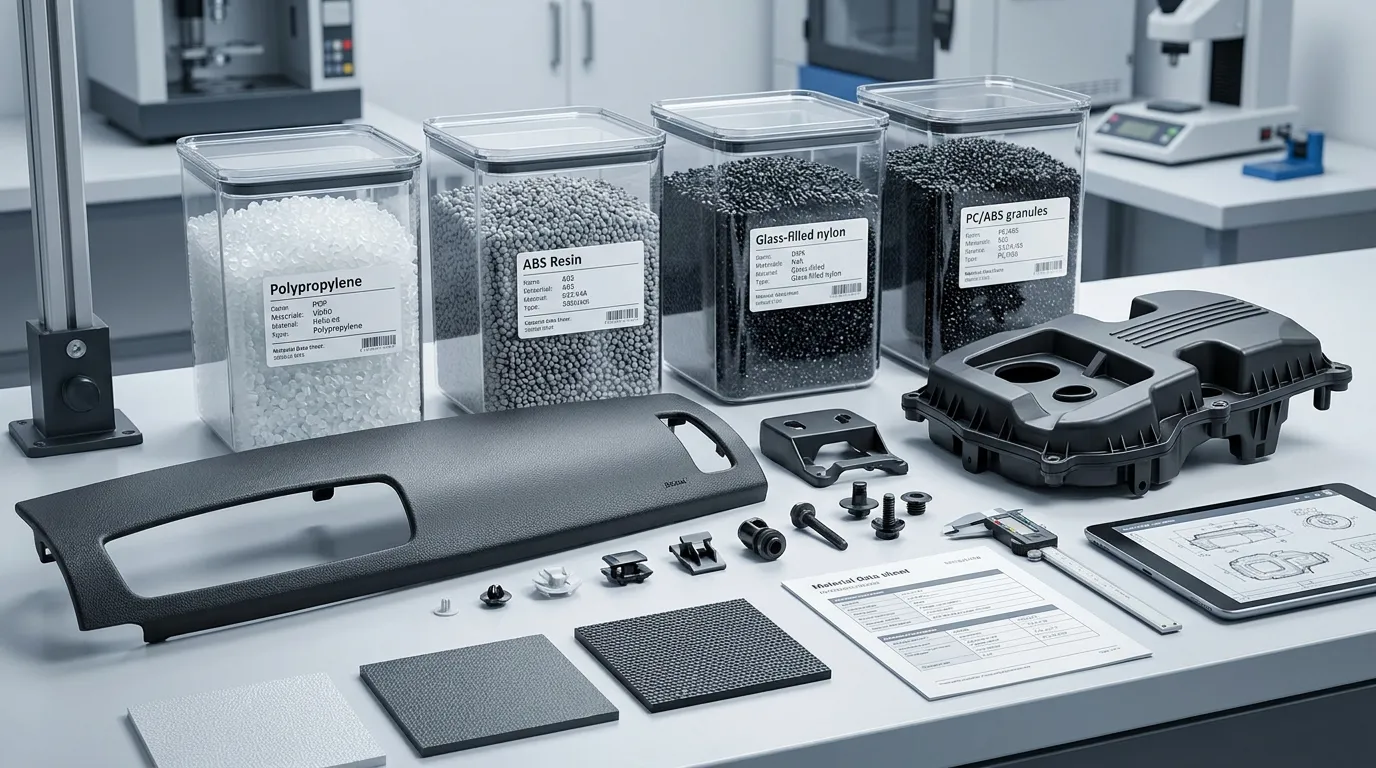
Material selection depends on heat exposure, impact requirements, UV stability, and cosmetic expectations. PP is common for lightweight interior parts, while reinforced nylon and PC/ABS blends are often used where higher strength or appearance quality is required.
Automotive plastics are selected based on operating conditions, not material popularity. A resin that works well for an interior trim piece may fail quickly near engine heat or direct sunlight. Material choice also affects shrinkage, 表面仕上げ, and tolerance stability.
内装用材料
Polypropylene (PP) is widely used for interior trim because it is lightweight, cost-effective, and easy to process. ABS is also common for interior parts that require better surface appearance and rigidity. For premium visible surfaces, many manufacturers prefer PC/ABS blends because they combine appearance quality with better heat resistance.
ABS is not automatically the best choice for visible automotive parts. It works well in stable interior environments, but PC/ABS blends are often safer when heat exposure and cosmetic stability matter together.
エンジンルームの下部素材
Under-hood applications usually require higher heat resistance and structural strength. ナイロン, also called polyamide (PA), is common for brackets, 住宅, and clips exposed to elevated temperatures. Glass-filled nylon adds stiffness and dimensional stability but may increase mold wear.
工具と樹脂挙動のより広い関係はここでカバーされています 完全プラスチック射出成形ガイド.
| 素材 | 耐熱性 | 外観品質 | 一般的な用途 |
|---|---|---|---|
| PP | 中程度 | Good | インテリアトリム |
| ABS | 中程度 | とても良い | Dash panels, bezels |
| PC/ABS | ハイ | Excellent | プレミアムの可視部品 |
| PA (ナイロン) | ハイ | 中程度 | エンジンルーム下の部品 |
| ガラス充填ナイロン | 非常に高い | 下 | 構造ブラケット |
Material selection should also account for long-term dimensional stability. A grille exposed to sun and seasonal temperature swings needs different resin behavior than an interior switch bezel.
What tolerances are realistic for automotive injection molded parts?
Automotive injection molded tolerances vary by material, 壁の厚さ, and geometry. Tight cosmetic and assembly-critical parts often require stricter process control, stable tooling, and validated inspection methods to maintain consistency across production runs.
Automotive tolerances depend on several variables working together. 樹脂の収縮, 冷却バランス, mold construction, and part geometry all affect final dimensions. Thin-wall parts with uneven geometry usually create more variation than simple, uniform components.
Tight tolerances are meaningless if the supplier cannot maintain stable processing conditions during production. Tool quality alone does not guarantee consistency. Process monitoring and dimensional inspection are just as important as mold precision.
耐性安定性に影響を与える要因
Parts with uneven wall thickness tend to cool at different rates, which increases warpage risk. Materials such as glass-filled nylon may hold dimensions more consistently but require tighter process control. Cooling layout also plays a major role in maintaining stable geometry.
A lamp housing is a good example. Even small dimensional changes can create assembly gaps or alignment problems. In many automotive applications, fitment consistency matters more than achieving the smallest possible tolerance number.
| 要因 | 耐性への影響 |
|---|---|
| 樹脂の収縮 | 最終寸法の変更 |
| 冷却バランス | ワープに影響を与える |
| 型の品質 | 再現性への影響 |
| 壁の厚さ | 歪みリスクへの影響 |
| プロセスバリエーション | 次元ドリフトの原因 |
For readers who want deeper tooling fundamentals, これだ 型の部品概要 explains how mold structure influences production stability.
How do automotive suppliers control cosmetic quality and surface finish?
Cosmetic automotive parts require tighter process monitoring because visible defects can lead to rejection even when dimensions are technically acceptable. Surface consistency, gloss, 質感, and color stability are major inspection priorities.
Visible automotive parts often fail because of appearance variation before they fail dimensional inspection. Surface quality affects customer perception immediately, especially on dashboards, trim panels, and exterior grille assemblies.
Common cosmetic defects include sink marks, flow lines, weld lines, silver streaks, and gloss inconsistency. Suppliers reduce these risks by controlling mold temperature, injection speed, cooling uniformity, and material drying conditions.
一般的な外観欠陥
| 欠陥 | 典型的な原因 | 共通の影響 |
|---|---|---|
| 陥没痕 | 壁の不均一な厚さ | 地表凹地 |
| フローライン | 不均一な流れの前線 | 目に見える筋状の筋 |
| 溶接線 | マテリアルフローの交会点 | 弱い外見 |
| グロスバリエーション | 不均一な冷却 | 色の不一致 |
| ワーページ | 収縮不均衡 | フィットの悪さ |
Texture consistency becomes especially important in multi-cavity production. A dashboard trim program with four cavities may produce visible variation if cooling or pressure differs between cavities.
経営する企業 自動車型の製造 usually inspect cosmetic parts under controlled lighting conditions to identify defects before shipment.
What quality control methods are used for automotive injection molding?
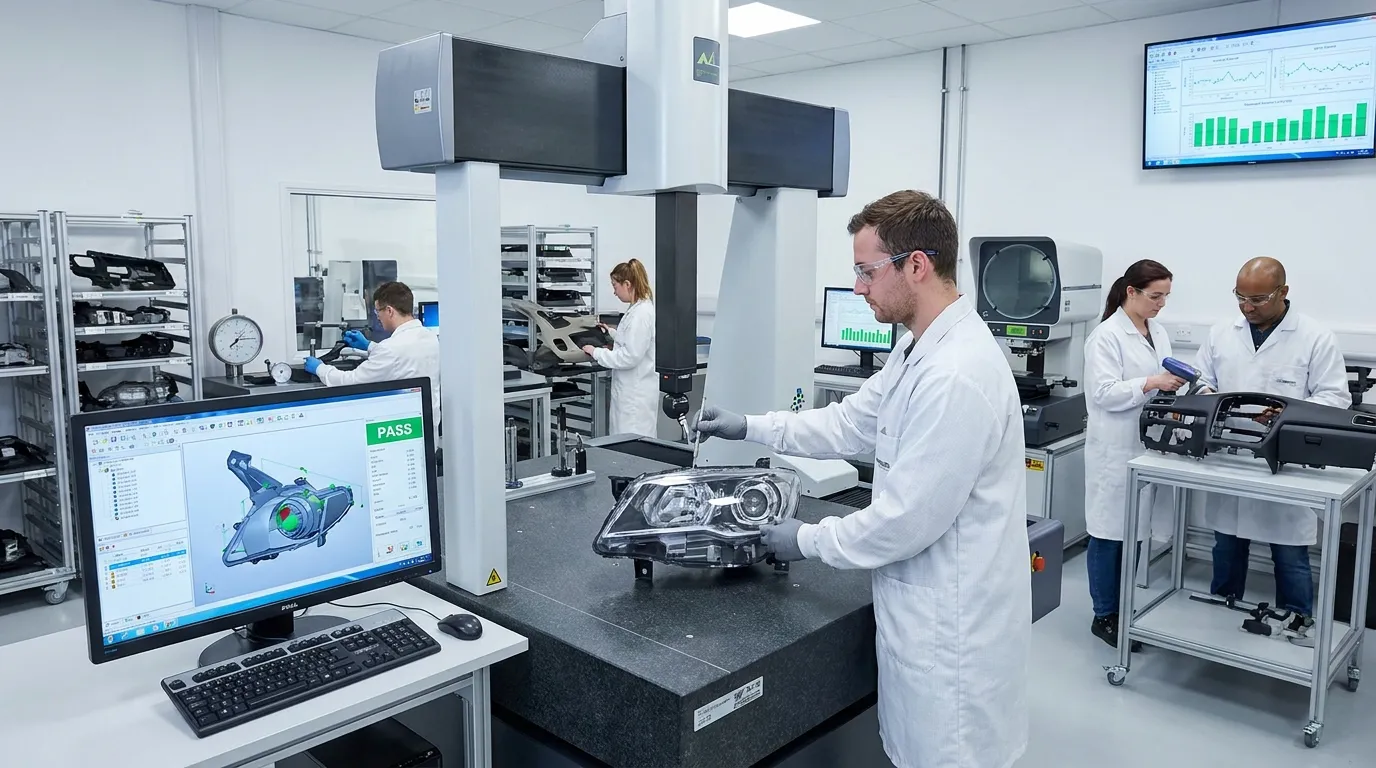
Automotive injection molding quality control combines dimensional inspection, プロセスモニタリング, and visual verification to reduce variation and prevent assembly issues during mass production.
Automotive suppliers use multiple inspection stages instead of relying on final checks alone. Quality control often starts with incoming material verification, then continues through sampling, inline monitoring, および最終検査.
インライ検査と最終検査
Inline inspection checks parts during production to identify variation before large batches are affected. Operators may monitor dimensions, 外見, gate quality, and flash levels at regular intervals.
Final inspection focuses on dimensional verification and cosmetic review before shipment. Many suppliers also use statistical process control (SPC) to track process drift over time.
一般的な測定機器
| 検査方法 | 目的 |
|---|---|
| キャリパーとゲージ | 基本的な次元検査 |
| 座標測定機 (CMM) | 複素幾何学測定 |
| ビジョンシステム | 外観検査 |
| ゴー/ノーゴーゲージ | アセンブリ検証 |
| SPCソフトウェア | プロセス監視 |
First article inspection is especially important for assembly-critical components. A lamp housing or snap-fit trim piece may pass individual measurements but still fail vehicle assembly if geometry shifts slightly across production runs.
以下で使用される検査分野 精密成形ワークフロー is also valuable in automotive production where repeatability matters.
自動車品質管理検査フロー
- 入荷資料検証
- 型の設置とサンプリング
- First article inspection
- インライン次元検査
- 外観検査
- 最終次元検証
- 包装および出荷承認
What causes warpage and dimensional inconsistency in automotive parts?
Warpage usually comes from uneven cooling, 壁厚の不均一さ, 樹脂収縮, or unstable processing conditions. Even small distortion can create assembly gaps, アライメントの問題, or stress during installation.
Cooling layout is one of the biggest contributors to dimensional consistency. Research published on Arxiv highlighted how cooling-channel design affects shrinkage and part stability in injection molding applications.
A production run for an exterior grille is a common example. If one side cools faster than the other, the part may twist slightly after ejection. The distortion may appear minor during inspection but still cause visible fitment issues during vehicle assembly.
| 問題 | 原因としては | 結果 |
|---|---|---|
| ツイスト | 不均一な冷却 | アライメント不良 |
| お辞儀 | 壁厚の不均衡 | アセンブリギャップ |
| シュリンクバリエーション | 樹脂の不整合 | サイズの変動 |
| シンク欠陥 | 厚い断面 | 美容拒絶 |
Poor cooling design creates long-term production risks. That’s one reason automotive programs often spend extra time validating tooling before full production begins.
How should buyers evaluate an automotive injection molding supplier?
Automotive suppliers should be evaluated on tooling quality, プロセス安定性, 検査能力, and production consistency rather than price alone. Poor process control often creates expensive downstream assembly and warranty issues.
A supplier with low pricing but weak process control can create far higher costs later through rejects, assembly delays, or warranty claims. Buyers should focus on production capability, inspection discipline, and communication during tooling validation.
Ask suppliers how they handle dimensional drift, cosmetic inspection, および是正措置. Their answers usually reveal more than a simple capability list. Experienced automotive molders should also explain how they document sampling, プロセス設定, and inspection records.
買い手評価チェックリスト
- 第一品検査手順の復習
- インライン品質モニタリングについて質問してください
- 自動車アセンブリの経験を確認してください
- 外観検査機能を確認してください
- カビのメンテナンス手順を確認する
- 納品とサンプリングのスケジュールを見直す
Programs with appearance-sensitive parts need extra supplier scrutiny. A dashboard trim supplier may require stronger cosmetic inspection capability than a supplier producing hidden structural clips.
経験を持つ製造業者 検査重視の製造 often apply tighter documentation and traceability practices that benefit automotive production as well.
次のステップを正しく進める
Choosing the right partner for injection molding automotive parts goes beyond tooling cost or machine capacity. Material behavior, 冷却制御, 次元安定性, and cosmetic inspection all affect long-term production performance.
Before approving a supplier, review how they handle validation, 検査, and process monitoring during full production runs. Ask for examples tied to parts similar to yours, especially if appearance or assembly fit is critical.
If your project involves complex geometry, visible surfaces, or tight fitment requirements, investing in stronger QC capability early usually prevents far larger production issues later.
よくある質問
What plastics are most common in automotive injection molding?
PP, ABS, nylon, and PC/ABS are among the most common automotive molding materials. Manufacturers select them based on heat resistance, impact performance, 次元安定性, and cosmetic requirements for each specific component.
What automotive parts are usually injection molded?
Dashboards, グリル, ランプハウジング, trim panels, クリップ, and interior bezels are commonly injection molded. The process supports high-volume production with repeatable dimensions and consistent surface quality.
What tolerances can automotive injection molding achieve?
Automotive molding tolerances depend on resin shrinkage, 型の品質, 冷却バランス, and part geometry. Tight-tolerance parts usually require validated tooling, stable processing conditions, and repeatable inspection methods.
How are automotive plastic parts inspected?
Automotive plastic parts are inspected using dimensional gauges, coordinate measuring machines, visual inspection systems, and inline quality checks. Many suppliers also use SPC tracking to monitor process variation during production.
What causes warpage in injection molded automotive parts?
Warpage is commonly caused by uneven cooling, 壁厚の不均一さ, 材料収縮, or unstable molding conditions. Distortion can create fitment problems even when individual dimensions appear acceptable.
How long does automotive injection molding production take?
生産期間は工具の複雑さによって異なります, sampling requirements, 生産量. Tool validation and first article approval often add significant time before full-scale manufacturing begins.
シェア:



サンシャインより書かれました
サンシャインで, 私たちは精密金型部品の専門製造およびサプライヤーです, プレスおよび射出成形用途向けの幅広い製品を提供しています. 私たちの主な焦点はパンチダイスです, イジェクターピンとスリーブ, ガイドポストとブッシング. 高度なCNC加工技術で, 厳格な品質管理, そして強力な生産能力, 私たちは信頼性を保証しています, 高精度部品, また、迅速かつ効率的なグローバル供給のための在庫の標準部品も併用しています.
ニュース
サービスを受けましょう
あらゆる予算に合った高品質な部品と、親切なスタッフが訓練されていて、訪問を有益で手間なく充実させてくれます.
