



イジェクターピンガイド: 材料, サイズ, コーティング, そして購入のヒント
Ejector pins are precision mold components used to push finished plastic parts out of injection molds. Buyers should compare material grade, 硬度, コーティング, 耐性, and sizing before ordering. H13 and nitrided pins work well for high-temperature production, while through-hard pins are safer for heavy shutoff applications. Custom sizing, coating selection, and supplier quality control all affect mold life, サイクル安定性, および交換頻度.
A low-cost ejector pin can turn into an expensive mold problem if the material, 硬度, or coating is wrong for the application. 着用痕, 取り付け部品, broken pins, and production downtime often start with poor pin selection. This guide explains how to choose the right ejector pins based on resin type, mold conditions, and sourcing requirements, without overcomplicating the buying process.
What are ejector pins and why do they matter in mold performance?
Ejector pins push molded parts out of the mold after cooling. The right pin material, 硬度, and placement reduce wear, prevent surface defects, and improve cycle consistency in injection molding.
Ejector pins sit inside the ejection system of an injection mold. After the plastic part cools, the pins move forward and release the part from the mold cavity. Without proper ejection, parts can stick, ワープ, or crack during removal.
Pin selection directly affects mold reliability. Poorly matched pins may wear quickly, leave visible marks, or bend under pressure. 次の通りです プロトラブ, ejector pin placement also affects cosmetic quality and force distribution during ejection.
If you need a broader overview of mold systems and component roles, これだ 金型部品ガイド explains how ejector systems fit into complete mold assemblies. You can also explore イジェクターピン機能 in more detail for operational basics.
Which ejector pin materials are best for different molding conditions?
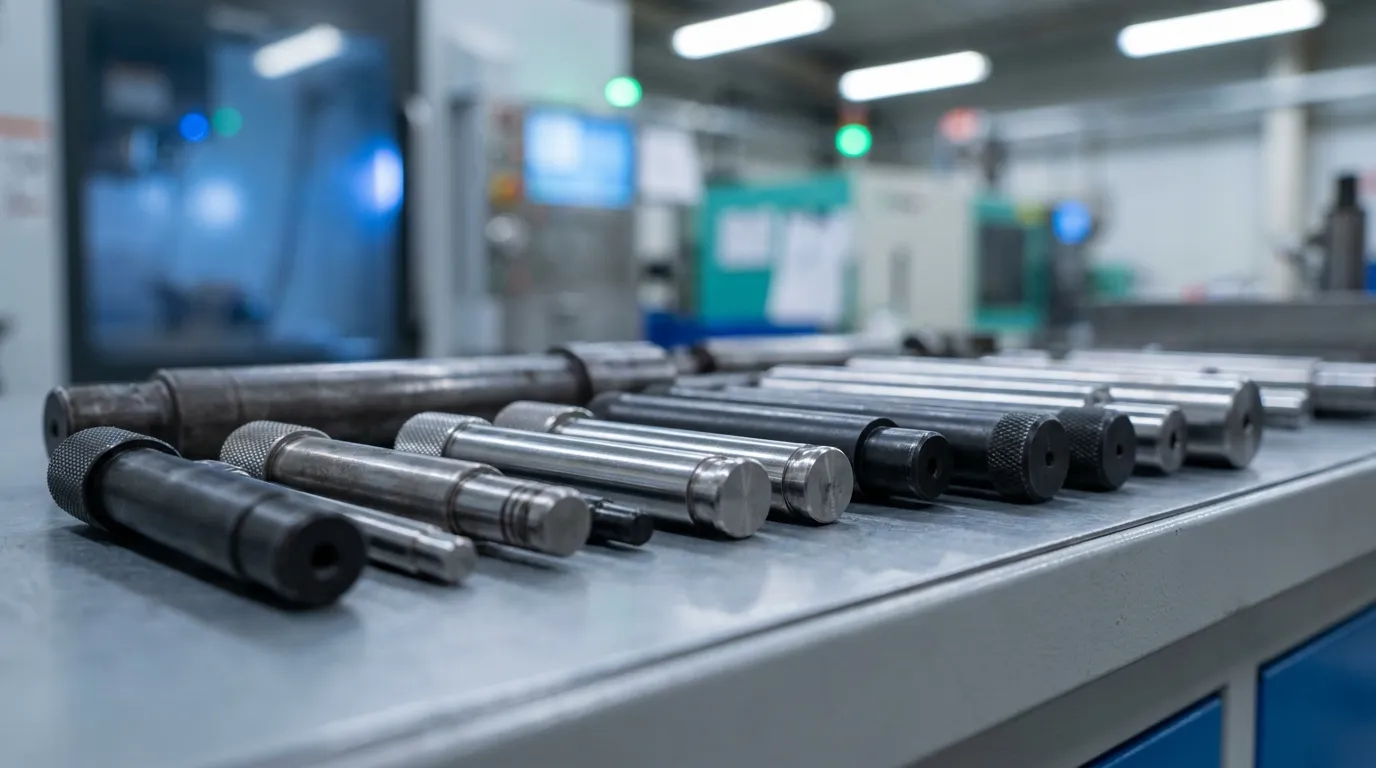
H13 and nitrided tool steels are common for high-temperature molding, while stainless steel options help reduce corrosion risks. Material choice should match resin type, サイクル体積, and mold temperature.
Most ejector pins are made from hardened tool steels because they handle repeated movement, 熱, and pressure. The right material depends on how aggressive the molding environment is. High-volume automotive molds need different pin properties than low-volume consumer product molds.
H13とステンレススチールの違い
H13 tool steel is one of the most common choices for injection molds. It handles heat well and maintains hardness during repeated production cycles. Stainless steel ejector pins are useful in medical or corrosive environments where moisture resistance matters more than maximum hardness.
| 素材 | 最適な利用法 | 主な利点 | 制限 |
|---|---|---|---|
| H13ツールスチール | 高温成形 | 耐熱性 | コストの高さ |
| ステンレス鋼 | 医療環境や湿度の高い環境 | 耐腐食性 | 耐摩耗性の低下 |
| 硬化工具鋼 | General production | コストと耐久性のバランス | 研磨樹脂では摩耗が早くなることがあります |
| 窒化鋼 | ハイサイクル成形 | 表面硬度の向上 | 表面層が衝撃で欠けることがあります |
A medical mold producing sterile plastic housings may use stainless ejector pins to reduce corrosion risk during frequent cleaning cycles. An automotive mold running glass-filled nylon usually benefits more from H13 or nitrided steel because abrasive resins increase wear.
This is where material selection becomes practical instead of theoretical. The cheapest ejector pins usually increase replacement frequency and downtime. Lower upfront cost often creates higher long-term maintenance costs.
For related tooling materials, 精密金型材料 can help compare other hardened mold components used in production tooling.
Through-hard or nitrided ejector pins: which should you buy?
Through-hard ejector pins are safer for steel shutoff applications because hardness runs through the full pin. Nitrided pins improve surface wear resistance but can fail faster in certain impact-heavy conditions.
This is one of the most common buying mistakes in mold component sourcing. Buyers often assume nitrided pins are automatically better because the surface hardness is higher. それは必ずしも正しいわけではありません.
Nitrided ejector pins use a hardened outer layer to improve wear resistance and reduce friction. They perform well in high-cycle production and abrasive resin applications. 次の通りです 修道女の男, nitrided pins can achieve high surface hardness levels that improve wear life.
Through-hard pins are different because the hardness extends through the entire pin body. This makes them more resistant to cracking or chipping under repeated impact. PTオンライン notes that through-hard pins are often preferred in steel shutoff conditions where side loading and impact stress are higher.
| ピンタイプ | ベスト・フォー | 主な利点 | 主なリスク |
|---|---|---|---|
| スルーハード | ヘビーシャットオフアプリケーション | 構造強度の向上 | 時間が経つにつれて摩耗が増えました |
| 窒化物 | ハイサイクル研磨成形 | 表面硬度の優位 | 衝撃による表層損傷 |
Custom molds with repeated side pressure often perform better with through-hard pins. A thin nitrided surface can fail faster if the mold experiences constant impact loading.
What coatings improve ejector pin lifespan?
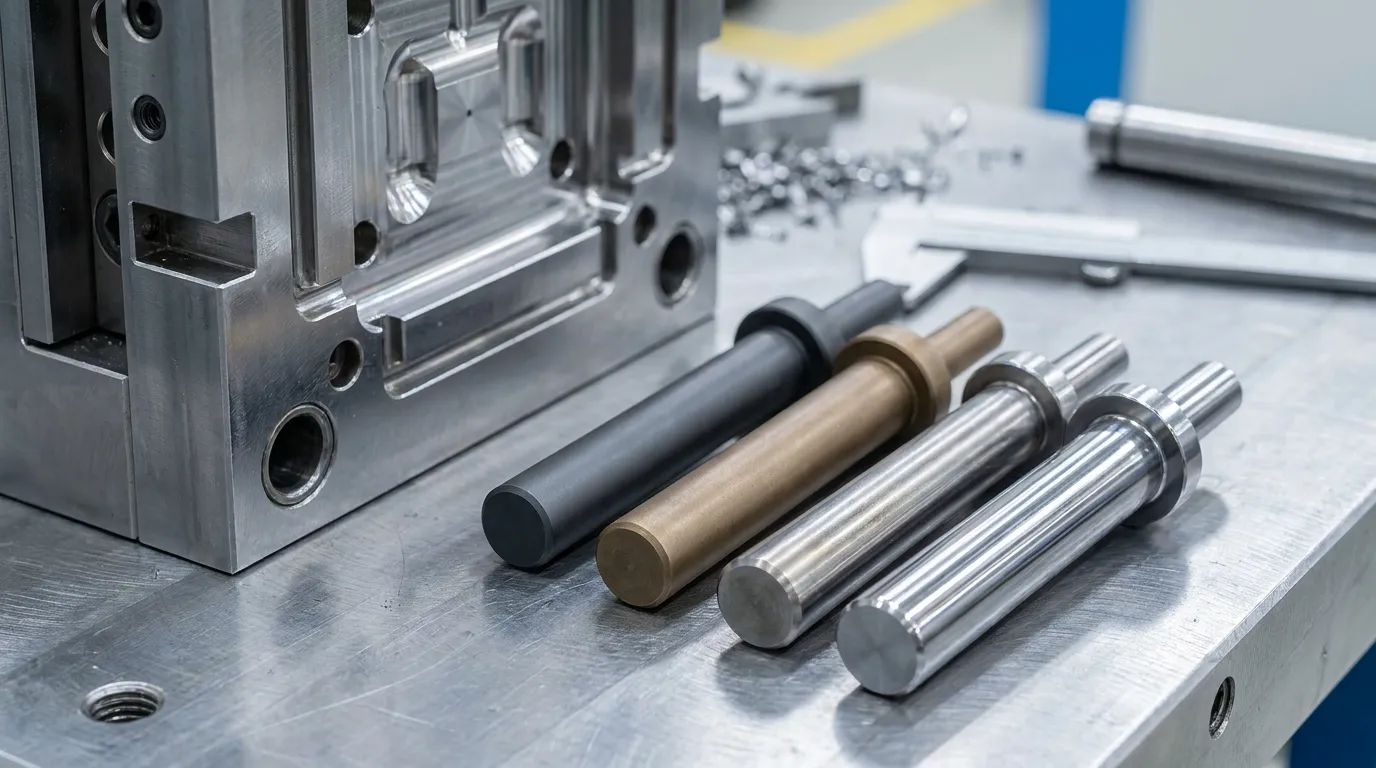
Coatings reduce friction and wear during repeated ejection cycles. DLC and nitrided finishes are commonly used when molds run abrasive resins or high-cycle production schedules.
Surface coatings help ejector pins survive longer under demanding production conditions. They reduce friction between the pin and mold surface, which lowers heat buildup and wear during repeated cycles.
DLC (diamond-like carbon) coatings are common in high-cycle molds because they improve hardness and reduce sticking. PVD coatings are also used when buyers want smoother movement and lower friction. ハスコ lists several coating and heat-treatment options designed for different molding environments.
| コーティング | 最適アプリケーション | 主な利点 |
|---|---|---|
| DLC | ハイサイクル型 | 低摩擦 |
| PVD | 精密成形 | より滑らかな動き |
| 窒化仕上げ | 研磨樹脂成形 | 表面硬度 |
| ブラックオキシド | 一般的な応用 | 基本的な防錆 |
A high-cycle automotive mold producing reinforced plastic clips may switch from standard hardened pins to DLC-coated pins after repeated wear problems. The higher coating cost often pays off through fewer shutdowns and lower replacement frequency.
Custom coatings are not necessary for every mold. Standard hardened pins are usually enough for low-volume production or softer resins.
How do you choose the correct ejector pin size?
Choosing the wrong ejector pin size can create sticking, 曲げる, or visible marks on molded parts. 直径, stroke length, and tolerance all need to match the mold design and part geometry.
Standard ejector pins are faster and more cost-effective for most molds. Custom sizes make sense when the mold has unusual cavity depth, restricted space, or specialized ejection requirements.
標準とカスタムイジェクターピンの違い
Standard pins reduce lead time and replacement cost because they follow common industry dimensions. Custom ejector pins may require additional machining, コーティング, or grinding work before shipment.
イジェクターピン選択表
| 適用条件 | 推奨ピンの種類 | 推奨硬度 | コーティングオプション |
|---|---|---|---|
| 高温樹脂 | H13イジェクターピン | 58-62 HRC | 窒化物 |
| 研磨性ガラス充填樹脂 | 貫通硬質工具鋼 | 60-64 HRC | DLC |
| 医療用モールディング | ステンレス射出ピン | 50-55 HRC | PVD |
| 一般消費者向け部品 | 標準硬化鋼 | 54-58年 HRC | ノーまたはブラックオキシド |
Use this checklist before ordering:
- 型の図面で直径の許容範囲を確認してください
- ピンの長さを必要なストロークに合わせて調整してください
- 供給業者から硬度の範囲を確認してください
- コーティングが寸法公差に影響を与えるかどうか確認してください
- 交換用のピンが標準サイズに従っているかどうかを尋ねてください
For dimensional basics and ejection setup examples, このガイドはこちら イジェクターピンのサイズ explains how sizing affects mold performance. Buyers working on larger mold systems may also benefit from these プラスチック射出成形の基本 before finalizing specifications.
Why do ejector pins leave marks or break?
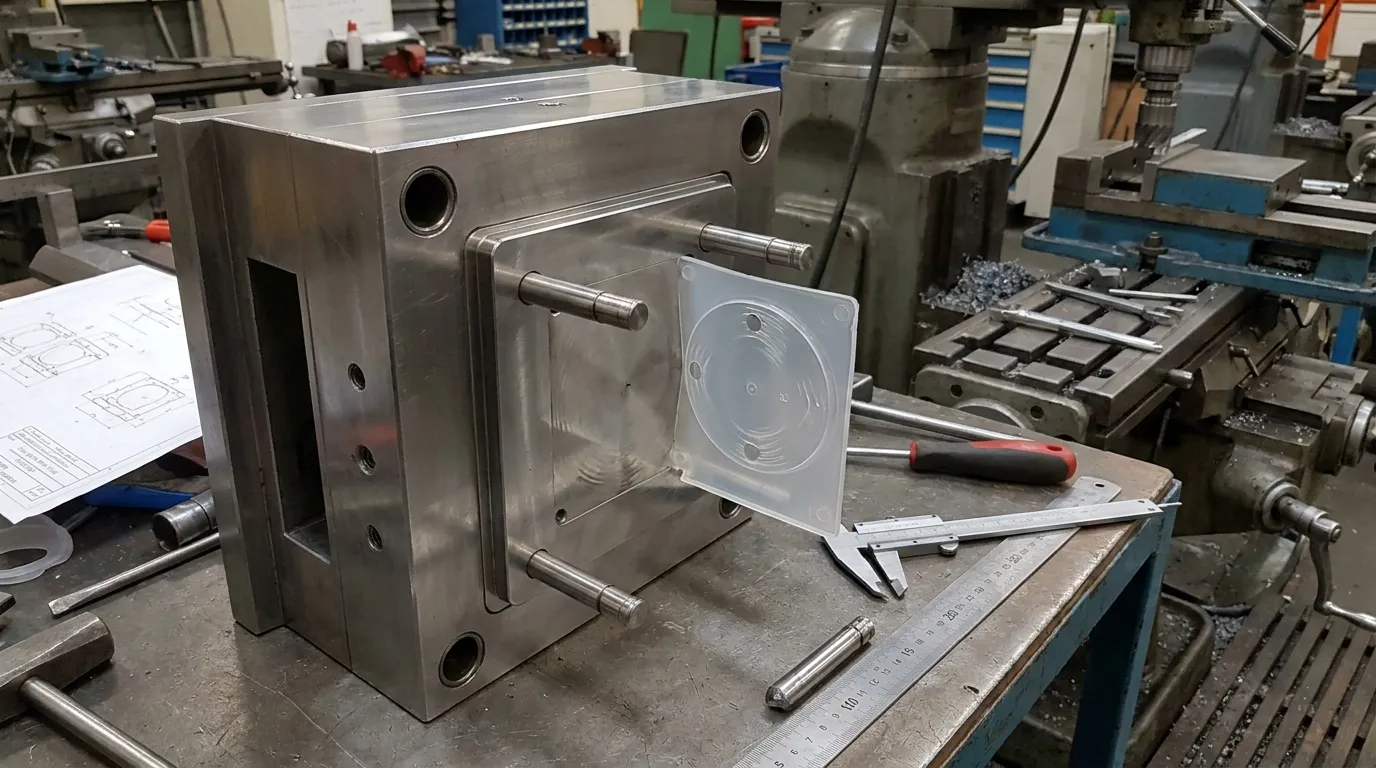
Ejector pin marks and breakage usually result from incorrect placement, 不均一な力, excessive friction, or poor hardness selection. Matching pin design to part geometry helps reduce cosmetic and structural defects.
Visible ejector pin marks are common when force concentrates on thin plastic surfaces. 冷却バランスの悪さ, weak support areas, or incorrect pin diameter can also increase marking. 次の通りです プロトラブ, proper pin placement helps spread force more evenly during part ejection.
Breakage usually comes from misalignment or excessive side loading. A pin designed for straight pressure may fail quickly if the mold creates lateral stress during ejection. PTオンライン also highlights steel shutoff conditions as a major failure source.
| 問題 | 原因としては | 推奨修正案 |
|---|---|---|
| 見えるピン跡 | 過剰な圧力 | 支持面積を拡大する |
| 壊れたピン | サイドローディング | 貫通硬いピンの使用 |
| 速い摩耗 | 研磨樹脂 | DLCコーティングを追加 |
| Sticking parts | アライメント不良 | カビの許容差を再確認してください |
A thin-wall electronics housing is a good example. If ejector pins push directly against unsupported cosmetic surfaces, circular marks often appear after cooling. Moving the pins closer to structural ribs usually reduces visible defects.
If you are troubleshooting recurring tooling wear, これらは 工具の摩耗問題 show how stress and alignment problems affect other precision tooling systems too.
What should buyers ask suppliers before ordering ejector pins?
Buyers should confirm material grade, hardness range, coating method, dimensional tolerance, and production lead time before placing ejector pin orders. These details directly affect mold life and replacement frequency.
Many ejector pin problems begin before production starts. Suppliers may use different steel grades, hardness processes, or tolerance standards even when the pin dimensions look identical on paper.
Ask suppliers for material certification whenever the application involves high temperatures or abrasive resins. Hardness range also matters because overly brittle pins can fail under repeated impact loading.
サプライヤー評価チェックリスト
| 質問 | なぜ重要なのか |
|---|---|
| What steel grade is used? | 耐熱性と耐摩耗性の確認 |
| What hardness range is guaranteed? | 早期故障を防ぐ |
| Is the coating outsourced or in-house? | 一貫性への影響 |
| What tolerance standard is followed? | フィッティングの問題を減らす |
| What is the MOQ? | 交換の柔軟性への影響 |
| What is the lead time? | 生産遅延を防ぐ |
Custom ejector pins are not necessary for every mold. Standard sizes are usually faster and more cost-effective unless the geometry truly requires customization.
For broader sourcing considerations across tooling systems, mold component sourcing explains how buyers evaluate precision manufacturing suppliers.
How do customs delays and shipping issues affect ejector pin orders?
International ejector pin orders can create unexpected downtime if customs paperwork or lead times are not handled properly. Small mold components are easy to overlook during procurement planning, but delayed replacement pins can stop an entire production line.
Incorrect HS code classification is one common problem. 次の通りです フレイトアミーゴ, classification issues can slow customs processing and create extra inspection requests.
A supplier shipment delayed by incomplete HS code documentation can extend mold downtime by days or even weeks. Buyers handling custom ejector pins should also allow extra production time for grinding, コーティング, or non-standard machining.
Use this checklist before shipment:
- HSコードの正確性を確認してください
- 材料証明書の確認
- コーティングのドキュメントを確認してください
- 通関の緩衝期間を追加してください
- 高サイクル型用の予備ピンを注文してください
If your mold program involves multiple production industries, これらは 射出成形の応用 show how sourcing requirements change between sectors like automotive, 電子機器, and medical manufacturing.
次のステップを正しく進める
The right ejector pins improve mold reliability, reduce visible defects, and lower replacement costs over time. 材料等級, 硬度, コーティング, and sizing should all match the actual production environment, not just the mold drawing.
Start by reviewing resin type, サイクル体積, and operating temperature. Then compare standard and custom pin options based on wear risk and lead time. If your molds experience repeated impact loading or abrasive resins, it is usually worth investing in better steel grades or coatings early instead of replacing failed pins later.
よくある質問
What is an ejector pin used for?
Ejector pins push molded parts out of the mold cavity after cooling. They help maintain production speed and reduce damage during part removal.
Which material is used to make ejector pins?
Ejector pins are commonly made from H13 tool steel, ステンレススチール, and hardened alloy steels. The right material depends on mold temperature, wear conditions, 生産量.
How much temperature can an ejector pin withstand?
Temperature resistance depends on the steel grade and coating. H13 and nitrided pins are commonly selected for high-temperature molding because they maintain hardness during repeated thermal cycles.
なぜイジェクターピンは成形部品に跡を残すのか?
Ejector pin marks appear when force distribution, 配置, or cooling conditions are not optimized. Proper pin sizing and positioning help reduce visible surface defects.
Why do ejector pins break?
Ejector pins often break due to misalignment, 過剰な力を使います, improper hardness, or repeated side loading. Material selection and mold alignment both affect lifespan.
Are coated ejector pins worth the cost?
Coated ejector pins can improve wear resistance and reduce friction in high-cycle production. They are usually more valuable in abrasive resin or high-temperature applications.



サンシャインより書かれました
サンシャインで, 私たちは精密金型部品の専門製造およびサプライヤーです, プレスおよび射出成形用途向けの幅広い製品を提供しています. 私たちの主な焦点はパンチダイスです, イジェクターピンとスリーブ, ガイドポストとブッシング. 高度なCNC加工技術で, 厳格な品質管理, そして強力な生産能力, 私たちは信頼性を保証しています, 高精度部品, また、迅速かつ効率的なグローバル供給のための在庫の標準部品も併用しています.
ニュース
サービスを受けましょう
あらゆる予算に合った高品質な部品と、親切なスタッフが訓練されていて、訪問を有益で手間なく充実させてくれます.
