



射出成形ガイド: 構成要素, 種類, そして「How It Works」
Injection mold systems are precision tools used to shape molten plastic into repeatable parts during injection molding production. A typical injection mold includes the cavity, core, runner system, 冷却チャネル, and ejector components. Mold type, 材料選定, and cooling design directly affect part quality, 生産速度, tooling cost, そしてカビの寿命.
An injection mold determines how a plastic part looks, 発作, and performs. Even small tooling decisions can affect cycle time, 欠陥率, および長期的な生産コスト. This guide explains how injection molds work, what components matter most, and how manufacturers choose the right mold setup for different production goals.
What is an injection mold?
An injection mold is a precision tooling system used to shape molten plastic into repeatable parts during injection molding. The mold controls the part’s final shape, 寸法, 表面仕上げ, そして生産の一貫性.
An injection mold is the custom-built tool installed inside an injection molding machine. Molten plastic flows into the mold cavity under pressure, cools into shape, and then ejects as a finished part. The same mold can produce thousands or even millions of identical components when maintained correctly.
The mold itself contains several engineered systems that control material flow, 冷却, アラインメント, そして一部リリース. That’s why tooling quality has such a strong impact on production efficiency and defect prevention.
If you’re new to the manufacturing process, これだ プラスチック射出成形ガイド explains the broader molding workflow and machine operation in more detail.
For a technical overview of molding fundamentals, その TWIグローバル射出成形の概要 provides a useful industry reference.
How does an injection mold work during production?
Injection molds work by receiving molten plastic under pressure, cooling the material inside a precision cavity, and ejecting the finished part after solidification. The process repeats rapidly for high-volume production.
The process starts with plastic pellets melting inside the injection molding machine barrel. The machine pushes the molten plastic into the mold cavity through a runner and gate system. Once the cavity fills, the mold holds pressure while the material cools and hardens.
Cooling time matters more than many buyers expect. A poorly designed cooling layout can slow production dramatically and increase warping or shrinkage issues. In high-volume manufacturing, even a few seconds added to cycle time can affect overall production cost.
注入相
注入中, the mold must stay tightly clamped to handle pressure. The cavity and core shape the plastic into its final geometry. Gates control how material enters the part, while runners distribute material through the mold.
A consumer electronics housing with thin walls, 例えば, often requires balanced flow paths to prevent cosmetic marks and incomplete filling.
冷却および排出フェーズ
冷却後, ejector pins push the part out of the mold. The mold then closes again, and the cycle repeats. Efficient cooling design helps reduce downtime and improve production speed.
これだ Protolabsの成形可能性ガイド explains how moldability and cooling design affect manufacturing performance.
For a broader explanation of production flow, これを見てください 射出成形プロセスガイド.
What are the main components of an injection mold?
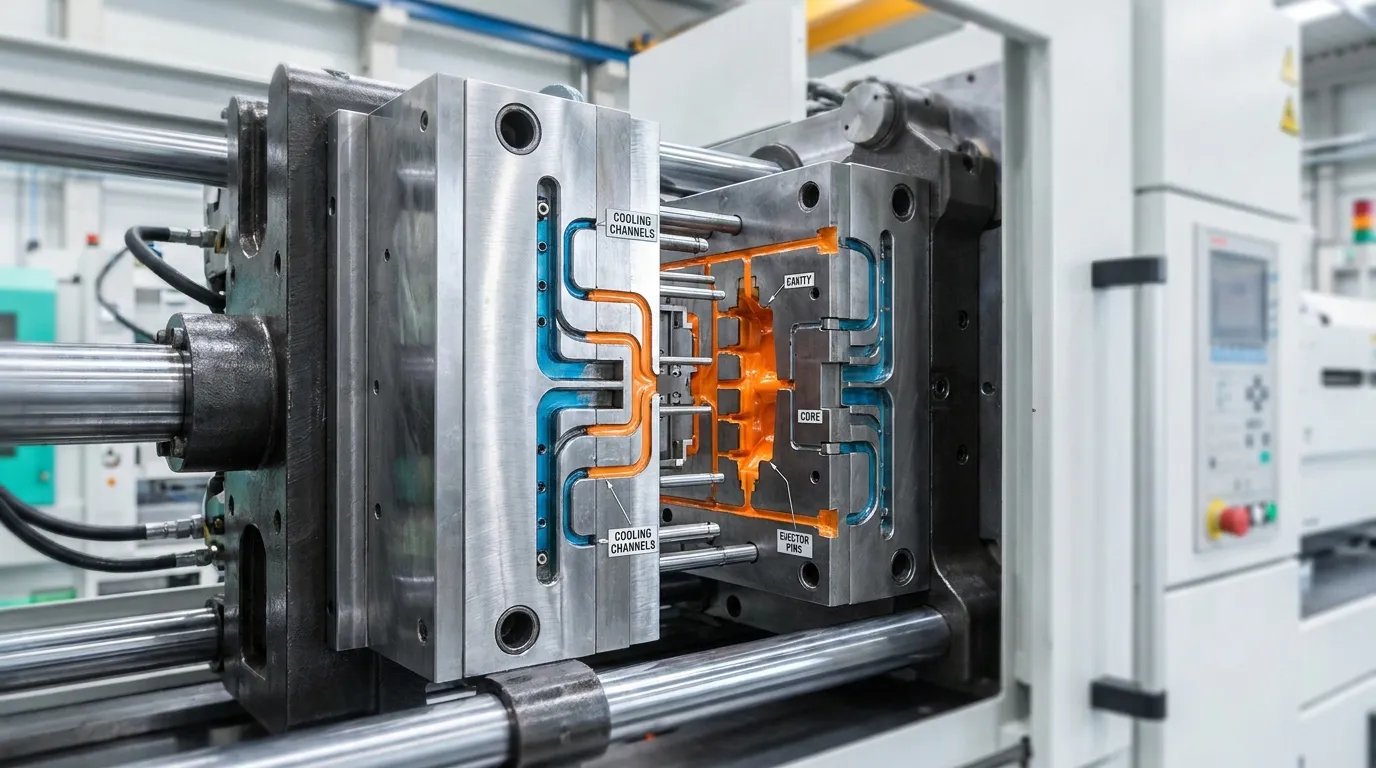
Injection mold components work together to control plastic flow, 冷却, アラインメント, and part ejection. Core systems include the cavity, runner system, エジェクター, 冷却チャネル, and guide mechanisms.
Every injection mold includes several mechanical systems that must work together with tight precision. If one area fails, the entire molding process can suffer from defects, ダウンタイム, or inconsistent dimensions.
| 構成要素 | 機能 | なぜ重要なのか |
|---|---|---|
| キャビティ | 部品の外形を形成します | 寸法と表面仕上げの制御 |
| コア | 内部機能の作成 | フィット感と構造形状への影響 |
| ランナーシステム | 溶融塑性の流れを導く | バランスの充填への影響 |
| 門 | 空洞への入口 | 溶接線と痕跡への影響 |
| 冷却チャネル | 型から熱を除去します | サイクルタイムの短縮 |
| イジェクターピン | 完成したパーツを押し出す | くっつきや損傷を防ぎます |
| ガイドピン | 型の半分を整列させる | クランプ時の精度を維持 |
Cooling channels often receive less attention than cavities or gates, but they directly affect production efficiency. A redesigned cooling layout can shorten cycle time significantly during high-volume production runs.
例えば, a medical component with tight tolerances may require advanced cooling paths and hardened steel inserts to maintain dimensional stability across long production runs.
これだ 金型部品概要 provides a deeper look at individual tooling systems and their engineering roles.
For additional mold construction details, その 射出成形構造の参考文献 offers a useful technical resource.
What are the different types of injection molds?
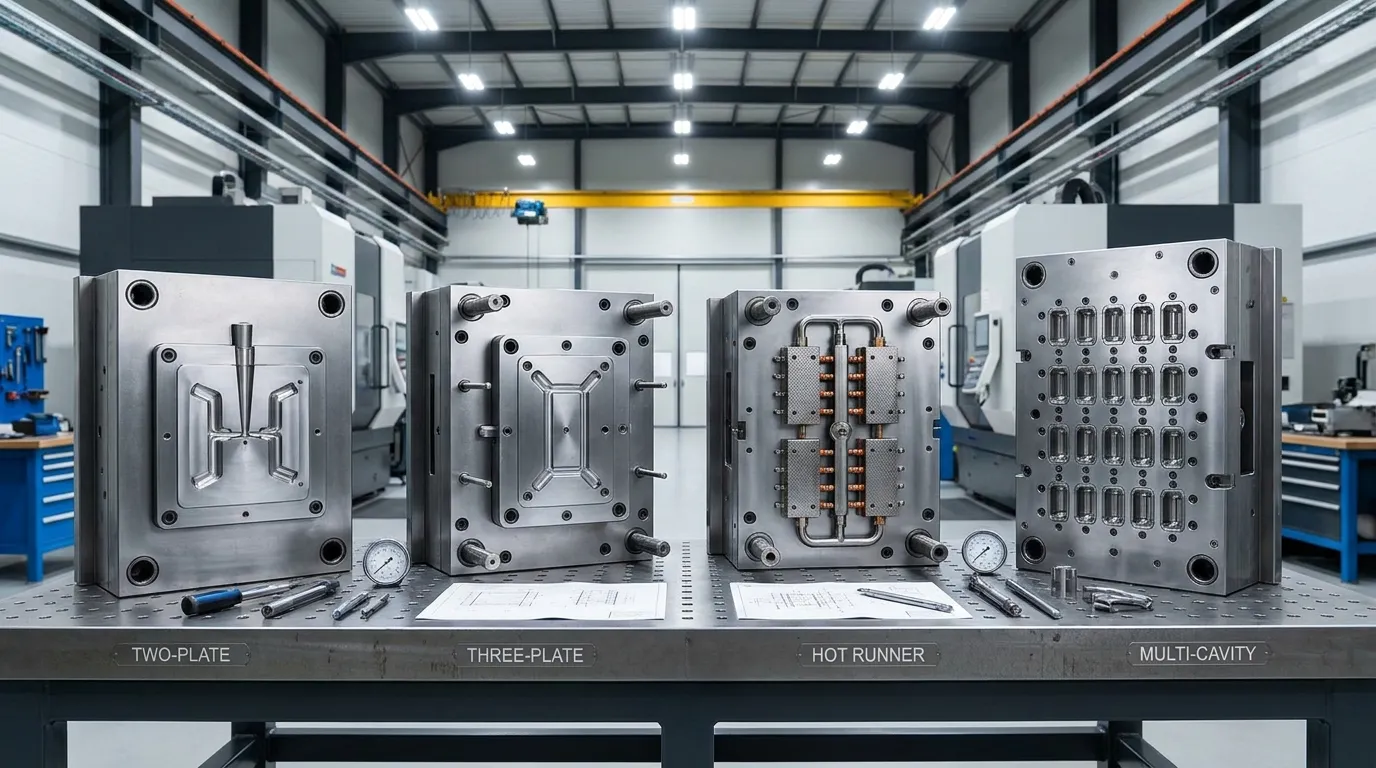
Different injection mold types are designed for different production needs. Simpler molds reduce tooling cost, while advanced systems like hot runner molds improve cycle efficiency and reduce material waste.
Manufacturers select mold types based on production volume, part complexity, gating requirements, and budget. Some molds focus on lower tooling cost, while others prioritize faster production and reduced scrap.
二板型と三板型の比較
A two-plate mold uses a single parting line and simpler runner system. It works well for many standard plastic parts and usually costs less to manufacture.
A three-plate mold adds an extra plate that allows more flexible gate placement. This helps with complex geometries and automatic runner separation, but it also increases tooling complexity and maintenance requirements.
| 型の種類 | ベスト・フォー | 主な利点 | 主な欠点 |
|---|---|---|---|
| 二枚板型 | 標準生産部品 | 金型コストの削減 | ゲート設置の制限 |
| 三層型 | 複雑なゲート配置 | ゲートの柔軟性の向上 | 手間のかかる作業 |
| ホットランナー型 | 大量生産 | 材料の無駄が少ない | 初期費用が高い |
| マルチキャビティ型 | 大規模な生産 | サイクルあたりの出力が高まる | よりバランスの複雑さ |
Hot runner molds are not always the best choice. They improve material efficiency, but simpler cold runner systems are often safer for lower production volumes or products with frequent material changes.
A low-volume prototype project, for instance, may benefit more from a simpler tooling design with lower upfront investment.
これだ 業界用金型応用ガイド explains how different mold setups fit various industries and product categories.
Which materials are used to make injection molds?
Steel molds are preferred for long production runs and tight tolerances, while aluminum molds reduce tooling cost and speed up prototyping. Material selection depends on production volume, part complexity, and expected mold lifespan.
Tool steel is the most common mold material for long-term production. Hardened steel handles high injection pressure, 研磨材料, and repeated cycles better than softer metals. It’s commonly used for automotive, 医療, and industrial production programs.
Aluminum molds are lighter and easier to machine. That makes them useful for prototyping, ブリッジ金型, and shorter production runs where speed matters more than maximum lifespan.
| 素材 | 最適な利用法 | 強度 | 制限 |
|---|---|---|---|
| 硬化鋼 | 長期生産期間 | 高い耐久性 | コストの高さ |
| 事前硬化鋼 | 中量型金型 | 加工が容易になる | 寿命の短縮 |
| アルミニウム | 試作機と低生産量 | より速いリードタイム | 耐摩耗性の低下 |
Aluminum molds reduce lead time and tooling cost, but steel molds are usually the better long-term investment for high-volume production. A medical connector produced in large quantities may justify hardened steel tooling because dimensional consistency matters over millions of cycles.
How long does injection mold production take?
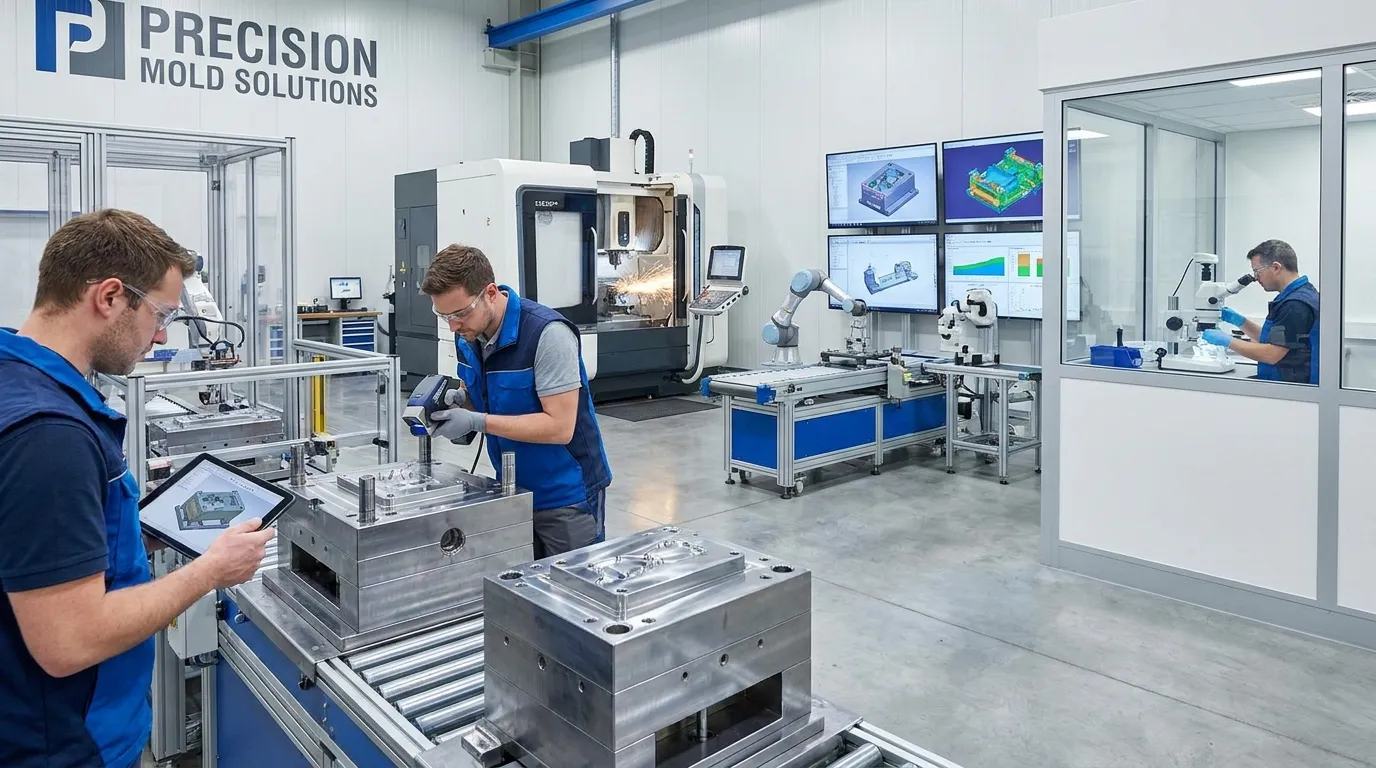
Injection mold lead times commonly range from several weeks to several months depending on mold complexity, キャビティカウント, 工具の改訂, および検証要件.
Lead time depends on more than machining speed. Mold design reviews, material sourcing, サンプリング, and validation testing all affect delivery schedules. Complex multi-cavity molds naturally take longer because they require tighter balancing and additional machining steps.
A simple prototype mold may move from design approval to sampling quickly. A multi-cavity production tool for consumer electronics can take much longer due to cosmetic requirements and repeated validation testing.
カビの配送を遅らせる要因
- 鋼切断後の設計改訂
- 特殊工具鋼の調達遅延
- 追加のサンプリングリクエスト
- 型の流れや冷却補正
- 国際輸送および通関の遅延
Faster tooling timelines are not always a positive sign. Aggressive schedules can reduce testing time and increase production issues later.
| 生産段階 | 典型的な焦点 |
|---|---|
| 設計承認 | DFMレビューと部品検証 |
| CNC加工 | 金型ベースとキャビティ製造 |
| 集会 | コンポーネントとシステムの設置 |
| サンプリング | 初期試験部品の製造 |
| 検証 | 寸法と外観のチェック |
これだ EvokPolyリードタイムガイド explains how tooling complexity affects scheduling. その Fictiv製造動向記事 also highlights how automation and digital validation are changing mold production workflows.
What problems can affect injection molds?
Injection molds can develop production problems from wear, cooling imbalance, alignment issues, or poor maintenance. Many defects start small and become expensive only after production volumes increase.
Flash happens when molten plastic escapes along the mold parting line. Short shots occur when the cavity does not fill completely. Uneven cooling can also create warping, 陥没痕, or dimensional instability.
カビのメンテナンスの基本
Regular maintenance helps prevent unexpected downtime and part inconsistency. Most production teams monitor wear surfaces, 冷却チャネル, エジェクターシステム, and alignment components during scheduled inspections.
A high-volume packaging mold, 例えば, may require more frequent cleaning because resin buildup can affect gate performance and filling consistency.
一般的なカビ問題チェックリスト
- 部品の縁にフラッシュを回す
- 短いショットや不完全なフィリング
- 冷却の不均衡
- 摩耗したイジェクターピン
- 金型のアライメントドリフト
- 門の詰まり
- 表面の傷や跡
これだ 精密金型部品ガイド explains how individual tooling systems influence mold precision and maintenance planning.
How do manufacturers choose the right injection mold design?
Choosing the right mold design depends on production volume, 材料選定, 部品の形状, and long-term cost goals. The best tooling setup is usually the one that balances reliability, cycle efficiency, およびメンテナンスの必要性.
A low-volume consumer product may use aluminum tooling to reduce launch cost and shorten development time. A medical device component with strict tolerances often requires hardened steel tooling and tighter validation procedures.
射出型比較表
| 生産ニーズ | 推奨型のセットアップ | なぜそれが合うのか |
|---|---|---|
| 試作部品 | アルミニウム型 | 迅速な対応 |
| 中規模生産 | 二枚板鋼金型 | コストと耐久性のバランス |
| 大量包装 | ホットランナー多空洞型 | サイクル効率の高速化 |
| 厳密公差医療部品 | 硬化鋼金型 | より良い次元安定性 |
| 化粧用電子ハウジング | マルチキャビティバランスランナーシステム | 視覚的な一貫性の向上 |
Part geometry also changes tooling strategy. Thin-wall electronics housings often require balanced runner layouts and advanced cooling control. 深い肋骨, アンダーカット, or textured surfaces may increase tooling complexity and maintenance requirements.
Manufacturers also evaluate long-term operating cost. A cheaper mold can become expensive later if cycle times stay slow or maintenance needs increase.
これだ 射出成形アプリケーションガイド shows how tooling decisions vary across industries and product categories.
次に何をすべきか
An injection mold affects far more than part shape. It influences production speed, メンテナンスの必要性, 欠陥率, および長期的な製造コスト. That’s why mold design decisions should match the product’s production goals instead of focusing only on upfront tooling price.
If you're comparing mold options, start by defining production volume, 材料要件, and quality expectations first. Then review cooling strategy, cavity layout, and mold material selection with your supplier. A well-designed injection mold usually saves far more money during production than it costs during tooling development.
よくある質問
What is an injection mold used for?
An injection mold is used to manufacture repeatable plastic parts by shaping molten material inside a precision cavity. It’s widely used for automotive, 電子機器, 医療, and consumer products that require consistent dimensions and high production volume.
What are the main parts of an injection mold?
The main parts include the cavity, core, runner system, gate, 冷却チャネル, 排出システム, and guide components. Each system controls how plastic flows, すごい, aligns, 制作中のリリース.
What is the difference between a two-plate and three-plate mold?
A two-plate mold uses one parting line and a simpler runner system, while a three-plate mold adds a separate runner plate for flexible gate placement. Three-plate molds improve gating control but increase tooling complexity and maintenance.
射出成形にどれくらい時間がかかりますか?
Injection mold production can take several weeks to several months depending on complexity, キャビティカウント, testing requirements, and design revisions. Large production tools usually require longer validation and sampling stages.
Why are injection molds expensive?
Injection molds require precision machining, 設計された冷却システム, hardened materials, and detailed testing. Higher cavity counts, 厳密な公差, and complex part geometries increase tooling cost significantly.
How many parts can one injection mold produce?
Mold lifespan depends on tooling material, maintenance quality, および生産条件. Hardened steel molds can often produce hundreds of thousands or even millions of cycles when maintained properly.
共有:



サンシャインより書かれました
サンシャインで, 私たちは精密金型部品の専門製造およびサプライヤーです, プレスおよび射出成形用途向けの幅広い製品を提供しています. 私たちの主な焦点はパンチダイスです, イジェクターピンとスリーブ, ガイドポストとブッシング. 高度なCNC加工技術で, 厳格な品質管理, そして強力な生産能力, 私たちは信頼性を保証しています, 高精度部品, また、迅速かつ効率的なグローバル供給のための在庫の標準部品も併用しています.
ニュース
サービスを受けましょう
あらゆる予算に合った高品質な部品と、親切なスタッフが訓練されていて、訪問を有益で手間なく充実させてくれます.
