



型ピンとブッシング: アライメントを改善し摩耗を減らす方法
Mold pins and bushings improve mold alignment by guiding mold halves into accurate position during every cycle. Choosing the correct fit, material hardness, and maintenance schedule reduces friction, prevents uneven wear, and lowers downtime risk. Hardened and coated guide systems usually last longer in high-volume production, while regular lubrication and early replacement planning help maintain part quality and mold lifespan.
Poor mold alignment rarely starts with a major failure. Most problems begin with small wear marks, uneven movement, or excess clearance inside the guide system. 時間をかけて, those issues can lead to flashing, 得点, and costly downtime. Choosing the right mold pins and bushings setup helps prevent those problems early, especially in high-cycle production where even small alignment errors add up fast.
What do mold pins and bushings do in injection molds?
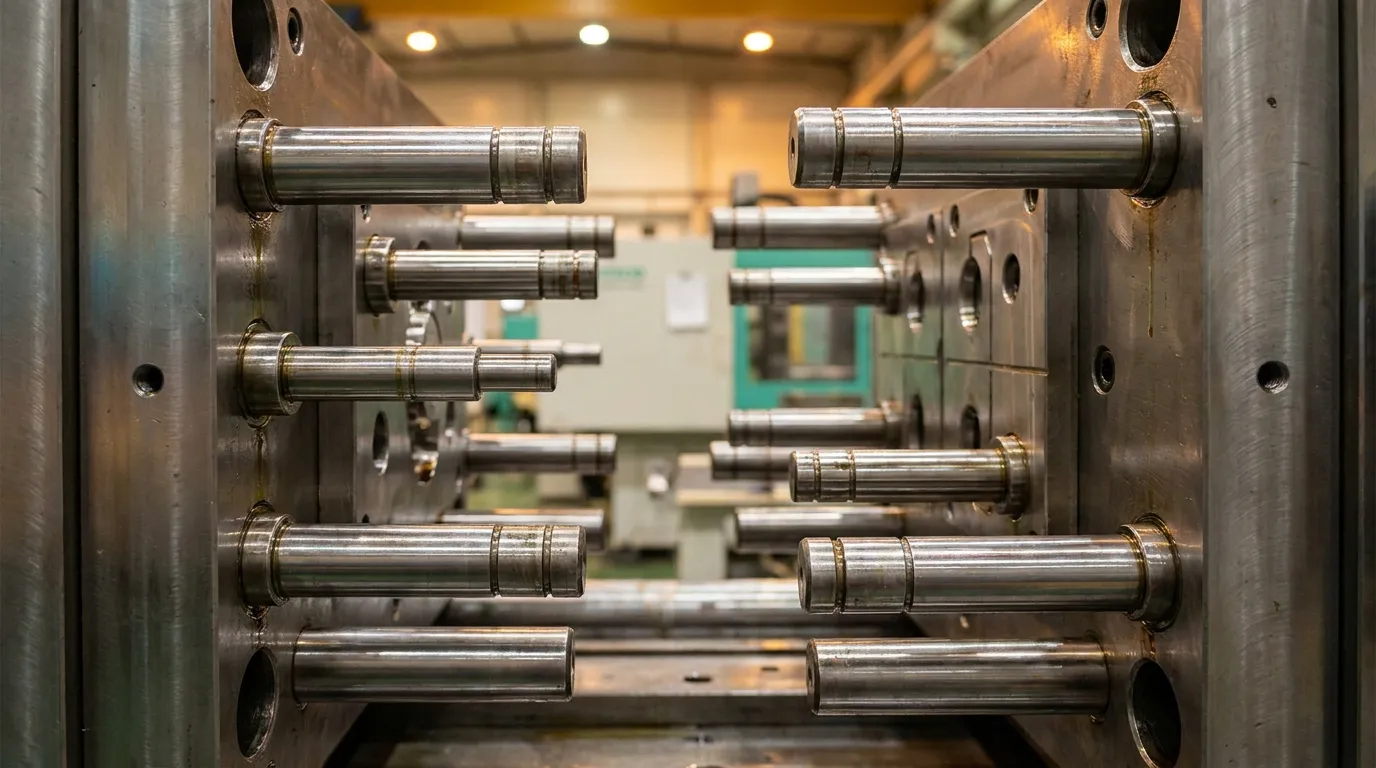
Mold pins and bushings keep mold halves aligned during every production cycle. Proper alignment reduces uneven wear, prevents flashing and binding, and helps maintain dimensional consistency over long production runs.
ガイドピン, often called leader pins, guide the moving and stationary mold halves into the correct position during mold closing. Bushings act as the matching contact surface that supports smooth movement and controls friction. 次の通りです プラスチック技術, accurate alignment helps protect critical mold surfaces from premature wear.
適切なアライメントがない場合, pressure shifts unevenly across the mold. That increases stress on cavities, スライド, エジェクターシステム, and shut-off surfaces. Even a small amount of misalignment can create flashing or dimensional variation in molded parts.
| 構成要素 | 主な機能 | 着用時の一般的な問題 |
|---|---|---|
| ガイドピン | 型の半分を整列させる | 結合または振動 |
| Guide bushing | 摩擦を減らす | 不均一な摩耗 |
| 潤滑溝 | 滑らかな動きを維持 | 熱の蓄積 |
| リテーナー制度 | コンポーネントをしっかりと保持します | アライメントドリフト |
For molds running high production volumes, guide systems directly affect service life. Well-fitted ガイドピンシステム help reduce impact loading during repeated opening and closing cycles.
If you're comparing broader mold components, その 完全な金型部品ガイド explains how guide systems interact with cooling, 射出, キャビティ設計.
How do you choose the right pin and bushing fit?
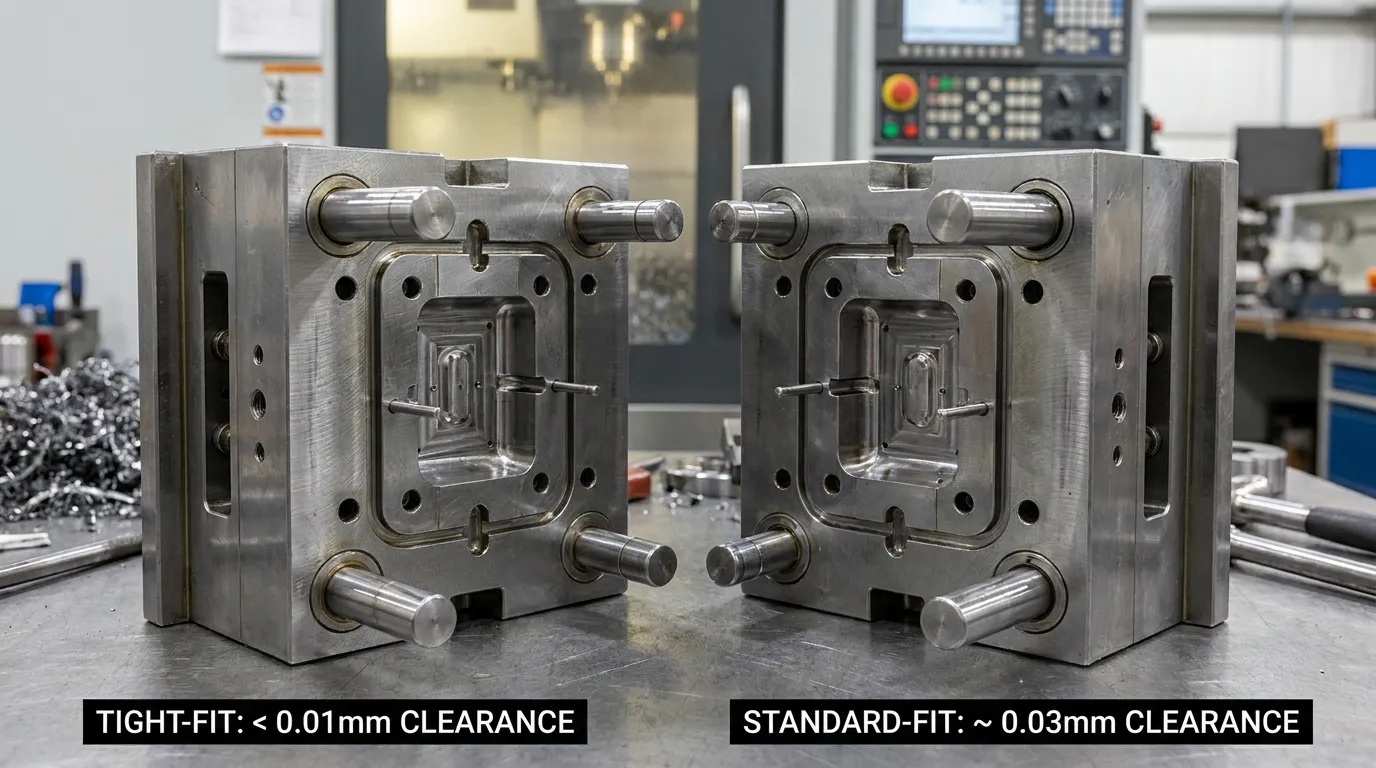
The correct pin-bushing fit balances alignment precision with smooth movement. Tight fits improve accuracy but increase seizure risk if lubrication or thermal expansion is not controlled.
The best fit depends on production speed, 動作温度, and mold tolerance requirements. High-precision molds often use tighter clearances to improve positioning accuracy. Standard production molds usually need slightly more clearance to reduce friction and support easier maintenance.
Very tight fits are not always the best choice. They work well in controlled environments with stable temperatures, but they can create sticking problems during long production runs. Medical molds with tight tolerances sometimes experience binding when thermal expansion changes the pin-to-bushing clearance after several hours of operation.
タイトフィットと標準フィットのガイドシステム
| フィットタイプ | 最適な利用法 | 利点 | リスク |
|---|---|---|---|
| ぴったり合う | 医療用および精密金型 | より良いアライメント精度 | 発作リスクが高い |
| 標準フィット | 一般生産型 | 潤滑やメンテナンスが容易 | 位置決め精度がやや低い |
| ルーズフィット | 試作型または低サイクル型 | 摩擦の減少 | 摩耗と振動の速さ |
A practical way to compare systems is by expected cycle count. An automotive mold running one million cycles annually places far more stress on guide surfaces than a low-volume prototype mold. High-cycle molds benefit from tighter machining tolerances and better surface treatments.
次の通りです 最初の型, guide systems improve positioning accuracy and support stable mold operation. Buyers comparing systems should also evaluate surface finish quality and lubrication access, not just dimensional tolerance alone.
When evaluating precision requirements, 精密金型公差 also influence how tightly guide systems should be matched to the mold design.
ピン・トゥ・ブッシング選択表
| 生産量 | 推奨クリアランス | 潤滑の必要性 | 摩耗リスク | 最適アプリケーション |
|---|---|---|---|---|
| 低音量 | 少し緩い | 中程度 | 低め | 試作型 |
| 中容量 | 標準フィット | レギュラー | メディア | 消費財 |
| 高音量 | 精密なタイトフィット | ハイ | 放置された場合は高く | 自動車用金型 |
| 超高精度 | タイトでコントロールされたフィット感 | 厳格なメンテナンス | 中程度 | 医療および電子工学 |
Which materials and surface treatments reduce wear?
Hardened tool steels with nitriding or surface coatings typically deliver better wear resistance and lower friction than untreated components. Material selection should match cycle count, mold speed, and lubrication conditions.
Most guide pins and bushings use hardened tool steel because it maintains dimensional stability under repeated movement. Harder materials resist scoring better, especially in molds that run continuously across long production shifts.
Surface treatment also matters. Nitriding creates a hardened outer layer that improves wear resistance without significantly changing the component size. Some manufacturers also use PVD coatings to lower friction and reduce surface damage during high-speed operation.
Premium coatings are not necessary for every mold. Standard hardened systems often perform well in low-cycle molds where lubrication and contamination control are properly managed. Buyers sometimes overspend on advanced coatings when maintenance practices are the real source of wear problems.
| 材料または処理 | 主な利点 | 最適な利用法 |
|---|---|---|
| Hardened tool steel | 一般的な耐摩耗性 | 標準生産 |
| 窒化鋼 | 表面硬度の向上 | ハイサイクル型 |
| PVDコーティング | 摩擦の減少 | 高速運転 |
| 磨き仕上げ | より滑らかな動き | 精密金型 |
A real production example shows why material choice matters. One automotive supplier replaced untreated bushings twice as often as nitrided components in a mold producing more than one million cycles per year. The nitrided setup reduced maintenance downtime and improved alignment consistency.
ザ 硬化型部品 used in other precision mold systems often follow the same wear-resistance principles as guide assemblies. Sunshine's engineering discussion on advanced mold materials also highlights how coatings and hardened surfaces improve long-term durability in demanding production environments.
What causes guide pin and bushing wear?
Guide system wear usually starts with poor alignment, 潤滑不足, or contamination inside the mold. Early wear signs include scoring, uneven polishing, 振動, and increased mold resistance during closing.
Most guide systems fail gradually, not suddenly. Small particles, dry movement, or uneven loading slowly damage the contact surfaces between the pin and bushing. As wear increases, alignment accuracy drops and mold movement becomes less stable.
Poor alignment is one of the biggest causes of premature wear. According to Sunshine's article on punch breakage in stamping dies, uneven loading and misalignment increase stress across tooling surfaces. Similar problems occur in injection molds when guide systems no longer close evenly.
オペレーターが無視してはいけない警告サイン
- ガイド面の刻み跡
- 金型閉じ時の振動増加
- 分断線付近にフラッシュ欠陥が現れる
- 不均一な研磨パターン
- 開閉サイクル中のノイズ
- ガイド周辺の過剰な熱
Lubrication problems also accelerate wear. Dry surfaces create friction that increases operating temperature and damages hardened layers. Contamination from plastic residue or metal particles can make the problem worse by scratching contact surfaces during each cycle.
An electronics mold producing thin-wall components showed flashing problems after uneven guide pin wear shifted alignment slightly during operation. The mold still closed fully, but part consistency changed enough to increase rejection rates.
If you are already seeing related friction problems elsewhere in the tool, カビの摩耗問題 inside ejector systems may point to broader maintenance gaps.
When should mold pins and bushings be replaced?
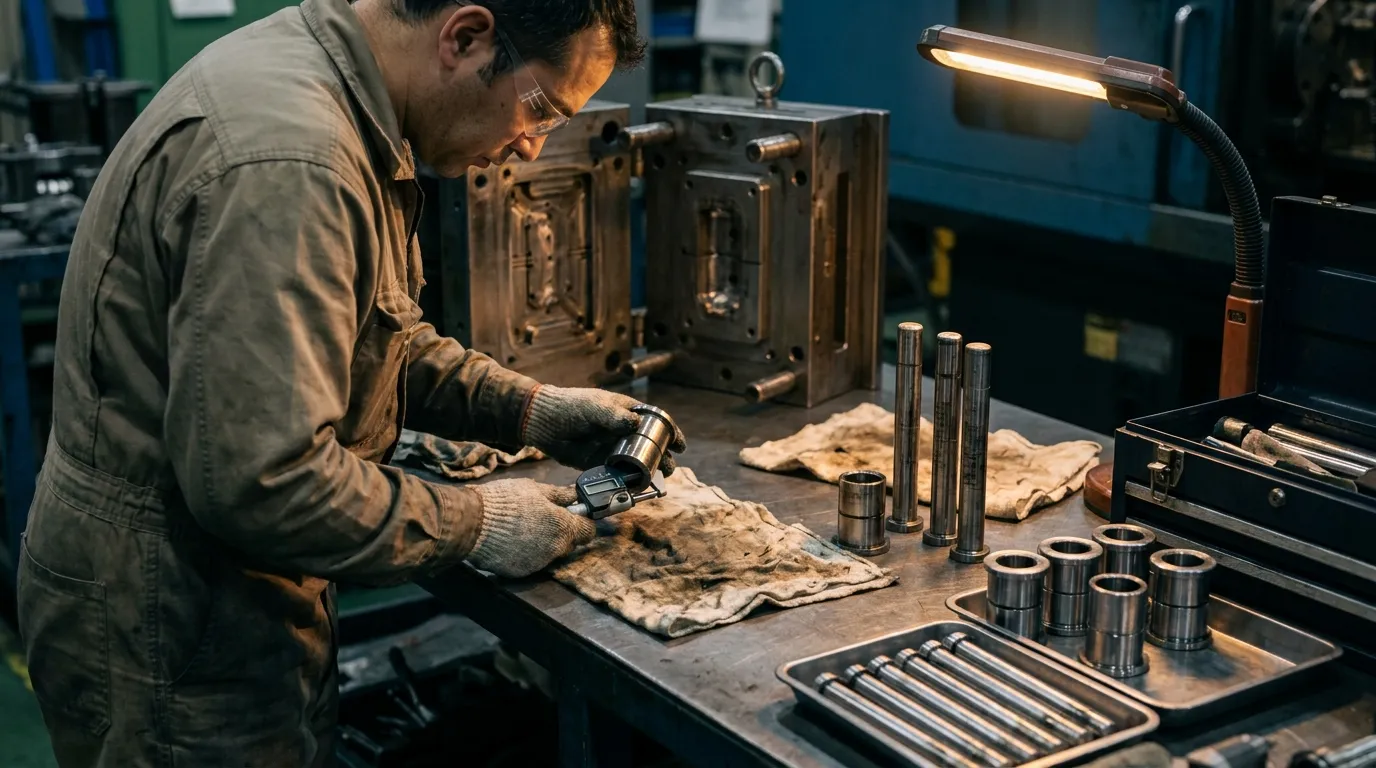
Mold pins and bushings should be replaced before alignment loss affects part quality. Waiting until severe scoring or looseness appears often increases repair costs and production downtime.
Replacement timing depends on cycle count, 生産速度, および運用条件. Some molds can run for years with minimal wear, while high-speed automotive tools may require regular guide system inspections every few months.
A common mistake is waiting for obvious damage before replacing components. By the time severe looseness appears, uneven loading may already have damaged cavities, スライド, または遮断面. Replacing guide systems early usually costs less than repairing multiple mold components later.
ガイドシステム摩耗検査チェックリスト
| 検査ポイント | 注意すべき点 | 推奨行動 |
|---|---|---|
| 表面仕上げ | スコアリングやスクラッチ | 磨くか置き換えるか |
| クリアランス | Excess movement | 公差の測定 |
| 潤滑 | 乾燥または汚染されたグリース | 清潔と再潤滑 |
| ノイズ | 振動音や衝撃音 | アライメントを検査してください |
| 成形部品 | フラッシュまたはミスマッチ | ガイドの着用を確認してください |
A maintenance team comparing replacement timing found that planned guide system replacement during scheduled downtime cost far less than emergency repair after alignment failure stopped production unexpectedly.
Regular inspection also helps identify lubrication issues early. For molds running continuous production, preventive checks are usually more effective than reacting after visible defects appear. Proper ガイドブッシングのメンテナンス helps extend service life and reduce unplanned shutdowns.
How should maintenance and lubrication be planned?
Preventive maintenance is the easiest way to extend guide system life. Consistent lubrication and routine inspections reduce friction, stabilize movement, and help prevent uneven wear before it affects mold accuracy.
Maintenance schedules should match production volume. High-cycle molds often need more frequent lubrication checks because heat and repeated movement gradually break down grease performance. Lower-volume molds usually require less aggressive maintenance intervals.
メンテナンスチェックリスト
- 定期型メンテナンス中のガイド面を清掃してください
- Check for scoring, discoloration, or uneven wear
- 再塗布する前に汚染された潤滑剤を除去してください
- ピンからブッシングへのクリアランスが仕様内に収まっているか確認してください
- 取り付け金具の動きや緩みがないか点検してください
- Store spare components in clean, dry conditions
Lubrication quality matters as much as lubrication frequency. Too little grease increases friction, but excessive lubrication can trap contaminants inside the guide system. Consistent cleaning is often more important than using expensive lubricant types.
For broader maintenance planning, その 金型部品のメンテナンス process should include regular inspection across the entire mold assembly, not only the guide system.
Which guide system works best for your production environment?
The best guide system depends on production volume, 精度要件, および運用条件. A setup that works well for low-volume consumer products may wear out quickly in high-speed automotive production.
Automotive molds usually need hardened pins, nitrided bushings, and tighter machining tolerances because they run continuously under heavy cycle counts. Medical and electronics molds often prioritize positioning accuracy over maximum wear resistance because small dimensional shifts can affect part quality.
| 本番環境 | 推奨セットアップ | 主な優先事項 |
|---|---|---|
| 自動車 | 硬化窒化システム | 長寿命 |
| メディカル | 精密タイトフィットシステム | アライメント精度 |
| 消費財 | 標準強化システム | バランスコスト |
| 試作型 | 標準適合ガイドシステム | メンテナンスが容易です |
High-end coatings are not always necessary. In cleaner production environments with stable temperatures, standard hardened systems often perform reliably for long periods. 一方で, molds exposed to contamination or very high speeds usually benefit from advanced surface treatments.
One medical mold experienced sticking because the guide fit was too tight for long production runs at elevated temperatures. Switching to a slightly larger clearance improved movement consistency without reducing part quality.
Different industries place different demands on guide systems. ザ 型の適用要件 across automotive, 医療, and electronics production help explain why guide system selection should match the operating environment, not just the initial component cost.
次のステップを正しく進める
Choosing the right mold pins and bushings setup comes down to balance. Tight tolerances improve alignment, but they also increase maintenance demands. Hardened and coated systems extend wear life, but only when lubrication and inspection routines stay consistent.
Before ordering replacement components, 生産量を見直す, 動作温度, and downtime history. Small alignment problems often become expensive repair issues if guide wear goes unchecked. A planned maintenance strategy usually delivers better long-term performance than simply replacing parts after failure.
よくある質問
What are mold pins and bushings used for?
Mold pins and bushings guide mold halves into accurate alignment during opening and closing cycles. They reduce uneven wear, 位置測定精度の向上, and help prevent flashing or binding problems in injection molds.
How do guide bushings reduce mold wear?
Guide bushings reduce direct friction between moving mold components and distribute alignment forces more evenly. Properly fitted bushings also help prevent metal-to-metal damage and vibration during production cycles.
When should guide pins be replaced?
Guide pins should be replaced when scoring, ゆるさ, or alignment variation becomes visible during inspection. Delaying replacement can increase mold damage and create longer production downtime.
What materials are best for mold guide systems?
Hardened tool steel is commonly used because it provides strong wear resistance and dimensional stability. Nitriding and surface coatings can further improve service life in high-cycle molds.
How tight should guide pin clearance be?
Guide pin clearance should balance alignment accuracy with smooth movement during thermal expansion. Extremely tight fits may increase seizure risk if lubrication is not properly controlled.
Can poor alignment damage mold components?
はい. Poor alignment increases uneven loading across mold components and may cause flashing, 得点, punch failure, または早期摩耗. Even small alignment errors can shorten overall mold lifespan.



サンシャインより書かれました
サンシャインで, 私たちは精密金型部品の専門製造およびサプライヤーです, プレスおよび射出成形用途向けの幅広い製品を提供しています. 私たちの主な焦点はパンチダイスです, イジェクターピンとスリーブ, ガイドポストとブッシング. 高度なCNC加工技術で, 厳格な品質管理, そして強力な生産能力, 私たちは信頼性を保証しています, 高精度部品, また、迅速かつ効率的なグローバル供給のための在庫の標準部品も併用しています.
ニュース
サービスを受けましょう
あらゆる予算に合った高品質な部品と、親切なスタッフが訓練されていて、訪問を有益で手間なく充実させてくれます.
