



医療部品製造: プラスチック型の品質がリスクを減らす方法
Medical parts manufacturing depends on stable tooling, controlled materials, and repeatable quality systems. High-quality plastic molds reduce dimensional variation, 汚染リスク, validation failures, and shipment delays. Manufacturers that monitor mold wear, document inspections, and maintain material traceability are better prepared to deliver consistent medical parts during scaling and long production runs.
Medical manufacturing leaves little room for variation. A small tolerance shift can affect sealing, フィット感, or device reliability, especially during high-volume production. That’s why mold quality matters far beyond part appearance. Strong tooling, stable processing, and disciplined QC systems help manufacturers avoid scrap, delayed validation, and production instability before problems reach customers or regulators.
Why does mold quality matter so much in medical parts manufacturing?
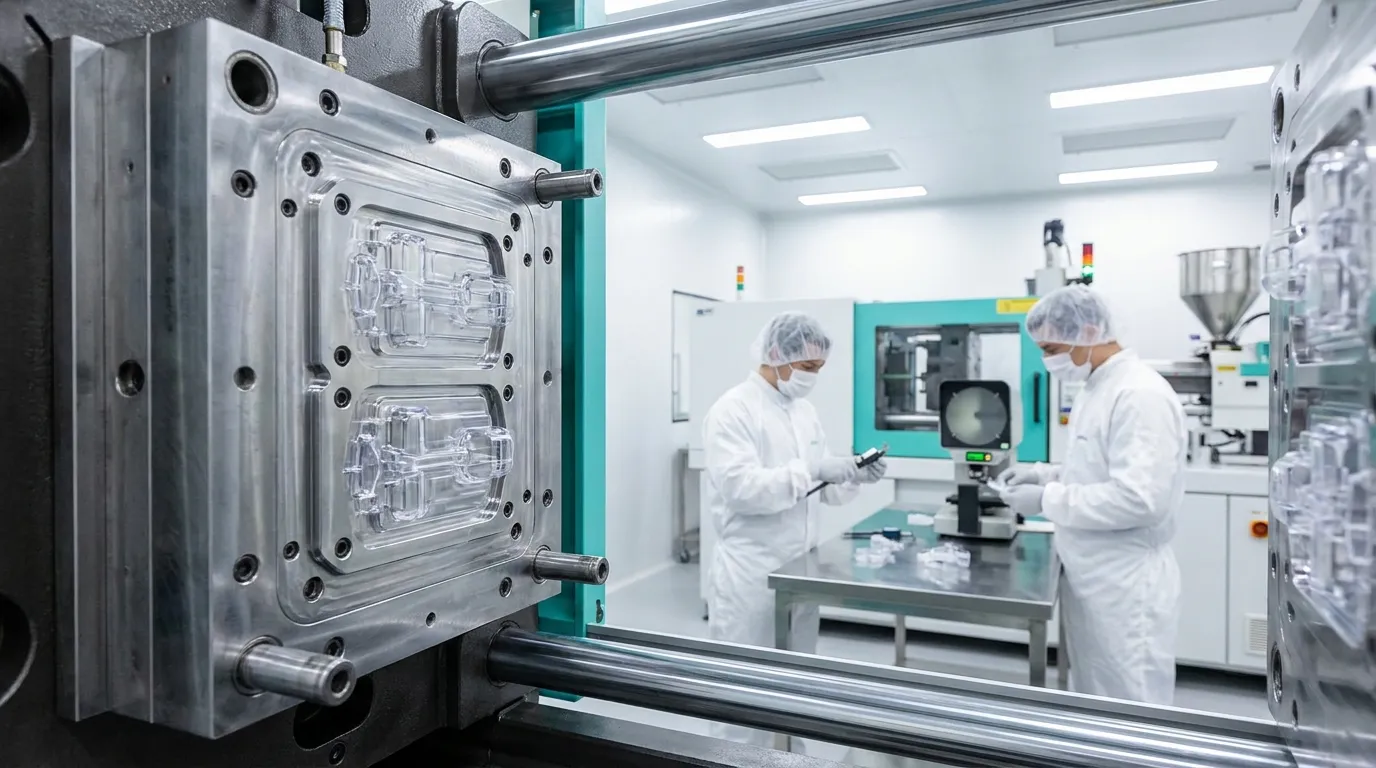
Medical parts manufacturing depends on stable tooling because even small dimensional shifts can affect device fit, シーリング, or safety. High-quality molds reduce variation, improve repeatability, and help manufacturers maintain consistent production during validation and scaling.
Medical parts often require tight tolerances across thousands or millions of cycles. If a mold cavity wears unevenly or cooling becomes unstable, dimensions can drift slowly over time. That creates risk during inspection and assembly, especially for connectors, 住宅, and sealing surfaces.
High-quality molds support repeatable production because they maintain cavity consistency under long production runs. Better steel selection, tighter machining tolerances, and controlled surface finishing all help reduce variation between parts.
製造業者はまた、 医療用成形プロセス. These systems help detect cavity wear before defects increase. For regulated production, repeatability matters as much as speed.
If you need broader background on tooling structures and cavity systems, サンシャイン・プロの 型の部品の基本 guide explains how injection mold systems support stable production.
The FDA has repeatedly highlighted manufacturing quality issues tied to production control failures, including warning actions involving medical device facilities reported by ロイター. Stable tooling helps reduce those risks early in the process.
What risks do poor-quality molds create in medical production?
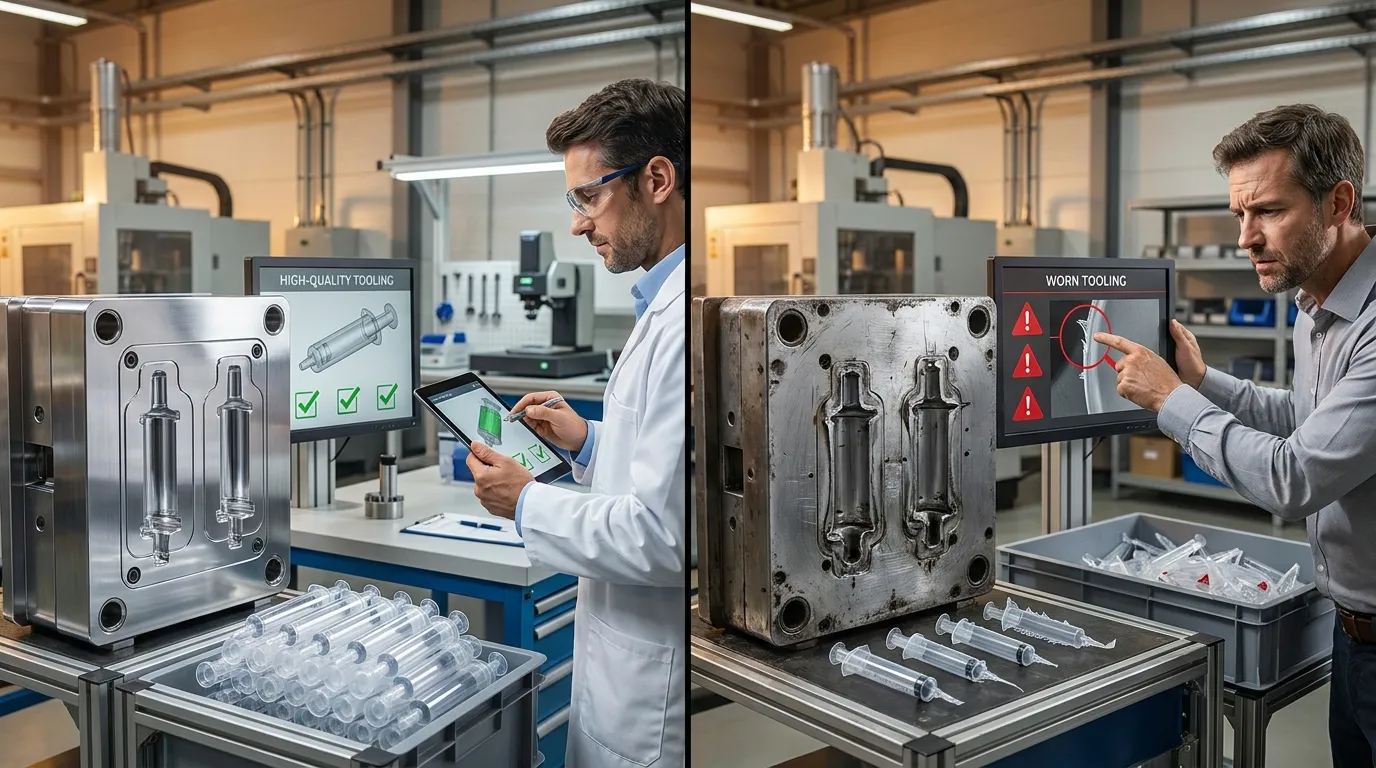
Poor mold quality increases the risk of dimensional drift, unstable part performance, excess scrap, and delayed validation. In medical manufacturing, these problems can slow approvals, disrupt shipments, and increase compliance exposure.
Poor tooling problems rarely appear all at once. A mold may pass early sampling, then develop flash, uneven shrinkage, or cavity inconsistency after extended production. Those changes create inspection failures that slow production and increase waste.
A common example involves medical connectors with sealing surfaces. If cavity wear changes dimensions slightly during long runs, seals may fail pressure testing. That forces reinspection, ソーティング, and possible tooling revision before shipments continue.
医療製造リスク比較表
| カビ問題 | 生産症状 | 事業への影響 | コンプライアンスへの影響 | 予防方法 |
|---|---|---|---|---|
| 不均一な空洞摩耗 | 次元ドリフト | スクラップの増加 | 検証チェックの失敗 | 定期キャビティ検査 |
| フラッシュ形成 | 過剰なトリミング | 生産の遅さ | 検査失敗 | カビのメンテナンスが改善される |
| 冷却の不均衡 | ワーページ | 組立遅延 | 再現性の懸念 | 熱監視 |
| 換気不良 | 焼け跡 | 部品拒否 | 表面品質の問題 | 換気口清掃スケジュール |
| 弱い鋼の耐久性 | 短い工具寿命 | ダウンタイムと修理費用 | 生産の不安定性 | 耐摩耗型金型 |
Lower tooling cost is not always lower manufacturing cost. A cheaper mold may reduce upfront spending, but repeated scrap, delayed validation, and downtime can become far more expensive over time.
投資するメーカー 耐摩耗型金型 often reduce long-term production interruptions because cavity dimensions remain stable for longer production cycles.
How do medical manufacturers control dimensional consistency?
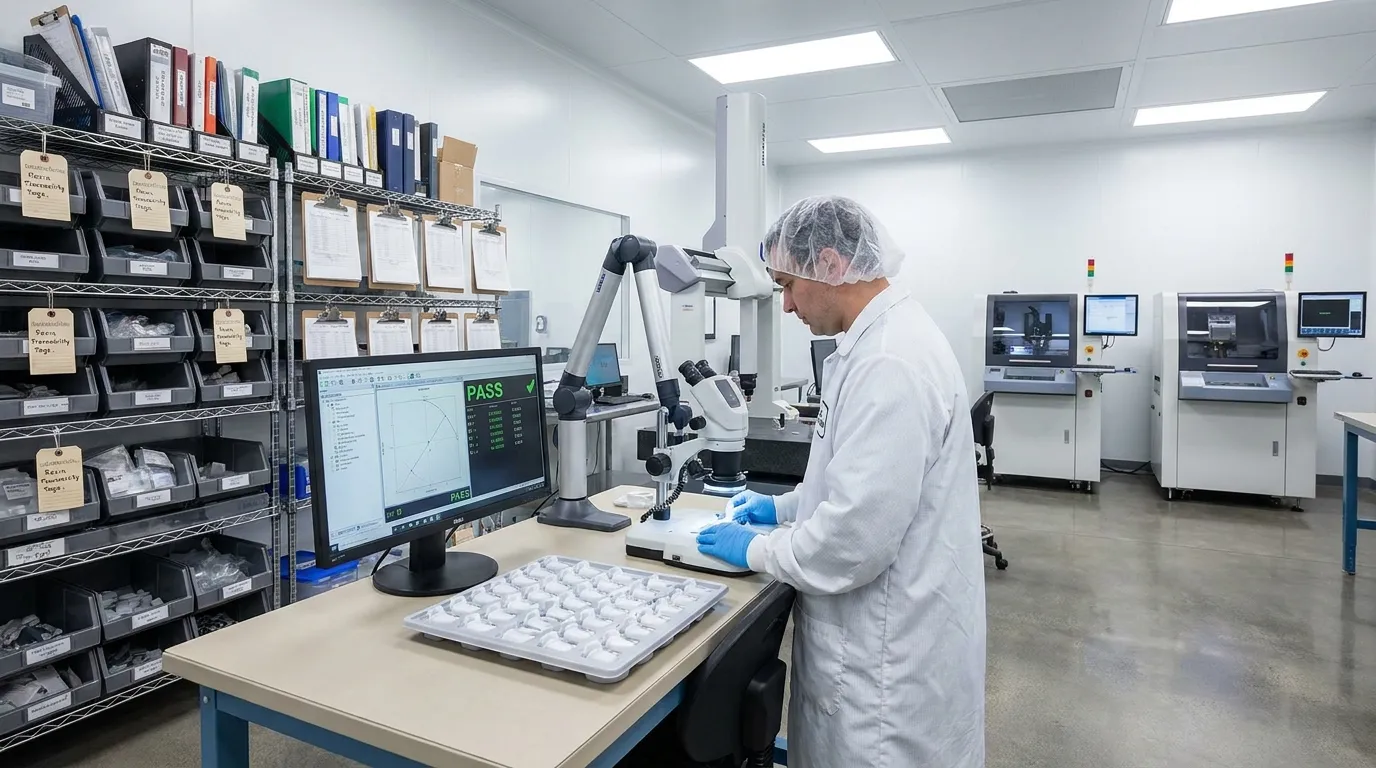
Medical manufacturers maintain dimensional consistency through controlled tooling maintenance, documented inspection plans, stable processing parameters, and material traceability. Consistency matters because validated parts must remain repeatable across production batches.
Consistency starts with process discipline. Strong manufacturers track cavity condition, 機械の設定, resin drying, and inspection measurements during every production stage. These controls help prevent gradual variation that becomes difficult to detect later.
A supplier with advanced machines but weak documentation can still create unstable production. Medical manufacturing depends on repeatable systems, not equipment alone.
カビのメンテナンスとキャビティモニタリング
Tool maintenance schedules help manufacturers monitor wear before defects increase. Engineers often inspect cavity surfaces, 門, 風, and cooling channels after planned cycle intervals instead of waiting for visible failures.
例えば, a multi-cavity mold producing diagnostic housings may develop uneven wear in one cavity first. Early inspection can isolate the issue before scrap spreads across full production batches.
ストロングを使ったメーカー デバイス成形制御 usually document cavity inspections alongside maintenance history. That creates a traceable record during audits and validation reviews.
生産中の検査計画
Inspection planning matters because stable tooling alone does not guarantee stable output. Medical manufacturers often use in-process measurements to confirm dimensions throughout production instead of relying only on final inspection.
- First article inspection
- プロセス中の次元チェック
- 樹脂ロット検証
- SPCトレンドモニタリング
- 最終バッチ検査
品質管理の期待は以下の通りです。 クリティカル・マニュファクチャリング highlight how documented process control supports regulated medical production.
Why do material traceability and contamination control matter?
Material traceability helps medical manufacturers identify, isolate, and document production risks quickly. Controlled resin handling and contamination prevention also reduce the chance of failed inspections or inconsistent part performance.
Medical molding requires more than accurate tooling. 樹脂の取り扱い, 保管, and documentation also affect product quality. If manufacturers cannot trace resin lots or process conditions, investigations become much harder when problems appear later.
A common issue involves undocumented resin substitutions during production scaling. If a supplier changes material lots without proper traceability, additional validation reviews may delay shipment approval.
Contamination control matters for the same reason. Dust, moisture, or mixed resin can affect surface quality and dimensional stability. Manufacturers producing 医療用プラスチック成形 components often use controlled handling systems and cleanroom procedures to reduce contamination exposure.
- 密封樹脂貯蔵
- 制御された乾燥手順
- 専用のマテリアルライン
- クリーンルーム包装
- ロットトレースビリビリティ記録
The FDA continues to monitor manufacturing consistency in medical supply production, including syringe manufacturing quality concerns covered by ロイター.
What should buyers ask before approving a medical parts manufacturer?
Buyers should evaluate whether a medical parts manufacturer can maintain repeatable tolerances, document inspection processes, manage tooling wear, and support stable production during scaling. Strong process discipline matters more than low initial tooling cost.
Many supplier evaluations focus heavily on machine lists and facility size. Those details matter, but production discipline usually matters more during long-term medical manufacturing programs.
A supplier should be able to explain how they monitor cavity wear, track resin lots, document inspections, and respond to dimensional drift. If those answers stay vague, production risk usually increases later.
サプライヤー評価チェックリスト
| 評価エリア | 買い手が尋ねるべきこと |
|---|---|
| 工具のメンテナンス | How often are cavities inspected and serviced? |
| 品質管理文書 | Are in-process inspections documented? |
| トレーサビリティ | Can resin lots be tracked to production batches? |
| 検証サポート | How are process changes documented? |
| クリーンルーム機能 | Which operations use contamination controls? |
| スケーリング安定性 | How is repeatability maintained during higher volume runs? |
A practical example involves pilot production scaling. A low-cost mold may work during early sampling, then develop flash defects after higher-volume runs begin. That can force production pauses and tooling adjustments at the worst possible stage.
このような質問は、サプライヤー評価ガイダンスでも議論されています シースキー・メディカル.
サプライヤーを比較する買い手は、Sunshine Proのガイドも参照できます。 医療機器供給業者 for more production-focused evaluation criteria.
How do customs delays and supply chain instability affect medical manufacturing?
Customs delays and unstable supply chains can interrupt validation schedules, delay first shipments, and increase production pressure. Medical manufacturers reduce this risk through stable tooling control, documentation readiness, and supplier coordination.
Medical production schedules often depend on tightly coordinated tooling, 材料, and regulatory timelines. If imported tooling components or resin shipments get delayed at customs, production windows can shift quickly.
One example involves imported mold components delayed during customs processing. A two-week hold can interrupt pilot production, delay validation sampling, and increase launch pressure across the entire program.
サプライチェーンリスク比較
| 安定したサプライチェーン | 不安定なサプライチェーン |
|---|---|
| 計画的な工具納入 | 遅延型部品 |
| 安定した樹脂供給 | 資材不足 |
| 予測可能な検証タイミング | 検査の再スケジュール |
| 管理された在庫計画 | 緊急生産の変更 |
| 安定出荷リリース | 顧客の配送遅延 |
Offshore sourcing is not automatically risky, but buyers should evaluate tooling ownership, customs exposure, and shipment coordination before prioritizing lower pricing alone.
Exporters in several markets have already reported customs automation delays affecting production timelines, according to reporting from ビジネス・スタンダード.
When is higher mold quality worth the investment?
Higher mold quality usually becomes worthwhile when production requires long-term repeatability, 厳密な公差, or stable scaling. Medical programs often stay active for years, so tooling reliability affects much more than startup cost.
Premium tooling is especially valuable when validation costs are high. Repeating inspections, resampling parts, or revising molds late in production can delay launches and increase operational pressure quickly.
より良い工具が意味を持つとき
| 制作状況 | より良い工具優先度 |
|---|---|
| 大量生産 | ハイ |
| 厳密なシール公差 | ハイ |
| 短期試作 | 中程度 |
| 長い製品ライフサイクル | ハイ |
| 多空洞医療用金型 | ハイ |
| 低リスクの試作部品 | 中程度 |
A manufacturer producing disposable diagnostic housings may accept moderate tooling costs during early prototypes. That same approach becomes risky once annual production scales into millions of parts.
Manufacturers also need to think about downtime. A cavity failure during full production creates far more disruption than a tooling upgrade during development.
If you need broader context around mold engineering and applications, サンシャイン・プロの 射出成形の応用 guide covers larger system-level considerations.
次のステップを正しく進める
Medical parts manufacturing depends on consistency from the first validated sample through full-scale production. Strong tooling, documented QC systems, and stable material handling all help reduce production risk before problems affect customers or regulators.
If you’re evaluating suppliers, focus on repeatability instead of tooling price alone. Ask how molds are maintained, how inspections are documented, and how production stays stable during scaling. Those answers usually reveal far more about long-term manufacturing reliability than equipment lists or marketing claims.
よくある質問
What is medical parts manufacturing?
Medical parts manufacturing is the production of components used in medical devices, diagnostics, and healthcare equipment. It requires controlled materials, repeatable processes, and documented quality systems to reduce safety and compliance risks.
Why is mold quality important in medical injection molding?
Mold quality affects dimensional consistency, 表面仕上げ, and long-term repeatability. Poor tooling can increase scrap, validation failures, and unstable production during scaling or extended manufacturing runs.
What certifications should a medical manufacturer have?
Medical manufacturers commonly operate under ISO-based quality systems and FDA-related compliance requirements, depending on the product and market. Buyers should verify certifications, inspection controls, and traceability processes before approving production.
How do manufacturers prevent contamination in medical molding?
Manufacturers reduce contamination through controlled resin handling, cleanroom procedures, 記録されたトレーサビリティ, and regular equipment maintenance. These controls help maintain stable medical part quality during production and packaging.
What causes delays in medical parts manufacturing?
Delays often come from tooling revisions, failed inspections, customs issues, 資材不足, or unstable production processes. Weak documentation and inconsistent quality systems can also slow validation and shipment approvals.
Can low-cost molds work for medical production?
Low-cost molds may work for prototypes or low-risk applications, but they often struggle with long-term dimensional stability. Medical production usually requires stronger tooling and tighter process control to maintain repeatability over time.



サンシャインより書かれました
サンシャインで, 私たちは精密金型部品の専門製造およびサプライヤーです, プレスおよび射出成形用途向けの幅広い製品を提供しています. 私たちの主な焦点はパンチダイスです, イジェクターピンとスリーブ, ガイドポストとブッシング. 高度なCNC加工技術で, 厳格な品質管理, そして強力な生産能力, 私たちは信頼性を保証しています, 高精度部品, また、迅速かつ効率的なグローバル供給のための在庫の標準部品も併用しています.
ニュース
サービスを受けましょう
あらゆる予算に合った高品質な部品と、親切なスタッフが訓練されていて、訪問を有益で手間なく充実させてくれます.
