



金型製造プロセス: 設計レビュー, 機械加工, 集会, およびQC
Mold manufacturing starts with design review and DFM analysis, followed by CNC machining, EDM処理, mold assembly, 試験, and quality control. A reliable mold manufacturing process reduces production defects, prevents expensive rework, shortens lead times, and helps manufacturers verify that a mold can run consistently before shipment approval.
A mold project can fail long before production starts. Poor DFM planning, loose tolerances, or rushed machining often create delays that show up during mold trials. That’s why experienced tooling suppliers focus heavily on process control from the first design review through final inspection. Understanding each stage helps buyers evaluate suppliers, reduce tooling risk, and avoid costly production issues later.
What are the main stages of mold manufacturing?
Mold manufacturing typically moves through design review, CNC加工, EDM処理, 集会, カビ試験, and final quality inspection. Each stage affects lead time, 寸法精度, production stability, and long-term mold performance.
Most production molds follow a structured workflow. Manufacturers review the product design first, then confirm tolerances, 物質的挙動, and molding feasibility before steel cutting begins. This early planning stage helps reduce expensive machining changes later.
After approval, the project moves into machining and component production. Shops use CNC milling, EDM, グラインド, 熱処理, and polishing to produce precision mold parts. Once components are complete, technicians assemble and fit the mold before testing it in production conditions.
A standard mold production workflow usually includes:
- 設計レビューとDFM分析
- 型設計承認
- CNC加工とEDM
- 熱処理と仕上げ
- 型の組み立てと取り付け
- カビ試験とサンプリング
- 最終検査および出荷承認
If you need a broader overview of tooling structure and terminology, これだ 射出成形のワークフロー guide explains how different mold systems and production stages connect.
Why does design review happen before machining?
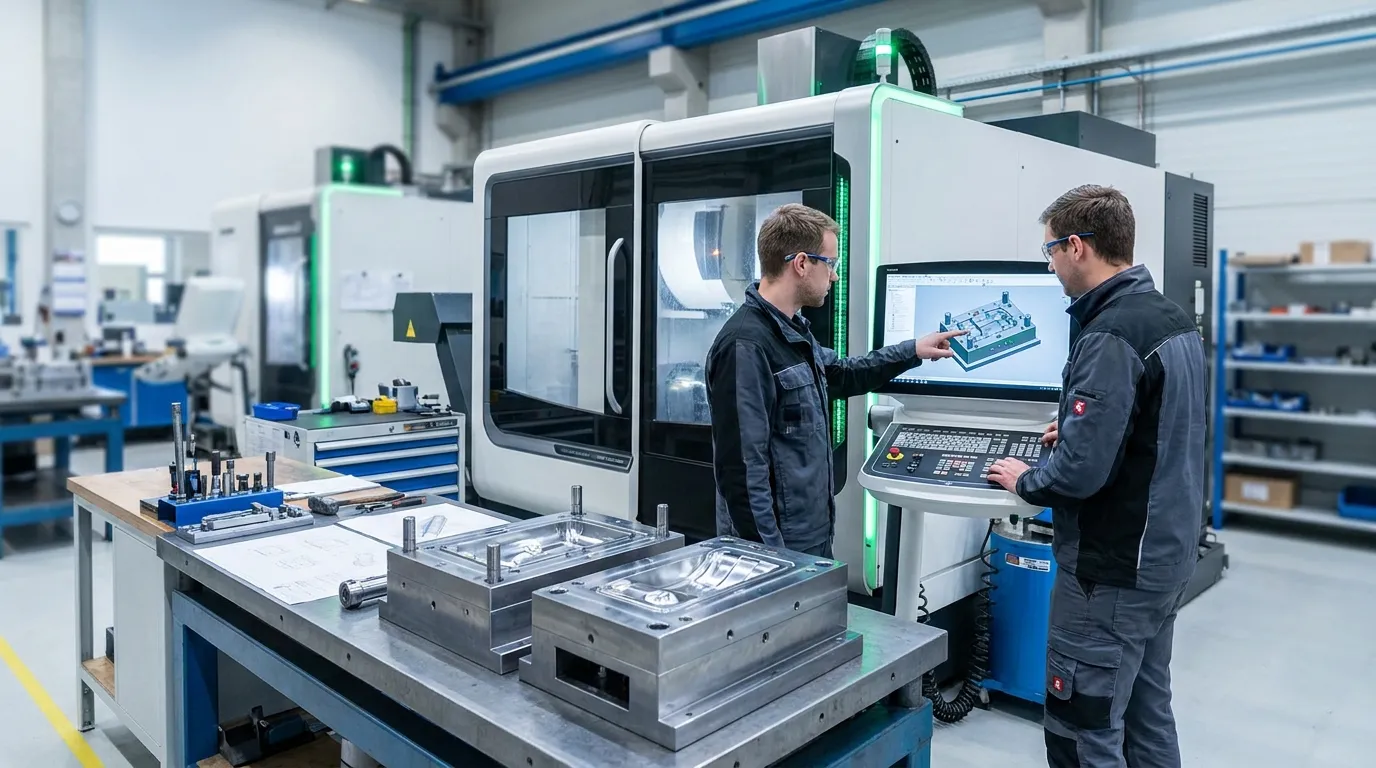
Design review happens before machining because tooling errors become expensive after steel cutting starts. Manufacturers use DFM analysis to verify part geometry, 収縮, ゲート配置, 冷却レイアウト, and production feasibility before committing to machining.
DFM, 製造可能性のためのデザインの略です, helps mold manufacturers identify production risks early. エンジニアが壁厚をレビューします, アンダーカット, ドラフト角, cooling paths, and material shrinkage before finalizing the tooling layout. A small geometry issue at this stage can create major rework after machining begins.
Fast tooling delivery is not always a sign of a better mold manufacturer. Some suppliers shorten lead time by reducing DFM review or trial validation. That approach can create larger production problems later, especially for high-volume molds with tight tolerances.
加工前によく見られるDFMの問題
Common problems discovered during DFM review include:
- 壁の厚さが均一で反りを引き起こす
- ゲートの位置が悪いと充填バランスに影響します
- サイクルタイムを長くする冷却レイアウト
- 薄い遮断部分は摩耗しやすい
- イジェクターピンの設置が難しい
A consumer electronics housing mold is a good example. During DFM review, engineers may discover that the original gate location creates visible weld lines near cosmetic surfaces. Adjusting the gate before machining is far cheaper than redesigning hardened steel later.
For a broader explanation of tooling structure and part design, see this プラスチック射出成形設計 リソースを探すか、 完全な金型部品ガイド for component-level details.
How are mold components machined and finished?
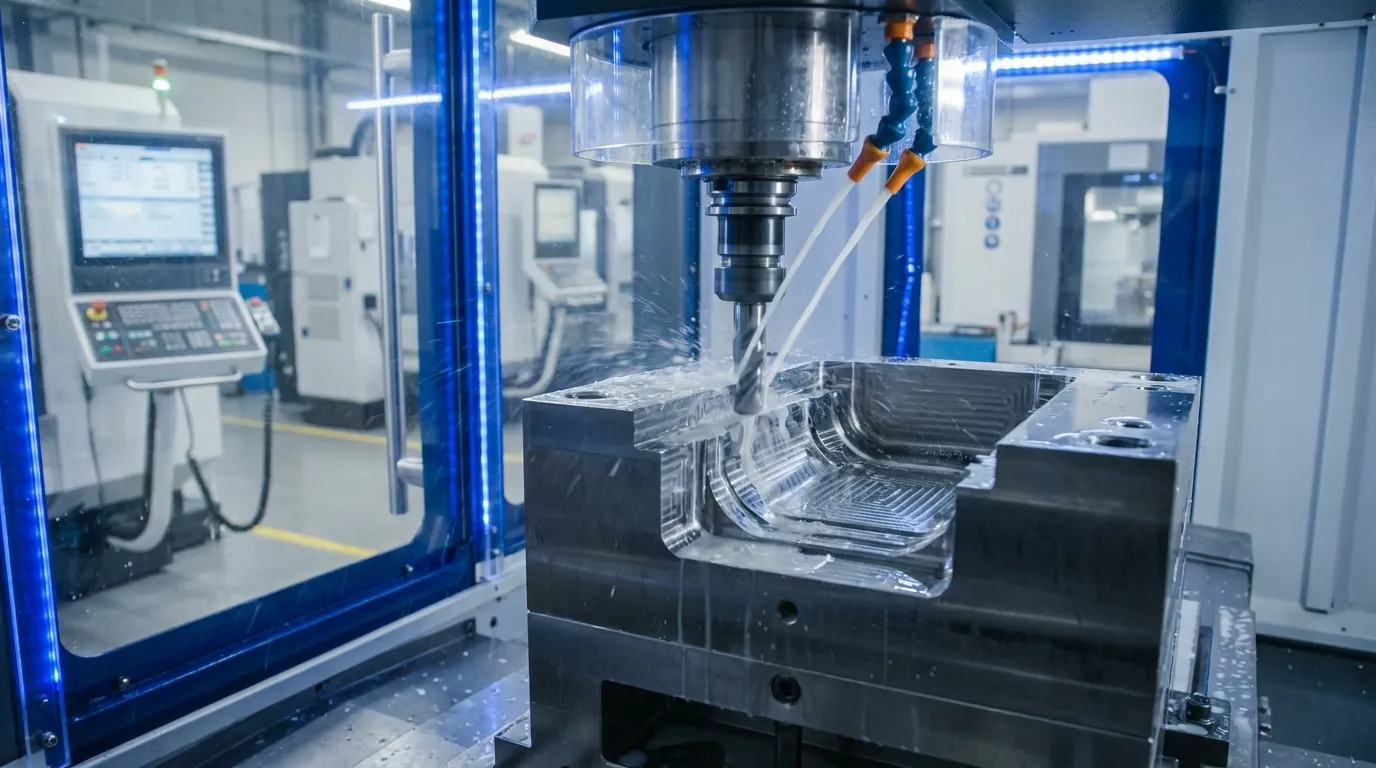
Mold manufacturers use CNC machining, EDM, グラインド, and polishing to create precise mold components. The machining sequence depends on geometry complexity, 許容差要件, surface finish targets, and production volume expectations.
Machining starts with raw tool steel blocks. CNC milling machines remove material to create mold bases, 空洞, カラー, 冷却チャネル, and ejector layouts. Shops often rough-machine components first, then leave extra stock for finishing operations after heat treatment.
CNC加工作業
CNC equipment handles most standard mold geometry. High-speed milling improves surface finish and dimensional consistency, especially for hardened steel molds used in automotive or medical production.
Typical CNC operations include:
| 動作 | 目的 |
|---|---|
| 粗い製粉 | 大量の鋼材を除去します |
| 仕上げミリング | 最終寸法を達成 |
| 掘削 | 冷却チャネルを作る |
| タッピング | スレッド機能の追加 |
| 高速フライス加工 | 表面仕上げの向上 |
EDM, グラインド, 研磨
EDM, or electrical discharge machining, is used for deep ribs, 鋭い角, and complex geometries that standard cutters cannot reach. Grinding improves flatness and tolerance accuracy, while polishing prepares cosmetic surfaces.
An automotive dashboard mold may require additional EDM work after trial sampling reveals minor warpage near thin rib sections. This type of adjustment is common during mold refinement.
A mold that passes dimensional inspection once is not automatically production-ready. Stable repeatability during mold trials matters more than a single successful sample.
Precision alignment parts also affect long-term performance. これらは 精密金型部品 help maintain cavity alignment, reduce wear, and improve consistency during repeated production cycles.
How does mold assembly and fitting work?
Mold assembly combines machined components into a functioning tooling system with aligned cores, 空洞, エジェクター, 冷却チャネル, and guide elements. Proper fitting reduces flash, 使用期間, 次元変動, and premature maintenance issues.
After machining is complete, technicians begin fitting all mold components together. This stage includes cavity alignment, ejector system installation, cooling connection setup, slide fitting, and movement testing. Small alignment errors can affect part quality, サイクルタイム, そしてカビライフ.
Assembly teams also check shutoff surfaces and moving components for smooth operation. Flash problems often begin with poor fitting or inconsistent parting line contact. Shops usually perform manual spotting and adjustment work before trial molding starts.
Key assembly checks include:
- ガイドピンのアライメント
- エジェクター運動
- 冷却チャネルの密封
- スライドトラベル検証
- パーティングライン接触点検
Low tooling cost can increase long-term production cost if the mold requires constant maintenance or unstable cycle performance. Proper fitting work often separates reliable production molds from short-life tooling.
これらは ガイドポストとブッシング play a major role in maintaining alignment during repeated mold opening and closing cycles.
What quality control checks happen before shipment?
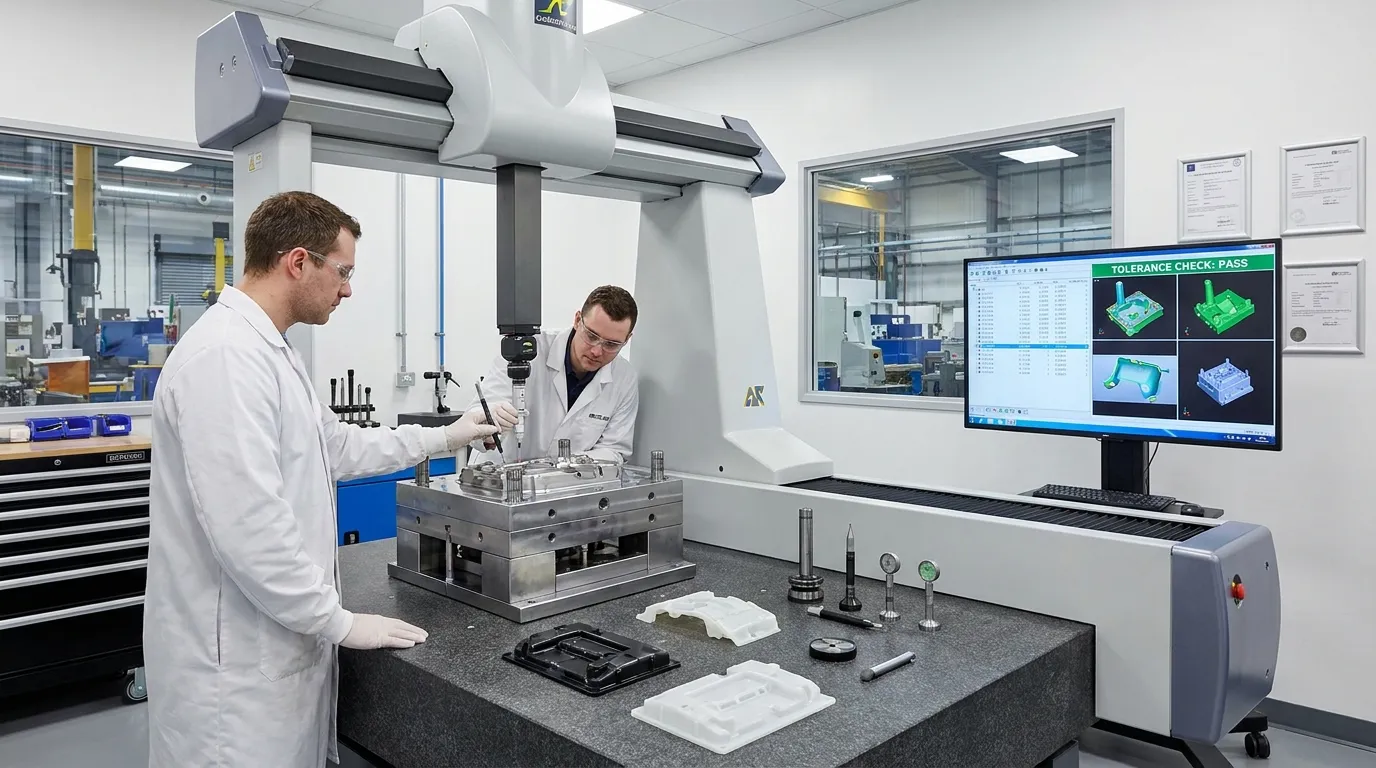
Quality control in mold manufacturing includes dimensional inspection, mold trial validation, fit verification, and sample-part testing. Manufacturers typically confirm tolerances, 表面仕上げ, 冷却性能, and stable molding conditions before shipment.
QC starts long before final shipment. Shops inspect components during machining, after heat treatment, during assembly, and again after trial production. Coordinate measuring machines, often called CMM systems, are commonly used for dimensional verification.
First article inspection
First article inspection confirms that the mold produces parts within specification. Manufacturers usually compare molded samples against approved drawings, cosmetic standards, and assembly requirements before customer approval.
A medical device enclosure mold may require additional documentation and repeatability testing before acceptance. Tight tolerance projects often include multiple sample runs to verify stable dimensions across repeated cycles.
金型製造QCチェックリスト
| 品質検査 | 目的 |
|---|---|
| Dimensional inspection | キャビティの精度を確認 |
| 表面仕上げチェック | 外観不良の防止 |
| 冷却検証 | サイクルタイムの安定化 |
| エジェクター試験 | 信頼できるリリースを確認 |
| カビ試験サンプリング | 生産準備状況の検証 |
| フィット検査 | フラッシュや摩耗を防ぎます |
| 再現性試験 | 安定した寸法を確認 |
Lead time can increase when trial samples fail dimensional inspection or cooling performance checks. 次の通りです エヴォック・ポリ および アプリオス, production molds often require additional validation and refinement before final approval.
If you're comparing tooling categories across industries, this guide to 工業用金型の応用 explains how mold requirements change by production environment.
What usually delays mold manufacturing projects?
Mold manufacturing delays usually come from late design changes, machining rework, trial failures, 資材不足, or unresolved dimensional problems. Small DFM mistakes early in the project can create multi-week delays later during testing and validation.
Most tooling delays begin before the mold reaches production trials. Poor communication during design review, unclear tolerance expectations, or incomplete product drawings can create rework after machining starts.
A consumer electronics housing project might require a gate redesign during mold testing after weld lines appear on visible surfaces. Even small geometry changes can delay delivery by several weeks because machining, 研磨, and validation all need revision.
カビ遅延リスク表
| 遅延原因 | 典型的な影響 | 予防方法 | リカバリーアクション |
|---|---|---|---|
| 後期の設計変更 | 再加工 | 以前のフリーズデザイン | 金型スケジュールの修正 |
| 試験成形の失敗 | 追加サンプリング | より良いDFMレビュー | 処理パラメータの調整 |
| 資材不足 | スケジュールの遅延 | 初期の鋼製注文 | 承認された代替資料 |
| 冷却の不均衡 | サイクル時間の延長 | シミュレーションレビュー | 冷却チャネルの変更 |
| 次元ミスマッチ | QCリジェクション | 公差計画 | リワークキャビティ面 |
次の通りです パワーフルスカイ, trial parameter mismatch and gate redesign are common reasons for mold schedule overruns. HH型 also emphasizes that stronger DFM and QC planning reduces production launch problems.
For a broader look at scheduling and process flow, これだ 型製造タイムライン guide explains how tooling stages affect delivery expectations.
How do manufacturers validate a mold before production?
Manufacturers validate a mold by running trial production cycles, checking repeatability, verifying dimensions, and confirming stable process conditions. The goal is to prove that the mold can produce consistent parts before shipment approval.
試験サンプリングと承認
Trial molding usually starts with short production runs. Engineers adjust injection pressure, cooling time, holding pressure, and cycle parameters while monitoring part quality. This stage helps identify flash, ワーページ, 陥没痕, or dimensional drift.
A high-cavity packaging mold may require cooling-channel adjustments after trial runs reveal unstable cycle times between cavities. These refinements improve consistency before full-scale production begins.
Manufacturers also evaluate repeatability across multiple cycles. Stable production matters more than a single acceptable sample. Buyers should ask for dimensional reports, sample approvals, and trial documentation before approving final shipment.
For additional information about production-ready tooling systems, これだ 生産型の検証 resource explains how molds transition from testing into full manufacturing use.
次のステップを正しく進める
A successful mold manufacturing project depends on more than fast machining or low tooling cost. Design review, QC planning, assembly accuracy, and production validation all affect long-term performance. Buyers who understand the workflow can identify risk earlier and ask better questions before approving a supplier.
If you're evaluating a new tooling project, focus on how the manufacturer handles DFM review, trial validation, and inspection control. Those stages usually determine whether a mold performs reliably in production or creates expensive problems later.
よくある質問
How long does mold manufacturing take?
Most production molds take several weeks to several months depending on complexity, キャビティカウント, machining requirements, and validation testing. Mold trials and design revisions often add extra time before production approval.
Why is DFM important in mold manufacturing?
DFM helps manufacturers identify production risks before steel cutting begins. Early review reduces rework and prevents delays caused by shrinkage issues, poor cooling layout, or incorrect gate placement.
What machines are used in mold manufacturing?
Manufacturers commonly use CNC milling machines, EDM equipment, 研削機, polishing systems, and coordinate measuring equipment. Each process supports dimensional accuracy and surface finish control.
What causes mold delivery delays?
Design changes, machining errors, failed mold trials, and material sourcing problems are common causes of delay. Poor communication during DFM review can also create expensive rework later in the project.
How is mold quality checked?
Manufacturers use dimensional inspection, mold trial sampling, fit verification, and sample-part validation to confirm mold quality. Inspection usually happens throughout machining, 集会, and final testing stages.
Should tooling be aluminum or steel?
Steel molds usually provide better durability and longer production life for high-volume manufacturing. Aluminum molds can reduce tooling time and cost for prototypes or lower-volume production runs.
共有:



サンシャインより書かれました
サンシャインで, 私たちは精密金型部品の専門製造およびサプライヤーです, プレスおよび射出成形用途向けの幅広い製品を提供しています. 私たちの主な焦点はパンチダイスです, イジェクターピンとスリーブ, ガイドポストとブッシング. 高度なCNC加工技術で, 厳格な品質管理, そして強力な生産能力, 私たちは信頼性を保証しています, 高精度部品, また、迅速かつ効率的なグローバル供給のための在庫の標準部品も併用しています.
ニュース
サービスを受けましょう
あらゆる予算に合った高品質な部品と、親切なスタッフが訓練されていて、訪問を有益で手間なく充実させてくれます.
